Explore how clear standards, operator training and shopfloor feedback build consistent quality in technical garment manufacturing.
For a brand placing orders for technical apparel, an approved sample is only the starting point. The next question that matters is how the agreed requirement is held across the whole order, even when the operator changes, the style changes or the plan is adjusted.
That is the question of quality discipline: building the requirement into daily working practice, rather than concentrating inspection at the point where goods are about to ship. The ISO quality management principles likewise emphasise engagement of people, a process approach and evidence based decision making. ISO
In technical garment manufacturing, aiming for perfection should not be read as a claim that defects never occur. What has to be built is the ability to perform consistently, to recognise deviation and to adjust on a defensible basis.
1. A standard has to be clear enough for many people to follow it the same way
An instruction to “sew it better” or “inspect more carefully” is hard to use as a shared reference when each person reads it differently. To be workable on the line, a requirement has to become specific information: where the detail sits, how it is performed, which reference sample applies and what the acceptance limit is.

For example, an instruction for setting a zipper can state the position of the slider, how the two front panels are aligned against each other and which points the operator checks themselves. This is one way of making a requirement concrete, not a general specification that applies to every product.
What has to be avoided is leaving the operator to guess at anything that has not been confirmed. A quality habit should begin with checking that the right document is in hand and asking when the information is unclear.
2. Training has to reach capability, not stop at instruction
Having listened to an instruction does not confirm that someone can perform the operation consistently. In the Training Within Industry method, NIST describes a sequence of preparing, demonstrating, having the learner practise, and continuing to follow up afterwards. NIST
Applied to a sewing line, the trainer should observe both the motion and the product that results from it. If the result falls short, it has to be established which step the learner has not understood, which detail is hard to control, or what tooling support is needed.
This approach separates “has been trained” from “is able to perform”. For a customer, it is also a point worth discussing when assessing how a factory prepares its people for a new product.
3. Good habits have to be re-checked at the moment of change
A method that suited the previous style should not be carried into the next one by assumption. When material, trims or construction change, the team has to confirm which conditions still hold and which have to be reviewed.
At every changeover, therefore, it is worth re-checking the documents in use, the materials issued and the first results produced. This is a risk based control suggestion; the scope of verification should match the specific change.
Quality discipline is not repeating a motion mechanically. It is knowing when to re-check before carrying on.
4. Feedback from operators has to become information that is acted on
The person performing the work can give very specific observations: a detail that is hard to hold, a position that is hard to see, an instruction that is not clear enough. For those observations to be useful, someone has to receive them, verify them and respond.
NIST treats giving employees problem solving tools and ownership of their role as an important part of developing a manufacturing workforce. NIST
In practice, people should be asked to describe clearly what was observed rather than to conclude the cause too quickly. “The seam tends to run off at this curve” is information that can be checked; “the operator is careless” is not yet a conclusion with sufficient basis.
5. Repairing a garment is not the same as solving the problem
Once a garment has been reworked to standard, the cause of the defect and the likelihood of recurrence still have to be examined. UNIDO emphasises root cause analysis, corrective action and monitoring of improvement as linked elements of manufacturing quality management. UNIDO Hub
An illustration: if a component is repeatedly set off position, repairing each garment addresses only what has already occurred. The responsible team should check the positioning marks, the written instruction and the working conditions before choosing a solution.
After an adjustment, the following results have to be observed. Only when there is evidence that the new method is sound should the lesson be written into the common instruction.
6. Data has to show whether the habit is producing a result
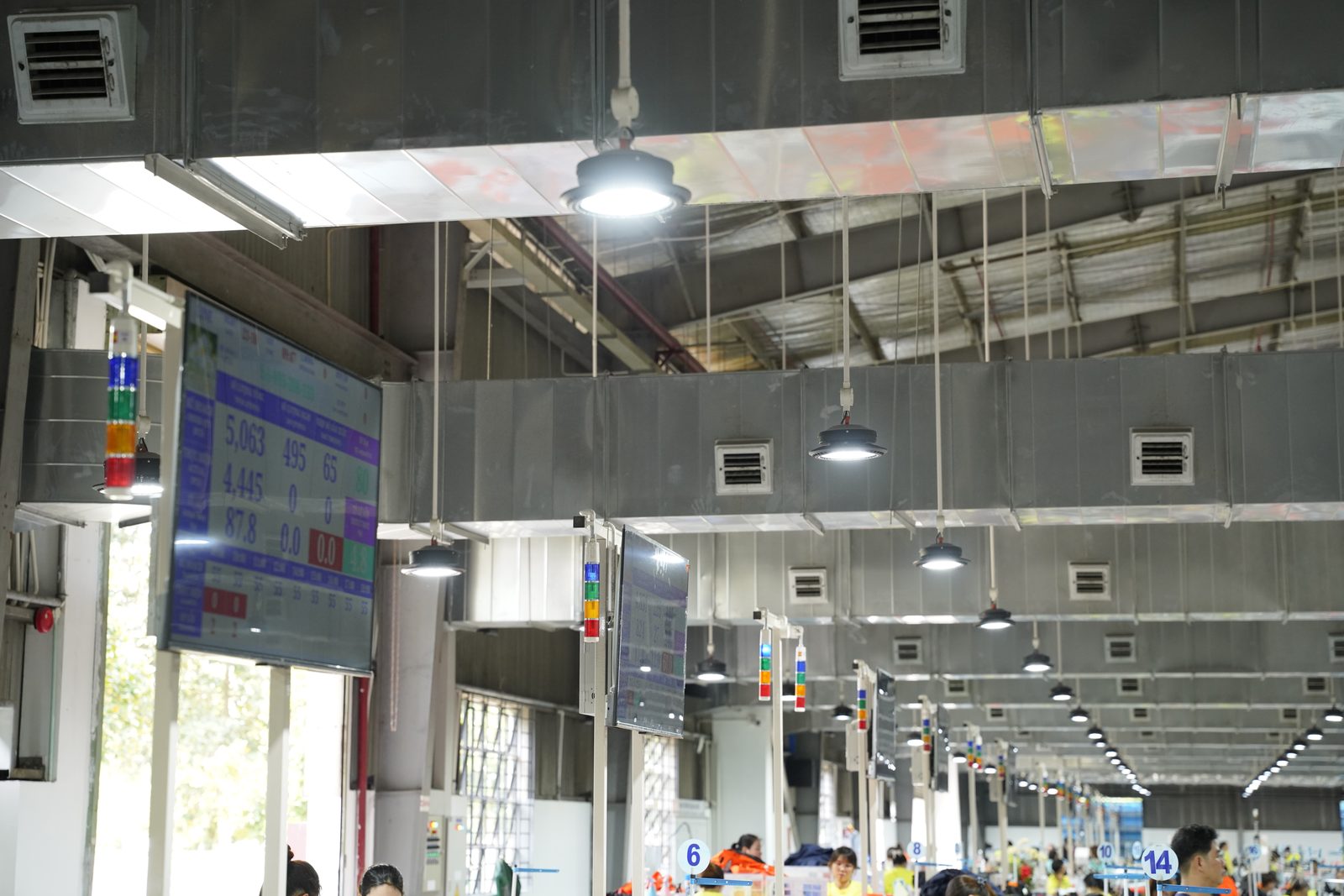
ISO identifies evidence based decision making as a quality management principle. That requires data to serve assessment and action, rather than to fill a report. ISO
For an operation under improvement, it is possible to track first time inspection results, the number of garments requiring rework, and how often the same defect recurs. These are suggested measures, not reported Viking figures.
When comparing, the scope and the method of calculation have to stay explicit. Fewer recorded defects is not enough to conclude better quality if the number of garments inspected has also fallen. Reliable data lets the reader understand how the result was formed.
7. Viking Vietnam: connecting individual responsibility with coordination on the line
In its company information, Viking Vietnam states a product direction tied to the safety, comfort and quality of workwear, and describes manufacturing capability in waterproof jackets with taped and welded seams. viking-vietnam.vn
In its account of the MIDAS TOUCH model, Viking describes coordination between the line leader, QC and QA, IE, maintenance and production technical staff. Targets are discussed at the start of the shift, tied to specific tasks, and reviewed during the day.
What is notable in this arrangement is that the operator is not left to resolve every difficulty alone. Issues of method, machinery, quality and work allocation each have a specialist role involved.
That is the basis for turning “attention to every detail” into coordinated responsibility. The value to aim for is not perfection in a company profile, but requirements that are understood the same way and problems that are followed through.
What has to be sustained across every order
To assess the quality discipline of a manufacturing partner, a customer can concentrate on three questions:
- Does the operator know the standard in force and how to check their own work?
- When something abnormal appears, does the information reach the right person and get handled clearly?
- After an adjustment, is there evidence confirming the result, and is the instruction updated?
These questions move the discussion into how the factory actually operates, rather than stopping at an equipment list or a general commitment.
Connect with Viking Vietnam
Talk to Viking Vietnam about the critical details, quality requirements and verification approach for your product.
Agreeing these clearly during sample development gives both sides a basis for controlling execution, assessing change and holding the product requirement throughout the working relationship.