Explore Viking Vietnam technical products, specialist teams and production line coordination behind its garment manufacturing capability.
At Viking Vietnam, manufacturing capability shows in both the construction of the product and the way the team organises its work. The material Viking publishes presents products such as technical bib trousers, reversible insulated jackets and waterproof garments. Alongside that, what is shared from the production floor shows how the line leader, quality, technical, IE and maintenance all take part in handling the work.
These two sides need to be seen together. The product shows which details the factory can execute; activity on the line shows how those specialist capabilities connect when an order is run.
For an international customer, this is the basis for looking at Viking more closely: not only viewing a finished sample, but understanding the team behind the sample and how the work is followed through in production.
Specific products show Viking's technical capability
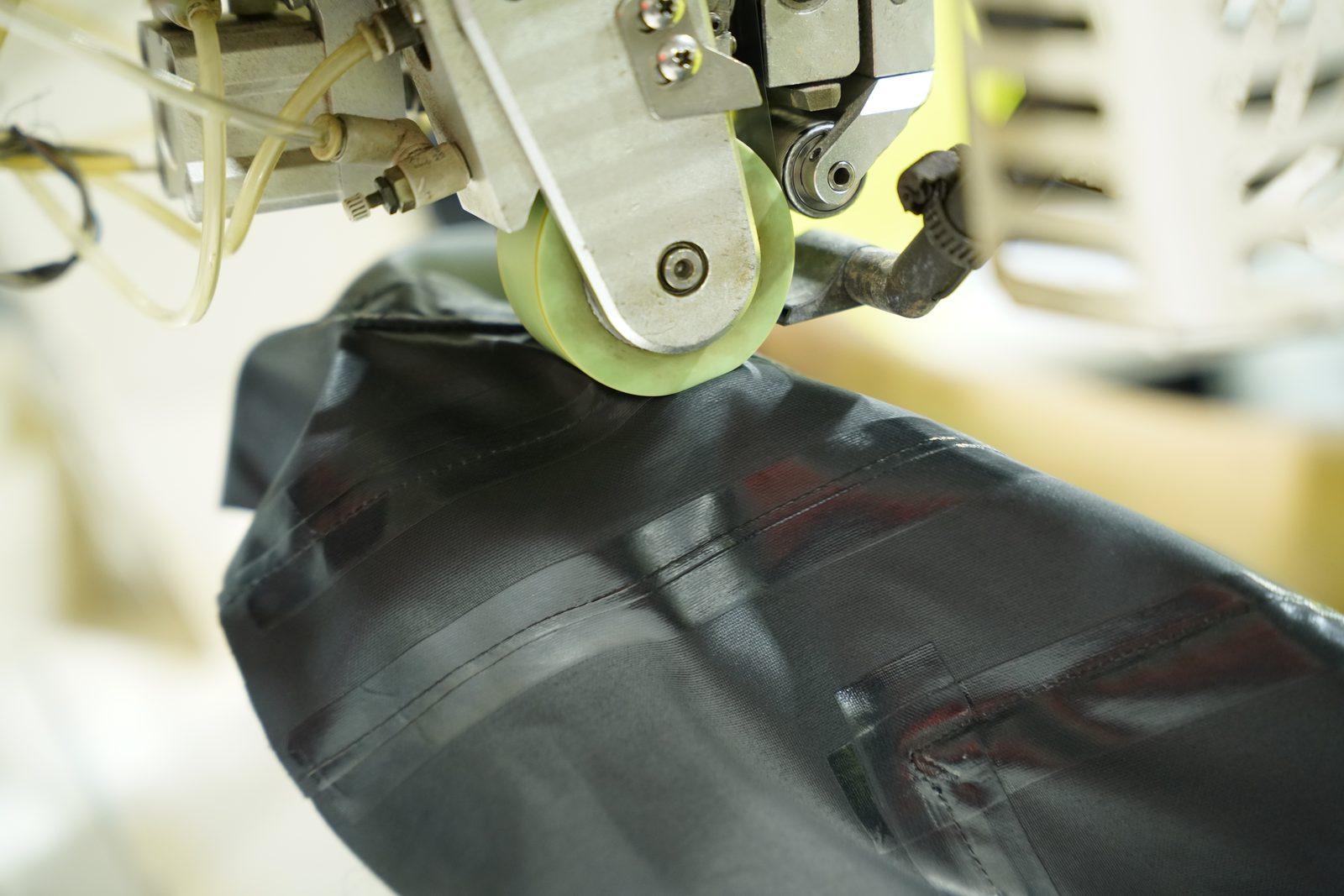
In its presentation of technical bib trousers, Viking refers to working with three layer laminate fabric, hot air seam taping, integrated zippers, ventilation details and adjustable straps. Areas such as the hem and the inner ankle are presented together with material reinforcement solutions.
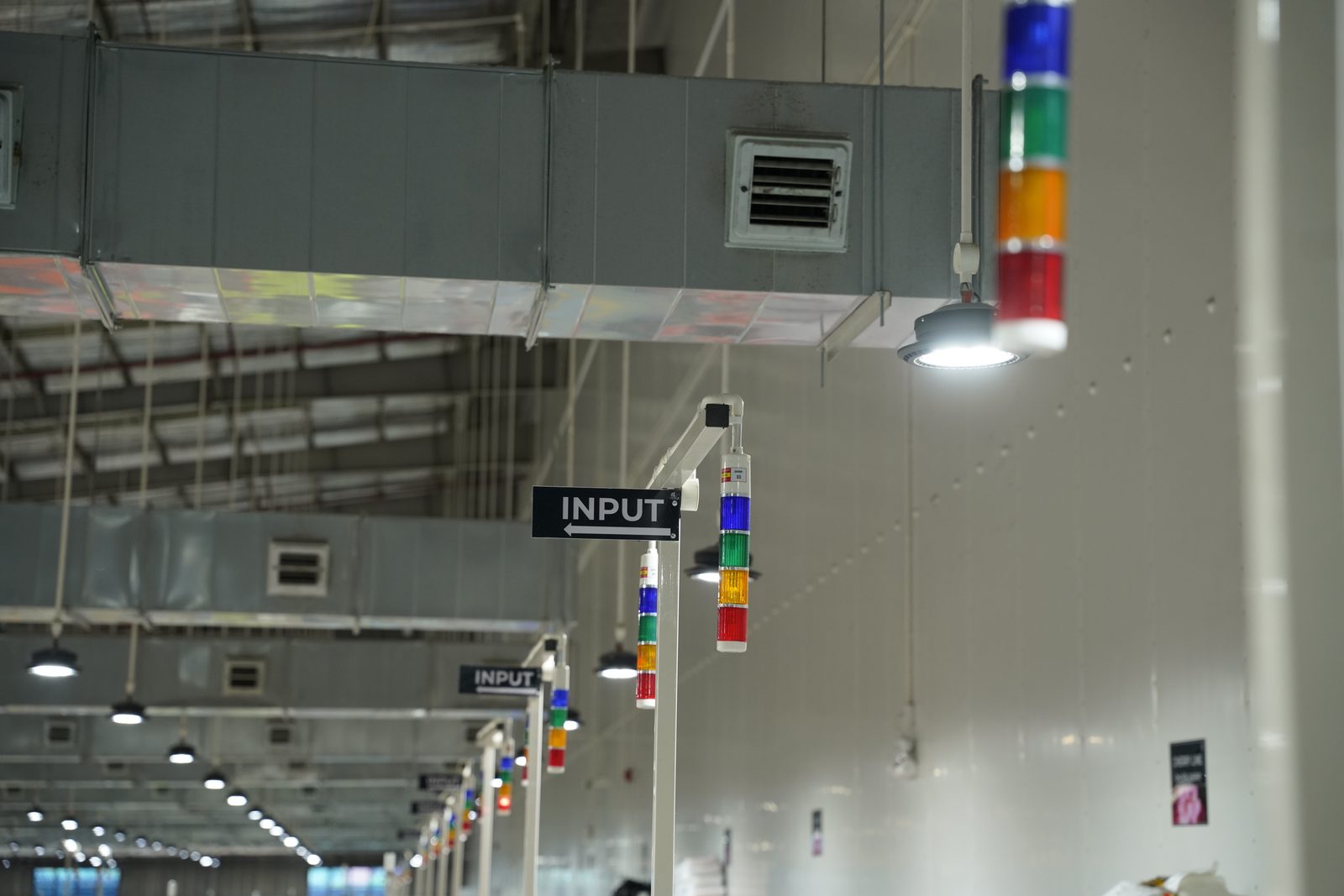
On the reversible insulated jacket, Viking presents a construction that combines a bright coloured face with a black quilted face, a two way zipper and the ability to connect to an outer shell. These are concrete examples of combining several features within one product.
From a product development point of view, the value of such examples is that they create a clear basis for discussion between customer and factory: which detail has to be executed, which requirement has to be confirmed, and which method suits the design.
One line meeting shows how Viking organises an order
In the Cherry line meeting recorded in the MIDAS TOUCH material, the line leader states the objective of completing the remaining 51 garments of an order within the day. At the same time, the group discusses preparing operations for the styles that follow. This is an objective set in the meeting, not a figure confirming a completed result.
What is notable is that the objective is not assigned to the line leader alone. Technical is needed to support the side pocket operation, IE tracks output by operation, quality joins the inspection of the product, and maintenance prepares machines for the next style.
Through this situation, a customer can see how Viking takes a plan down to specific work. Rather than stating only the quantity to be reached, the discussion makes clear which part of the work has to be supported so that the line can keep going.
The technical team works directly with production
In the video introducing the departments that do not sew directly, Viking describes the technical team as the function that turns the customer's requirement into working information, develops patterns and defines the method of execution. That role is tied to work in production, not limited to preparing documents.
The same connection appears in the Cherry line meeting: when an operation needs concentrated effort, the line leader raises the need for technical support directly.
This is an important point in how a customer assesses Viking's capability. Technical documentation and samples have specialist people following them through into actual execution, and difficulties on the line are brought into discussion so that a workable method can be found.
IE brings line coordination back to real data
IE, the industrial engineering function, is presented by Viking with responsibility for time study, removing unnecessary motion, line balancing and improving working methods. The stated purpose relates not only to output but also to reducing unnecessary movement for the person doing the work.
In the Cherry line material, the IE member takes on tracking output by operation per hour, recording how work is grouped, and updating the line layout. The IE role is therefore tied to the specific situation unfolding during the day.
From a customer's point of view, this creates a basis for discussing progress through operation level information. When support is needed, the team can identify where the difficulty sits rather than looking only at total output at the end of the day.
Quality and machinery enter the same production discussion
In Viking's five role model, quality takes part in prevention, early defect detection and coordination with the line leader. In the recorded meeting, the quality member states the tasks of staying close to the line, checking the first line sample of the styles being run, and coordinating on the remaining work.
Maintenance is presented with responsibility for machine care, equipment adjustment and support with folders and guides. In the same meeting, the maintenance representative confirms the preparation of machines for the following orders.
What is worth noting here is that quality, progress and equipment are discussed within the same order context. The support functions have information about work that is coming, rather than being called in only once a problem has already interrupted the line.
Viking develops its team through daily work
In the MIDAS TOUCH material, Trang Nha explains that a “golden hand” does not mean everyone performs perfectly from the start. The emphasis is on learning together how to do better, focusing on the line's objective, and working with concrete tasks, figures and information boards.
The material also describes the roles discussing at the start of the shift and reviewing at intervals during the day. This shows training and improvement placed close to the production situation: which operation needs instruction, which equipment needs preparing, which data needs updating.
From that approach, Viking's direction on people development is tied to the ability to perform the work. Individual experience is brought into shared discussion, helping each function understand the others' part better.
What a customer can see from how Viking works
The technical products and operating situations Viking shares create three bases for a customer to examine the factory's capability:
- Ability to execute the product: discussion starting from specific constructions and details, rather than a general description of “technical apparel”.
- Ability to coordinate: defined roles for technical, IE, quality, maintenance and the line leader during execution.
- Ability to follow the work: objectives tied to tasks, data and the moment support is required.
None of this asserts that every order runs without difficulty. The value lies in a customer being able to see which teams are involved and how difficulties are brought out to be handled together.
Connect with Viking Vietnam
Talk to Viking Vietnam about your sample, your technical requirements and your order plan, so that a suitable development and production approach can be defined together.
From the details on the product to the way work is organised on the line, a specific discussion helps both sides understand which capabilities have to be brought in, which points have to be verified, and where responsibility sits at each stage of the cooperation.