Explore how Viking Vietnam turns manufacturing experience into SOPs, video instructions and work standards to support training, quality and operational consistency.
In a garment factory with many years behind it, a great deal of valuable knowledge sits neither in the machines nor in the software. It sits in people.
A technician knows how to handle a difficult fabric. A long serving operator knows how to hold a component so the seam stays consistent. A line leader knows which position tends to become the bottleneck. A QC inspector can recognise a defect after a few seconds of looking.
This experience is what makes up a factory's real capability. But if the knowledge lives only in individual memory, the business carries a standing risk: when that person leaves, moves to another function or is simply absent, the experience can go with them.
So at Viking Vietnam, one important direction is to steadily turn individual experience into a shared method of working through SOPs, technical documents, instructional video and a production library.
This is not administrative work. It is how a factory builds capability that can be maintained, taught and improved over time.
1. Experience becomes an asset only when others can use it
A person with ten years of experience is a valuable asset. But if only that person knows how to run a difficult operation, the organisation still depends on an individual.
Organisational capability begins to form when knowledge is turned into:
- A clear method.
- A sequence of work.
- Control points.
- Reference images or video.
- Criteria for pass and fail.
- Guidance for common situations.
At that point the experience can be passed to a new person, reused on the next style and improved further.
This is the shift from “I know how to do it” to “we have a method that many people can follow correctly.”
2. An SOP should not be written only to fill a file
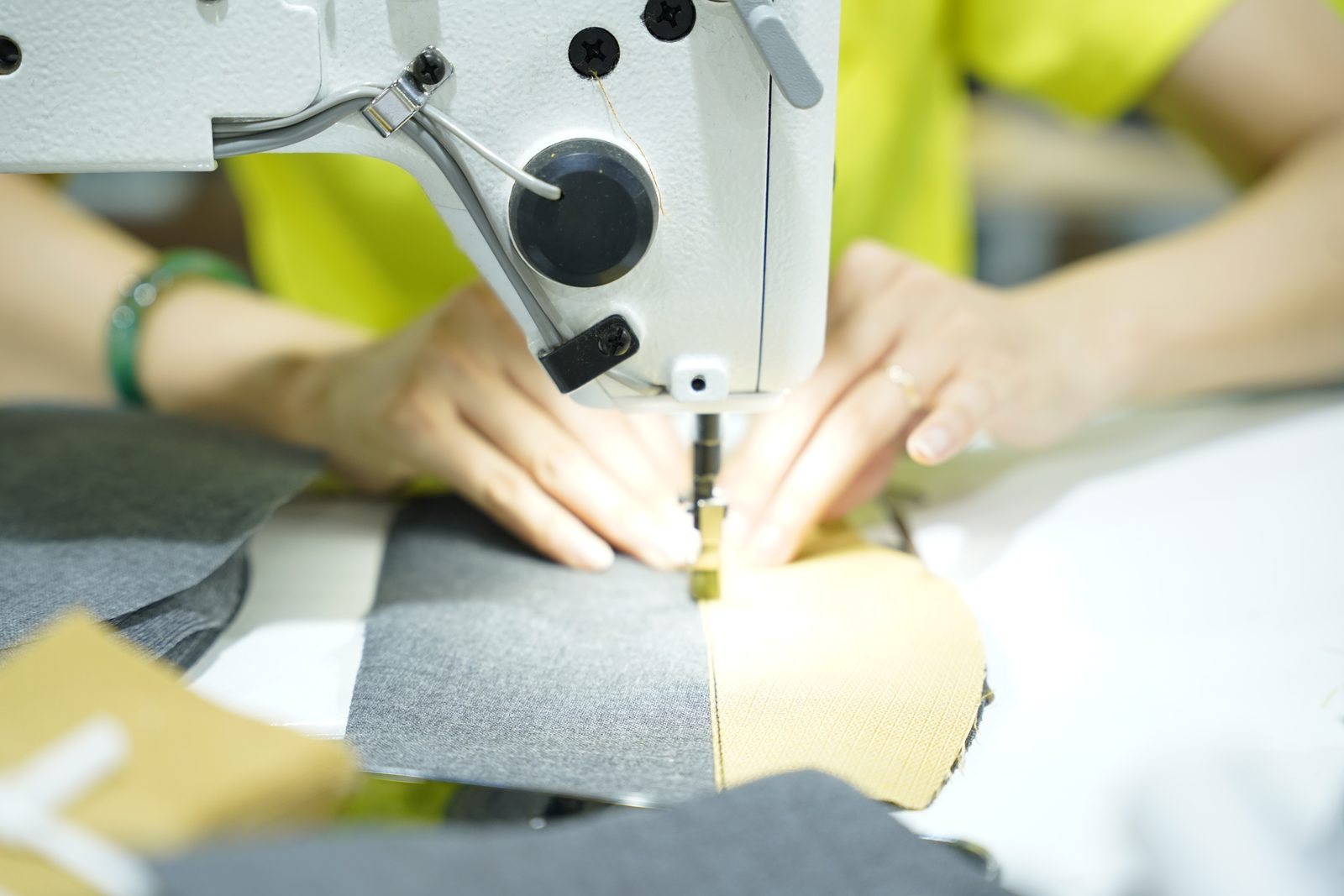
An SOP can be thorough and still carry little value if the person doing the work does not use it. Standardisation in a factory therefore has to start from the actual work.
A good SOP answers the basic questions:
- Where does this work begin?
- What inputs are required?
- In what order are the steps carried out?
- Which points carry high risk?
- What does the operator have to self check?
- Whom do they tell when something is abnormal?
- What does a correct result look like?
For technical products the SOP has to be more specific still. For an operation involving seam sealing, the instruction cannot simply say “seal the seam to standard”. The operator needs to know which material is in use, which positions need treating, what to check and how to respond if the sealed line is not stable.
An SOP has value only when it helps the operator work better on the floor.
3. Production video explains difficult handling through images
Some operations are very hard to describe fully in words. How to hold the component. How to turn the material around a curve. How to position a pocket. How to feed the product through the machine at a particular angle.
This is where instructional video becomes useful. Within the scope of IE at Viking, filming video and updating the production library is part of the professional remit. This lets the factory build a visual reference step by step.
Video can support:
- New people learning faster.
- Line leaders instructing more consistently.
- IE comparing handling between alternatives.
- Technical recording a method that has been confirmed.
- Other lines referring to it when running a similar product.
A short, focused video is sometimes worth more than a long document the operator struggles to picture.
4. Standardisation starts from a confirmed method
The fastest way of working is not automatically the one that belongs in the library. Before standardising, the method has to be checked.
The functions can review it together:
- Technical: does the method match the product construction?
- QC: does the result meet the quality standard?
- IE: is the handling reasonable and sustainable?
- Maintenance: are the machine and the attachment suitable?
- Line leader: can the operator apply it under real production conditions?
Only when these fit should the method become a shared reference.
This point matters a great deal. Standardise a method that is not right, and the factory can get it wrong very consistently.
5. Standard work makes training a new person faster
When someone new joins the factory, they should not have to start entirely from what they are told by word of mouth. With clear standard work, the trainer can focus on the key points:
- The order of handling.
- Working posture.
- Tools required.
- Self check points.
- Common defects.
- Output standard.
The new person also has something to look back at. This makes training less dependent on the trainer's memory.
More importantly, two different trainers have a common basis for conveying the same method. That is the foundation for training capability that can scale as Viking recruits more people or introduces new products.
6. Standardisation does not mean blocking improvement
A common misunderstanding is that once an SOP exists, everyone must follow the document exactly and change nothing.
In practice, standard work should be the best method confirmed at this point in time. If an operator finds a better way, the idea deserves consideration.
The route can be: spot the opportunity, propose, trial, check, confirm, update the standard.
The SOP then stops being a fixed document and becomes a platform for improvement. What matters is that a change is confirmed before it becomes the shared method.
This is how two aims are balanced: discipline in execution and flexibility in improvement.
7. Every repeated defect is a signal to review the work standard
When a defect appears repeatedly, the factory should not only ask “who got it wrong?”
A more useful question is “why does the system still allow this defect to recur?”
The cause may lie in:
- An unclear SOP.
- Insufficient illustration.
- Operators who have not been trained.
- A method that is hard to execute.
- An unstable machine.
- An unsuitable attachment.
- An inspection standard that is not understood the same way by everyone.
Corrective action then should not stop at repairing the garments. The factory has to review the way the work itself is standardised.
If the lesson goes back into the SOP or the instructional video, today's defect can become knowledge that prevents a defect on the next order.
8. Standardisation lets the functions speak one language
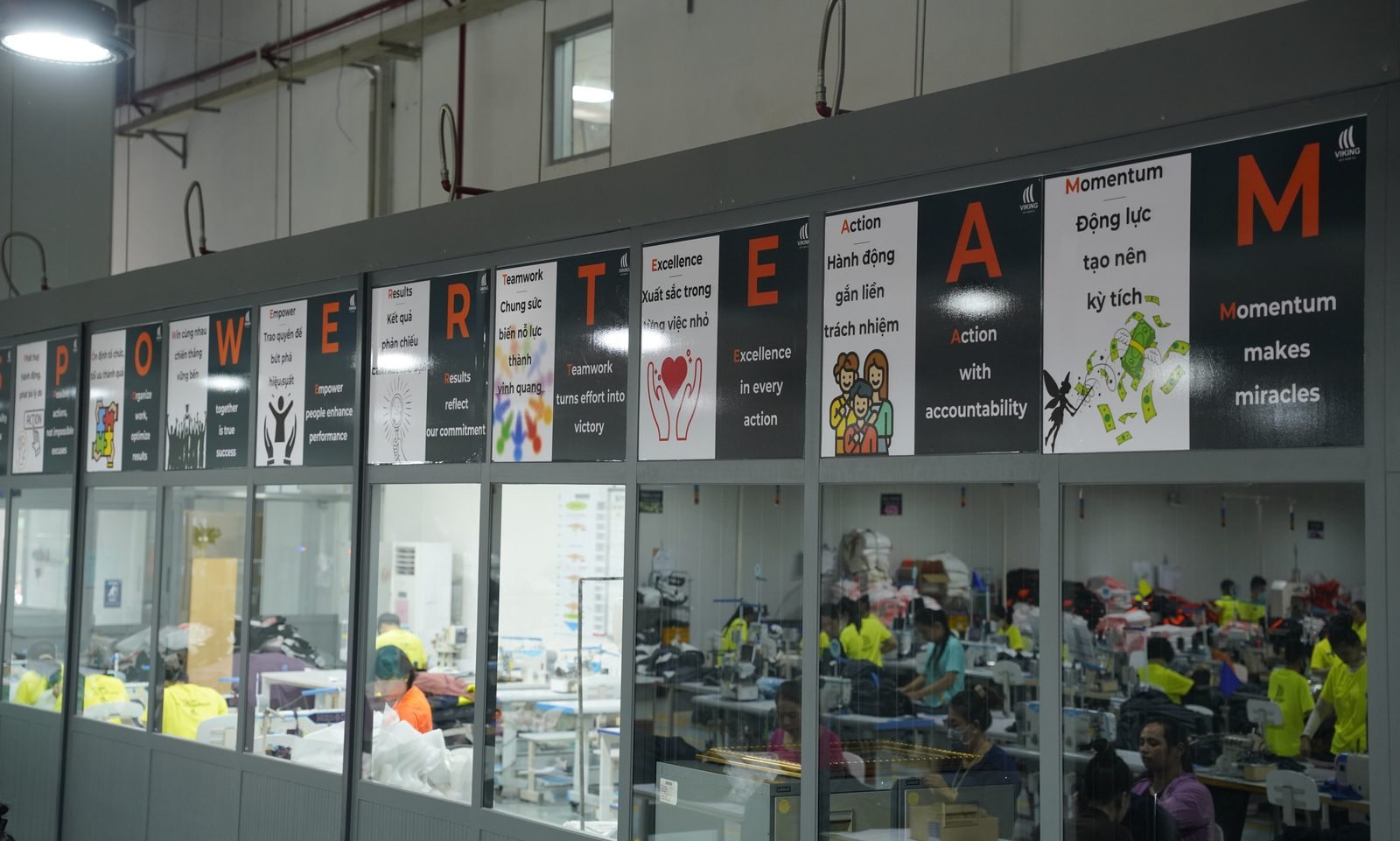
An operation usually involves several people: the operator executing it, the line leader managing it, technical instructing, IE following method and output, QC checking quality, maintenance supporting the equipment.
If each person understands the method differently, disagreement follows easily. Standard work creates a common point of reference.
Instead of asking “what do you think?” or “how do you usually do it?”, the functions can look together at:
- The approved sample.
- The document in force.
- The reference video.
- The inspection criteria.
When the shared information is clear, coordination between functions becomes more effective too.
9. Version control is inseparable from standardisation
In export manufacturing, customer requirements change. Measurements change. Trims change. The design changes. The packing method changes.
If old and new documents coexist on the line, the risk of deviation is high. A standardisation system therefore has to control:
- The version currently in force.
- The update date.
- The person who confirmed it.
- The scope of application.
- Old documents to be withdrawn or stopped.
This is an important part of compliance. The person doing the work does not only need a document. They need the document that is actually in force.
10. Standardisation is the foundation for digitalisation and AI
When a process is unclear, putting it into software only digitalises the confusion.
Before applying digital systems more deeply, a business therefore has to understand:
- What the current process is.
- Who is responsible.
- What the inputs are.
- What the outputs are.
- Where the control points sit.
- Which data has to be recorded.
Once these are standardised, technology can support the work better. Video, electronic SOPs, production data, MES or an AI assistant can all become tools helping staff find information and learn faster.
But the foundation remains knowledge that has been organised. For Viking this matters particularly in building a “second brain” for each function: experience has to be packaged into knowledge that people and technology can both use.
11. The value for international customers
For a customer, internal standardisation is usually less visible than a new machine. But its effect shows up in several places:
- New people are trained on a firmer basis.
- The working method depends less on individuals.
- Difficult operations have a reference document.
- Functions coordinate more easily.
- Changes are conveyed more clearly.
- Repeated defects have a chance of becoming lessons.
- The product has a steadier basis from sample through to bulk.
A customer does not need the factory to prove it has a great many SOPs. The question worth more attention is: has the important knowledge been turned into a method that many people can follow correctly?
From individual experience to Viking capability
In a long established factory, people's experience is an enormous asset. The challenge is not to let that asset sit only inside individuals.
Viking Vietnam is developing an approach in which experience is progressively turned into: SOP, video, training, practice, checking, improvement, a new standard.
When that loop is maintained, the factory does not only train more people. It also learns from its own work.
And that is an important step towards building an organisation able to run consistently, develop its people and improve continuously.
Connect with Viking Vietnam
Viking Vietnam develops manufacturing capability in technical outerwear, workwear, waterproof garments, protective clothing and high performance apparel alongside standardising knowledge and training its teams.
Through SOPs, technical documents, operation video, coordination between IE, technical, QC, maintenance and line leaders, and the practice of feeding lessons back from production, Viking works towards a clear aim: turning each person's experience into the shared capability of the whole factory.
That is the foundation for knowledge to be retained, for people to develop faster, and for customers to have a manufacturing partner that becomes steadier with every order.