Software does not create quality data by itself. Data begins on the floor, and in a garment factory the inspection table is one of the most important points. This article covers ten aspects, from recording and classifying defects to reading trends and closing the feedback loop between QC, technical, IE and the sewing line.
In the digital transformation of the apparel industry, many companies invest in software, data dashboards, reporting systems and production management tools. These tools are necessary to increase transparency and to support faster decisions.
However, there is an important principle that needs to be understood correctly: software does not create quality data by itself. Software only records, stores, aggregates and analyses the data that people have entered from the floor.
In a garment factory, one of the most important places where quality data is created is the inspection table.
At the inspection table, defects are found.
At the inspection table, the condition of the product is recorded.
At the inspection table, defect trends begin to emerge.
At the inspection table, the factory can see which points in the process need to improve.
For Viking Vietnam, the inspection table is not only where products are checked. It is an important data point in the quality management system, connecting QC, the sewing line, technical, IE and production management for continuous improvement.
1. Quality data begins on the production floor
In garment manufacturing, quality data should not be understood simply as the numbers on an end of day report. Real data begins on the floor, where the product is cut, sewn, finished, inspected and packed.
A defect found at the inspection table can provide a great deal of important information:
- What type of defect it is
- At which operation it appeared
- Which style it occurred on
- Which size, colour or material it relates to
- Whether it has repeated
- Whether it comes from the method, the machine, the technique or the material
- How it was resolved
If this information is recorded correctly, the inspection table becomes an important source of data for understanding the real state of quality.
If information is recorded incompletely, recorded wrongly, or simply ticked off to finish the job, then no matter how modern the software is, it cannot produce an accurate report.
Digital transformation in quality management therefore has to begin with the discipline of recording data on the floor.
2. The inspection table is not only where defects are found
In a mature quality system, the inspection table should not be seen as a place that simply catches defects. Its more important role is to help the factory see problems so they can be improved.
If a defect is found but never analysed, it only creates rework.
If a defect is recorded correctly, classified correctly and fed back correctly, it becomes data for improving the process.
At Viking Vietnam, the inspection table helps the factory answer important questions:
- Which defect appears most often
- Which defect affects quality most seriously
- Which defect tends to repeat on a particular style
- Which defect relates to a specific operation
- Which defect needs the technical team to adjust the instruction
- Which defect needs the line leader to retrain an operator
- Which defect needs maintenance to check a machine or a jig
When the inspection table works as it should, QC does not only detect defects. QC helps create the data the factory uses to stop those defects coming back.
3. Correct defect classification is what gives the data value
One of the most important elements of quality data is how defects are classified.
If defects are recorded too generally, the data becomes hard to use. For example, if everything is recorded as a sewing defect, the factory will not know what the defect actually is, where it appeared, or which department needs to act.
A good classification system needs to distinguish:
- Stitching defects
- Measurement defects
- Fabric surface defects
- Wrong position of a detail
- Trim defects
- Seam sealing defects
- Reflective tape defects
- Soiling, staining, creasing or scratching
- Packing or labelling defects
- Defects related to how the style was implemented
For technical apparel, classification matters even more. A small defect on a waterproof product, protective clothing, workwear or outerwear can affect how the product performs, not only how it looks.
At Viking Vietnam, clear defect classification allows data from the inspection table to be used for training, technical adjustment, method improvement and risk control in bulk production.
4. Data from the inspection table reveals defect trends
A single defect can be handled on the spot. But when the same defect appears repeatedly, it is no longer the problem of one product. It is the sign of a trend that needs to be analysed.
Data from the inspection table helps the factory recognise:
- Whether the defect is increasing over time
- Whether it is concentrated at one operation or several
- Whether it appears with one operator, one line, or many lines
- Whether it relates to a specific material
- Whether it appeared after a change of machine, pattern or sewing method
- Whether it relates to how the first piece was set up on the line
When a defect trend is detected early, the factory can act before the problem spreads.
This matters especially on export orders, where the requirements for quality, schedule and consistency between shipments are all high.
For customers, a factory that can read defect trends is more reassuring than one that only repairs defects one at a time.
5. The inspection table connects QC and the sewing line
Quality data only has value when it is fed back to the place that needs to improve.
If the inspection table finds a defect but the information never reaches the sewing line, the defect can keep repeating. If QC only records defects without talking to the line leader or the technical team, the data stays on a report without creating any real change.
An effective feedback process needs to make clear:
- Where the defect was found
- Who the defect should be reported to
- Whether it needs immediate action or further monitoring
- Which operation needs to be re-checked
- Which operator needs further guidance
- Whether technical needs to adjust the sewing method
- Whether IE needs to review line balancing or the method
- Whether maintenance needs to check a machine or a jig
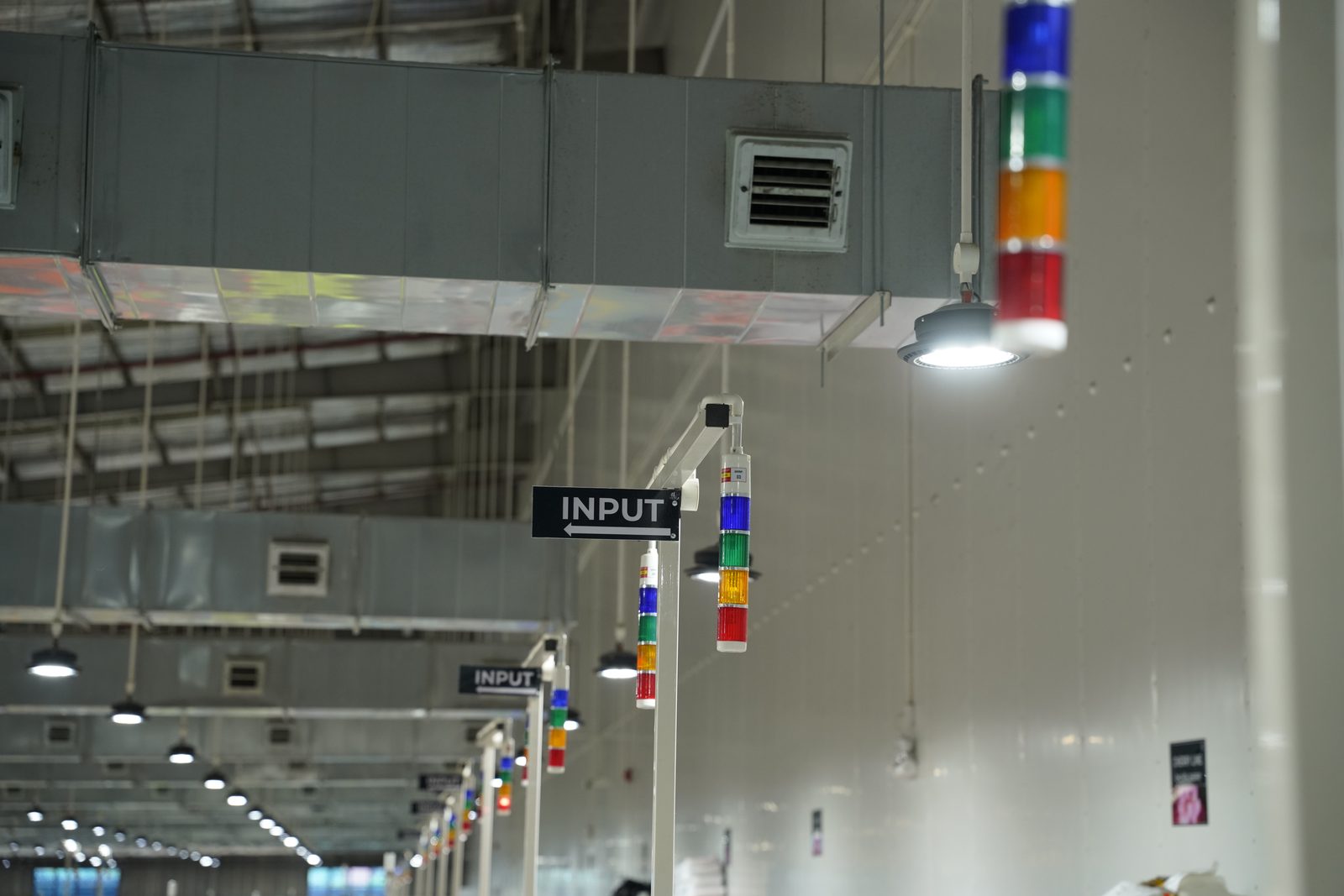
At Viking Vietnam, the inspection table does not stand apart from the sewing line. It is part of the quality feedback loop, helping the factory address the problem at its root instead of only repairing the finished product.
6. Quality data helps the technical team improve the process
In technical garment manufacturing, many defects cannot be solved by asking operators to be more careful. Some defects come from the sewing method, the assembly sequence, the difficulty of an operation, the design of a detail, or a mismatch between material and handling.
Data from the inspection table helps the technical team identify what to review:
- Which operation generates defects most often
- Whether the current instruction is clear enough
- Whether the first piece on the line needs adjusting
- Whether the assembly sequence should change
- Whether additional notches are needed
- Whether a jig or supporting tool should be improved
- Whether technical documents or method sheets need updating
When quality data is reflected accurately, the technical team has a basis for improving the process rather than acting on intuition.
This is what allows the factory to raise quality through the system, not only by adding more inspection.
7. Data from the inspection table helps IE and production see the bottleneck
Quality and productivity are closely linked.
An operation with many defects can reduce the productivity of the whole line. A difficult operation that has not been properly analysed can put pressure on operators. A bottleneck in production can leave work in progress piling up and raise the risk of defects.
Data from the inspection table can help IE and production analyse:
- Which operation is generating the most defects
- Whether the defect relates to an operation time that is too short or under too much pressure
- Whether the operation should be split
- Whether a more suitably skilled operator should be placed there
- Whether the current layout makes the operation or its control difficult
- Whether the operation needs supporting equipment to reduce defects
When QC, IE and production look at quality data together, the factory can find a better balance between productivity and quality.
At Viking Vietnam, improving production is not only about working faster. It is about working more steadily, with fewer defects and better control.
8. Software is only as strong as the data going into it
Software systems, dashboards and digital reports can help a factory see its data faster and aggregate information more effectively. However, the quality of any digital system depends heavily on the quality of the data entered into it.
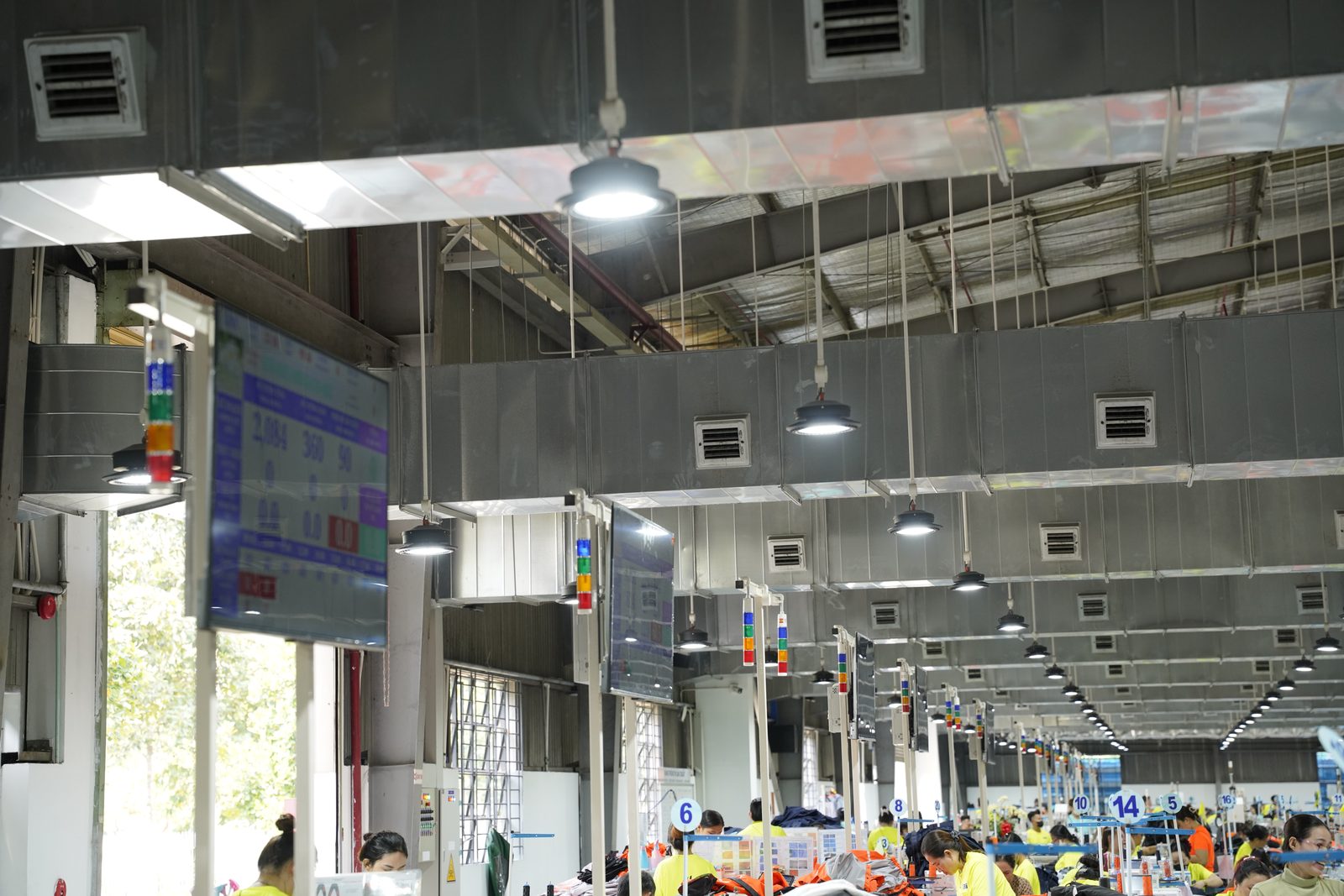
If the data at the inspection table is not accurate, the system will produce an inaccurate report.
Common risks include:
- Defects not recorded completely
- Defects classified wrongly
- Unclear information about the operation
- Defect quantities that do not match reality
- Data entered late relative to when the defect appeared
- No note about the cause or the action taken
In that case, software can make the information look more professional without helping the factory understand what is actually happening.
So before talking about advanced analytics, a factory needs to build the discipline of recording accurate data at the inspection table.
That is the foundation that makes digital transformation in production worth something in practice.
9. International customers need a system that learns from defects
For international customers, defects in production are not the only thing they care about. What matters more is whether the factory has a system to control defects, analyse them, and prevent them.
A reliable manufacturing partner needs to be able to:
- Detect defects early
- Record defects clearly
- Classify defects accurately
- Feed defects back to the right department
- Resolve defects in time
- Analyse recurring causes
- Improve the process to reduce defects in future
When a factory has a system that learns from defects, customers can be more confident that a problem is not only patched, but taken into a cycle of improvement.
At Viking Vietnam, the inspection table is one of the points that lets the quality system learn from the reality of production every day.
10. Viking Vietnam and an approach to quality data that starts on the floor
Viking Vietnam works towards a quality management approach built on the reality of the floor, coordination between departments, and continuous improvement.
Within it, the inspection table plays an important role because it is where the condition of the product is recorded directly after each stage of production.
Viking's approach focuses on:
- Controlling defects at source
- Recording quality data clearly
- Analysing defect trends
- Feeding back quickly to the sewing line
- Connecting QC with technical, IE, maintenance and production
- Using data to improve the process
- Protecting consistency between the approved sample and bulk production
For Viking Vietnam, data does not exist to fill a report. Data has to help the factory make better decisions, improve faster, and give customers greater confidence.
In technical garment manufacturing, quality cannot rest on final inspection alone. Quality has to be built through the right data, the right feedback, and the right improvement action.
Summary of operational value
- Quality data in a garment factory does not begin in software; it begins on the production floor, and above all at the inspection table.
- The inspection table is not only where defects are found, but where the data for trend analysis and process improvement is created.
- Accurate defect classification lets the factory understand the cause, the operation involved, and the action required.
- Data from the inspection table connects QC, the sewing line, technical, IE, maintenance and production management in one quality feedback loop.
- Viking Vietnam treats quality data as the foundation for controlling production, improving continuously, and building trust with international customers.
Connect with Viking Vietnam
If you are looking for a garment manufacturing partner in Vietnam with a clear quality control system, reliable production data, and the capability to improve from the floor, Viking Vietnam is ready to work with you.
We focus on building quality at each control point in the process, where real data is recorded, analysed, and turned into improvement.
Connect with Viking Vietnam to develop technical apparel with quality that is stable, transparent and dependable for the global market.