Explore how Viking Vietnam controls seam sealing through material compatibility, machine parameters, operator technique and quality verification in technical waterproof garments.
A jacket can be made from an excellent waterproof fabric. But once the needle has passed through the material, thousands of tiny holes appear along the seams. If those seams are not treated properly, water can still get through.
That is why seam sealing, the bonding of waterproof tape over the stitch line, is a critical technical operation in waterproof garment manufacturing.
Viking Vietnam presents manufacturing capability in waterproof, taped seam and welded seam outerwear, alongside technical outerwear, workwear and high performance apparel for export markets.
But owning a seam sealing machine is not the same as having consistent seam sealing capability. Real capability lies in controlling, at the same time: the material, the seam, the tape, the machine, the people, the parameters, the checking and the feedback.
1. Why a seam becomes the waterproofing risk point
A laminate or membrane fabric can form a barrier against water. But when two panels are joined, the needle passes through the material structure and leaves small holes. Seam tape is bonded over the stitch line to protect that point.
In the technical material Viking publishes, seam sealing quality depends on several factors: the type of tape, the compatibility between tape and fabric, temperature, pressure, machine speed, adhesion after bonding, and how curved or multi layer positions are handled.
Which means that good waterproof fabric plus poor seam sealing still does not give a reliable waterproof garment. The product's waterproofing is only strong when the whole system is controlled.
2. The seam tape has to suit the material
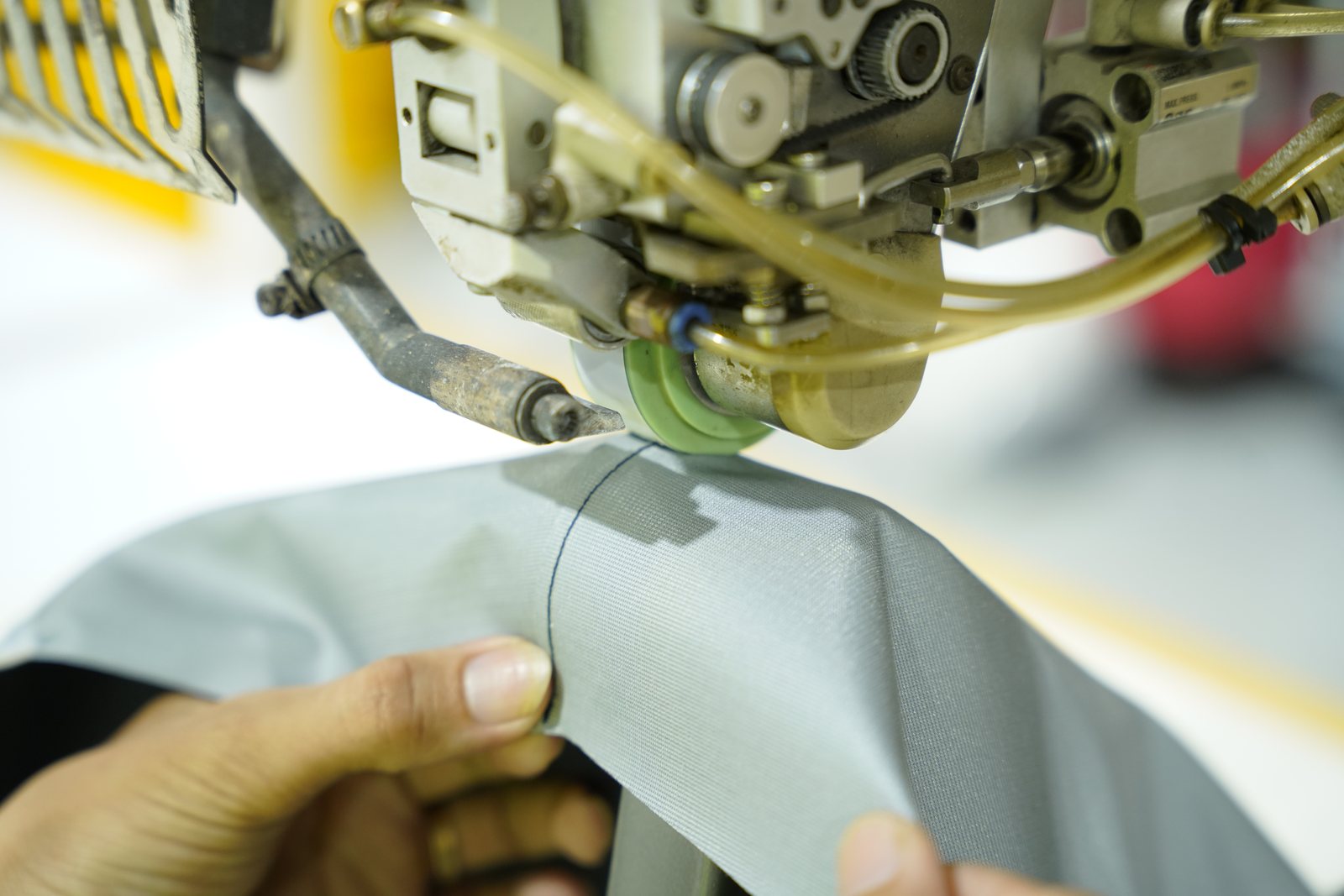
Not every seam tape works on every fabric. Compatibility between the tape and the material surface is one of the factors Viking places inside the scope of seam sealing control.
Across different constructions, such as two layer laminate, three layer laminate, membrane fabric, coated fabric or material with a specially treated surface, the bonding conditions can differ. A tape that bonds well on one material will not necessarily give the same result on another.
Before bulk production, therefore, it has to be clear which tape is approved, which material it applies to, what the appropriate bonding conditions are, and what needs further checking.
This is why managing seam tape has to be tied directly to the BOM, the technical documentation and the approved sample.
3. Three key parameters: temperature, pressure, speed
Viking describes a seam sealing system able to adjust three main parameters: temperature, pressure and speed. The three relate directly to one another.
If the temperature is not right, the adhesive layer may not activate sufficiently, or the material may be affected. If the pressure is not right, the tape may not make stable contact with the surface. If the speed is faster or slower than the confirmed condition, the heat contact time changes.
The operator is therefore not simply running the product through a machine. They have to understand that every parameter change can affect the result.
That is the difference between operating a machine and controlling a technical process.
4. A neat seam is not automatically an easy seam to tape
Seam sealing begins before the product reaches the sealing machine. An inconsistent stitch line can make taping harder. Viking also states that seam quality relates directly to the seam sealing performance of a waterproof product.
The factors deserving attention can include:
- Whether the stitch line is straight and consistent.
- Whether there is puckering.
- Whether the seam allowance is even.
- Whether the intersection carries too many layers.
- Whether the surface is creased.
- Whether the construction at a curve is suitable.
Seam sealing is therefore not the responsibility of the sealing area alone. The quality of the previous operation directly affects the next one.
5. The hardest positions are usually not the straight ones
A long straight seam is usually easier to control. The difficulty tends to appear at curves, corners, points where several seams meet, zip areas, the hood, the shoulder, pocket construction and positions where several layers of material overlap.
Viking lists curved, intersecting and multi layer positions as the areas needing control in seam sealing.
At these points the operator has to combine skill, speed, how the product is held, the direction the tape travels and the machine condition. Operator training therefore matters a great deal.
The machine can deliver stable heat and pressure. But it is the person who has to guide the product through complex shapes.
6. Seam sealing operators need dedicated training
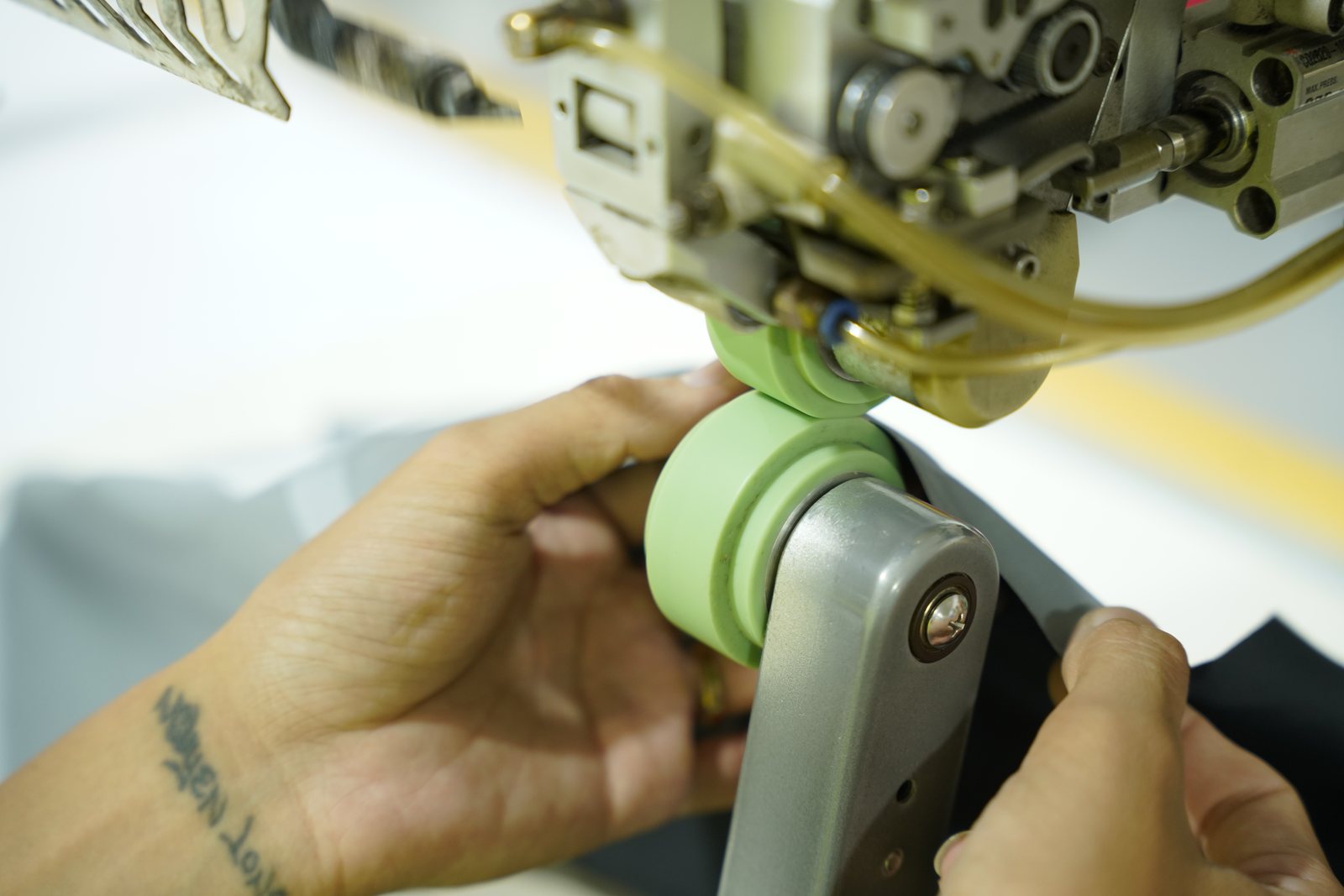
Viking states that seam sealing capability requires both suitable equipment and a team that understands the operation. Training should not focus only on which button starts the machine.
The operator needs to understand:
- Why the correct seam tape has to be used.
- Why parameters must not be changed at will.
- When the bonded surface is abnormal.
- What effect a misaligned tape has.
- When to stop and inform technical.
- How to handle curves and multi layer intersections.
- Which criteria QC has to confirm.
In a technical system the operator is not only the person carrying out the movement. They are one of the first control points in the process.
7. The first piece matters especially for seam sealing
Before running volume, the first garment has to confirm the actual conditions. A first piece involving seam sealing can be used to assess:
- Whether the tape is the correct type.
- Whether the tape width and position are right.
- Whether the tape covers the seam consistently.
- Whether the material surface has been affected.
- Whether corners and curves have been handled well.
- Whether there is any sign of lifting or wrinkling.
- Whether the machine parameters are correct.
If the conditions are not yet stable, this is the point to adjust. Production volume should not be used to find out whether it works.
The sounder principle is: verify first, then scale.
8. A visual check alone cannot confirm waterproofing
A seam tape can look perfect and still not deliver the functional performance the product requires. Viking emphasises that controlling waterproof performance has to rest on an appropriate test method and data, not on appearance alone.
Among the technical requirements Viking has published are cases involving checks after multiple wash cycles, checks on seam sealing adhesion under water pressure, and checks on laminate stability.
The specific criteria, however, have to be defined per customer, per material and per product programme. A test level from one programme should not be assumed to apply to every order.
What matters is that the factory knows: what has to be tested, against which requirement, how the result is recorded, and what happens if it fails.
9. When seam sealing fails, find the cause rather than simply re bonding
If the tape lifts, wrinkles or fails a check, the right response is not always to run it through the machine again. The groups of causes to examine are:
- Material: are the tape and the fabric compatible?
- Machine: are the parameters stable?
- Method: is the handling correct?
- People: has the operator been fully instructed?
- Seam construction: was the preceding stitch line suitable for sealing?
- Environment and handling: was the surface dirty, damp or disturbed before bonding?
Analysing the cause avoids correcting the symptom while leaving the root cause in place. This is also where the five why method or other root cause analysis approaches can be applied.
10. QC has to control both appearance and function
On a technical waterproof product, QC does not only check whether the stitching looks neat, whether the tape is straight and whether the appearance is clean. QC also has to understand the function the seam sealing is protecting.
Viking describes its QC direction for technical garments as controlling both appearance and function. That changes how the inspector looks at the product.
A very small deviation in tape position may barely affect appearance and still affect how well the seam is covered. The inspector therefore has to understand why a point is checked, not only remember what to check.
11. IE has a role in seam sealing consistency
Seam sealing is a technical operation and also part of the production flow. IE has to attend to the operation time, the number of machines, how many skilled operators there are, the workload, the bottlenecks, the sequence in which work in progress reaches the sealing area, and the balance with the operations before and after.
If the sealing area becomes a bottleneck, work in progress can build up. If sealing is rushed to clear that backlog at the cost of the technical conditions, quality can suffer.
IE and technical quality therefore have to work together. Efficiency should not be created by sacrificing process control.
12. Maintenance keeps the equipment in the right condition
Standard parameters only mean something if the machine can hold them steadily. Maintenance therefore has to support the machine condition, the heating system, the pressure system, the rollers, the air system where relevant, the parts in contact with the tape, and the servicing and cleaning.
A skilled operator cannot fully compensate for unstable equipment.
Seam sealing is therefore a clear illustration of the principle Viking works towards: quality is created by a system, not by one department.
13. Gore licensed manufacturing asks for more than owning the machine
Viking presents itself as a licensed manufacturer in connection with GORE-TEX for military, workwear and consumer product lines.
In its explanation of what a Gore licensed factory means, Viking stresses that licensing is not simply a logo; it is tied to the seam sealing process, operator training and requirements relating to equipment and sample approval.
What is worth noting for a buyer is this: capability is not the machine itself. Capability is the controlled process around the machine.
The equipment is a necessary condition. People, materials, documentation, training and verification are what turn equipment into real manufacturing capability.
14. Seam sealing also shows how well the functions work together
Looking at a line of tape on a garment, it can seem like the work of one operator. Behind it, though, several roles coordinate:
- Merchandising: clarifies the customer requirement.
- Technical: defines the seam construction and the method.
- Materials and purchasing: secure the correct tape and the correct fabric.
- IE: designs the flow and the operation capacity.
- Maintenance: prepares the equipment.
- The operator: executes.
- QC: controls.
- QA and testing: confirm against the programme requirement.
If one link is unclear, seam sealing can become inconsistent. This is why good technical capability is always the result of a well coordinated system.
What seam sealing is worth to international customers
When choosing a factory for waterproof garments, a buyer should not only ask whether the factory has seam sealing machines.
Better questions are:
- Which seam tape is the factory using for this material?
- How are the sealing conditions confirmed?
- How are the operators trained?
- How are curved and multi layer points controlled?
- How is the first piece verified?
- What does QC check after sealing?
- Which functional test is required?
- If the test fails, what is the procedure?
Those questions separate having the equipment from having process capability.
Viking Vietnam: seam sealing as part of a technical manufacturing system
Viking Vietnam treats waterproof garment manufacturing as requiring more than basic sewing ability: the factory has to understand technical materials, seam sealing, equipment, QC, IE and team training in order to hold consistency from the approved sample through to bulk production.
Seam sealing capability can be summarised as a simple chain: the right fabric, the right seam, the right tape, the right parameters, a trained operator, a verified first piece, process control, and a functional check.
That is why seam sealing, though only one part of the production process, shows so clearly the technical depth of a waterproof garment factory.
For Viking Vietnam, the aim is not only to produce a neat line of seam tape. The aim is to build a process in which material, people, machinery and quality control all support the product's real function.