Learn how Viking Vietnam controls the transition from approved sample to mass production through technical review, IE, QC, pilot samples, and shopfloor feedback.
In export garment manufacturing, a good approved sample is an important starting point. For international customers, however, the more important question is whether the factory can hold that quality through bulk production.
A sample is usually made with high concentration, in small quantity, and with a great deal of direct checking by the technical team. But when the product reaches the sewing line with many sizes, many colours, many operators, many operations and schedule pressure, the risk of deviation appears.
This is why the handover from approved sample to mass production needs to be tightly controlled.
A dependable factory does not only make a good sample. It needs a system that turns the approved sample into bulk production that is stable, correct to specification, correct in quality and correct to the technical requirement.
At Viking Vietnam, this process is treated as an important part of operating capability. We focus on connecting technical, IE, QC, the line leader, maintenance and production, so that a product entering the line is not implemented on intuition.
1. The approved sample is a reference standard, not an end point
On many orders, the approved sample is the basis on which the customer confirms the product before bulk production. The sample shows the shape, the construction, the material, the trims, the stitching, the functional details and the level of finish.
However, the approved sample is not the end of product development. It is the reference standard the factory works from.
Once the sample is approved, the factory needs to clarify:
- The critical technical points of the product
- The operations that will be difficult on the line
- Materials or trims that need special control
- The points where sample and bulk can easily diverge
- The measurements that must be checked during sewing
- The packing, labelling and finishing requirements
Without this analysis after sample approval, the sewing line can understand the product in several different ways. That raises the risk of deviation in bulk production.
2. Technical handover has to be clear before the style reaches the line
One of the most important steps before production is the technical handover. It is the process that lets the departments involved understand the product correctly before bulk production begins.
The technical handover usually needs to make clear:
- The construction of the product
- The assembly sequence
- The special technical points
- The position of critical details
- The measurements to be controlled
- The stitching requirements
- Requirements for seam sealing, reflective tape, lining or insulation where relevant
- Defects that already appeared during the sample stage
- Points the customer has particularly noted
At Viking Vietnam, technical handover is not simply passing documents down to the line. It is the process of making sure the people doing the work understand the requirement correctly and know which points to control in real production.
3. IE turns the sample into a production process backed by data
Once the sample is approved, IE plays an important part in turning the product into a clear production process.
IE needs to analyse:
- Which operations the product consists of
- The sequence of those operations
- Which operation needs a specialised machine
- Which operation needs a jig or supporting device
- Which operation could become a bottleneck
- The expected operation time for each step
- How the line layout should be organised
When IE is involved early, the factory has a better basis for preparing the sewing line. Production does not rest only on individual experience; it is organised with data, process and a clear layout plan.
For customers this is reassuring. An order prepared carefully before it reaches the line carries less risk of the factory being caught out during bulk production.
4. The pilot piece tests whether technical and production understand each other
The pilot piece is an important step for confirming that the sewing line has understood and executed the requirement correctly before large quantities are produced.
Through the pilot piece, the factory can check:
- Whether operators understand the operation correctly
- Whether the assembly sequence is suitable
- Whether the machines have been prepared correctly
- Whether the stitching is stable
- Whether the measurements meet the requirement
- Whether the functional details are executed correctly
- Whether QC has grasped the critical control points
- Whether the instruction needs adjusting before the bulk run
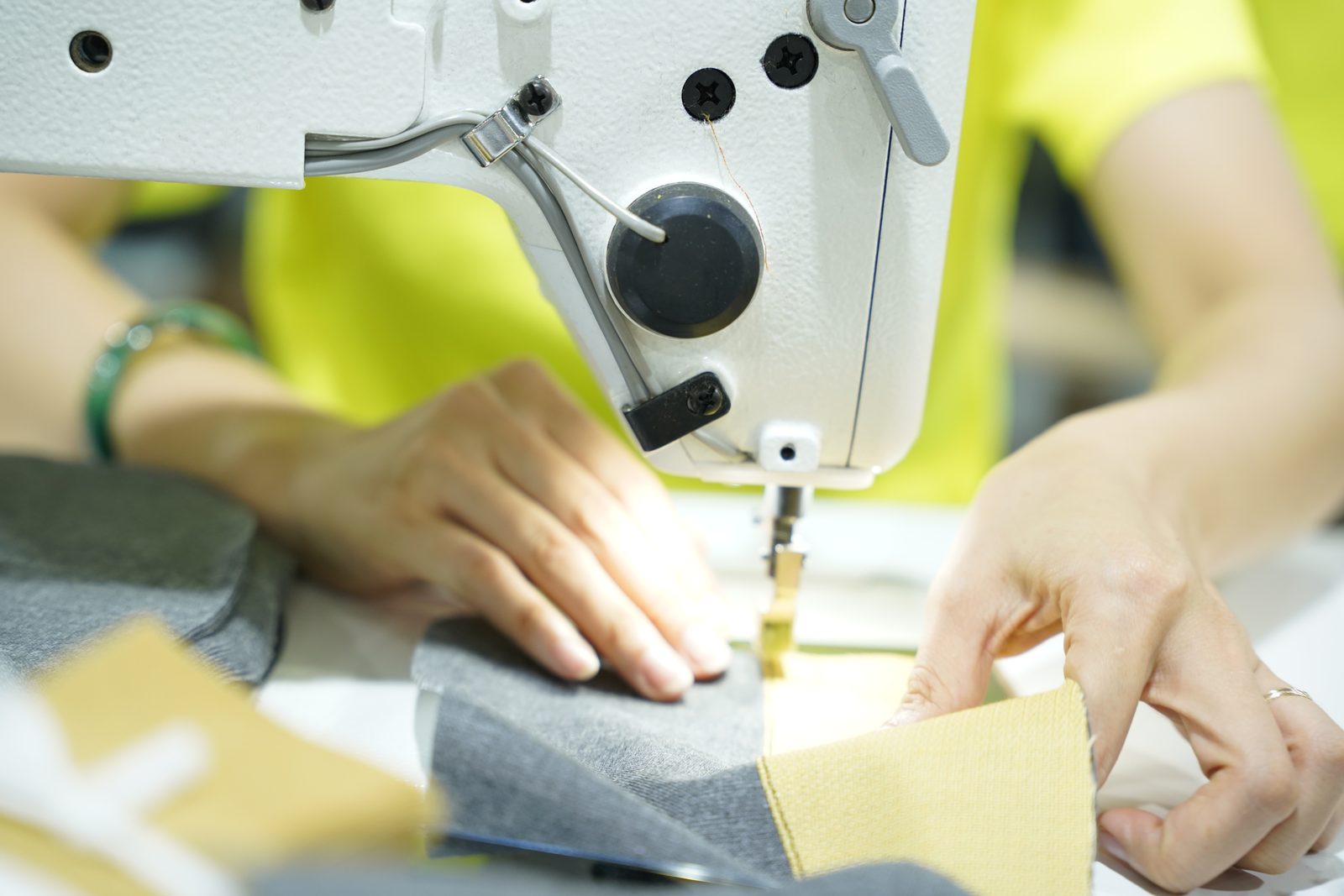
If the pilot piece is not checked carefully, a defect can spread across many products. Checked seriously, it gives the factory the chance to find and resolve a problem sooner.
At Viking Vietnam, the pilot piece is not simply a trial product. It is the step that confirms whether the whole sewing line system can implement the style in practice.
5. QC has to be involved from the start, not only at final inspection
During the move from sample to bulk production, QC needs to be involved from the beginning in order to understand the risk points of the product.
If QC only inspects at the end of the line, a defect may already have repeated across many products. Repair cost, processing time and schedule risk all rise.
QC needs to know:
- The approved sample and the points to compare against
- The critical measurements
- The positions where deviation is likely
- The operations with a high risk of defects
- The customer's quality requirements
- How defects are classified and fed back
- The right inspection frequency during the early production stage
When QC is involved early, quality is controlled better at source. This is an important part of keeping bulk production stable.
6. Maintenance makes sure the machines suit the style before production
A product can be analysed correctly, but if the machines are not suitable, production still carries risk.
Before the style reaches the line, maintenance needs to work with IE and technical to prepare:
- The machine types required
- The condition of those machines
- Jigs or supporting tools
- Settings suited to the material
- Pressing, bonding, cutting or finishing equipment where relevant
- A plan for when a machine stops or runs unevenly
For technical product lines, machines and supporting equipment affect quality directly. A seam, a bonded detail, a length of seam sealing or a special trim can each require its own preparation.
At Viking Vietnam, coordination between maintenance, technical and IE reduces the risk of interruption when the product starts running in bulk.
7. Feedback in the early production stage stops defects from spreading
The early stage of production is the most important time to observe and adjust.
In the first hours, or on the first products, the factory needs to watch closely:
- Which operation is running behind
- Which defect is starting to appear
- Whether operators are struggling with an operation
- Whether the machines are stable
- Whether work in progress is piling up anywhere
- Whether measurements are fluctuating
- Whether QC is finding a repeating defect
When information is fed back quickly, the factory can adjust before the problem spreads. That reduces repair work, relieves pressure at the end of the line and protects the delivery schedule.
For customers, the ability to respond early in production is an important sign of a factory with a sound operating system.
8. Consistency between sample and bulk has to be controlled by a system
Customers often worry about a very practical problem: the approved sample meets the requirement, but bulk production is not consistent.
Deviation between sample and bulk can come from several causes:
- Operators have not understood the operation correctly
- Technical documents were not communicated fully
- The machines are not suitable
- Material varies between lots
- QC has not grasped the critical control points
- The layout or the distribution of operations is not right
- Schedule pressure raises the risk of error
To control this, the factory needs a clear system of coordination between departments.
At Viking Vietnam, consistency between the approved sample and production is built through technical handover, operation analysis, the pilot piece, QC control and feedback from the floor.
9. Technical products need tighter control during the handover stage
On ordinary products, a small deviation mainly affects appearance. On technical products, a small deviation can affect function.
The product lines that need tight control include:
- Waterproof garments
- Protective workwear
- Reflective workwear
- Insulated jackets
- Outdoor apparel
- Technical uniforms
- Products with seam sealing
- Products using laminated materials or special trims
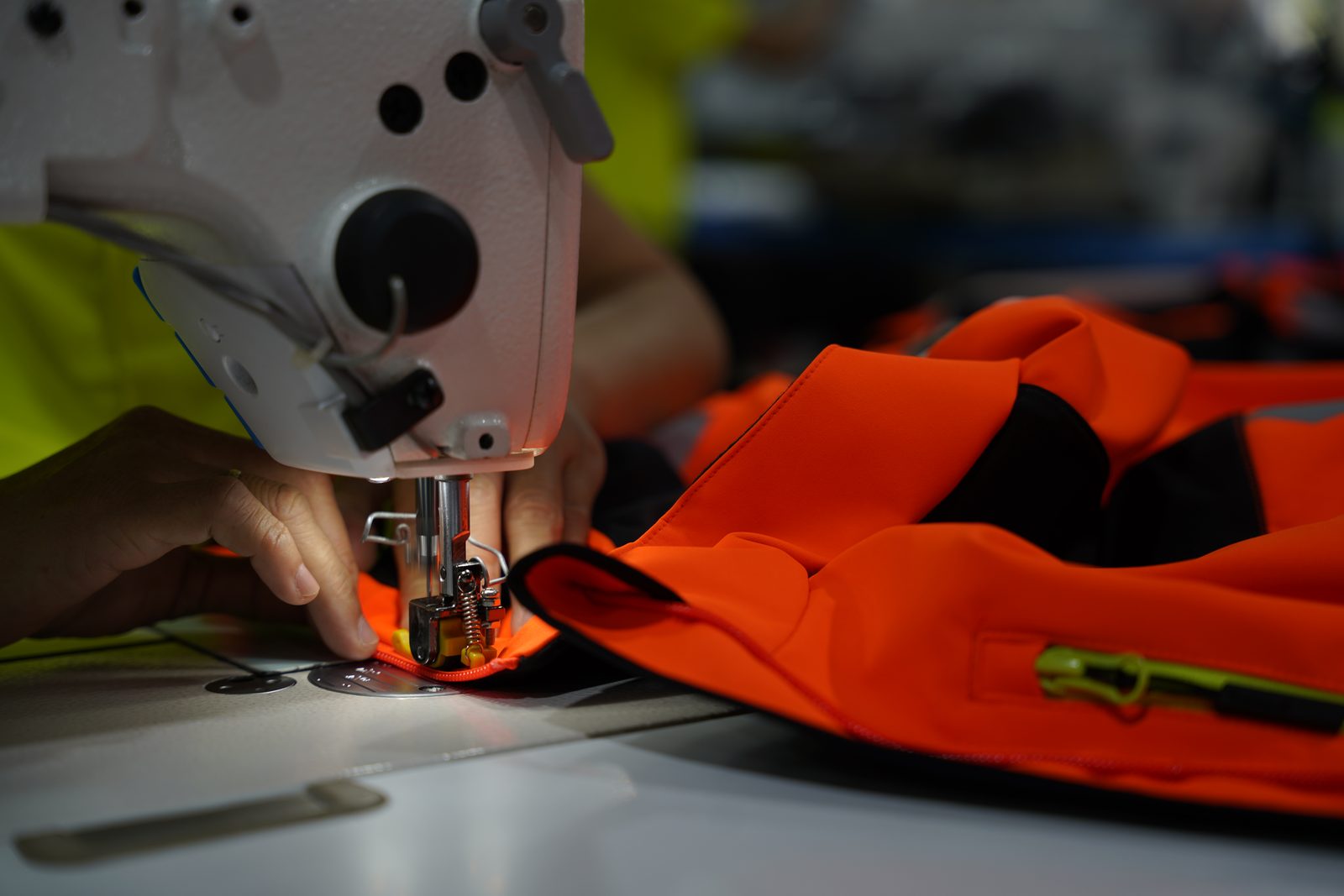
For these products, the move from sample to production needs tighter control, because each detail can relate to waterproofness, warmth, visibility, protection or durability in use.
At Viking Vietnam, experience in technical garment manufacturing has taught us that quality cannot be checked only at the end of the process. Quality has to be built from the preparation done before the style reaches the line.
10. Why customers can feel more confident when the handover process is clear
For international customers, a dependable manufacturing partner needs to master the transition from sample development to bulk production.
A clear handover process gives customers more confidence because:
- The product is analysed before it enters the line
- Risk points are identified early
- Machines and layout are prepared appropriately
- QC understands the critical quality requirements
- The pilot piece is checked before the bulk run
- Defects that arise are fed back and resolved in time
- Consistency between the approved sample and bulk is better controlled
A good sample creates the first impression. But the ability to hold quality steady in bulk production is what creates long term trust.
11. Viking Vietnam and the capability to control from sample to bulk
Viking Vietnam has experience in export garment manufacturing and in technical product lines. Working with international customers, we understand that every order needs to be controlled not only at the finished product, but from the production preparation stage.
Viking's approach focuses on:
- Understanding the requirement of the approved sample
- Technical handover before production
- Analysing the process and the operations
- Preparing suitable machines, layout and people
- Controlling the pilot piece
- Monitoring quality in the early production stage
- Fast feedback between QC, technical, IE, maintenance and the line leader
- Holding stability through bulk production
For Viking Vietnam, bulk production is not simply repeating a sample. It is the work of organising a system so that every product in the shipment comes as close as possible to the standard the customer approved.
Summary of operational value
- The approved sample is an important reference standard, but quality is really proven in bulk production.
- The handover from sample to bulk needs technical, IE, QC, maintenance, the line leader and production all involved.
- The pilot piece confirms that technical and the sewing line understand each other before the bulk run.
- Technical products need tighter control because a small deviation can affect how the product performs in use.
- Viking Vietnam focuses on control from sample to bulk in order to create stability, transparency and trust for international customers.
Connect with Viking Vietnam
If you are looking for a garment manufacturing partner in Vietnam able to keep tight control from approved sample through to bulk production, Viking Vietnam is ready to work with you.
We support customers in developing and manufacturing workwear, protective clothing, waterproof garments, outdoor apparel and high performance apparel, with a clear process, stable quality and the ability to respond from the floor.
Connect with Viking Vietnam to turn an approved sample into bulk production that is stable, dependable and suited to the standards of the global market.