A garment factory's capability lies not in its size but in how it operates each day. This article walks through nine operational signals inside the Viking Vietnam factory, from the morning meeting to how departments coordinate when a problem appears.
In export garment manufacturing, a factory capability is not judged only by its size, the number of sewing lines, or a list of modern equipment. For international customers, especially in technical apparel, real capability shows in how the factory operates every day.
Walking through a production floor, many important signals can be observed: how materials and trims are managed, how a sewing line starts the day, how data is updated, how QC controls defects, how the maintenance team responds to breakdowns, and how departments coordinate when a problem appears.
At Viking Vietnam, these operational signals are an important part of manufacturing capability. They reflect the management system, the quality culture, and how ready the factory is to meet the requirements of international markets.
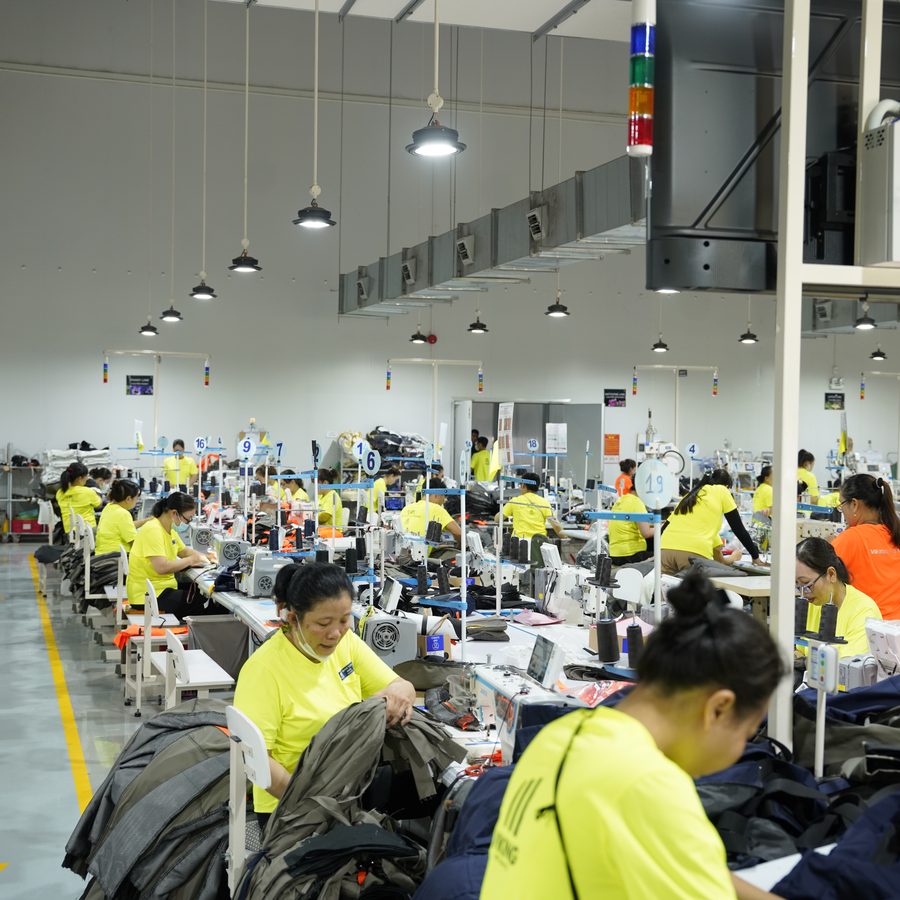
1. How the factory starts the production day
An effective production day does not begin when the sewing machines start. It begins with a clear definition of targets, plans, and responsibilities for every department.
At Viking Vietnam, the morning meeting brings the relevant roles together to agree on the key points:
- Which styles take priority today
- How many pieces must be completed
- Which operations risk becoming bottlenecks
- Which quality issues need monitoring
- Which machines must be prepared for the next style
- Which people or departments need support
Clarity at the start of the day reduces waiting on the line, limits misunderstanding, and increases the ability to solve problems early.
For a factory producing technical garments, this matters a great deal. When targets are unclear, a line easily becomes reactive. When targets are clear, every department can coordinate proactively to protect both schedule and quality.
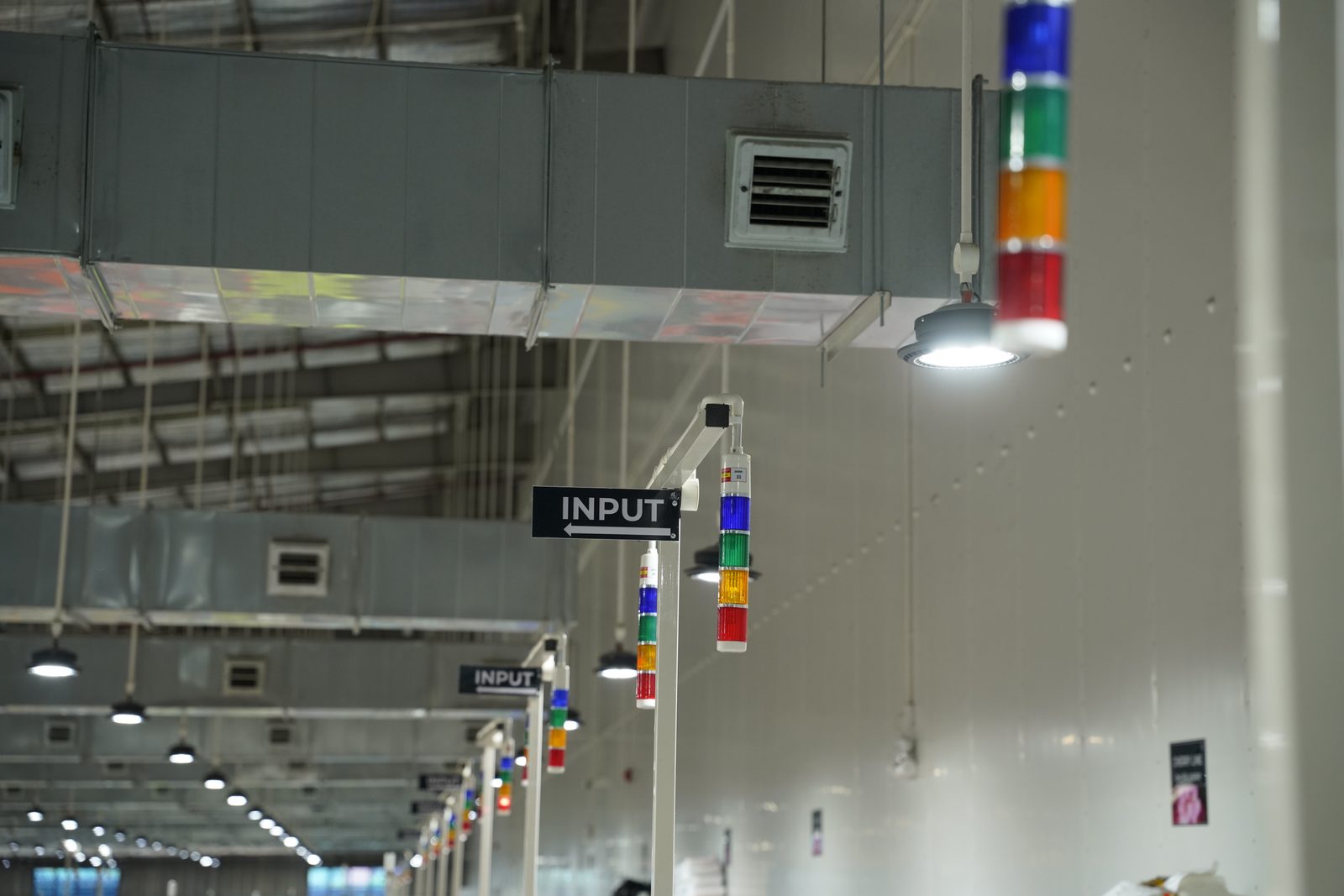
2. How materials and trims are managed
Materials and trims are the foundation of a garment. For technical ranges such as waterproof jackets, protective workwear, and products with seam sealing, reflective details, or laminated fabrics, material management must be even more precise.
A capable factory needs to control:
- Receiving materials against the correct style
- Clear identification of each material lot
- Storage under the correct technical conditions
- Separation of materials by order
- Traceability when it is needed
- Preparing materials at the right time for production
The way materials are placed and identified shows how organised a factory is. When materials are not clearly managed, the risks of mix ups, delays, or specification errors increase.
At Viking Vietnam, material control is not only a warehouse task. It is part of the quality assurance system at the input stage.
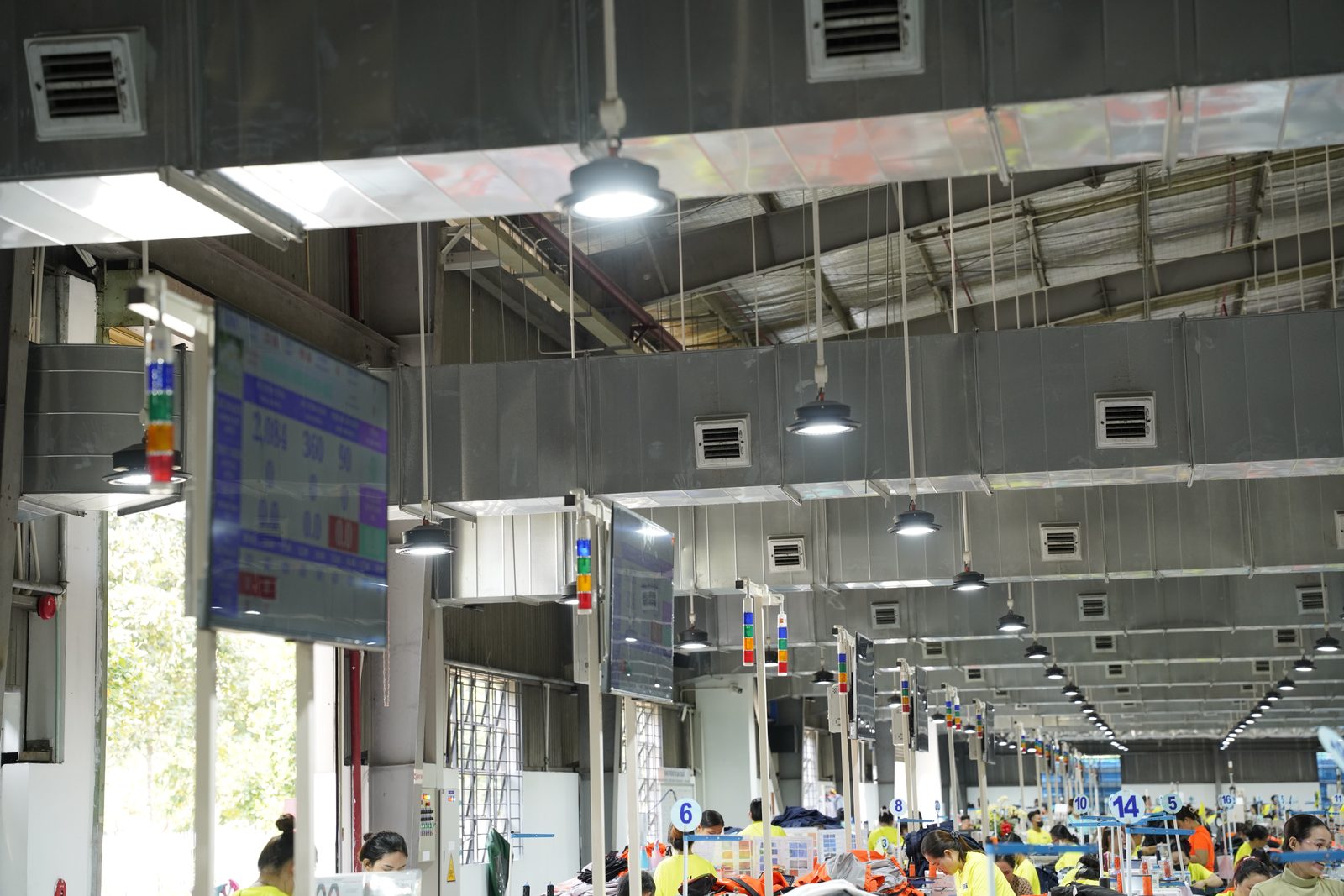
3. How information boards are used
In production, information has to be visible and updated in time. An effective information board lets the line and the supporting departments see the real situation.
The information that needs to be clearly displayed includes:
- The production target for the day
- Actual output at each point in time
- The style currently in production
- Defects that have appeared
- Operations that need support
- Responsibility for each position
- Progress against plan
An information board is not only a monitoring tool. It creates transparency in operation.
When data is updated clearly, the factory can detect problems earlier. When problems are detected early, the team can adjust faster. This is an important foundation of controlled production.
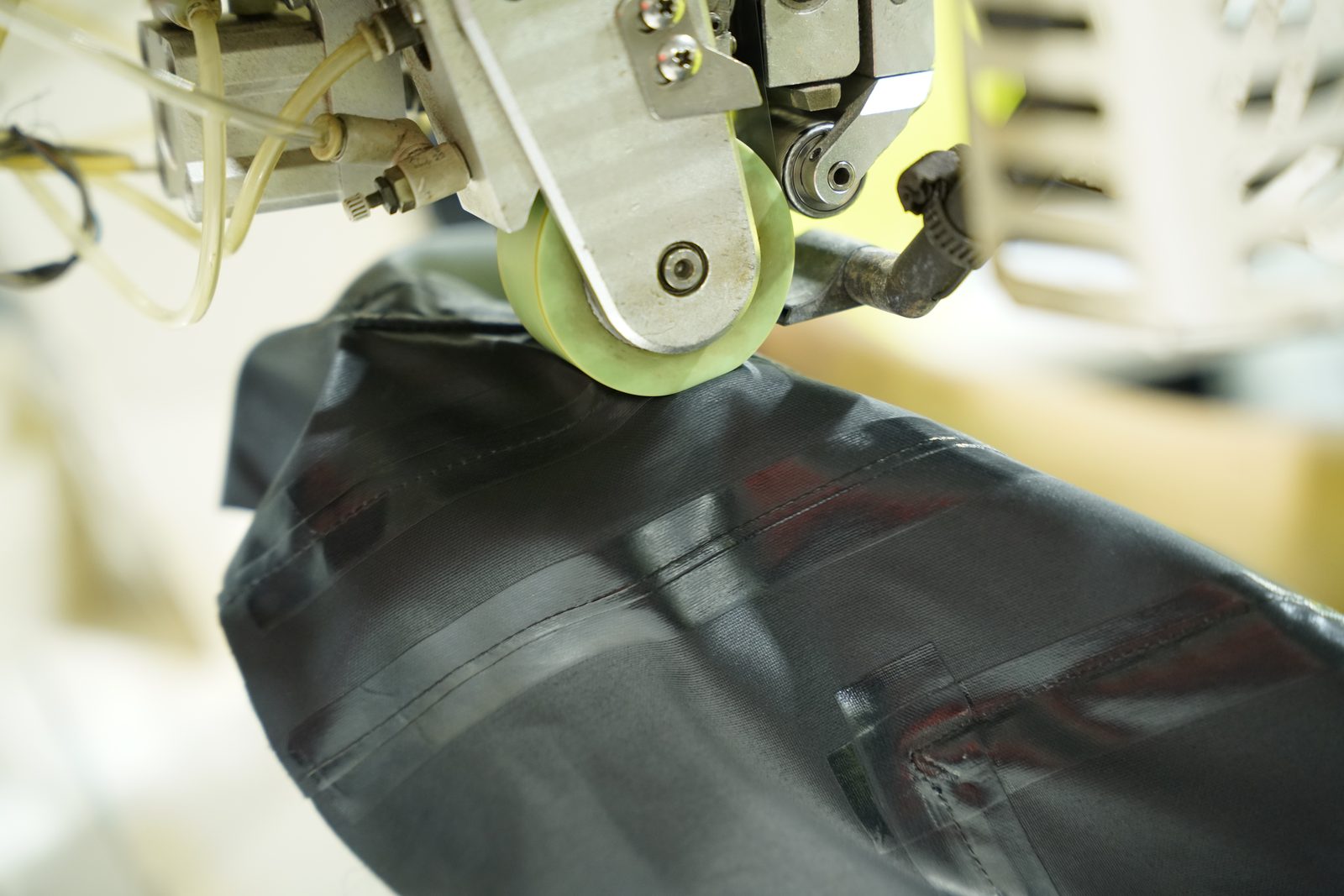
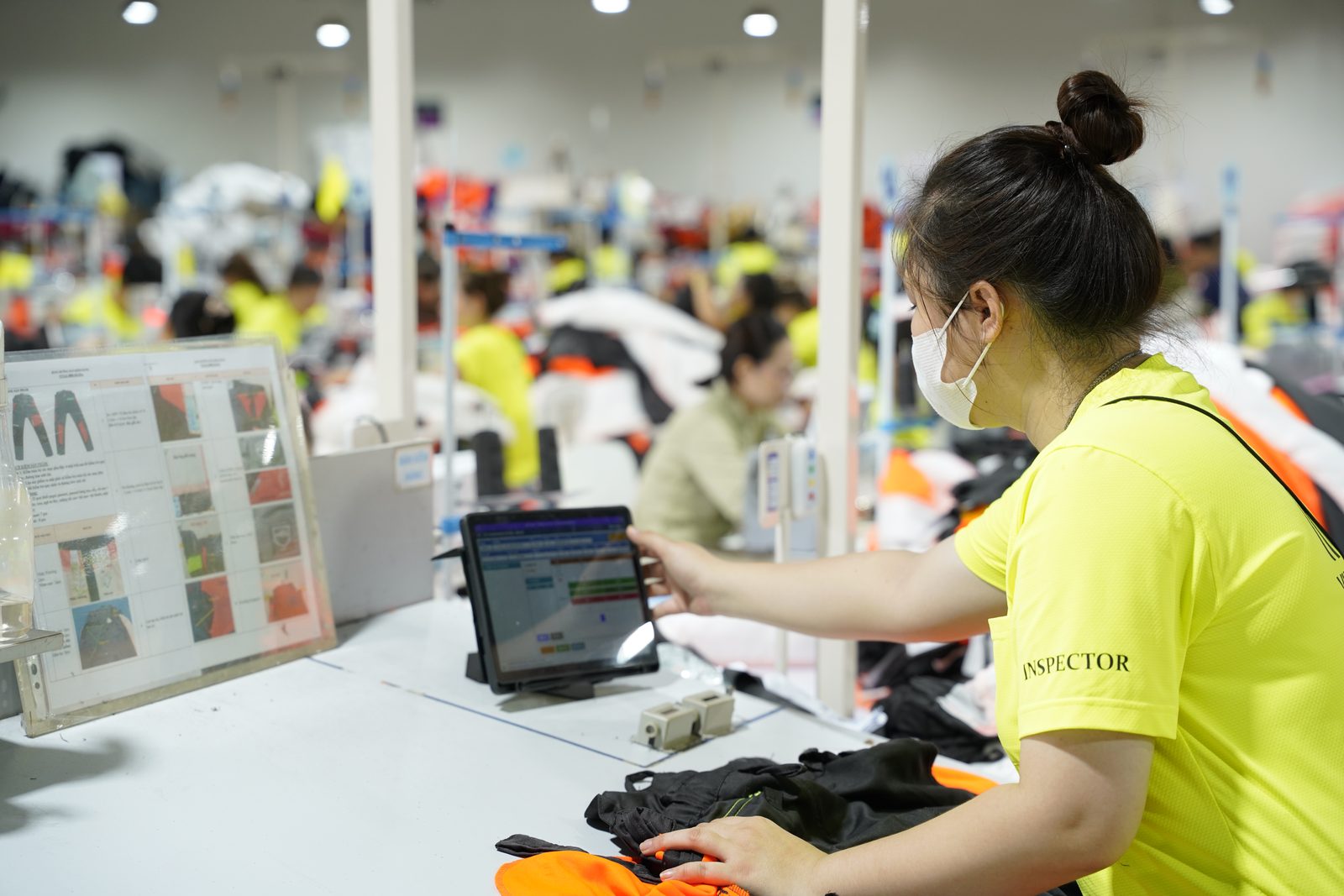
4. How QC controls defects at source
In technical apparel, quality cannot be checked only at the end of the line. If a defect is found too late, the factory loses time on rework, the schedule is affected, and quality risk increases.
At Viking Vietnam, QC and QA play an important role in controlling quality at source.
Their task is not only to find defects. It also includes:
- Monitoring operations where defects are likely to appear
- Guiding operators to recognise critical technical points
- Giving early feedback to the line leader and the technical team
- Preventing defects from repeating during production
- Ensuring the product meets the customer standard
For waterproof products, protective clothing, or garments with complex technical details, controlling defects at source protects both the performance of the product and the reputation of the customer.
5. How the maintenance team responds when a machine stops
Modern machines create value only when they run reliably. Maintenance capability is therefore an important part of the production system.
When a machine stops, several things can be assessed:
- How quickly the maintenance team responds
- How well the cause is identified
- How they coordinate with the line leader
- Whether the solution is temporary or permanent
- Whether the incident is recorded to prevent recurrence
- How machines are prepared for the next style
At Viking Vietnam, maintenance does not only repair machines when something goes wrong. The team also prepares machines, adjusts equipment, builds jigs and attachments, improves operations, and helps operators work more comfortably.
This is what allows a sewing line to keep a stable production rhythm.
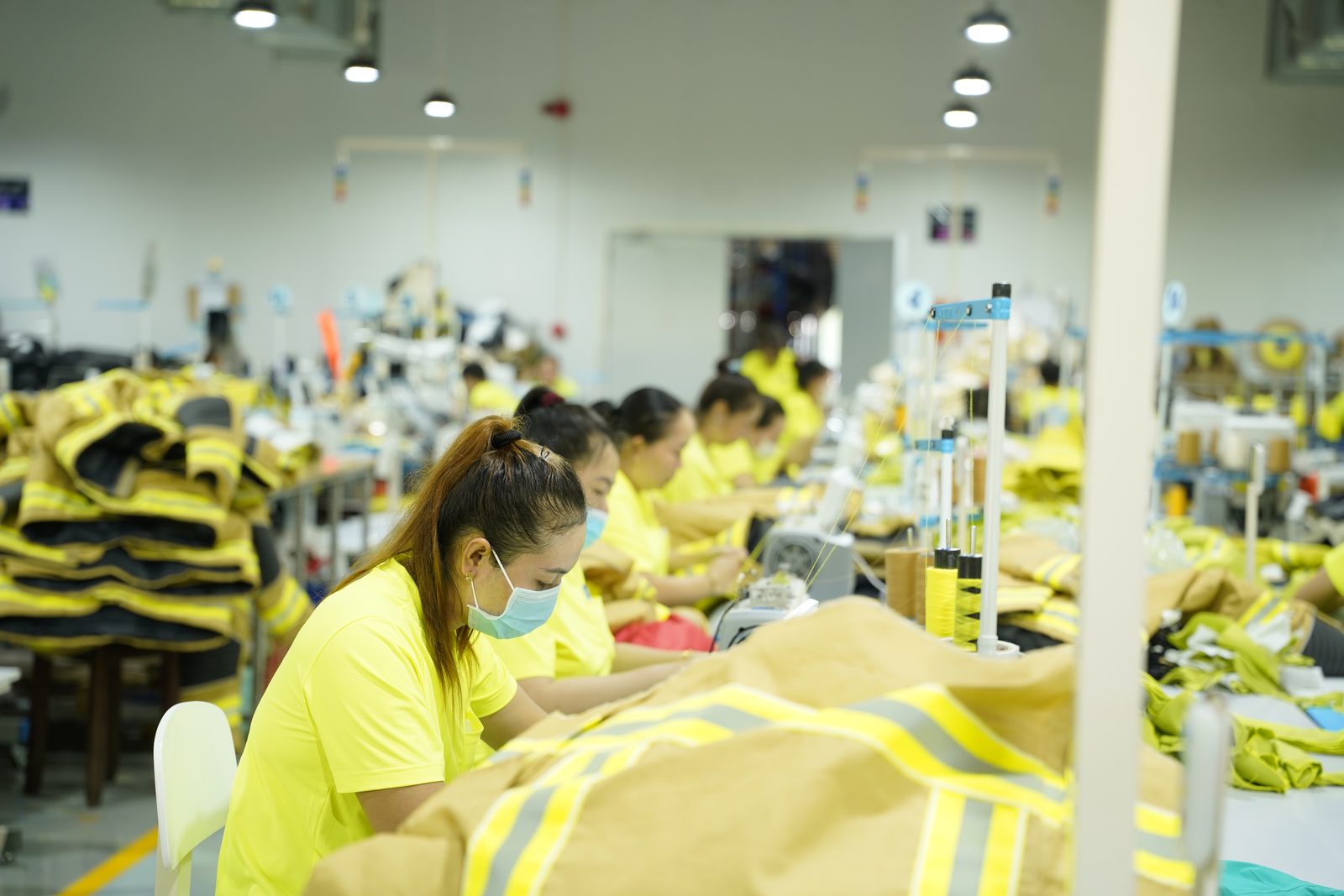
6. How the line leader coordinates people
The line leader holds the operating rhythm of the line. On a line with many operations and many levels of skill, the way people are allocated affects productivity and quality directly.
An effective line leader needs to know:
- Who is suited to which operation
- Which operation is falling behind
- Which section needs additional support
- Which style takes priority
- Which issues to raise with technical, QC, IE, or maintenance
- When the allocation needs to change
At Viking Vietnam, the line leader does not work alone. The role is supported by IE, QC and QA, technical implementation, and maintenance, so the line operates as one synchronised system.
The way a line leader allocates and coordinates shows the factory management capability on the floor.
7. How the factory handles defective garments
Defective garments are important production data. The way a factory handles them shows the maturity of its quality system.
A good system needs to make clear:
- At which operation the defect appeared
- What the root cause is
- Whether the defect repeats
- Who is responsible for resolving it
- Whether the method, the technique, or the equipment needs adjusting
- Which instruction needs updating to prevent recurrence
At Viking Vietnam, defective garments are not simply repaired to complete an order. More importantly, defects are analysed so the process can be improved.
A factory with a quality culture does not look for ways to hide problems. It uses problems as data to do better.
8. How departments coordinate when a problem appears
Operational capability does not only show under favourable conditions. It shows most clearly when a problem appears.
When there is a technical fault, a delay, or a machine breakdown, the effectiveness of the response depends on coordination between departments:
- The line leader assesses the effect on schedule
- QC and QA assess the quality risk
- IE analyses productivity and the bottleneck
- Maintenance handles the equipment
- Technical implementation adjusts the sewing method
- Production management makes the coordination decision
When departments work separately, a small problem can drag on. When they coordinate well, the factory can resolve it quickly, reduce risk, and keep the schedule stable.
This is one of the clearest signals of a factory real capability.
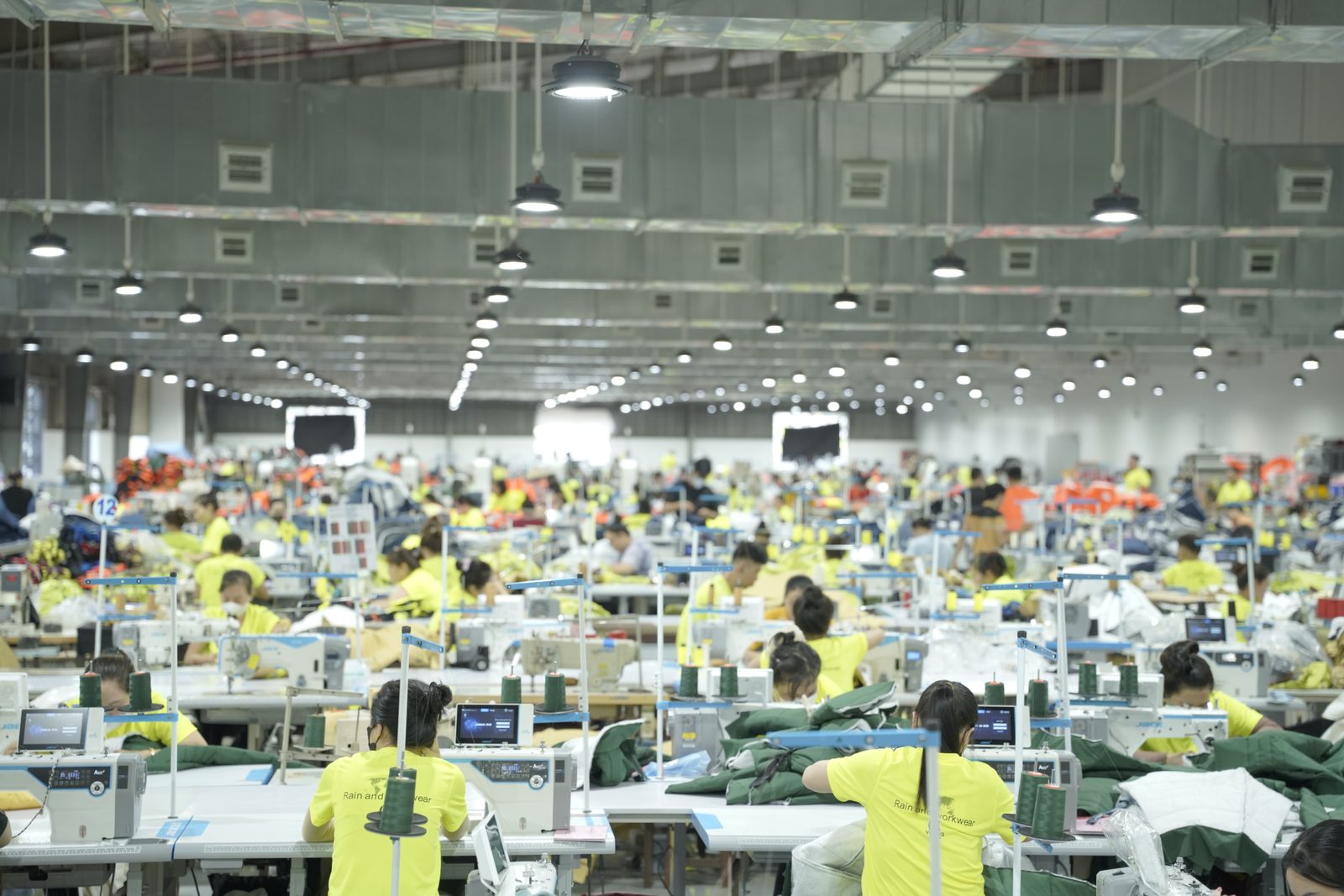
9. The operational signals that build trust with international customers
For international customers, trust does not come from a capability profile alone. Trust is built from how the factory operates in reality.
The important signals include:
- Clear production targets
- Data updated in time
- Materials and trims well controlled
- QC and QA close to production
- Maintenance responding quickly
- Effective coordination by the line leader
- Defects recorded and analysed
- Departments coordinating when problems appear
- An organised working environment
- Processes improved continuously
At Viking Vietnam, these signals contribute to long term trust with our partners. In technical apparel, customers do not only buy a product. They need a production system that can protect their quality, their schedule, and the reputation of their brand.
Summary of operational value
- A garment factory capability lies not in its size, but in how it actually operates each day.
- Clarity in targets, roles, data, and responsibility makes a sewing line more effective.
- Material control, QC at source, and data on the floor are the foundations of quality assurance.
- The way a factory handles incidents and defects reflects the maturity of its production system.
- The operational signals inside a factory are the basis of trust with international customers.
Connect with Viking Vietnam
If you are looking for a garment manufacturing partner in Vietnam with a clear operating system, stable technical capability, an effectively coordinated team, and a long term commitment to quality, Viking Vietnam is ready to work with you.
We focus on building quality from the process, from our people, and from every control point in production.
Connect with Viking Vietnam to develop technical apparel that is reliable and fit for the requirements of the global market.