A machine can cut to the marker, software can aggregate productivity, a system can record defects by code. But to understand why a defect repeats or why an operation is hard to implement, a factory still needs human experience and judgment. This article covers ten aspects of that combination.
In the modern apparel industry, technology plays an increasingly important role. Automatic cutters, production management systems, productivity dashboards, inspection equipment, design software, IE support tools and digital solutions all help a factory run faster, with more transparency and more data to decide on.
However, in technical garment manufacturing there is one very important truth: technology can support the operation, but it cannot fully replace human professional judgment.
A machine can cut accurately to the marker.
Software can aggregate productivity data.
A system can record defects by code.
A device can support measurement checks.
But to understand why a defect keeps repeating, why an operation is hard to implement, why a material behaves differently from the sample, why a line is losing its balance, or why the person who finally wears the garment may not be comfortable, the factory still needs human experience, observation and judgment.
At Viking Vietnam, technology is treated as an important supporting tool. But the core capability of the factory still comes from the combination of people, process, data and real production experience.
1. Technology helps the factory work faster and more clearly
The role of technology in modern garment manufacturing cannot be denied.
Technology helps the factory:
- Manage production data more clearly
- Track productivity faster
- Reduce error in some repetitive operations
- Support marker making and material optimisation
- Record quality defects more systematically
- Support order schedule management
- Give the departments the same data to coordinate from
For international customers, technology increases transparency in the production process. When data is recorded well, the factory has a basis to respond faster, control better and improve more precisely.
At Viking Vietnam, technology is used as part of the operating system, especially in areas that need data, precision and continuous monitoring.
However, technology only creates real value when it sits inside a system where people understand the process and know how to use the data correctly.
2. Machines can support an operation, but they do not understand the whole product
In garment manufacturing, many operations can be supported by machines or specialised equipment. This increases consistency, reduces dependence on manual handling and supports productivity.
However, a garment is not just a set of seams. It is a combination of material, structure, function, shape, customer requirement and the real conditions in which it will be used.
A technical product can involve many things to weigh up:
- Coated or laminated fabric
- Seams that must be waterproof
- Seam sealing that needs the right heat, pressure and speed
- Reflective tape that needs the right position and adhesion
- Insulation that must be distributed evenly
- A shape that must support movement
- Trims that must be compatible with the product's function
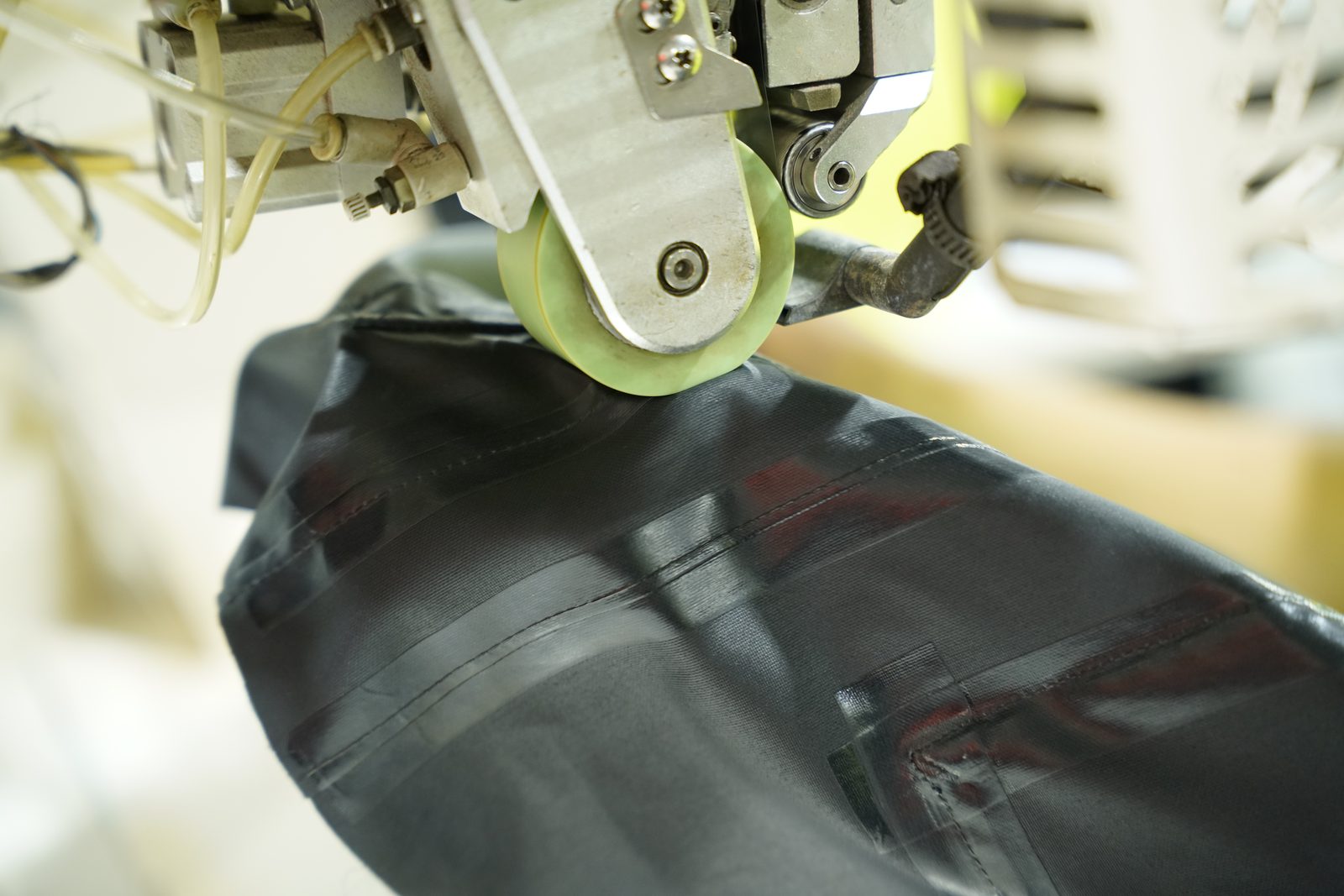
A machine can perform one specific operation, but a person has to judge whether that operation suits the product as a whole.
This is why, in technical apparel, the experience of the technical team, QC, IE, the line leader and the operators matters so much.
3. Professional judgment catches a problem before it becomes a large defect
In a garment factory, not every problem is obvious from the start. Many risks begin as small signals:
- An operation running slower than usual
- A seam showing signs of inconsistency
- A fabric that is harder to control than in the previous run
- A detail that regularly needs a small repair
- An operator needing more time to complete the operation
- A group of operations starting to accumulate work in progress
- A small defect repeating across several products
Looking only at end of day figures, the factory may find the problem too late. But an experienced person on the floor can see the signal earlier.
Professional judgment helps the factory ask the right questions:
- Is this a handling error or a method error?
- Is this an operator issue or an operation issue?
- Is this a temporary deviation or a trend forming?
- Does it need a machine adjustment, a pattern change, a layout change, or retraining?
- Should we go back to the customer on a technical point that is not clear?
At Viking Vietnam, professional judgment is not intuition alone. It is the combination of production experience, data from the floor, and the ability to coordinate across departments.
4. IE needs data, but also needs to understand people and the line
IE is one of the roles where the combination of data and judgment shows most clearly.
IE can use data to analyse operation times, build the layout, track productivity and balance the line. However, looking only at the numbers without understanding the reality of the sewing line can produce a solution that does not fit.
An operation that looks simple on a sheet can be difficult in practice because:
- The material is slippery, thick or stretchy
- A small detail requires high precision
- The operator needs both hands for the handling
- The machine needs its own adjustment
- The work in progress is awkward to turn
- The operation directly affects final quality
IE therefore needs to read the data and understand the floor at the same time.
At Viking Vietnam, IE does not only produce sheets. IE observes the line, talks with the line leader, and works with technical, QC and maintenance to find a solution that fits.
This is what gives customers more confidence: data at Viking does not stay on a report, it is used to improve what actually happens on the line.
5. QC needs measuring equipment, but still needs a trained eye
In quality control, equipment and inspection standards matter. They give the factory a clear basis for measurement and reduce arbitrary judgement.
However, QC still needs a trained eye to recognise a problem in the context of the product.
Some defects are not simply right or wrong against a single criterion. QC needs to understand:
- Does this defect affect appearance or function?
- Is it likely to repeat?
- Does it come from the material, the handling or the machine?
- Can it be repaired reliably?
- Does it relate to the customer's standard?
- If production continues, will the risk spread?
For waterproof products, protective clothing, workwear, outdoor apparel or any product with high technical requirements, QC does not inspect by eye alone. QC needs to understand the function of the product and its critical risk points.
At Viking Vietnam, QC is part of the quality feedback system. Data from QC lets technical, IE and production adjust in time to reduce defects at source.
6. Operators feel the feasibility of an operation most directly
In many cases, the first person to sense that an operation has a problem is the operator performing it.
They can recognise:
- Fabric that is hard to feed into the machine
- A detail that is hard to hold steady
- Notches that are not clear enough
- A machine that does not suit the handling
- A trim that makes assembly awkward
- A sewing sequence that makes the operation slower
- A position that is easy to get wrong without a supporting tool
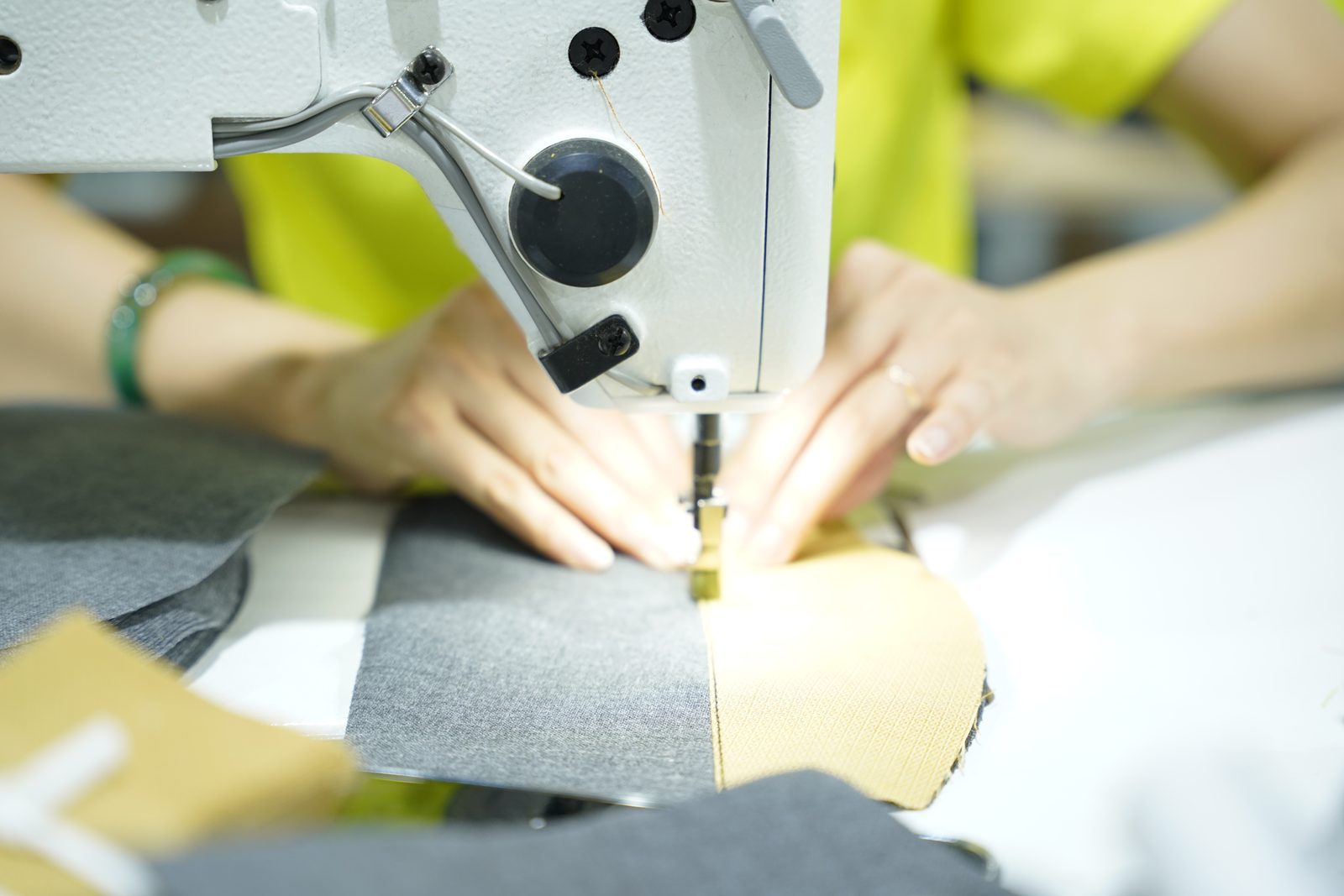
These observations matter. If the factory listens, operators are not only the people who perform the operation. They become a real source of information for improving production.
Technology can record data, but the operator is the one who directly feels how easy or hard an operation is.
At Viking Vietnam, developing our people is an important part of improving production performance. A good system needs to let people raise a problem and take part in improvement.
7. Technical judgment turns a customer requirement into a production method
Customers can provide technical files, reference samples, measurement charts, material requirements and quality standards. But to bring those requirements into bulk production, the factory has to convert them into a specific way of working.
The technical team has to judge:
- Which assembly sequence suits best
- Which operation needs special control
- Where deviation is likely in bulk production
- Whether anything needs clarifying with the customer
- Whether a trim or material should be tested first
- Which way of setting it up helps the line understand quickly and do it right
- Which method instruction needs standardising
This is the part technology cannot fully replace. Every product has its own context, every customer has its own requirements, and every material behaves in its own way in production.
At Viking Vietnam, the technical team plays an important role in connecting the customer's requirement with what the factory can actually produce.
8. Technology is strongest combined with a capable human system
A modern factory is not simply a place with many machines. A modern factory is where technology and people work together effectively.
Technology helps the factory:
- Record data faster
- Track production more transparently
- Support better analysis
- Reduce error in some repetitive operations
- Increase control over the process
People help the factory:
- Understand the context of the product
- Assess technical risk
- Recognise abnormal signals
- Adjust the production method
- Coordinate between departments
- Make decisions that suit the reality
When technology sits with people who lack capability, data can be misread. When people work without technology, management can be slow and unclear.
The real value therefore lies in the combination.
At Viking Vietnam, technology is developed alongside the capability of the team, the operating process and a culture of continuous improvement.
9. Why customers can feel more confident with this approach
For international customers, choosing a supplier is not only choosing today's production capacity. It is also choosing the ability to control risk throughout the relationship.
A factory that depends only on individual experience can find it hard to scale and hard to stay consistent.
A factory that depends only on technology but lacks professional judgment can find complex situations difficult to handle.
A reliable factory needs both:
- Data to see the problem
- People to understand the problem
- Process to resolve the problem
- A system to stop the problem coming back
At Viking Vietnam, this approach gives customers more confidence when developing technical products, products with functional requirements, or orders that need consistency in bulk production.
A product is not made by machines alone. It is made by a system of people who know how to use technology properly.
10. Viking Vietnam and smart manufacturing that keeps people at the centre
Viking Vietnam works towards a modern manufacturing model in which technology, data and people create value together.
We believe smart manufacturing does not mean removing the human role. On the contrary, smart manufacturing should raise human capability, helping the team work more clearly, more precisely and on a firmer basis.
Viking's approach focuses on:
- Using technology to support the operation
- Using data to detect problems early
- Developing technical and QC capability on the floor
- Strengthening coordination between IE, production, technical, QC and maintenance
- Encouraging improvement to come from the reality of the operation
- Combining automation with professional judgment
- Maintaining consistent quality in bulk production
In technical garment manufacturing, technology is an important tool. But people remain the decisive factor in how that tool is used to create quality, consistency and trust.
Summary of operational value
- Technology helps a garment factory run faster, more clearly and more transparently, but it cannot fully replace human professional judgment.
- In technical garment manufacturing, people have to assess the context of the product, the material, the operation, the quality risk and the real conditions of use.
- IE, QC, technical, the line leader, maintenance and operators all play a part in combining data with experience from the floor.
- Technology only creates real value inside a system with a clear process and a team capable of using the data correctly.
- Viking Vietnam pursues smart manufacturing that keeps people at the centre, in order to deliver consistent quality and long term trust with international customers.
Connect with Viking Vietnam
If you are looking for a garment manufacturing partner in Vietnam able to combine technology, data, production experience and professional judgment, Viking Vietnam is ready to work with you.
We do not only invest in tools. We build the capability of our people, our processes and our operating system, so that every product is better controlled from the floor to the finished garment.
Connect with Viking Vietnam to develop technical apparel with a production system that is smart, stable and dependable for the global market.