Explore how Viking Vietnam inspects finished garments after sewing, from appearance and measurements to functionality, defect handling and preparation before packing.
When a garment leaves the sewing line, it is easy to assume the hard part is over. In fact this is the moment an important question arises: is the product genuinely ready to move to the next step?
A jacket may have completed every sewing operation and still have a great deal to confirm: appearance, measurements, function, zips, pockets, hood, cuffs, labels, logos, seam sealing, thread trimming, cleanliness and the packing requirement.
This is the role of finished garment inspection.
At Viking Vietnam this work is not only about finding defects before packing. It is a control point confirming that the actual product reflects what was required in the approved sample, the technical documentation and the production process.
1. Finished sewing does not mean finished
A garment that has been sewn and a garment that is ready to ship are two different states. After leaving the line, it still has to be checked for the correct construction, size, colour, materials and trims, labels, logos and workmanship, with no outstanding defects and the finishing requirement met.
This is why inspection should not be treated as a final formality. It is an independent layer of control after production.
2. Appearance is the first point but not the only one
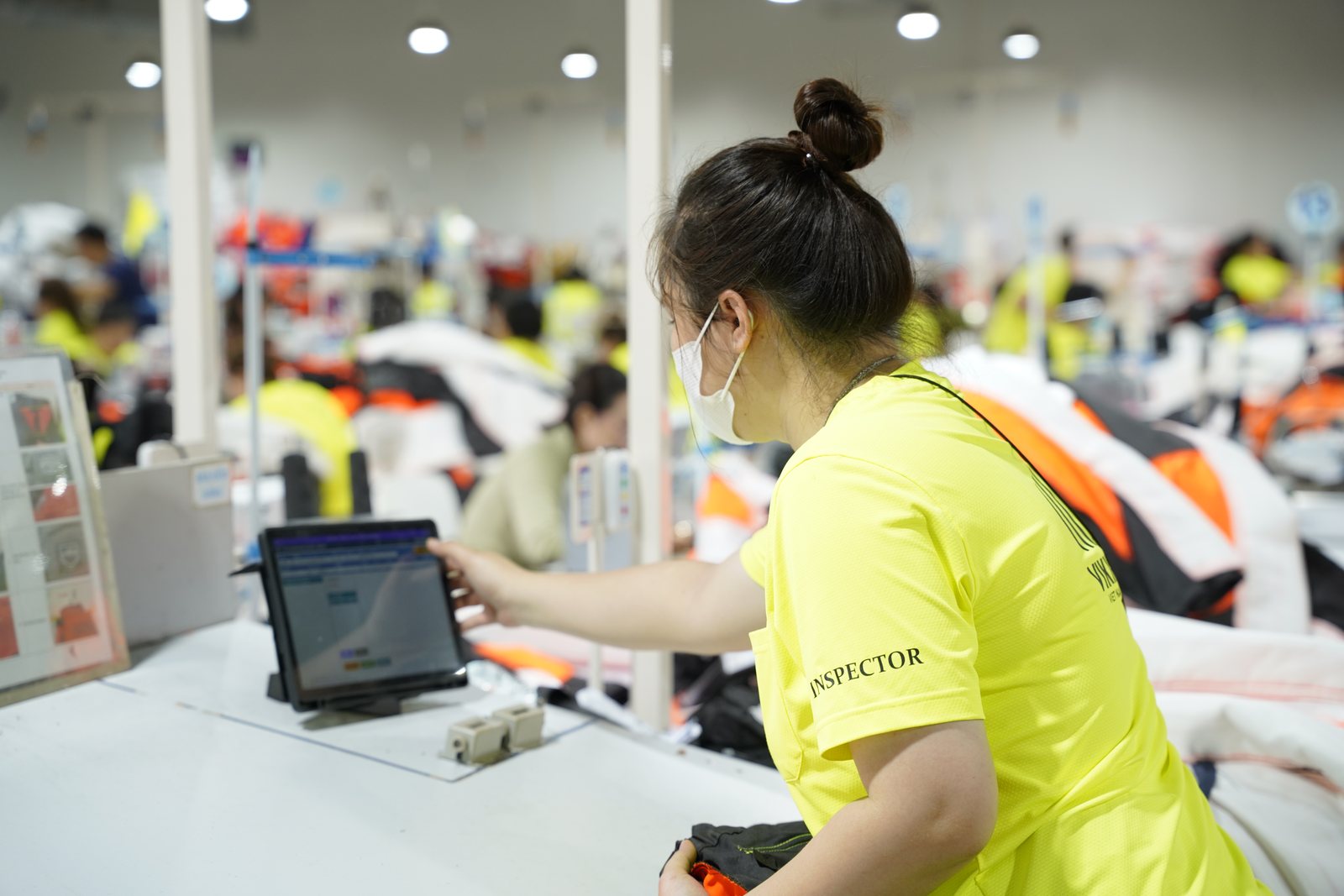
A good technical product needs the right appearance. Inspection can look at the stitching, symmetry, puckering, stitch quality, bartacks, pocket placement, zips, reflective, logos, loose threads, stains and creasing.
But on a technical garment, looking is not enough. A product can be handsome and still have a problem with measurements, function, seam sealing, zip operation or the adjustment details.
Inspection therefore has to combine appearance and function.
3. Measurement is an important part of final inspection
The fit of a garment is not judged by feel alone. Measuring confirms that the product sits within the approved requirement.
The points can include chest, body length, sleeve length, shoulder, hem, hood and pocket position. Depending on the product, some measurements matter more than others.
What matters is that the method is consistent. If each person measures differently, the data loses its value. Inspection therefore has to follow the confirmed measuring guide.
4. Functional checks matter especially on technical apparel
A technical jacket has many details that have to work:
- Zip: does it run smoothly?
- Pocket: is it convenient to use?
- Hook and loop: is it in the right position?
- Drawcord: does it work?
- Stopper: does it hold the cord?
- Snaps and buttons: do they work reliably?
- Hood adjustment: does it adjust correctly?
A garment cannot be passed on appearance alone if its main function does not work.
This is the clear difference between inspecting ordinary fashion and inspecting a high performance garment.
5. Seam sealing has to be checked once the garment is complete
On waterproof garments, seam sealing is an important part of finished garment inspection. The inspector can look at whether the tape is in the right position, whether it has shifted, whether it is lifting, whether there is abnormal wrinkling, whether it covers the seam fully, and whether the multi layer intersections have been handled soundly.
A small fault in the seam tape may not stand out on the outside of the garment and still needs assessing. That is why inspecting a technical garment means understanding its inner construction too.
6. The inspector has to know where the standard sits
One of the basic questions is: inspect against what? Inspection cannot rest on personal experience alone.
The reference points have to be defined: the approved sample, the technical specification, the measurement chart, the workmanship standard, the trim card, the packing requirement and the approved comments.
This reduces the chance of each person carrying their own standard. Whether a garment passes has to rest on a confirmed requirement.
7. Finding a defect has to come with action
If inspection finds a defect, the next step cannot be simply setting it aside. What has to be established is the defect, the quantity, whether it can be repaired, which function has to handle it, and whether other garments may be affected.
A single defect may only need a repair. But if the same defect appears repeatedly, the information has to travel back to production and inline QC.
This matters a great deal. Inspection does not only protect the customer at the end of the process. Its data can also improve the operations upstream.
8. Rework has to be controlled
Repair is a real part of production. But it cannot become an uncontrolled loop. A repaired garment has to be inspected again.
The chain can run: defect found, segregate, rework, re inspect, pass or hold.
What matters is that a repaired garment does not rejoin the normal flow without being confirmed again. On technical garments, unpicking and repairing also has to be considered carefully so the material is not damaged.
9. Inspection has to feed back to the line, not only report at day end
If a defect is still being created on the line while inspection only summarises at the end of the shift, the factory has lost the chance to react early.
A good system needs a feedback loop: inspection finds a repeating defect, informs inline QC and the line leader, work in progress is checked, the operation stops if needed, the method is corrected, and the result is confirmed again.
This connects final inspection back to quality at source. Inspection is not the end point. It is part of the quality feedback loop.
10. Defect data has to be classified
Inspection data can be very valuable when it is classified properly: by style, size, line, operation, defect type, frequency, severity, root cause and corrective action.
Saying there were thirty defective garments today makes improvement hard. Knowing that fifteen of them came from the same pocket operation is information of a different order. The team can then focus on the right area.
11. Inspection verifies how well inline QC is working
If inline QC is controlling well, the defects reaching final inspection should fall. If inspection keeps finding the same defect that already appeared on the line, that is a signal to review the system.
The questions are: did inline QC find it, was it fed back, did production act, was the first piece correct, and was the correction verified afterwards?
Final inspection therefore does not only assess the product. It also provides data to assess how effective process control is.
12. Inspection should not be used to filter quality in place of production
A factory can hire many more inspectors. But if defects keep being created on the line, the cost of quality rises.
The better aim is reducing defects at source, not adding inspectors at the end.
Inspection exists as a protective layer. But production and inline QC are where quality has to be created. If inspection becomes the main repair area, the upstream process needs reviewing.
13. Training inspectors has to use real garments
A new inspector has to be trained on the product standard, the measuring method, defect classification, functional checks, the critical points, how to record and how to escalate.
A useful method is to use a good sample beside a defective one. The trainee sees directly what passes, what does not, where the deviation is, and why that deviation matters.
It turns a written standard into something visible.
14. Report accuracy matters as much as the quantity inspected
In inspection, the report has to reflect the actual state. Passing over a defect to hit a target, recording inaccurate figures, moving unconfirmed goods into a pass status or hiding a problem for a better looking report are all out of place.
When the data is wrong, management decides on wrong information. That affects more than quality. It affects planning, delivery and communication with the customer.
Accurate data is part of quality.
15. From inspection to QA AQL
Once garments have been inspected, the order may pass through further control steps depending on the programme and the customer requirement.
QA AQL may take part in final quality checks, folding checks, packing checks, carton checks, reporting, and coordination with the customer's QC or a third party inspection.
Final quality therefore does not rest on a single checkpoint. There are several layers of control with different responsibilities.
16. Packing should only start once the garment qualifies
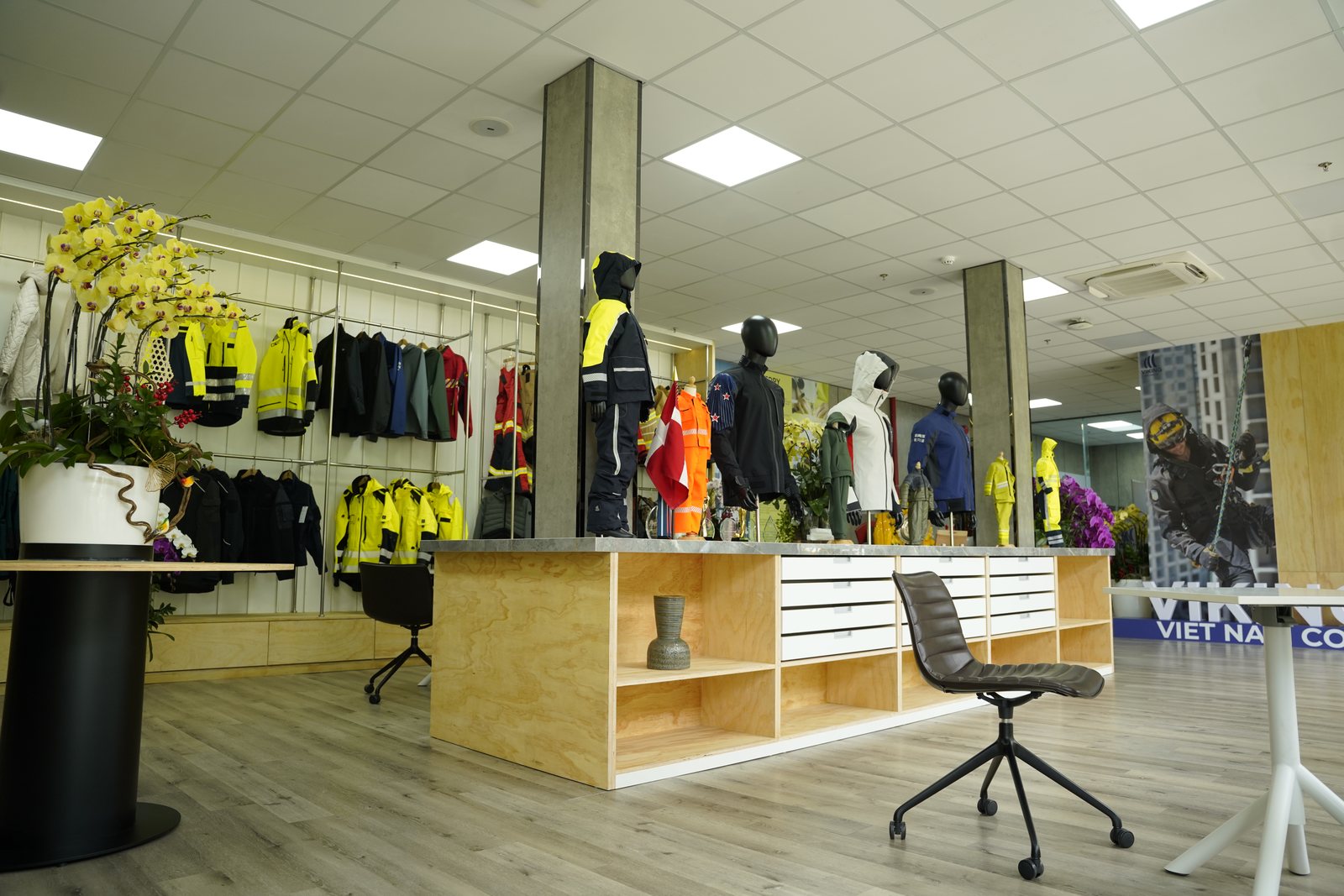
Once a garment is bagged and in a carton, taking it back out to repair costs more time.
The sound principle is therefore: inspect, repair if needed, verify, release, then pack. Not pack first and find the defect later.
It is simple logic with a large effect on flow.
17. How customers should look at final inspection
Assessing a factory, a buyer should not stop at asking whether inspection is one hundred percent. The deeper questions are:
- Which standard do inspectors work against?
- How are defects classified?
- How is reworked product re inspected?
- Are repeating defects reported back to the line?
- Is the final defect data analysed?
- Who releases product to packing?
- How do QA and the inspection team differ in responsibility?
What matters is not only that inspection happens, but what it is for and how its data is used.
Viking Vietnam: final inspection is not where quality begins
At Viking, finished garment inspection can be seen within a larger chain: quality at source, inline control, finished garment inspection, rework control, re inspection, QA AQL, packing and shipment readiness.
Each step has its own role. The shared aim does not change: find it early, feed it back correctly, fix the real cause, and move the product on only once the conditions are confirmed.
A good quality system does not try to prove that defects never happen. It proves that when one does, the organisation can see it, report it, handle it, verify the result and learn from it.
That is why finished garment inspection at Viking is not only the last operation in production. It is also an important source of data for doing better on the orders that follow.