Viking produces across a material range from 50 to 350 g/m². This article sets out the reference scale by product group, the three questions we ask before fixing a weight, and the right order of priorities when cost has to come down.
Viking Vietnam produces jackets, protective clothing and technical accessories for international markets, across a material range from 50 to 350 g/m².
This article explains how we help customers choose fabric weight deliberately.
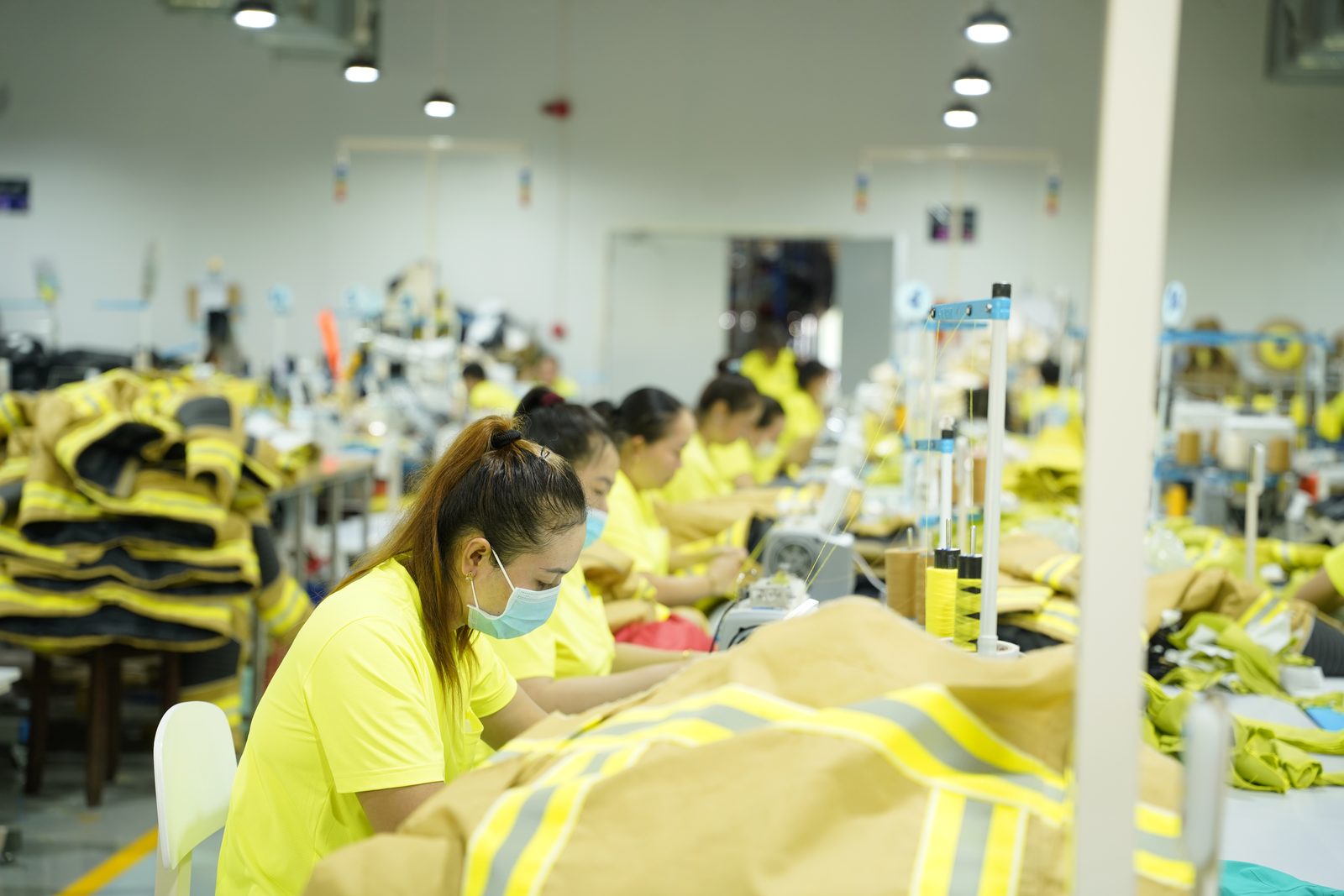
One line can run several fabric weights depending on the product family.
A common and expensive default
Buyers tend to assume heavier fabric is more durable.
That is only partly true. Weave structure, fibre type and coating affect durability as much as weight. A 50 g/m² ripstop can resist tearing better than a plain fabric twice its weight.
Choosing heavier than necessary raises fabric cost, raises consumption, and makes the garment uncomfortable in hot climates. Three costs at once.
The reference scale across the Viking range
|
Weight |
Product |
Right when |
|
50 g/m² |
Ultralight single-layer shell |
It must pack away, against wind and light rain |
|
120 g/m² |
Rain suit |
Carried daily, must handle prolonged heavy rain |
|
150 to 160 g/m² |
2.5-layer shell |
Worn regularly outdoors, needs all-round balance |
|
260 g/m² |
Fleece |
Must retain heat and hold the garment's shape |
|
250 to 350 g/m² |
Work trousers |
Environments with friction and impact |
|
350 g/m² |
Fabric bags |
Must carry over 5 kg without deforming |
Three questions we ask before fixing a weight
1. Is the product carried or worn continuously?
Carried products need to be light and packable. Continuously worn products prioritise durability and shape retention.
2. Is there friction in the environment?
If so, the right answer is usually local reinforcement at abrasion points, not raising the weight of the whole garment. That is cheaper and more comfortable to wear.
3. What is the ambient temperature?
In hot and humid climates, heavy fabric significantly reduces how long a wearer tolerates the garment. This is routinely overlooked when a product designed for temperate markets is sold into tropical ones.
The third question is the one we ask most often, and the one customers consider least.
When cost has to come down, do not touch weight first
The relationship between weight and cost is not linear.
Increasing weight raises fabric cost proportionally, but also affects 3 other things:
-
Fabric consumption.
-
Sewing time.
-
The needles, threads and presser feet required.
Those three do not appear on a fabric quotation but do appear in the making charge.
So when a customer needs to reduce cost, we normally examine design structure and consumption first, then discuss weight. That approach protects the perceived quality of the product.
What the customer receives
-
A weight recommendation based on real work and real climate, not on default assumptions.
-
Local reinforcement options instead of raising the weight of the entire garment.
-
A fabric sample set arranged by weight for direct comparison.
-
A priority order for cost reduction, starting where it least affects the wearer's experience.
Three things you no longer have to do yourself
-
No paying for weight you do not need.
-
No trading wearer comfort for durability.
-
No cutting cost by making the product thinner. Other levers should be used first.
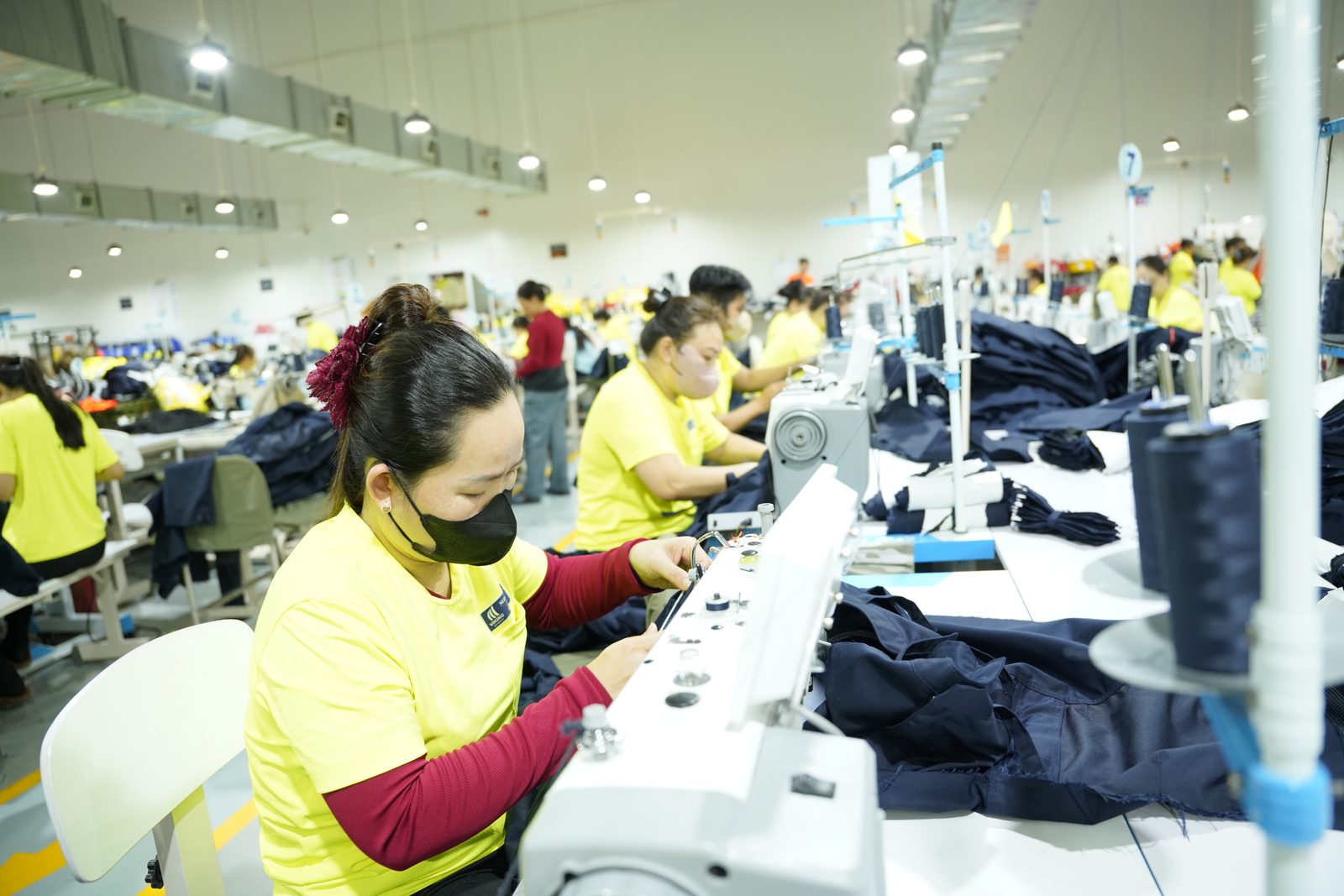
Heavier fabric requires different needles, threads and presser feet, and more sewing time.
Let Viking Vietnam accompany your business
If you would like to compare these weight bands directly, contact us for a fabric sample set arranged by weight, with full specifications for each code.