When a customer needs to select fabric for a technical product line, Viking verifies five parameters with the supplier before recommending. This article explains those parameters and why the step saves a full sampling round.
Viking Vietnam is a high-end protective clothing factory in Vietnam serving the German, American, Japanese and Nordic markets.
When a customer needs to select fabric for a technical product, we do not simply forward a supplier's offer. We verify 5 parameters first, then recommend.
This article explains those parameters, and why this step saves customers a full sampling round.
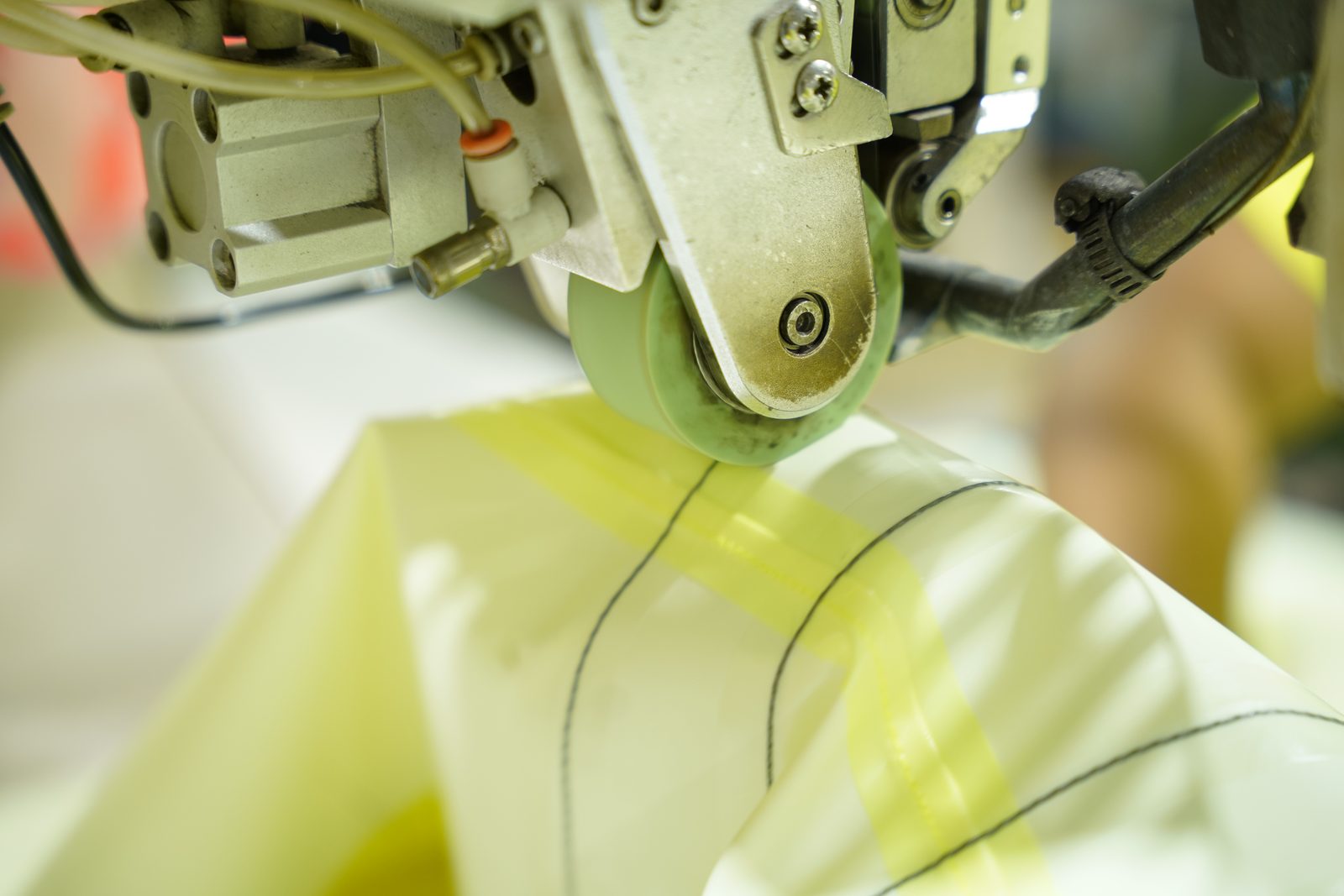
Coated fabric passing through the seam sealing machine. The coating decides whether the tape bonds.
The real cost of choosing the wrong fabric
A wrong fabric choice rarely shows up immediately.
It shows up at the second sample, when the garment feels stiffer than expected. Or in production, when a coating turns out not to accept seam tape. Or later still, when end users report that the product dries slowly.
Each time, the cost is not in the fabric. It is in time: one sampling round is two to three weeks, and the whole collection moves back with it.
So we place the verification step at the beginning, not at the end.
The 5 parameters we verify before recommending a fabric
|
Parameter |
Determines |
Risk if skipped |
|
Weave structure |
Tear resistance |
A thick fabric that still tears, or a thin one that outperforms it |
|
Denier |
Weight and thickness |
A garment heavier than planned, no longer packable |
|
Filament count |
Softness and drape |
A stiff garment although every other figure is correct |
|
Coating |
Water resistance and drying speed |
Seam tape failing to bond in production |
|
Reverse finish |
Water repellency |
The garment absorbing water, becoming heavy and slow to dry |
The first three determine how the garment feels. The last two determine how it behaves in water, and whether it can be produced at all.
Three questions we put to the material supplier
We do not stop at reading a specification sheet. For every material proposal we ask the supplier 3 questions before accepting it into sampling.
Question 1. Was this figure measured on new fabric or after wash cycles?
A figure on new fabric gives the upper limit. It does not describe the second year, which is when wearers actually judge the product.
Question 2. Measured to which standard?
The same property can be measured by several methods producing scales that are not directly comparable. Skipping this means comparing two figures that share no common basis.
Question 3. Does the coating affect any production process?
This is the most expensive question to skip. Some coatings prevent seam tape from bonding, and that only surfaces once the fabric is already cut.
These three questions take about half a working day. We ask them even of suppliers we have worked with for years.
What the customer receives
-
A material recommendation with reasoning, not a forwarded quotation.
-
Early warning of technical conflicts between fabric and production process, before cutting.
-
A fabric sample set for your own assessment, with full specifications.
-
Alternative options where the preferred code carries supply or lead time risk.
Three things you no longer have to do yourself
-
No verifying supplier figures yourself. We do that.
-
No discovering a technical conflict mid-production. We find it at material selection.
-
No accepting a fabric simply because it is available. If it is not right, we say so.
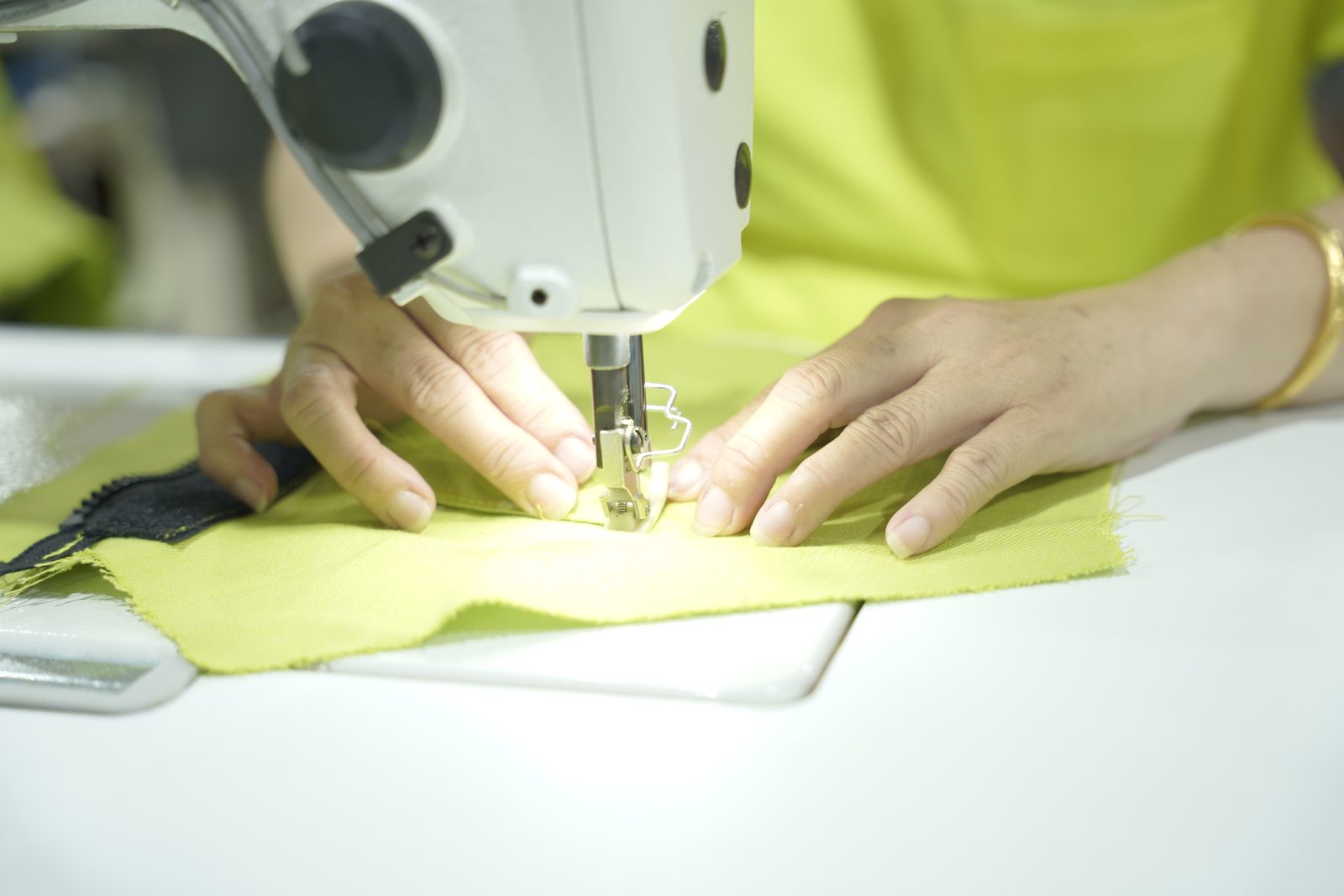
Every fabric code is trial sewn before entering formal sampling.
Let Viking Vietnam accompany your business
If you are selecting materials for a technical product line, send us your requirements. Our technical team will propose fabric codes matched to the real operating environment.
We include an explanation of every parameter, and of the risks worth weighing.