Explore how Viking Vietnam aligns merchandising, engineering, IE and quality teams to prepare materials, equipment and production plans.
On an order for waterproof protective jackets for a customer in the German market, Viking Vietnam held a cross department meeting to review the objective, the scope and the technical requirements before production. The case Viking presents shows product development, technical, quality and planning taking part from the preparation stage onwards. Viking Vietnam
This approach reflects an important requirement in order management: before the sewing line begins, the departments have to agree what the product must achieve and which resources have to be prepared.
1. Merchandising connects the customer requirement to execution
At Viking Vietnam, merchandising is responsible for receiving and processing orders, coordinating with production, checking and balancing materials, issuing production orders and following progress. The role also takes part in resolving customer complaints and product quality issues. Viking Vietnam
That scope creates a single point connecting customer information to the functions that execute. The product requirement has to become information clear enough for technical to prepare documents, for materials to be balanced, and for production to have a basis to work from.
For a buyer, the significance of this arrangement is having a point of contact that follows the order throughout, not only receiving information at the quotation stage.
2. Consumption figures and technical documents give every operation its basis
Viking assigns the technical documentation function responsibility for quotation consumption, production consumption, material and trim cards, measurement charts and technical standards. The work also includes coordinating execution, approving the first line sample and setting the packing requirement. Viking Vietnam
These outputs connect the product requirement to specific work. The material card allows trims to be checked; the measurement chart defines what has to be inspected; the technical standard gives a basis for the method of execution.
From a production readiness point of view, the value does not lie in the quantity of documents. What has to be achieved is that the functions can use the information and understand the requirement the same way.
An order that is properly prepared needs a basis for execution, not only a sample to look at.
3. IE turns the product requirement into a line organisation plan
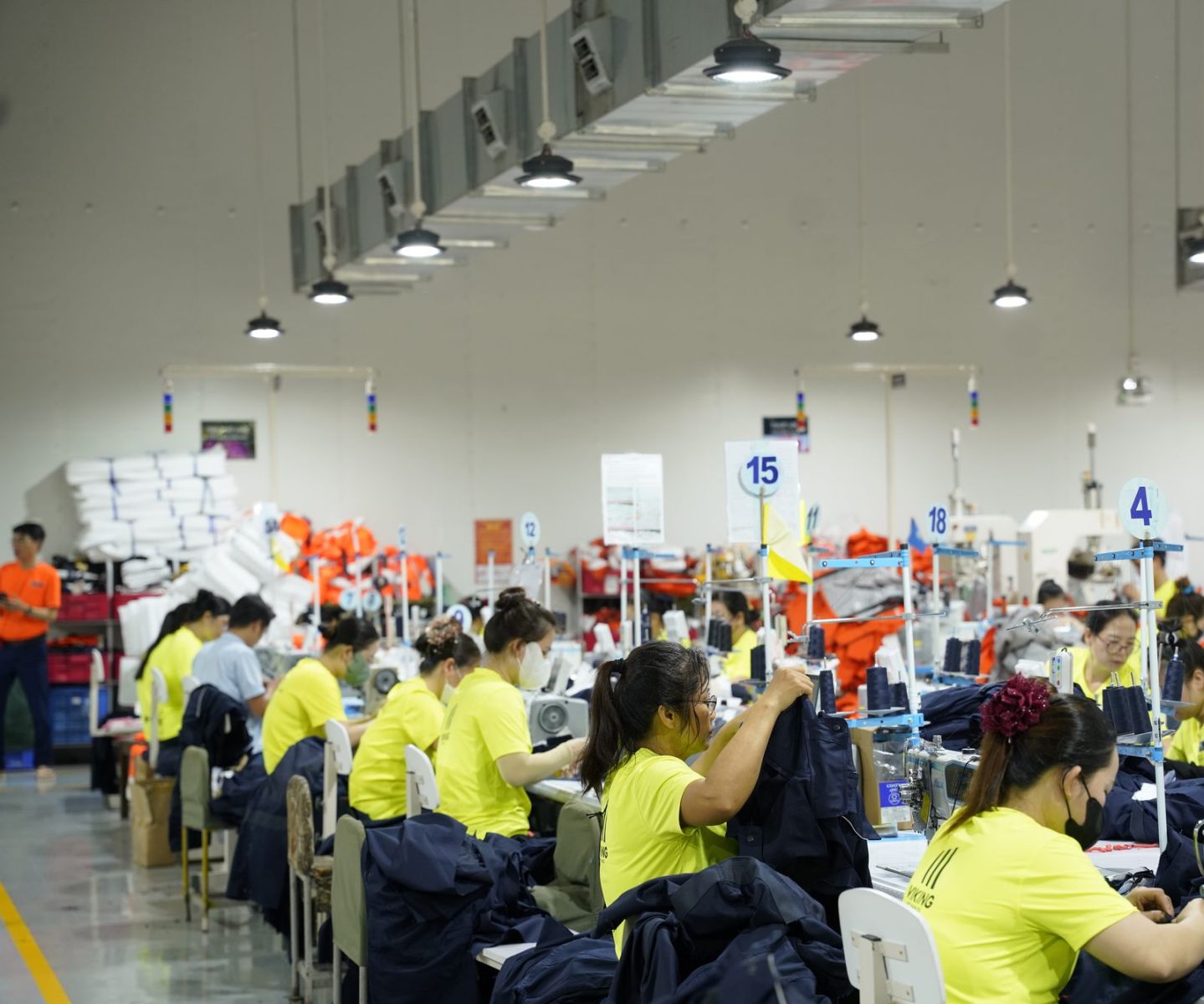
Within the scope Viking publishes, IE is responsible for writing the sewing process, costing, defining machine requirements and designing the line layout. The function also calculates output by operation group, reports daily output, balances the line and coordinates execution timing. Viking Vietnam
These tasks show equipment preparation and operation organisation placed within the same specialist role. The machines to be used have to be considered together with the assembly sequence and the way work is divided.
Viking also requires IE to be able to allocate operations according to operator skill. That is the basis for connecting the plan on paper with the capability of the people executing it, rather than arranging work only by headcount present.
4. The production plan includes inspection and packing
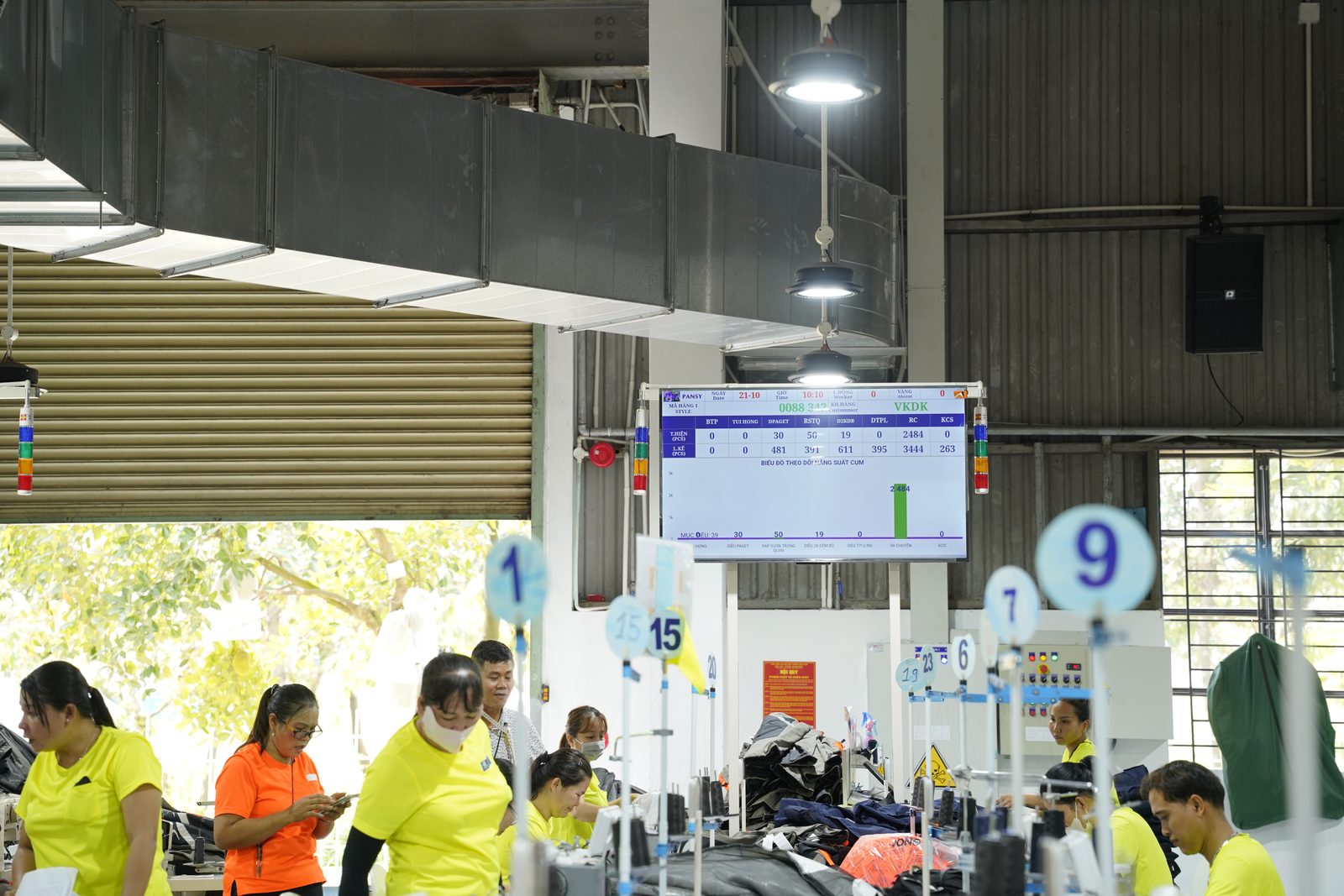
In the process Viking presents, once the sample is approved a plan is built for cutting, printing, sewing, inspection and packing. The plan also considers line output per shift, labour requirements, warehouse coordination and material allocation. Merchandising and technical compare the material and trim list against the approved sample. Viking Vietnam
The plan therefore does not only fix when sewing starts. It has to connect the work before and after the line into one coherent execution approach.
5. The first line sample connects the standard to actual capability
Inline QC at Viking is responsible for checking quality at each operation, comparing against the technical standard, the sample and the sample card, checking the first line sample, and tracking and reporting quality on the line. Viking Vietnam
A confirmation point at the head of the line creates the opportunity to compare the document against the product as actually made. In discussing an order, customer and factory can agree which details need attention, what has to be checked, and how a result that falls short is handled.
This brings quality into the execution stage rather than leaving it until the garment is finished. Having a sample check does not mean every risk has been removed; production results still have to be followed.
6. Shipping requirements are prepared alongside product requirements
At Viking, QA AQL is responsible for checking and approving folding and carton packing against documents and sample cards, reporting inspection results, and working with the customer's QC or a third party at final inspection. Viking Vietnam
This assignment shows that completing an order has its own control content. The product has to be considered together with the agreed delivery requirement, not assessed only on being sewn.
For a customer, information on folding, carton packing and inspection coordination should be clarified during preparation. That is what lets each function know what has to be confirmed before moving to shipment.
7. Production data has to reflect reality
Viking's business ethics policy requires records held by an employee to be complete, accurate, timely and a truthful reflection of actual activity. The policy also defines removing poor quality data in order to meet a reporting target as a violation. Viking Vietnam
That requirement matters when set beside the work of tracking output, quality and progress. A plan can only be reassessed on a clear basis when the input information reflects the actual state of the order.
For an international partner, truthful reporting creates the basis for discussing how to respond. The aim is to identify the situation correctly, not to produce a report more favourable than reality.
8. Customer information is used under a confidentiality duty
Production preparation requires several functions to access information. Viking states that customer information may be used only for related work, within the scope necessary, and has to be protected in line with company policy and commitments to the customer. Viking Vietnam
This principle separates full coordination from unlimited sharing. Documents have to reach the right people to do the work, but their use still has to stay within what is permitted.
For brands developing their own products, this is a subject to be agreed alongside the technical requirement and the order management approach.
Readiness shows in how the functions connect
From a partner assessment point of view, preparation can be examined through three questions:
- Is the requirement clear enough? How far are the sample, documents, materials and inspection content agreed?
- Have the resources been identified? How have operations, machines, line layout and the required skills been considered?
- Is responsibility specific? Who follows progress, who confirms quality, and who handles what remains open?
These questions bring the assessment of manufacturing capability back to conditions that can be discussed and verified, rather than resting on factory size or a general commitment.
Connect with Viking Vietnam
Send your technical requirements, order structure and delivery plan to Viking Vietnam so that a suitable production preparation approach can be discussed together.
Clarifying materials, method, resources and responsibility from the start gives both sides a foundation for following the order on the same basis of information.