Explore Viking Vietnam’s journey to build an international-standard garment factory focused on technical apparel, quality systems, sustainability, people development, and global partnerships.
In export garment manufacturing, an international-standard factory is not judged only by its size, the number of sewing lines or its monthly capacity. What matters more is how the factory operates: whether it has a system, whether it controls quality consistently, whether it respects its workers, whether it meets sustainability requirements, and whether it has the capability to stay alongside international customers over the long term.
For Viking Vietnam, the journey to build an international-standard garment factory combines production experience, management thinking, the development of people, responsibility towards the environment and a commitment to transparent cooperation with global customers.
From a base in export garment manufacturing, Viking Vietnam has step by step built capability in technical product lines such as workwear, rainwear, waterproof garments, protective clothing, outdoor apparel and high performance apparel. These products ask for more than a neat seam. They need precision, durability, real world functionality and the ability to stay consistent across many seasons.
1. International standards begin with how you think about operations
A factory can buy more machines, expand its floor area or hire more people. But to become a manufacturing partner at international standard, a factory has to build the right operating mindset.
That mindset starts with very practical questions:
- What does the customer need beyond price?
- What does the end user need from the product?
- Which process limits defects from the start?
- Which data needs recording so we can improve?
- Which department is responsible when something changes?
- How do we keep quality from depending on luck or on one person's experience?
- How do people, systems and technology run steadily together?
For Viking Vietnam, international standard is not a checklist to pass an audit. It is how the factory organises its work every day, from receiving the order, developing the sample, preparing production, controlling materials and trims, managing the sewing line, inspecting quality, finishing and packing, through to shipment.
When the operating mindset is clear, each order stops being an isolated activity and becomes part of a controlled production system.
2. From garment factory to technical manufacturing partner
Viking Vietnam does not focus only on ordinary garment production. The factory's strength lies in product lines with high technical and functional requirements.
Products such as workwear, waterproof garments, rainwear, protective clothing, outdoor apparel and high performance apparel usually carry more complex requirements:
- The material has to suit the environment of use.
- The seam has to be stable and strong.
- Functional details have to be positioned correctly.
- Seam sealing and other special operations need careful control.
- The product has to deliver comfort, safety and durability in real use.
- Quality has to stay consistent between the approved sample and bulk production.
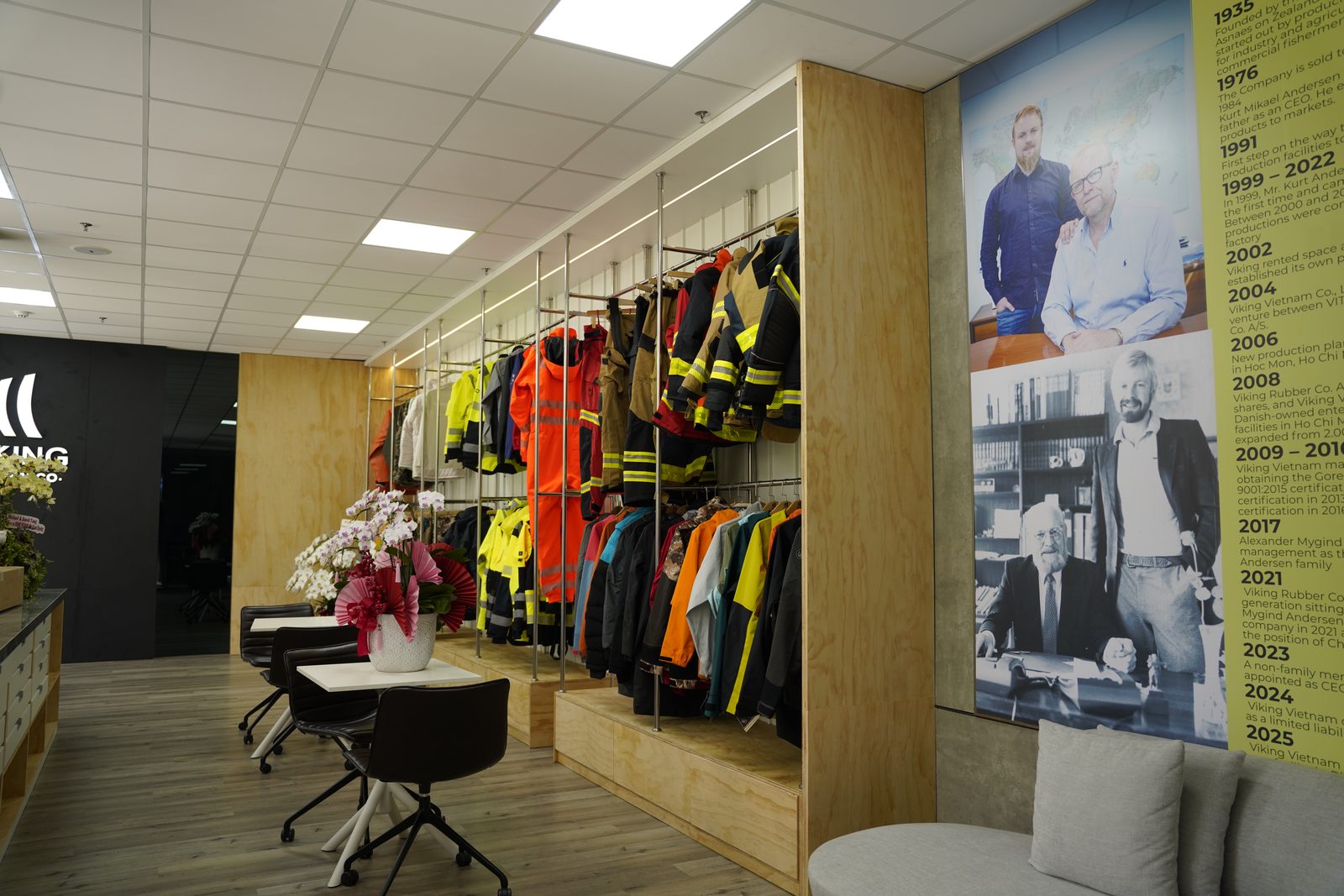
To produce these lines well, the factory needs a technical team, QC, IE, maintenance, line leaders and operators trained accordingly. Machines are only one part. Real capability lies in how people understand the product, understand the process and work together to get it right the first time.
This is why Viking Vietnam builds production capability from the ground up: clear technique, clear process, clear responsibility and clear data.
3. A quality system is the common language with international customers
For customers in Europe, the United States, Japan and other demanding markets, quality cannot be promised in words alone. It has to be demonstrated through a system.
A sound quality system lets the factory answer the important questions:
- From which stage is the product controlled?
- Are materials and trims checked before production?
- How are technical changes managed?
- How is the pilot piece confirmed?
- How are defects on the line recorded and resolved?
- Is quality data used for improvement?
- When the customer needs to trace an issue, does the factory have clear records?
Viking Vietnam treats quality as a system, not as an activity that happens at final inspection. That matters a great deal in technical manufacturing, because many risks have to be prevented before the product is finished.
When quality becomes the shared responsibility of several departments, the factory can reduce defects, reduce rework, protect the delivery schedule and build long term trust with customers.
4. People are the foundation of an international-standard factory
An international-standard factory cannot rest on process and equipment alone. It is people who make the system actually work.
At Viking Vietnam, operators are not only the people who perform an operation. They are the people who create quality in each product. The line leader does more than hold the schedule; they hold the rhythm of the operation and the spirit of the team. QC does more than find defects; they help prevent them. IE does more than measure time; they make the process more effective. Technical does more than read documents; they turn the customer's requirement into clear production instructions.
Training and developing the team is therefore an important part of the journey towards international standard.
A well trained team is able to:
- Understand the product and the technical standard correctly.
- Perform the operation correctly from the start.
- Spot risks early during production.
- Coordinate well between operations.
- Adapt to new products and new requirements.
- Hold quality steady across many orders.
Machines can add speed. Technology can support data. But people with skill, responsibility and a willingness to learn are the foundation of long term consistency.
5. Sustainability is part of competitive capability
In the global supply chain, sustainability is no longer a secondary factor. International customers care increasingly about how a product is made: working conditions, environmental management, resource use, waste reduction, social responsibility and the ability to meet ESG requirements.
Viking Vietnam approaches sustainability through what actually happens in the factory.
That shows in directions such as:
- Controlling materials and trims to reduce waste.
- Optimising processes to limit rework and rejects.
- Managing waste and production areas responsibly.
- Focusing on working conditions and worker safety.
- Training the team to raise awareness of quality, environment and responsibility.
- Building an operating culture that is transparent, disciplined and continually improving.
Sustainable manufacturing is not a separate project. It is how the factory makes decisions every day. When the factory gets it right the first time, reduces defects, reduces waste and respects its people, that is ESG in practice.
6. Technology supports, but the system creates stability
In a modern garment factory, technology matters more and more. Production data, progress boards, specialised machines, control processes and management tools all help the factory run more transparently.
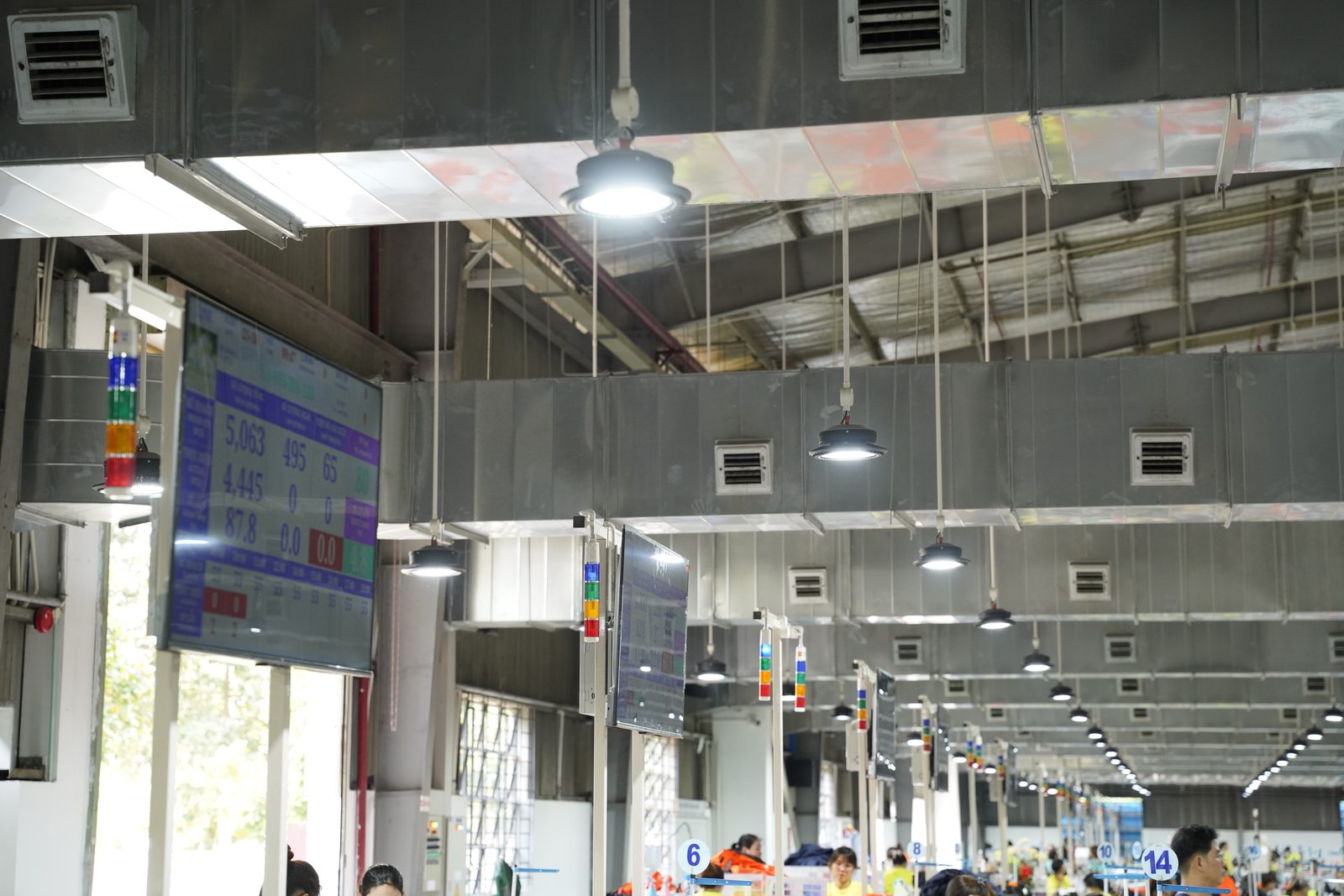
However, technology only becomes effective inside a clear system.
If the process is unclear, the data will be fragmented. If responsibility is unclear, information struggles to become action. If people are not trained, technology rarely produces durable results.
At Viking Vietnam, technology does not replace people. It helps people work better, recognise problems faster and decide on a firmer basis.
This is how an international-standard garment factory should develop: not chasing technology for appearance, but using it to raise real operating capability.
7. International partnership needs transparency and responsibility
When an international customer chooses a manufacturer, they do not only look at current capacity. They look at the ability to work together over time.
They need a partner who can:
- Understand the technical requirement of the product.
- Communicate clearly during sample development and production.
- Report honestly when a problem arises.
- Propose solutions rather than wait for instructions.
- Control change responsibly.
- Hold quality steady across many seasons.
- Develop together in a sustainable direction.
Viking Vietnam builds international partnerships on transparency, responsibility and a spirit of working alongside the customer. An order is not a short term transaction. It is an opportunity for both sides to understand each other better, improve further and create more durable value for the supply chain.
8. The road ahead: a self-running, sustainable factory with global capability
The journey to build an international-standard garment factory has no fixed end point. As markets change, customers change, technology changes and ESG requirements rise, the factory has to keep learning and improving.
Viking Vietnam continues to develop along these lines:
- Raising capability in technical product lines.
- Strengthening quality and environmental management systems.
- Developing skilled workers and middle management capability.
- Applying data and technology to operations.
- Building a responsible working environment.
- Deepening cooperation with international customers.
- Moving towards more sustainable and more transparent manufacturing.
An international-standard factory is not built in a day. It is built from years of accumulated experience, many rounds of process improvement, many generations of workers who grew into their craft, and many customer relationships built on trust.
Viking Vietnam continues that journey with a clear purpose: to manufacture not only to complete an order, but to create dependable value for customers, for workers and for the global supply chain.
Summary of operational value
Viking Vietnam's journey towards an international-standard garment factory rests on several important foundations:
- An operating mindset built on systems rather than scattered experience.
- Capability in high performance apparel, workwear, rainwear, waterproof garments and protective clothing.
- A quality system that controls the product from inputs through to finished goods.
- Operators, technical, QC, IE, maintenance and management trained to coordinate effectively.
- A sustainability direction tied to ESG, the environment and social responsibility.
- A spirit of international cooperation based on transparency, responsibility and continual improvement.
Connect with Viking Vietnam
Viking Vietnam works alongside international brands and partners in manufacturing high performance apparel, workwear, rainwear, outdoor apparel, protective clothing and other technical product lines. With a foundation of quality, people, systems and sustainability, Viking Vietnam aims to be a dependable manufacturing partner for customers who need stability, transparency and long term cooperation.
Contact Viking Vietnam to develop technical apparel made in a factory built on systems, responsibility and international standards.