Learn how pre-production meetings help Viking Vietnam control technical requirements, materials, machinery, quality, and delivery risks before sewing starts.
In export garment manufacturing, many problems do not begin when the product is finished. They usually begin earlier, with points that were not made clear before the style reached the sewing line.
A technical requirement that was not understood the same way by everyone.
A trim that was not fully checked.
A difficult operation that was not analysed in advance.
A machine that was not prepared correctly.
A quality control point that was not repeated.
A change from the customer that never reached the right person.
When these points are not resolved before production, the risk appears as quality defects, late delivery, rework, an unbalanced line or poor coordination between departments.
This is why the pre-production meeting plays such an important role in a technical garment factory.
At Viking Vietnam, the pre-production meeting is not a formality. It is the step where the departments look at an order together, understand the requirement, identify the risks and agree how the style will be implemented before it enters the sewing line.
1. The pre-production meeting turns information into clear action
On a garment order, information can come from many sources:
- The customer's tech pack
- The approved sample
- The measurement chart
- Material documentation
- Sample comments
- Packing requirements
- Inspection standards
- The delivery schedule
- Changes made during sample development
If this information sits only in emails, technical files or each department's own notes, production can easily understand it in different ways.
The pre-production meeting turns that information into clear action:
- What each department needs to prepare
- Which operations need attention
- Which materials need to be checked again
- Which machines must be ready in advance
- Which control points QC should focus on
- Which bottlenecks IE should watch for
- How the line leader should allocate people
- Which equipment or jigs maintenance should prepare
When information becomes specific responsibility, the order has a firmer basis for stable implementation.
2. A good meeting starts with understanding the product correctly
Before discussing productivity, schedule or layout, the factory needs to understand the product correctly.
For technical garments this matters even more, because each detail can affect how the product performs.
The points to clarify include:
- Which product group it belongs to: workwear, protective clothing, waterproof garment, insulated apparel or outdoor apparel
- The properties of the main material
- Which trims affect the function of the product
- Which seams need special control
- Which details affect waterproofness, warmth, reflectivity or durability
- Which points of the fit need attention in bulk production
- Which points the customer particularly cares about
A product that is not understood correctly from the start is very hard to produce consistently later.
At Viking Vietnam, understanding the product correctly is the foundation that lets technical, IE, QC, maintenance and production work together effectively.
3. Checking materials and trims before production reduces risk
Materials and trims affect quality and schedule directly.
In the pre-production meeting, the factory needs to confirm the status of materials and trims before the style reaches the line:
- Whether the main fabric is available in full quantity
- Whether colour and fabric lots are controlled
- Whether trims are the correct code, colour and size
- Whether seam tape, reflective tape, zips, buttons, labels or lining meet the requirement
- Whether any trim needs a special functional check
- Whether a late material delivery could affect the schedule
- Whether any material should be tested first on the machine or on the actual operation
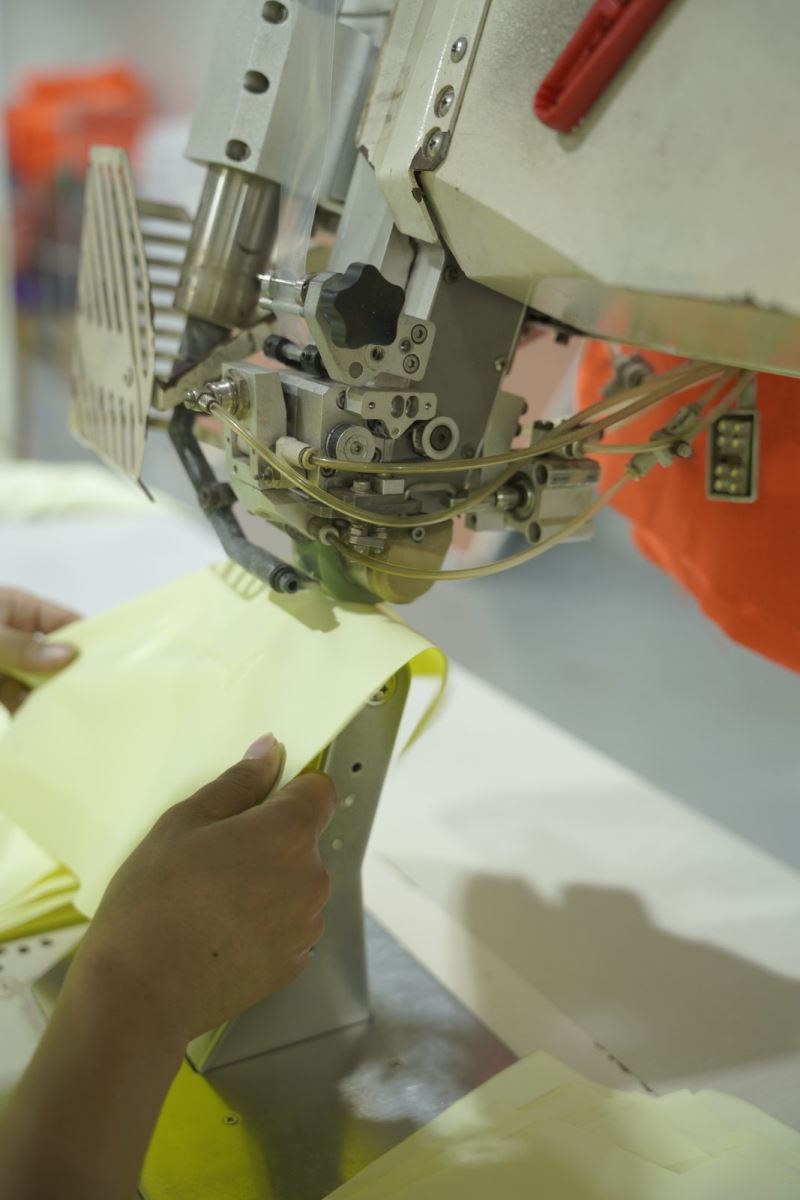
On technical products, trims are not only finishing details. They can directly affect how usable the product is.
An unsuitable seam tape can affect the waterproof seam. An unstable reflective tape can affect visibility. An incompatible zip can affect durability and the wearer's experience.
Controlling materials and trims before production is therefore an important step in reducing risk for both the factory and the customer.
4. Technical has to clarify the difficult points before the line starts
Every product has its own points that need attention. If a difficult point is found only once the line is running, the factory loses time adjusting, retraining or repairing.
In the pre-production meeting, the technical team needs to clarify:
- Which operations are difficult
- Which handling is easy to get wrong
- Which points already produced defects during the sample stage
- Whether the assembly sequence needs attention
- Which points operators need to be shown first
- Whether a reference sample is needed at the line
- Whether photos, video or supporting documents are needed for the operation
- Whether anything unclear needs to go back to the customer
Technical does not only pass on documents. Technical has to help the sewing line understand the right way to do the work.
At Viking Vietnam, a clear technical handover reduces reliance on learning while doing and asking along the way, and helps production control quality better from the start.
5. IE forecasts bottlenecks before production
IE plays an important part in production preparation because IE sees the product in terms of process, time and the flow of the sewing line.
In the pre-production meeting, IE needs to clarify:
- How many operations the sewing process has
- Which operations take longer
- Which operations need higher skill
- Whether specialised machines or jigs are needed
- What the planned line layout looks like
- How many operators need to be allocated
- Which operations risk becoming a bottleneck
- What the initial line balancing plan is
When IE is involved before the style reaches the line, the factory can prepare better instead of waiting for production to block before acting.
For customers, this is an important sign of a factory able to operate on data, not only on individual experience.
6. QC has to identify the critical control points
Quality should not be checked only at the end of the line. On export orders, especially technical products, QC needs to identify the critical control points before production begins.
In the pre-production meeting, QC needs to clarify:
- The customer's inspection standard
- The critical defects to prevent
- The points to compare against the approved sample
- The measurements to check regularly
- Which operations need checking at source
- The inspection frequency in the early production stage
- How defects will be fed back to the sewing line
- How defect data will be recorded for improvement
When QC understands the risks from the start, quality control becomes more proactive.
At Viking Vietnam, QC does not only inspect products. QC is part of the defect prevention system, giving customers more confidence in the consistency of bulk production.
7. Maintenance has to prepare machines and equipment before the style reaches the line
An order can be well prepared on paper, but if the machines are not ready, the sewing line can still be interrupted.
Maintenance needs to take part in preparation to confirm:
- The machines needed for each operation
- Whether the specialised machines are available
- Whether the machines need adjusting to the material
- Whether jigs, templates or supporting devices need preparing in advance
- Whether pressing, bonding, cutting or finishing equipment has special requirements
- Whether there is a risk of machine stoppage or missing equipment during production
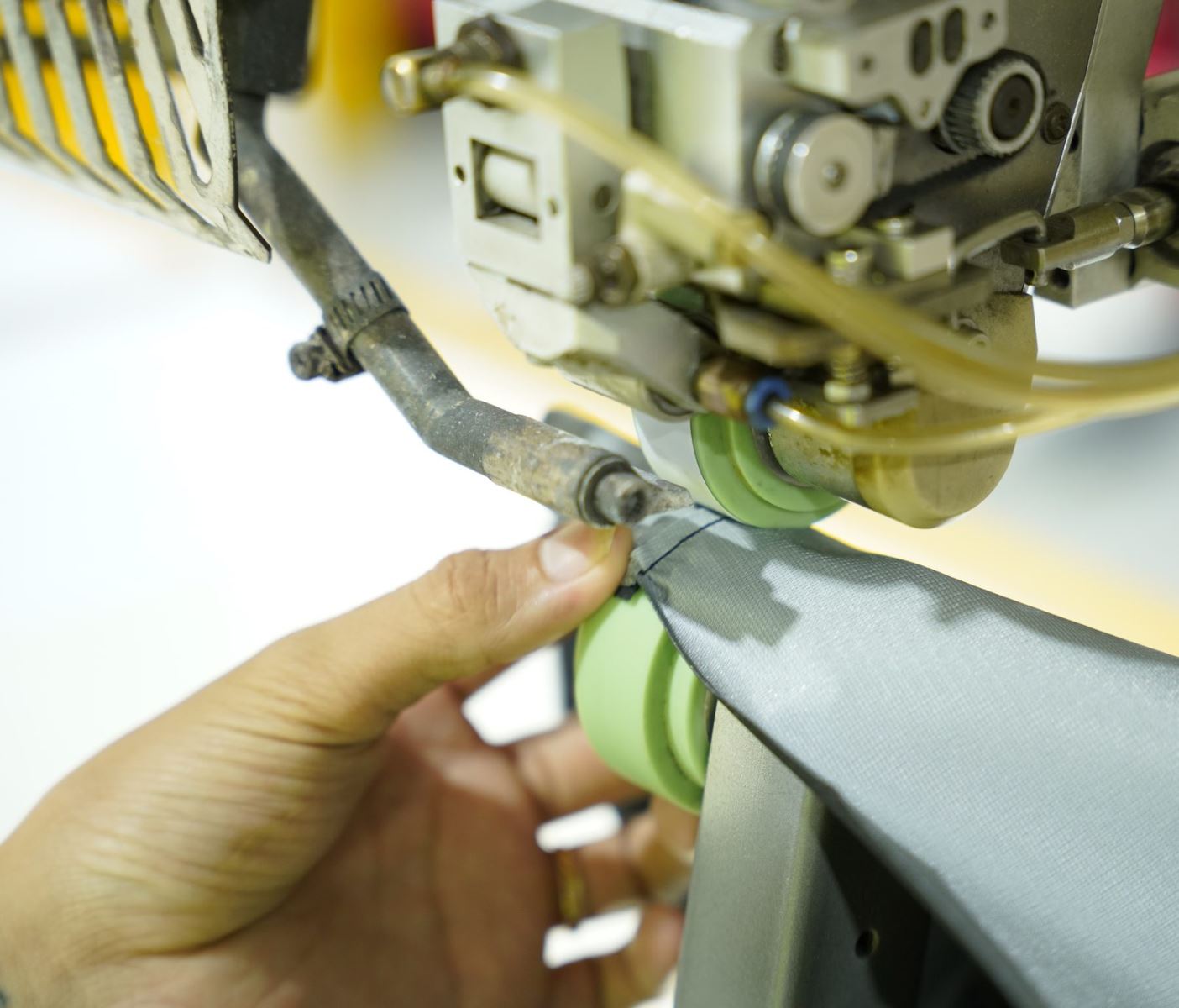
On waterproof garments, workwear or technical apparel, equipment and machine settings can have a large effect on quality. Machine preparation should therefore never be something that comes up after the line has started.
A factory that prepares well reduces waiting time, reduces interruption and helps the line run more steadily.
8. The production plan has to connect the schedule to real capacity
In the pre-production meeting, the delivery plan needs to be connected to the factory's real capacity.
The questions to answer include:
- When the style will reach the line
- What the daily output target is
- Which line will produce this style
- Whether other orders running in parallel will affect resources
- Whether materials and trims will arrive on schedule
- Whether the number of sizes, colours and styles adds complexity
- Whether a support plan is needed for the first days
A production plan is not just a start date and a delivery date. A good plan reflects the real capacity of the floor, the complexity of the product and how well each department can prepare.
For international customers, this increases transparency and reduces the risk of commitments that exceed real capacity.
9. Recording actions after the meeting prevents things being missed
A meeting only has value when it leads to action.
After the pre-production meeting, the following need to be recorded clearly:
- Which issues have been confirmed
- Which issues still need clarifying
- Which department is responsible
- What the deadline is
- Which documents, machines, materials or reference samples need preparing
- Whether anything needs to go back to the customer
- Who will follow up on completion before the style reaches the line
Without recorded actions, a meeting can become a general discussion. Problems can still be missed and only appear once production has started.
At Viking Vietnam, clarity after the meeting is part of operating capability. Every risk identified needs an owner and a point at which it is checked again.
10. Why customers can feel more confident when the factory runs a clear pre-production meeting
For international customers, a dependable factory is not only one that can resolve problems. It is one that can prevent problems before they happen.
The pre-production meeting gives customers more confidence because:
- The product requirement is understood consistently
- Technical risks are identified in advance
- Materials and trims are checked before production
- Machines and layout are prepared appropriately
- QC knows exactly which points to control
- IE has a basis for organising the line effectively
- Departments coordinate before production pressure begins
- Open issues are recorded and followed up
A stable order does not begin when the product reaches the line. It begins with how the factory prepares before that.
11. Viking Vietnam and production preparation for technical products
Viking Vietnam has experience manufacturing workwear, protective clothing, waterproof garments, insulated apparel, outdoor apparel and high performance apparel for export markets.
For these product lines, production preparation is especially important because each detail can relate to the function, durability, comfort or safety of the wearer.
Viking's approach focuses on:
- Clarifying technical requirements before production
- Checking materials and functional trims
- Analysing operations and risk points
- Preparing the layout, machines and supporting equipment
- Identifying the critical quality control points
- Connecting technical, IE, QC, maintenance, the line leader and production
- Following up the actions that must be completed before the style reaches the line
For Viking Vietnam, good production preparation is part of our commitment to quality. When an order is prepared clearly, the sewing line has a firmer basis to run steadily, the product is more likely to be consistent, and customers can feel more confident throughout the partnership.
Summary of operational value
- The pre-production meeting reduces risk before the style reaches the line, especially on technical orders.
- The meeting needs to clarify the product, materials and trims, difficult technical points, machine needs, layout, quality and schedule.
- IE, QC, technical, maintenance, the line leader and production all need to take part to agree how the style will be implemented.
- Recording actions after the meeting prevents things being missed and makes sure risks are resolved before production.
- Viking Vietnam treats production preparation as an important part of its capability to control quality, schedule and consistency in bulk production.
Connect with Viking Vietnam
If you are looking for a garment manufacturing partner in Vietnam with clear production preparation, risk control before sewing starts, and effective coordination between departments, Viking Vietnam is ready to work with you.
We support customers in developing and manufacturing workwear, protective clothing, waterproof garments, outdoor apparel and high performance apparel, with tight control from the preparation stage through to bulk production.
Connect with Viking Vietnam to build orders that are stable, transparent and dependable from the very first step of production preparation.