Explore how ISO 9001 supports quality management in export garment manufacturing and helps control products, processes, people, and customer satisfaction for international buyers.
In export garment manufacturing, and especially on technical product lines such as workwear, rainwear, outdoor apparel, protective garments or high performance apparel, quality cannot be something discovered at final inspection. If a defect only appears once the product is finished, the factory loses time on repair and can also affect the delivery schedule, production cost and the customer's trust.
This is why ISO 9001 matters in a modern garment factory. According to ISO, ISO 9001 is the standard for quality management systems, built on principles such as customer focus, the process approach and continual improvement. ISO also notes that an organisation may choose certification to ISO 9001 to demonstrate its quality management capability, although certification is not mandatory.
For Viking Vietnam, the spirit of ISO 9001 is not a certificate on the wall. What matters more is how the factory builds an operating system in which every department understands its responsibility, every operation has a control point, every defect can be traced, and every order is managed through data, process and coordination between people.
Quality does not start in the QC department
In everyday thinking, quality is usually associated with QC or final inspection. In technical garment manufacturing, however, quality starts much earlier.
Quality starts the moment the customer's technical file arrives. The merchandising team has to understand the order requirement correctly. The technical department has to turn the tech pack into patterns, a sewing process, measurement standards and production instructions. Purchasing has to control materials and trims for the correct type, colour and performance. The warehouse has to manage lots, style codes and storage conditions. The sewing line has to understand the operation correctly. QC has to control during the process, not wait until the end of the line.
ISO 9001 helps the factory see quality as a connected system. A product that meets the requirement is not the result of one good inspector at the end of the line, but of many departments doing the right thing from the start.
The process approach in garment manufacturing
One important element of ISO 9001 is the process approach. ISO describes it as identifying and managing processes and their interactions in order to achieve the intended results in line with the organisation's quality policy.
In a garment factory, this means not looking at each department in isolation. An export order can pass through many steps: receiving the requirement, sample development, approving materials and trims, preparing consumption, production planning, cutting, sewing, seam sealing, inspection, packing and shipment.
If one step is wrong, the next step suffers. An unclear measurement can be misread by the sewing line. A fabric that is not properly controlled can affect shrinkage, seam tape adhesion or shape stability. A small change in the technical file, if not communicated fully, can create a repeating defect across a large quantity.
Applying ISO 9001 thinking, the factory does not only ask who got it wrong. It asks which process is not clear enough, which control point is not effective, which information was not passed on correctly, and how to stop the defect happening again.
Controlling quality at every operation
On ordinary products, visual inspection can account for much of quality. On high performance apparel, quality also lies in things the eye cannot easily see: waterproofness, seam strength, the accuracy of seam sealing, the position of functional details, comfort in movement, and the ability to keep performing in real conditions of use.
The factory therefore has to control quality operation by operation. In cutting, that means the marker, the grain line, the accuracy of each piece and how sizes are separated. In sewing, it means stitch density, the seam, the position of details, symmetry and how the operator handles the work. In seam sealing, it means temperature, pressure, speed and the match between the material, the tape and the seam construction. In finishing, it means labels, packing, the packing list and each customer's specific requirements.
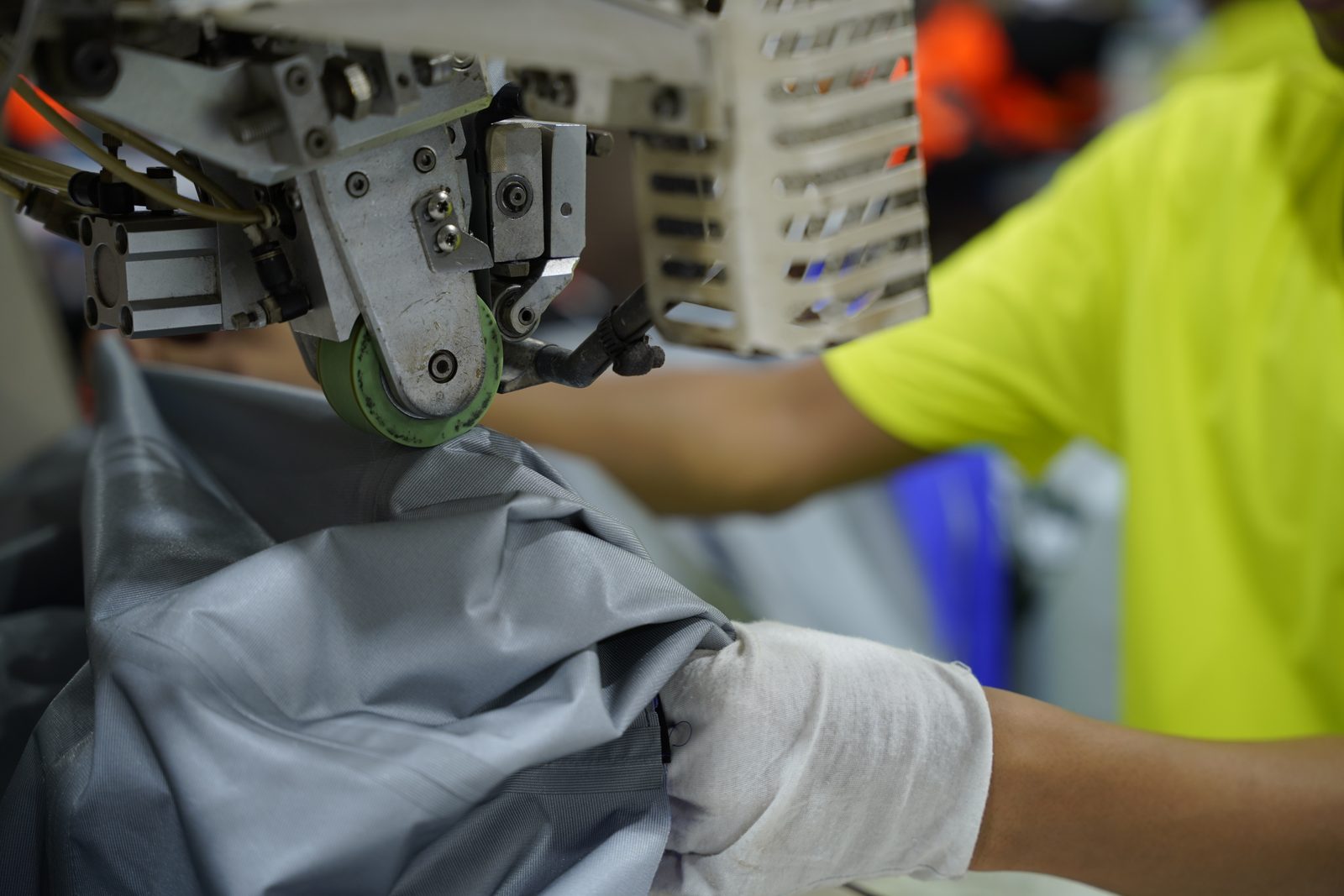
What distinguishes a sound quality system is that defects are found as early as possible. When a defect is caught at source, the factory can resolve it quickly, reduce rework, reduce waste and protect the delivery schedule.
The role of data in an ISO 9001 system
ISO 9001 does not encourage managing by intuition. A quality system needs information, records, data and evidence of how it operates. ISO also emphasises resources, competence, awareness, communication, documented information, evaluation of performance and improvement of the system.
In a real garment factory, quality data comes from many sources: defect reports on the line, inline inspection results, final inspection, defect rates by operation, repair time, the causes of repeating defects, customer feedback, internal audit results and corrective actions.
When data is recorded properly, the factory can see the real problem. For example, if the same defect repeats at the same operation, the cause may not be the operator at all. It may be an unclear instruction, an unsuitable jig, an unstable machine, a technical document that was never updated, or a line layout that does not work.
Data lets the factory move from reacting to preventing. That is an important foundation for raising production capability, especially for international customers who need consistency across many seasons.
People remain at the centre of the quality system
An effective ISO 9001 system cannot rest on forms alone. Forms record, but it is people who understand, carry out and improve the process.
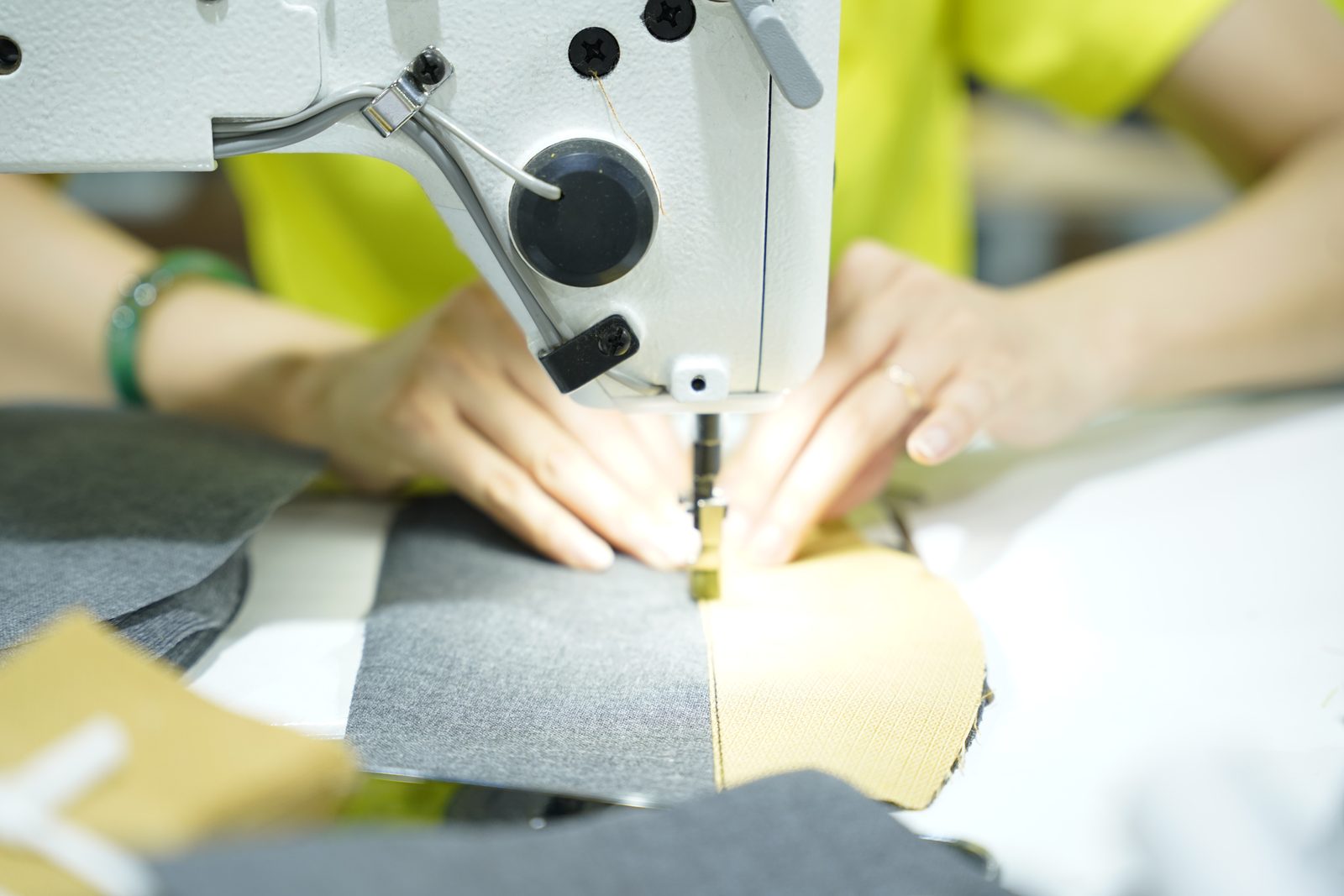
In a garment factory, operators need clear guidance on the standard for each operation. The line leader needs to know how to follow productivity and quality during the day. QC needs the capability to recognise defects early. IE needs to analyse time, handling and bottlenecks. Technical needs to turn the customer's requirement into instructions that are easy to follow. Maintenance needs to keep the machines stable. Management needs to create an environment where problems are reported honestly rather than hidden.
When people understand the reason behind a process, they do not only follow the requirement; they control quality in their own work. This matters a great deal at Viking Vietnam: building a team with skill, responsibility and the ability to hold an order steady together.
ISO 9001 and the trust of international customers
For customers in Europe, the United States, Japan and other demanding markets, a garment factory does not only need to sew well. Customers need a partner able to manage risk, respond transparently, control change and hold quality steady.
ISO 9001 creates a common language between the factory and the customer. When a customer asks about the quality control process, the factory needs a clear answer. When a customer asks to trace an issue, the factory needs records. When a defect arises, the factory needs corrective and preventive action. When an order moves from sample to bulk production, the factory needs to show that the system is ready.
For Viking Vietnam, this is the foundation for long term partnership. An international customer is not only looking for a competitive price, but for stability, transparency and a partner who can stay the course across many production seasons.
ISO 9001, ESG and sustainable manufacturing
Quality and sustainability are not separate. A product with many defects means repair work, wasted materials and trims, wasted energy, longer production time and more pressure on the workforce. When the factory gets it right the first time, operating efficiency improves and environmental impact is better controlled.
This is why ISO 9001 can support ESG thinking in garment manufacturing. A sound quality system reduces waste, increases stability, improves internal communication and raises customer satisfaction. Combined with environmental standards, social responsibility and a sustainability direction, the factory can build long term competitiveness rather than simply handling one short term order after another.
For Viking Vietnam, quality is not only a commitment to customers. It is also a responsibility to our people, to our production resources, and to our direction of becoming a sustainable partner in the global supply chain.
Summary of operational value
ISO 9001 in a garment factory is not just a certificate. It is a way of building a system so that quality is created through inputs, process, people, data and continual improvement.
An effective quality system helps the factory:
- Control risk before bulk production.
- Detect defects early at each operation.
- Reduce rework and waste and protect the delivery schedule.
- Increase transparency with international customers.
- Build a foundation for sustainable production and long term partnership.
Connect with Viking Vietnam
Viking Vietnam works alongside international brands and partners in manufacturing high performance apparel, workwear, rainwear, outdoor apparel and other technical product lines. With a systematic approach to quality management, an ESG direction and production capability serving global markets, Viking Vietnam aims to be a dependable partner for customers who need stability, transparency and responsibility in every order.
Contact Viking Vietnam to develop technical apparel that meets the quality, performance and sustainability requirements of the international supply chain.