Learn why technical jacket manufacturing requires strong factory capability in material control, fit, functional details, seams, seam sealing, QC, and stable mass production.
Small details that make a big difference.
In export garment manufacturing, the technical jacket is one of the product groups that demands the most from a factory. It is not simply a jacket with more details than an ordinary one. It is a product that combines design, material, function, workmanship, quality control and consistency through bulk production.
A technical jacket may be worn in rain, wind or cold, outdoors, on a construction site, in a factory, in an industrial zone, in sport or in travel. The wearer may need waterproofing, wind protection, insulation, reflective visibility, freedom of movement, somewhere to carry equipment, or the ability to work in it for long hours.
Every small detail therefore matters.
A pocket in the wrong place makes the garment awkward to use. An unstable seam affects durability. Seam tape that does not adhere well reduces waterproof performance. A poorly designed hood protects less in wind and rain. An unsuitable zipper affects the experience of wearing it.
For Viking Vietnam, technical jacket manufacturing is an important capability across high performance apparel, workwear, rainwear, waterproof garments, protective clothing and outdoor apparel for international customers.
1. A technical jacket starts from its purpose of use
Before producing a technical jacket, the factory needs to understand who the product is designed for and in what conditions it will be used.
An outdoor jacket is not the same as a jacket for workers outside. A rain jacket for light rain is not the same as one for heavy rain. A workwear jacket needs durability and practicality that a fashion jacket does not. A protective jacket with reflective tape has to be designed so the wearer is easily seen in low light.
The factory needs to be clear on:
- Who the end user is.
- The environment it will be used in.
- Whether the product needs to be waterproof, windproof, insulating or reflective.
- How much the wearer will move.
- Whether it has to work with a backpack, a safety helmet, gloves or other equipment.
- Whether the target market has its own climate, usage habits or technical standards.
With the purpose of use understood, the factory can control what matters rather than simply sewing to a shape.
2. Material decides most of a technical jacket's performance
Technical jackets usually use more complex materials than ordinary jackets.
Those materials can include:
- Waterproof fabric.
- Windproof fabric.
- Two or three layer laminate.
- Softshell.
- Insulating fabric or an insulation layer.
- Reflective fabric or materials carrying reflective detail.
- Abrasion resistant material at high wear areas.
- Technical lining.
Each material behaves differently. Some are heat sensitive, some stretch easily, some need surface control, some need seam sealing, some are difficult to sew where layers build up.
The factory needs to understand:
- Whether the material slips while sewing.
- Whether it shows needle marks, heat marks or distortion.
- Whether it needs a particular needle, thread, presser foot or machine setting.
- Whether seam tape should be tested before production.
- Whether colour lot or surface stability needs controlling.
- Whether it affects the shape of the garment after finishing.
On a technical jacket, good material is only the foundation. The factory's capability lies in handling that material so the finished garment keeps both its function and its shape.
3. Fit has to support real movement
A technical jacket does not only need to fit while the wearer stands still. It has to work while they move.
The wearer may:
- Raise their arms.
- Bend forward.
- Rotate their shoulders.
- Carry a backpack.
- Work outdoors.
- Sit, climb, pull, lift or handle tools.
- Wear extra layers underneath.
The fit therefore has to be developed to support movement.
The important areas are:
- Shoulder.
- Armhole.
- Back.
- Sleeve.
- Collar.
- Hem.
- Hood area.
- Pocket and zipper area.
Too tight and the jacket restricts movement. Too loose and it gets in the way or protects less. If the sleeve is wrong, the jacket rides up when the wearer raises an arm. If the hood is poorly constructed, the garment performs badly in wind and rain.
This is why pattern development and fit checking matter so much in technical jacket manufacturing.
4. The hood is a small detail with a large effect on the wearer
The hood is one of the important details on a technical jacket, especially on rainwear, waterproof jackets and outdoor apparel.
A good hood needs to:
- Cover the head properly.
- Not restrict vision too much.
- Be adjustable to the wearer.
- Hold its shape in wind and rain.
- Work together with the collar and the zipper.
- Not create a place where water collects.
- Be easy to use while the wearer is moving.
On some workwear or protective clothing, the hood may have to fit over a safety helmet or other protective equipment. The design then needs even closer checking.
A hood that looks good on the sample does not necessarily work in the field. The factory therefore needs to understand how it is used, how it is sewn, how it is sealed where needed and how to inspect it on the finished garment.
5. Zippers and storm flaps affect waterproofing, durability and usability
The zipper is a detail the wearer uses constantly. On a technical jacket, it is not simply a closure. It affects durability, water resistance, usability and the look of the whole garment.
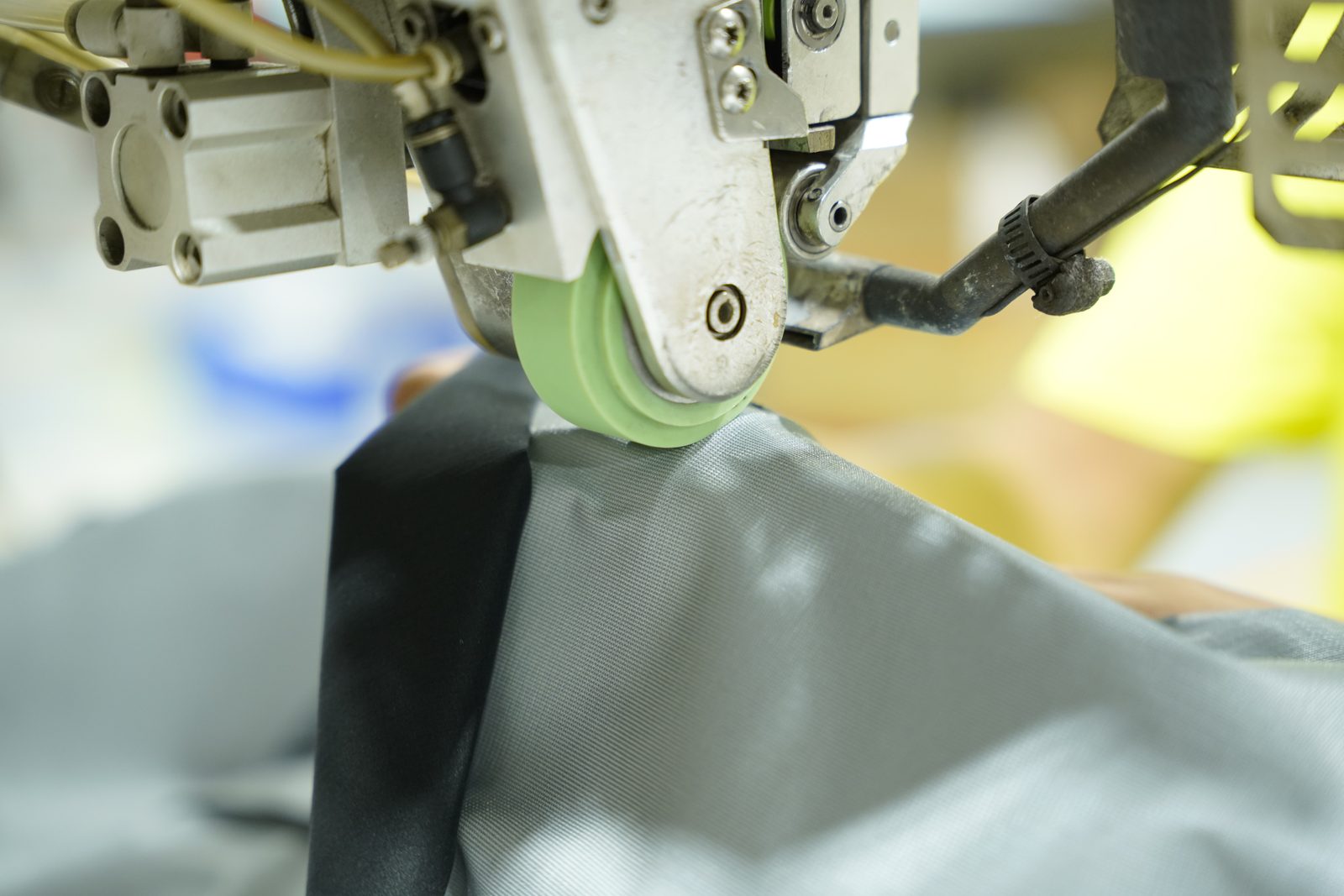
The factory needs to control:
- The zipper type.
- The direction of pull.
- How smoothly it runs.
- The durability of the teeth.
- The storm flap where the product needs to be waterproof.
- The accuracy of the zipper insertion.
- Symmetry between the two front panels.
- The position of the slider, the stopper and the top of the flap.
A misaligned zipper spoils the look. A stiff zipper is hard to use. An insufficient storm flap lets water through at the centre front. A zipper unsuited to the environment fails early.
On a technical jacket, the zipper and its flap are functional details, not ordinary trims.
6. Pockets have to be designed around how people use them
Pockets are an important detail on a technical jacket. On workwear, outdoor apparel and protective clothing especially, they are not decoration.
Pockets have to serve real use:
- What the wearer needs to carry.
- Whether the pocket opens easily with gloves on.
- Whether a backpack or a harness covers it.
- Whether it needs a storm flap.
- Whether it needs a water resistant zipper.
- Whether it creates bulk during movement.
- Whether its position affects the shape of the jacket.
- Whether it adds thickness where sewing or sealing is already difficult.
A pocket in the wrong place diminishes the wearing experience. A pocket sewn inconsistently affects durability. An outer pocket that is not handled well can hold water or create a leak point.
The factory therefore needs to control the design, the sewing technique and the quality of every pocket detail.
7. Seams have to hold at high stress areas
A technical jacket has many areas under stress and in constant movement: shoulder, sleeve, armhole, side body, collar, pockets and hem.
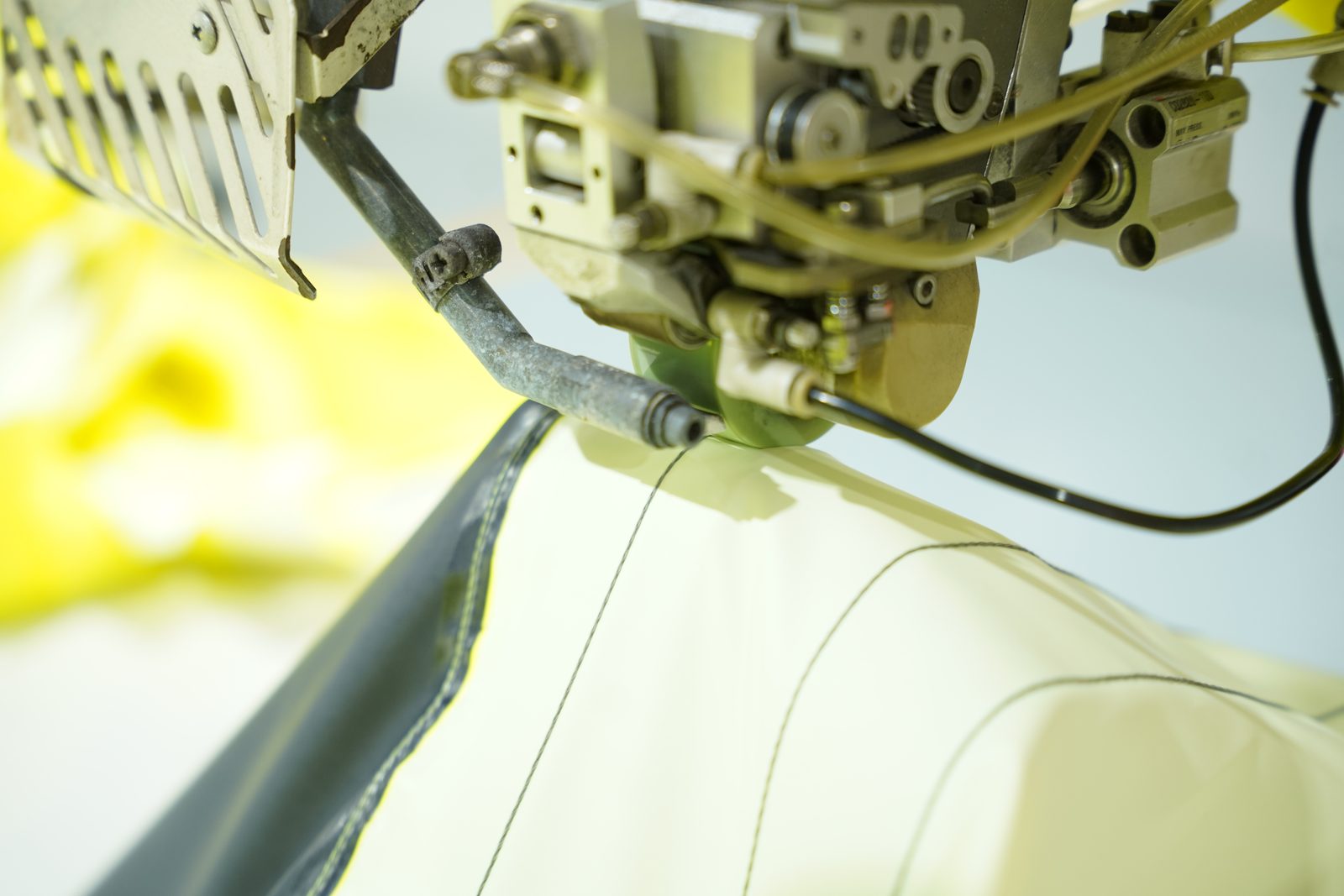
These areas need close control of:
- The stitch type.
- Stitch density.
- Seam strength.
- Evenness through multiple layers.
- Stability on curves.
- How well the shape holds after finishing.
- The risk of thread breaks or puckering.
Where the garment is used at work or outdoors, the seam has to survive repeated movement. An unstable seam shortens the life of the jacket and reduces the wearer's confidence in it.
On waterproof products, the seam also relates to seam sealing. A poor seam makes the sealing operation difficult to get right.
8. Seam sealing decides the quality of a waterproof jacket
On a waterproof jacket, seam sealing is a particularly important operation.
Waterproof fabric alone does not make a waterproof jacket if the seam is not handled correctly. When the needle passes through the fabric, the needle holes can become an entry point for water. Seam sealing covers the seam with a suitable tape.
The factory needs to control:
- The type of seam tape.
- Compatibility between tape and fabric.
- Sealing temperature.
- Sealing pressure.
- Machine speed.
- Tape adhesion.
- The fabric surface after sealing.
- Curved, intersecting and multi layer positions.
- Inspection after sealing.
An inconsistent sealed seam reduces the waterproof performance of the whole garment. Producing waterproof technical jackets therefore needs both the right equipment and a team that understands the operation.
9. Cuffs, hem and adjustment create real world fit
A technical jacket has to be adjustable to suit the wearer and the conditions.
Details such as cuffs, hem, drawcords, cord stoppers, hook and loop tabs or adjustment buckles all need careful control.
They help to:
- Keep wind and water out.
- Hold warmth better.
- Improve fit during movement.
- Let the wearer adjust around the layers underneath.
- Make the garment more usable across weather conditions.
A cuff that is too tight is uncomfortable. Too loose and the jacket protects less. A drawcord that is hard to use will not be adjusted. A weak stopper shortens the life of the garment.
These small details are often where the end user feels the quality of the product most clearly.
10. Reflective and identification details have to sit in the right place
On some workwear, protective clothing or outdoor apparel, reflective detail plays an important role in making the wearer visible.
The factory needs to control:
- The position of the reflective tape.
- Its size.
- Its adhesion.
- Symmetry between the two sides of the garment.
- Its stability after washing and in use.
- Its effect on sewing, sealing, folding and packing.
Reflective tape should not be treated as decoration. For someone working outdoors, in low light or around moving vehicles, it relates to safety.
The factory therefore needs to control it as a functional detail, not as a trim added on.
11. QC has to understand how each detail affects function
Quality control on a technical jacket cannot stop at whether the garment looks good.
QC needs to understand how each detail affects the product:
- Whether the seam affects durability.
- Whether the hood has the right shape and function.
- Whether the zipper is easy to use.
- Whether the pocket is in the right place and secure.
- Whether seam sealing adheres evenly.
- Whether cuffs and hem adjust properly.
- Whether reflective tape is in the right position.
- Whether measurements are stable across sizes.
- Whether the fabric surface was damaged during production.
QC on technical jackets has to cover appearance, measurement, construction and function. That is what sets it apart from ordinary garment inspection.
12. Bulk production has to stay consistent across sizes, colours and lots
A good technical jacket sample is not enough. International buyers need stable bulk.
Bulk production has to control:
- Measurements for each size.
- Shape across sizes.
- Colour between fabric lots.
- Consistency of trims.
- The position of details across garments.
- Seams and seam sealing between lines and between production days.
- Packing to each market's requirement.
With many colours or many sizes, the risk rises. The factory needs a clear system to avoid mix-ups and hold consistency.
For B2B customers, consistency in bulk is what protects their brand's reputation in the market.
13. Viking Vietnam and technical jacket manufacturing capability
Viking Vietnam develops manufacturing capability in technical jackets across high performance apparel, workwear, rainwear, waterproof garments, protective clothing and outdoor apparel.
Viking's approach focuses on:
- Understanding what the jacket is for.
- Controlling technical materials and functional trims.
- Developing patterns that suit real movement.
- Controlling the hood, zipper, pockets, cuffs, hem and adjustment details.
- Controlling seams and seam sealing on waterproof products.
- Training operators around each technical risk point.
- QC checking both appearance and function.
- IE supporting a stable process and sewing line.
- Coordination between technical, QC, IE, maintenance, line leaders and production.
- Holding consistency from approved sample through to bulk production.
For Viking Vietnam, a technical jacket is not simply a product with many details. It is a product that requires the factory to understand the wearer, the material and the function, and to control every small detail along the way.
Summary of operational value
Technical jacket capability shows in how well a factory controls the small details that have a large effect on quality and on the wearing experience.
A dependable factory needs to control:
- The purpose and environment of use.
- Technical materials, laminates, waterproof, windproof or insulating fabric.
- Fit that supports real movement.
- Hood, zipper, storm flap, pockets, cuffs, hem and adjustment systems.
- Seams at high stress areas.
- Seam sealing on waterproof products.
- Reflective detail and functional trims.
- QC that understands both appearance and function.
- Consistency between sample and bulk.
Connect with Viking Vietnam
Viking Vietnam works alongside international brands and partners in manufacturing technical jackets, workwear, rainwear, waterproof garments, protective clothing, outdoor apparel and high performance apparel. With technical capability, a quality control system, a trained team and experience in export production, Viking Vietnam aims to be a dependable partner for technical jacket programmes.
Contact Viking Vietnam to develop technical jackets built from the right design, suitable materials, consistent workmanship and a responsible production process.