Learn what export garment factories need to prepare for European, U.S., and Japanese buyers, from quality, technical capability, transparency, ESG, to long-term partnership readiness.
The foundations of becoming a dependable manufacturing partner in the global supply chain.
In export garment manufacturing, Europe, the United States and Japan are markets with high expectations on quality, consistency, transparency and responsibility in production. For these markets, a garment factory cannot compete on price or volume capacity alone.
International buyers increasingly look at more than output:
- Does the factory understand technical products?
- Is the production process stable?
- Is quality controlled from the start?
- When something changes, does the factory update and respond clearly?
- Do the workers operate in a safe and responsible environment?
- Does the factory have environmental and ESG management in place?
- Can the product hold consistent quality across many seasons?
For Viking Vietnam, working with international customers is not simply completing an order. It is the process of building system capability, developing people, controlling technique and creating long term trust in the global supply chain.
1. Understand the standards and expectations of each market
Europe, the United States and Japan are all demanding markets, but each one approaches the work differently.
European buyers usually focus strongly on:
- Sustainability.
- Social responsibility.
- Supply chain transparency.
- More environmentally friendly materials.
- Compliance with technical standards and certification.
- Long term cooperation.
U.S. buyers usually emphasise:
- On time delivery capability.
- Flexibility in production.
- Fast response.
- Cost control and operating efficiency.
- Clarity in communication and reporting.
Japanese buyers usually set very high expectations on:
- Precision.
- Consistency in every detail.
- Discipline in the process.
- Uniform quality.
- Careful, responsible handling of problems.
An export factory therefore needs more than the ability to “make export goods”. It needs to understand the quality culture and the expectations of each market.
2. Quality has to be built by the system, not only by final inspection
For international markets, quality cannot rest on final inspection. If a defect is only found once the garment is finished, the factory loses time on repair, raises cost and risks the delivery schedule.
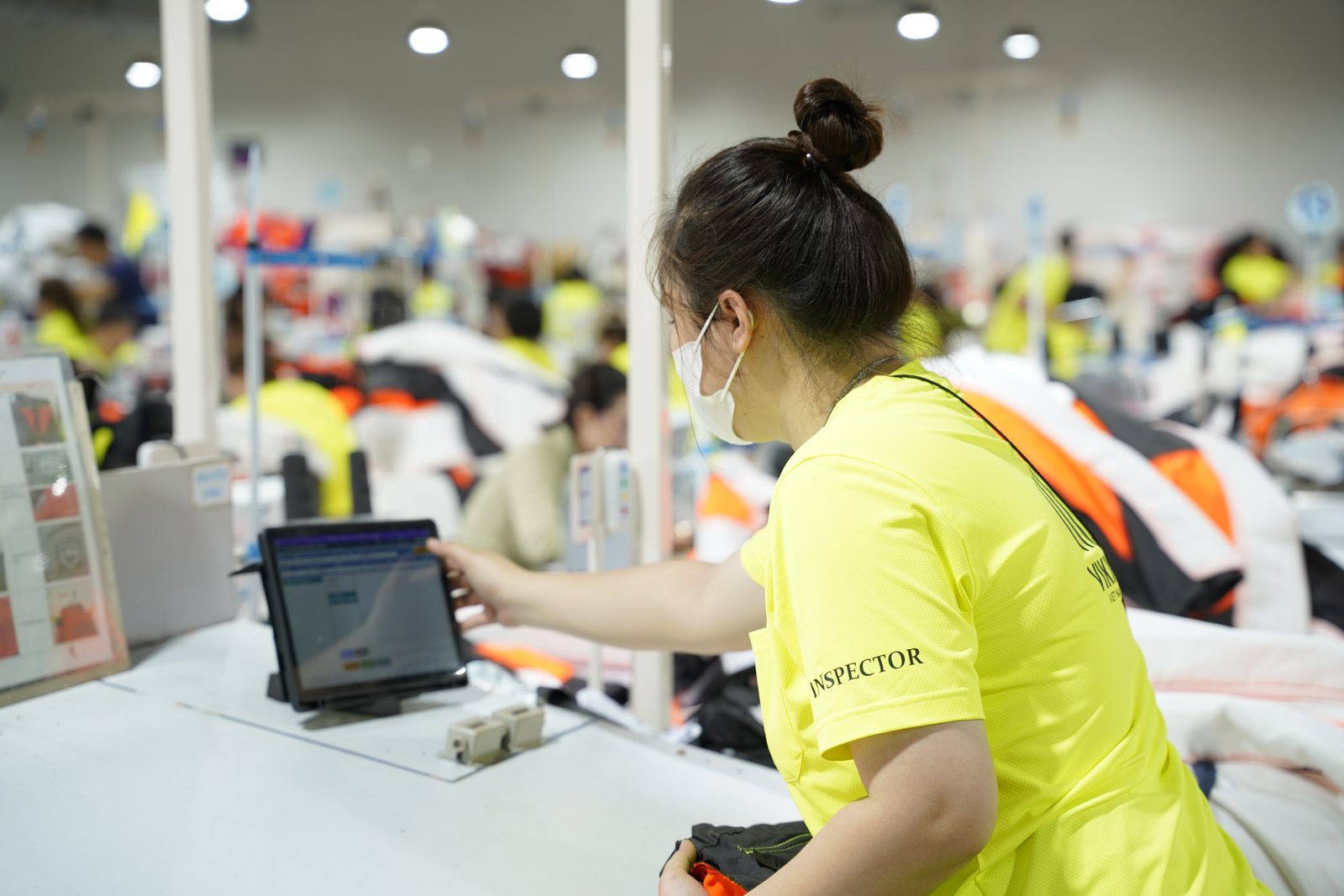
An export factory needs to build quality at many points:
- Incoming material control.
- Sample and measurement confirmation.
- Clear technical handover.
- Control of the pilot piece.
- Quality control at source.
- Inspection of semi finished parts.
- Control of special operations.
- Finished garment inspection.
- Recording defects and corrective action.
- Data for improvement on the next order.
On high performance apparel, workwear, waterproof garments, protective clothing and outdoor apparel, quality control matters even more, because the product has to work as well as look right.
A dependable factory has to show that quality comes from the system, not from luck.
3. Technical capability is the condition for serving premium products
Buyers in Europe, the U.S. and Japan are usually not looking for a factory that sews simple products. They need a partner able to produce lines with clear technical, durability and performance requirements.
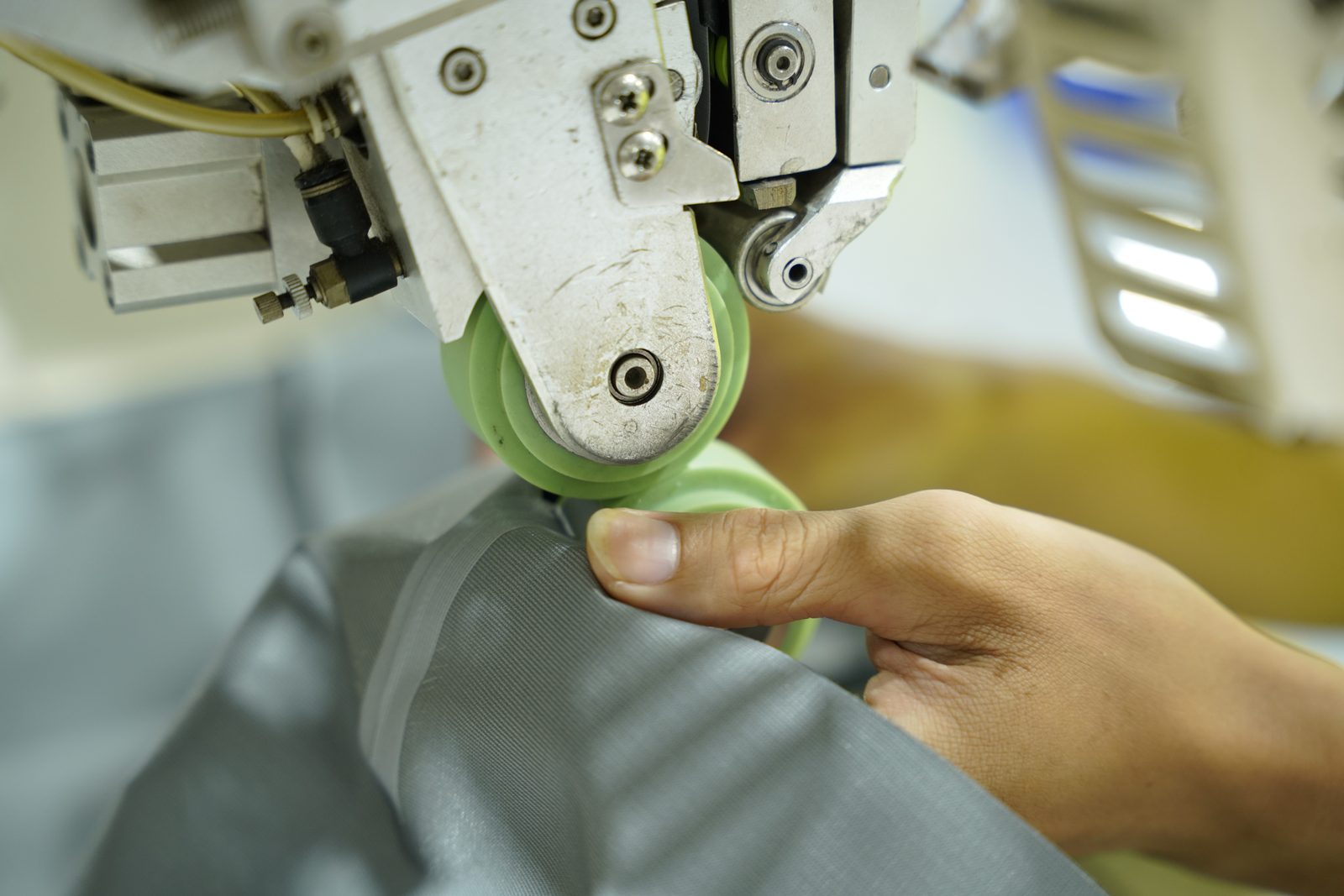
The factory needs capability in product groups such as:
- Workwear.
- Rainwear.
- Waterproof jackets.
- Protective clothing.
- Outdoor apparel.
- Insulated apparel.
- Reflective workwear.
- Technical uniforms.
- High performance apparel.
To produce these, the factory needs to understand:
- Technical materials.
- Laminate fabrics.
- Seam sealing.
- Functional trims.
- Fit that supports movement.
- Quality control standards.
- The conditions the end user works in.
A factory that only knows how to follow a sample will struggle when a technical problem arises. A factory that understands the product can analyse the risk with the customer, propose solutions and hold production steadier.
4. Transparent communication helps the customer control risk
For international buyers, clear communication is part of manufacturing capability.
An export factory needs to be able to update:
- The status of materials and trims.
- Sample progress.
- Production progress.
- QC status.
- Problems that have arisen.
- Corrective action.
- Risks affecting delivery.
- Technical or material changes.
Transparency does not mean everything is always perfect. It means that when there is a problem, the factory reports early, states it clearly, analyses the cause and offers a way to resolve it.
International buyers value factories able to respond honestly, because that lets them manage their own supply chain, selling plan and commitments to their market.
5. Change control is an indispensable capability
In export manufacturing, change can arrive at any time:
- A measurement change.
- A trim change.
- A colour change.
- A label change.
- A packing change.
- A delivery schedule change.
- A technical change requested by the customer.
Without good change control, the same order can carry several versions of the information. That leads to the wrong sample, the wrong material, the wrong packing, or a defect across the whole lot.
A good change control system makes clear:
- Who requested the change.
- Which style it applies to.
- From what point it takes effect.
- Which documents need updating.
- Which departments need to be informed.
- How goods already produced will be handled.
- Which points QC needs to recheck.
- Whether the customer needs to confirm again.
This matters a great deal to professional customers, because it protects consistency between the approved sample, bulk production and the goods that ship.
6. The factory needs material management and traceability
For Europe, the U.S. and Japan, traceability and material management are increasingly important.
The factory needs to control:
- The material supplier.
- The material code.
- The fabric lot.
- The colour.
- The trims.
- Test reports where they exist.
- Quantity received and issued.
- Storage location.
- The style it is used on.
- The link between material and finished garment.
If a problem occurs, the customer needs the factory to trace it quickly: where the material came from, which order it was used on, which line produced it, where the defect arose and how many pieces are affected.
A good traceability system is not only for audits. It helps the factory manage risk better and builds trust with international customers.
7. ESG and social responsibility are rising requirements
In the global supply chain, ESG is no longer a secondary matter. International buyers increasingly care about the conditions in which the product was made.
An export factory needs capability in:
- Environmental management.
- Working conditions.
- Occupational safety.
- Employee welfare.
- Waste management.
- Efficient use of energy.
- Social responsibility.
- Compliance with law and with customer standards.
- Transparency in records and in operation.
For Viking Vietnam, sustainability does not live in a certificate. It is how the factory operates each day: reducing waste, protecting workers, controlling environmental impact and building long term trust with customers.
8. Training the team is the foundation of lasting quality
An export factory cannot rely on machines alone. People decide how stable production is.
The factory needs to invest in training:
- Operators who understand the operation and the quality standard.
- Line leaders who can coordinate production.
- QC who can control defects at source.
- IE who can analyse output and balance the line.
- Technical who can turn customer requirements into process.
- Maintenance who can support machines and equipment in time.
- Merchandising who can communicate clearly with the customer and internally.
In demanding markets, one small defect repeated can affect the customer's own reputation. A well trained team is therefore one of the most important foundations of a dependable export factory.
9. The capacity to respond and improve decides long term growth
No factory avoids every problem. What matters is whether the factory can learn from them.
An export factory needs a mechanism to:
- Record defects.
- Classify them.
- Analyse the cause.
- Decide corrective action.
- Track the result after correction.
- Standardise the lesson.
- Prevent the same defect on later orders.
This is the foundation of continuous improvement.
International buyers value factories that do not simply patch a defect, but turn it into data for improvement. That matters most in long term cooperation, where each season needs to be better than the one before.
10. A long term partnership mindset is what sets a factory apart
A professional export factory does not only ask how many pieces the customer needs. It takes an interest in the customer's long term goals.
That includes:
- Understanding the target market.
- Understanding the end user.
- Understanding the brand standard.
- Proposing improvements where they fit.
- Communicating transparently when there is risk.
- Supporting new product development.
- Optimising quality, cost and schedule together with the customer.
- Working alongside them on ESG and sustainability goals.
That mindset makes the factory part of the customer's supply chain strategy, rather than a place where orders are made.
This is an important direction for Viking Vietnam: building cooperation on quality, trust, transparency and long term value.
11. Viking Vietnam and capability for Europe, the U.S. and Japan
Viking Vietnam develops manufacturing capability in high performance apparel, workwear, rainwear, waterproof garments, protective clothing and outdoor apparel. These product groups suit markets with high expectations on technique, quality, durability, consistency and responsibility in the supply chain.
Viking's approach focuses on:
- Understanding what each market requires.
- Controlling quality through the system.
- Developing technical capability and premium products.
- Communicating transparently with customers.
- Controlling change and maintaining traceability.
- Training the team to sustain quality.
- Connecting production with ESG and sustainability.
- Building long term cooperation with international partners.
For Viking Vietnam, working with Europe, the U.S. and Japan is not only about exporting products. It is a commitment to building a manufacturing system that is dependable, responsible and capable of serving the global supply chain.
Summary of operational value
To work with European, U.S. and Japanese markets, an export garment factory needs several foundations in place:
- Understanding the standards and expectations of each market.
- A quality system running from incoming material to finished garment.
- The capability to produce technical products.
- Transparent communication on progress, quality and risk.
- Clear control of technical change.
- Material management and traceability.
- ESG and social responsibility requirements met.
- A trained team sustaining consistent quality.
- The capacity to respond, improve and work alongside the customer long term.
Connect with Viking Vietnam
Viking Vietnam works alongside international brands and partners in manufacturing high performance apparel, workwear, rainwear, waterproof garments, protective clothing and outdoor apparel. With a direction built on quality systems, technical capability, ESG responsibility and a long term partnership mindset, Viking Vietnam aims to be a dependable manufacturing partner for European, U.S. and Japanese markets and for global supply chains.
Contact Viking Vietnam to develop technical apparel made inside a system that is transparent, consistent and responsible.