Learn why internal communication between merchandising, technical, IE, QC, maintenance, planning, and production teams is essential for maintaining quality, delivery, and export order stability.
In export garment manufacturing, a stable order does not depend only on machines, materials or operator skill. Behind an order delivered on time, to the right quality and the right technical requirement, lies continuous coordination between many departments in the factory.
Information from the customer has to be understood correctly by merchandising.
A technical change has to reach technical, IE, QC and production.
A material risk has to be updated in time by planning and the warehouse.
A defect on the line has to be fed back quickly by QC to the line leader and technical.
A machine problem has to be resolved by maintenance before it affects the schedule.
If internal communication is unclear, the same order can be understood in several different ways. The risk then does not stay in one operation; it can spread across the whole process.
Viking Vietnam builds its manufacturing direction not only around the product, but around people, process and responsibility towards the environment, as the foundation for developing as a factory that is smart, sustainable and humane.
1. Internal communication turns the customer's requirement into concrete action
On an export order, the customer usually provides a great deal of information:
- Tech pack
- Measurement chart
- Approved sample
- Sample comments
- Material and trim requirements
- Inspection standards
- Packing requirements
- Delivery schedule
- Changes arising during product development
This information cannot stay in emails or stored files. It has to become concrete action for each department.
Merchandising has to understand the customer's requirement and pass it on correctly internally. Technical has to turn the requirement into patterns, process, pilot piece and method instructions. IE has to analyse operations, layout, time and bottlenecks. QC has to define the quality control points. Planning has to arrange the schedule. The warehouse has to prepare materials and trims. Production has to implement it correctly on the line.
When information is passed clearly, the factory reduces the risk of misunderstanding. When responsibility is clearly allocated, each department knows what to do and by when.
2. Poor communication creates defects even when every department works hard
In many cases, a production defect does not happen because a department was careless. It happens because information was not passed clearly enough between departments.
For example:
- The customer updates a measurement but the sewing line is still using the old document.
- Technical changes the sewing method but QC has not been given the new control point.
- The warehouse issues the correct trim from the old list, but that list was never revised after a change.
- IE builds the layout from the original process, but the product has had an operation changed.
- Maintenance does not know the next style needs a specialised machine, so the line has to wait.
- The line leader receives an output target without knowing which operation is the quality risk.
When communication is out of step, the factory can lose time on repairs, re-inspection, layout adjustment, schedule changes, or explaining the situation to the customer again.
Internal communication is therefore not a secondary soft skill. In an export garment factory, communication is part of the system that controls quality and schedule.
3. Merchandising is the bridge between customer and factory
Merchandising plays an important role in making sure the customer's information reaches the right department, at the right moment, in the right level of detail.
An effective merchandiser does more than follow the order. They need to understand:
- What the customer is asking for.
- Which change affects technical.
- Which change affects materials and trims.
- What needs confirming again with the customer.
- Which department needs updating immediately.
- Which risk could affect schedule or quality.
On technical orders this role matters even more. Workwear, rainwear, waterproof garments, protective clothing and outdoor apparel usually carry many functional details. A piece of wrong or missing information can affect the whole production process.
Merchandising is where clarity is maintained between the market's requirement and what the factory can actually execute.
4. Technical has to communicate clearly so the standard does not stay on paper
The technical department is where the customer's requirement becomes a real production method.
However, a good technical document is still not enough if it is not communicated clearly to the line.
Technical needs to communicate with many departments:
- With merchandising, to clarify the customer's requirement.
- With IE, to define operations, time and layout.
- With QC, to agree the quality control points.
- With maintenance, to prepare machines, jigs or supporting equipment.
- With the line leader, to implement the handling correctly.
- With operators, to explain a difficult operation or a point easy to get wrong.
Viking Vietnam trains its team to understand how machines work, to recognise defects during sewing, pressing and laminating, and to analyse data so improvement is faster and more accurate.
This shows that technical is not an isolated specialism. It has to be connected to communication on the floor so the standard is actually met in bulk production.
5. QC has to feed back quickly so defects do not spread
In technical garment manufacturing, QC cannot inspect only at the end of the line. QC needs continuous communication with the line leader, technical and production.
When a defect is found, QC needs to make clear:
- What type of defect it is.
- At which operation it arose.
- Whether it repeats.
- How seriously it affects the product.
- Whether to stop and adjust, or keep monitoring.
- Which department needs to take part in resolving it.
- Whether the result is stable after the action.
If QC finds a defect but feeds it back slowly, the line can keep producing more defective garments. If QC feeds it back in time, the factory can stop the defect early.
Viking Vietnam emphasises the principle that everyone is an inspector, with people trained to recognise defects, check their own work and speak up as soon as they find a problem.
This is an important foundation for making quality communication a shared responsibility rather than QC's job alone.
6. IE lets production communicate through data
In a garment factory, many arguments arise when departments rely only on impressions.
Is this operation really slow? Where is the line blocked? Do we need another person or a different layout? Are the machines the cause? Do operators need more training, or is the process itself unsuitable?
IE brings those questions back to data:
- Operation times.
- Productivity by group of operations.
- Output per hour.
- Line layout.
- Bottlenecks.
- Machine requirements.
- The line balancing plan.
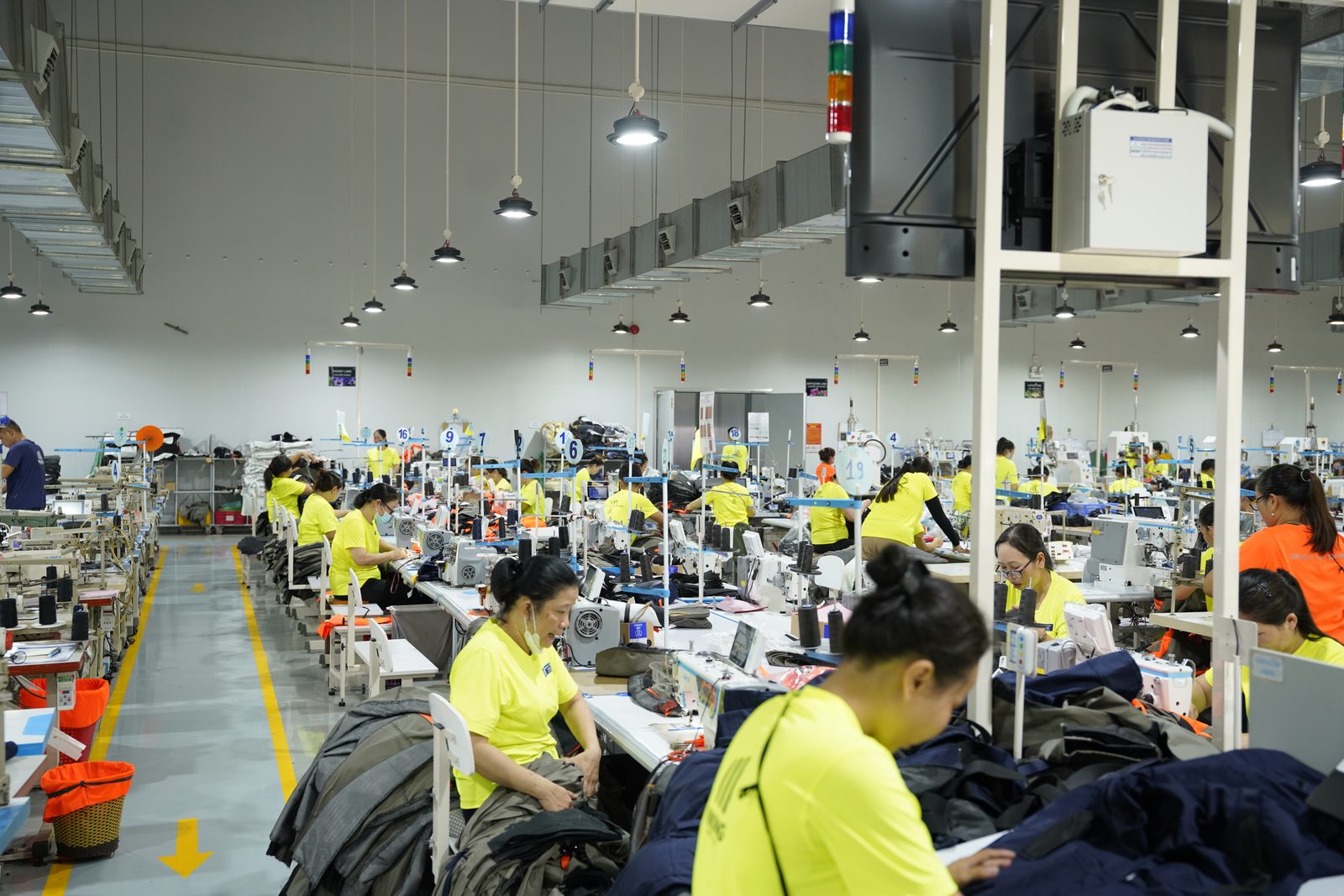
When IE communicates with data, departments share a basis for deciding. That reduces arguing on intuition and speeds up problem solving.
Viking has implemented an MES system connecting the production steps from cutting, sewing and seam sealing through to packing, so productivity, technical defects and completion rate can be tracked in real time.
Data does not replace communication, but it makes communication more accurate.
7. Maintenance needs early information to reduce interruption
Maintenance is usually called when a machine stops. But in a sound production system, maintenance does not only react to incidents. It needs to be involved early in production preparation.
Maintenance needs to know:
- Which machines the next style requires.
- Whether the material calls for machine adjustment.
- Which operation needs a jig or supporting device.
- Which machines need checking before the style reaches the line.
- Which equipment could affect the schedule.
- Whether a contingency plan is needed.
If maintenance receives the information too late, the line may have to wait for a machine, a jig or an adjustment. That hits productivity directly.
Early communication between IE, technical, maintenance and the line leader makes production more proactive, especially on products with technical materials, seam sealing or special operations.
8. The production plan needs continuous communication with the floor
A production plan cannot be set once and left alone. In reality, an order can change because of materials, the approved sample, actual productivity, defects, machines or a customer requirement.
Planning therefore needs regular communication with:
- Merchandising, on customer priorities.
- The warehouse, on the status of materials and trims.
- Production, on actual output.
- QC, on quality risk.
- IE, on bottlenecks and line balance.
- Finishing and packing, on the final stage of the schedule.
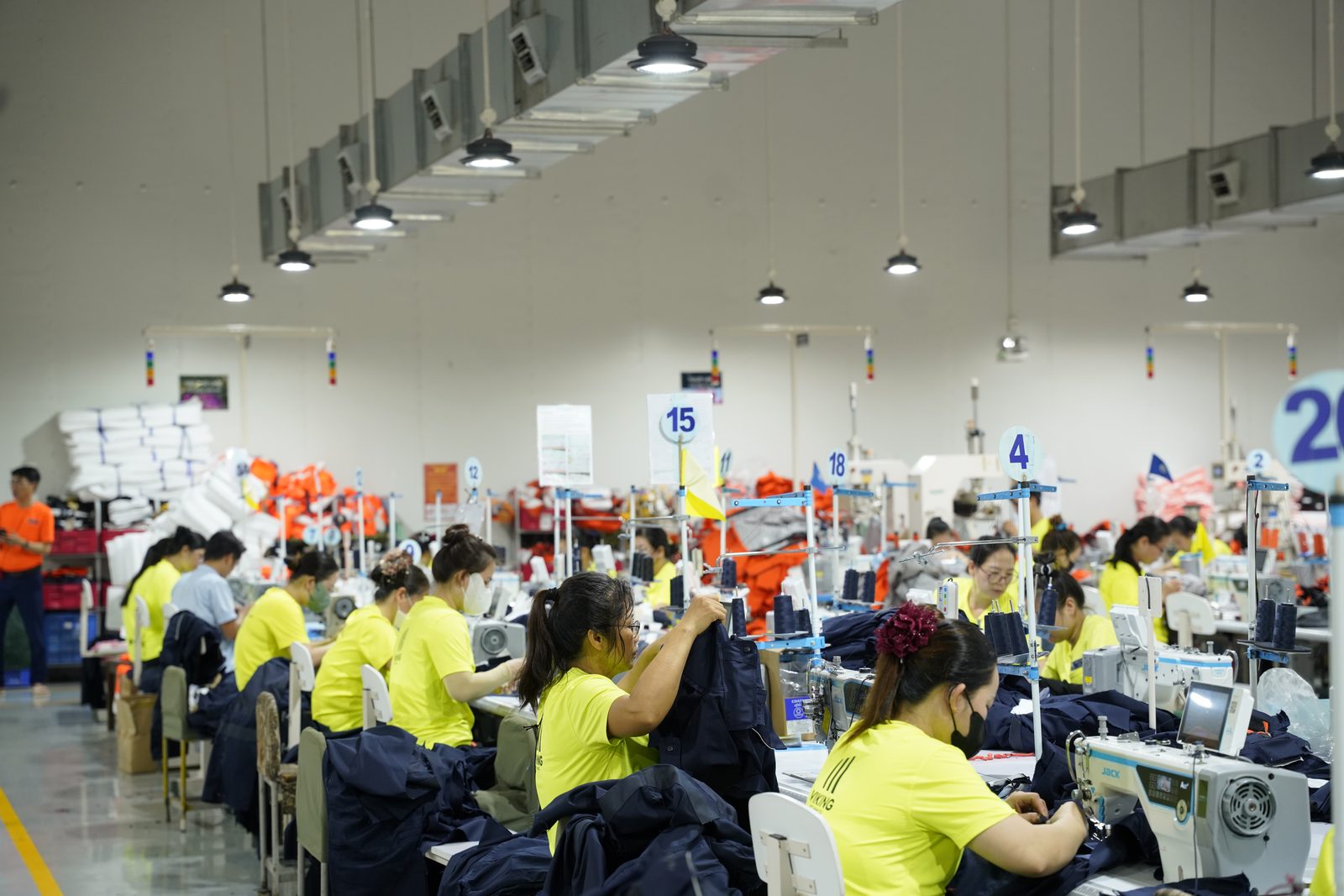
A good plan is not only a timetable. A good plan is a system that keeps updating between what was expected and what is actually happening.
When communication between planning and the floor is clear, customers receive more dependable schedule information.
9. Internal communication shapes the customer's experience directly
International customers do not see all the internal communication inside the factory. But they feel its result in how the factory responds.
When internal coordination is good, the customer receives:
- Clearer information.
- Faster responses.
- More practical solutions.
- Earlier warning of risk.
- More consistent quality.
- A more dependable schedule.
- Fewer unpleasant surprises during production.
When internal coordination is poor, customers usually wait longer, receive inconsistent information, or learn about a problem only when it is too late.
Viking Vietnam defines effectiveness not only through internal indicators, but through helping customers reach their own goals: working alongside them from the idea to the finished product, and proposing improvements when they are needed.
This is why good internal communication eventually becomes a good customer experience.
10. Internal communication is the foundation of continual improvement
Improvement cannot happen if departments do not tell each other the truth about problems.
A factory that wants to improve needs a communication environment in which:
- Defects are reported early.
- Data is shared clearly.
- Problems are seen as systemic rather than as individual blame.
- Departments analyse causes together.
- Improvement actions are followed through.
- The lesson is standardised for the next order.
Viking invests in both technical and soft skills training for operators, technicians, QC and management, including specialised defect inspection, use of inspection equipment, and root cause analysis using PDCA.
When internal communication comes with training and data, the factory has a better foundation for continual improvement.
11. Viking Vietnam and cross-functional coordination
Viking Vietnam develops manufacturing capability in high performance apparel, workwear, rainwear, waterproof garments, protective clothing and outdoor apparel. On these product lines, internal communication is an essential condition for keeping orders stable.
Viking's approach focuses on:
- Merchandising understanding the customer's requirement correctly.
- Technical turning that requirement into a clear process.
- IE analysing operations and supporting production with data.
- QC controlling quality at source.
- Maintenance preparing and supporting machines in time.
- The line leader holding the rhythm of production on the floor.
- Planning updating between what was expected and what is real.
- Departments responding quickly when a risk arises.
For Viking Vietnam, internal communication does not only make work flow more smoothly. It is part of production capability, protecting quality, schedule and the trust of international customers.
Summary of operational value
Internal communication is an important factor in keeping export orders stable in a technical garment factory.
An effective communication system helps the factory:
- Turn the customer's requirement into concrete action.
- Reduce the risk of misunderstanding between departments.
- Feed defects back early so they do not spread.
- Use IE and MES data to communicate more accurately.
- Reduce interruption by preparing machines early.
- Give customers more dependable schedule updates.
- Create the foundation for continual improvement and long term cooperation.
Connect with Viking Vietnam
Viking Vietnam works alongside international brands and partners in manufacturing high performance apparel, workwear, rainwear, waterproof garments, protective clothing and outdoor apparel. With cross-functional coordination, clear communication and a mindset of continual improvement, Viking Vietnam aims to be a dependable manufacturing partner for customers who need consistent quality, a transparent schedule and long term cooperation.
Contact Viking Vietnam to develop technical apparel made inside a production system built on clear communication, responsibility and effectiveness.