Learn why incoming material control is essential for export garment factories to ensure quality, delivery, traceability, and stability in mass production.
Product quality begins before anything reaches the sewing line.
In export garment manufacturing, people often assume quality begins at the sewing line or at inspection. In practice it begins much earlier: at the moment materials and trims enter the factory.
A metre of fabric in the wrong shade can affect a whole lot. A roll with a surface defect raises waste at cutting. A zipper with the wrong code slows the line. An incompatible seam tape can affect waterproof performance. A label with the wrong information can hold up packing and shipment.
On high performance apparel, workwear, rainwear, waterproof garments, protective clothing and outdoor apparel, materials and trims are not simply production inputs. They are part of the product's function, its durability, its safety and the experience of the person who wears it.
Incoming material control is therefore an important step in making sure an export order is produced consistently, to the right quality and on schedule.
1. Incoming material is the first quality gate
A factory can have skilled operators, strict QC and a stable sewing line. But if the incoming material is not right, everything downstream is affected.
Incoming control lets the factory confirm:
- Whether the fabric is the right type, colour and lot.
- Whether the trims are the right code, size and function.
- Whether the quantity is enough for production.
- Whether the quality matches the customer requirement.
- Whether there is a surface, colour, weave, coating or laminate defect.
- Whether any trim needs testing before it goes to the line.
- Whether any risk needs reporting back to the customer or the supplier.
Without good incoming control, a defect may only appear after cutting, after sewing or after finishing. By then the cost of handling it is far higher.
A good production system stops risk as early as it can.
2. Fabric inspection is more than looking for surface defects
In technical garment manufacturing, inspecting incoming fabric is not simply checking for dirt, tears, colour bleeding or weaving faults.
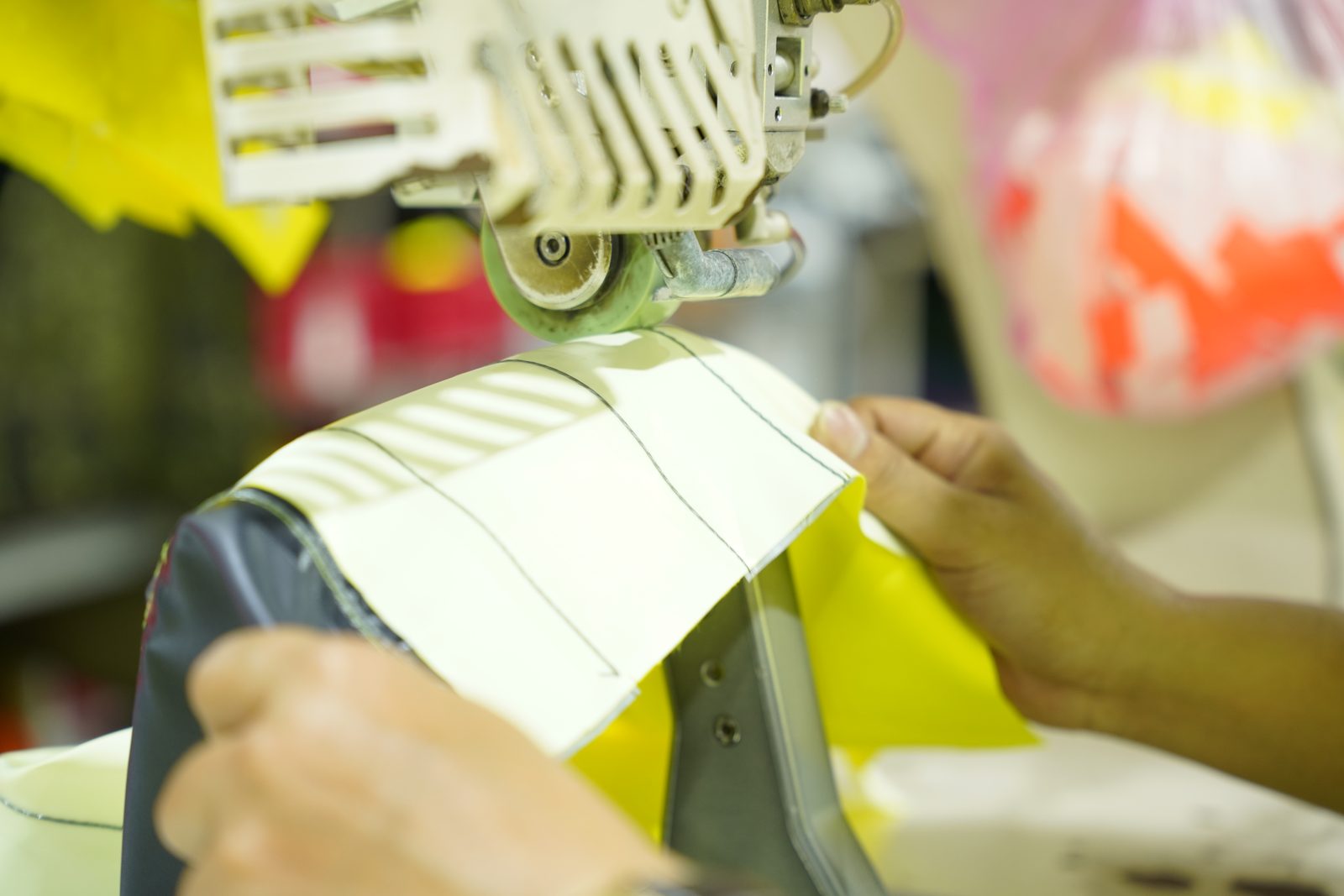
The factory needs to check more:
- Colour between rolls.
- Consistency between lots.
- Fabric width.
- Fabric weight where it matters.
- Shrinkage or dimensional stability.
- The fabric surface.
- Grain direction.
- The condition of any coating or laminate.
- Compatibility with seam tape on waterproof goods.
- How it will behave in cutting, sewing, sealing and finishing.
With laminate, waterproof, softshell or coated materials, a defect may not be obvious at first glance. A crease, a heat mark, a delaminated patch, a slight colour difference or a distorted surface can all show up in the finished garment.
Fabric inspection therefore needs an experienced eye, a clear procedure and an understanding of the final product.
3. Lot management prevents colour and quality variation
In export manufacturing, lot management matters a great deal. The same colour in a different lot can vary slightly in shade, surface or handfeel.
Without good lot control, the garment can show:
- A shade difference between front and back panel.
- A shade difference between sleeve and body.
- A shade difference between sizes in one order.
- A shade difference between shipments.
- Differences in shrinkage or in how the fabric behaves after finishing.
To avoid this, the factory needs clear management of:
- The lot code.
- The number of rolls.
- The quantity in each lot.
- The storage location.
- The plan for using each lot by colour, size or PO.
- How lots are marked when issued to cutting.
- How to trace back if a defect appears.
For international buyers, consistency in colour and quality matters. A lot mix-up can damage trust even when the stitching is perfect.
4. Trims can be the biggest risk point on technical products
On high performance apparel, trims are not only there to finish the garment. They affect function, durability and how the product performs in use.
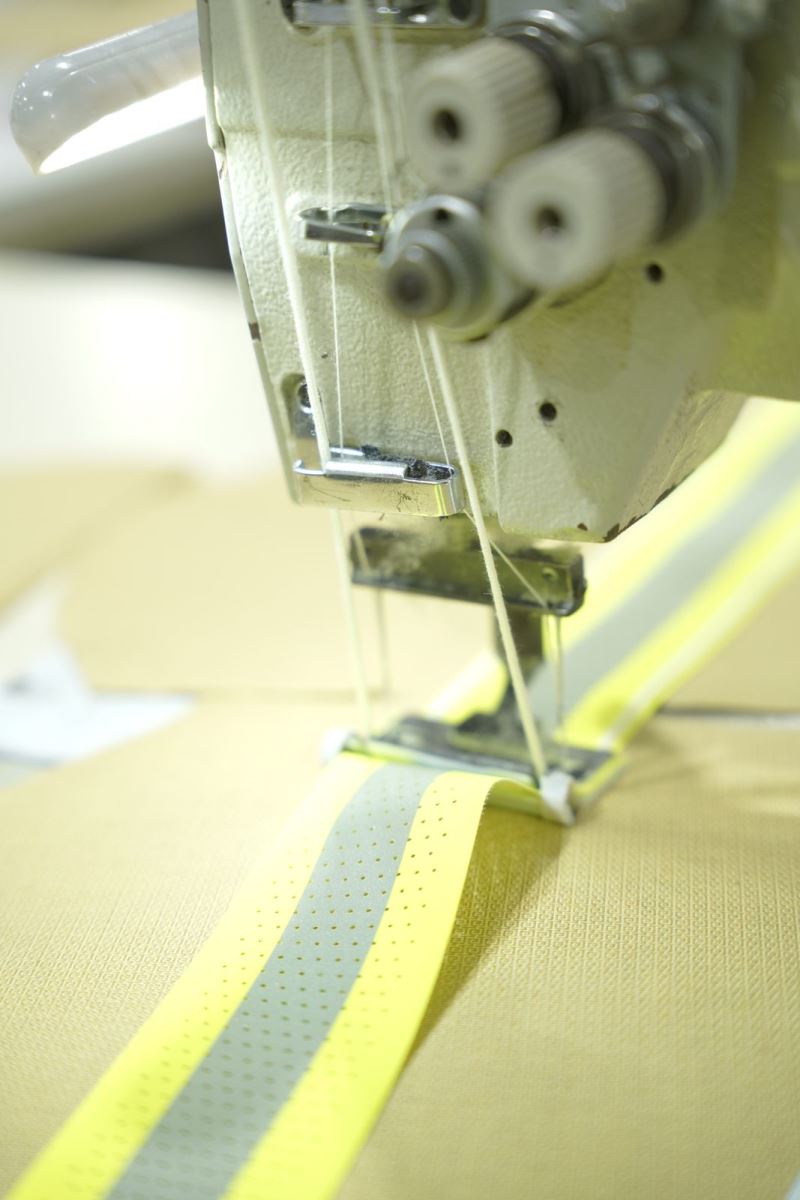
Trims needing careful control include:
- Zippers.
- Buttons, snaps, eyelets and stoppers.
- Drawcords, elastic, cuffs and hems.
- Seam tape.
- Reflective tape.
- Labels, tags, logos and badges.
- Lining or insulation.
- Packing materials.
An unsuitable zipper makes the garment hard to use. The wrong seam tape affects waterproof performance. Reflective tape in the wrong place, or of the wrong quality, affects how visible the wearer is. A label with the wrong information delays shipment.
Trims therefore need to be controlled as part of the quality system, not treated as minor supplies.
5. Controlling incoming quantity protects the schedule
Quality matters, and so does quantity.
If materials or trims fall short, the line may have to stop, change plan or run discontinuously. That affects output, schedule and cost.
The factory needs to control:
- The quantity of fabric actually received.
- The quantity of trims actually received.
- Expected wastage.
- Consumption per garment.
- The incoming defect rate.
- The quantity needed to make up a shortfall.
- When each material has to be ready before the style goes to the line.
On an export order, missing one small trim can hold up the whole shipment. A garment can be fully sewn and still not ship because a label, a tag, a drawcord or a packing item is missing.
Incoming quantity control therefore has to be tied closely to the production plan.
6. Material control reduces defects at the cutting table
The cutting table is where material starts becoming semi finished parts. If incoming fabric is not controlled, the risk at cutting rises.
The problems that can arise include:
- Cutting through a defective section.
- Spreading the fabric face the wrong way.
- Losing control of grain direction.
- Mixing lots.
- Mixing colours that look alike.
- Running short of fabric mid cut.
- High wastage caused by incoming defects.
A defect at cutting carries through to the sewing line. Wrong or defective parts can stop the line and force re-cutting or rework.
Checking fabric before cutting helps the factory reduce waste, protect the schedule and hold quality steady from the start.
7. Storage conditions affect material quality
Materials and trims need more than an inspection on arrival. They need to be stored correctly before use.
The factory needs to pay attention to:
- Humidity.
- Temperature.
- Light.
- Dust.
- How fabric is stacked.
- How small trims are kept.
- Separation by style, colour and lot.
- How material on hold or under query is managed.
- First in, first out where it applies.
With technical materials such as laminate fabric, seam tape, reflective tape or coated trims, storage matters even more. Stored wrongly, the material can be affected before it ever reaches production.
A good material store is not only tidy. It has to help the factory control risk, trace quickly and issue accurately.
8. Traceability begins with materials
When a customer needs to trace a problem, the factory has to know which material the garment was made from, which lot, which supplier and which order.
Traceability answers questions such as:
- Which PO used this fabric lot?
- Which line were these trims issued to?
- Which lot does the defective garment belong to?
- Does any other product use the same material?
- How are goods made before and after a change distinguished?
- If goods need to be quarantined, how many are affected?
For international buyers, traceability is an important part of transparency. It resolves problems faster and limits how far they spread.
A good traceability system is not only for audits. It makes the factory operate more responsibly.
9. Incoming control reduces rework and waste
When materials are not well controlled, defects appear at many later stages. The factory may have to repair garments, replace trims, re-inspect, re-cut or even scrap semi finished parts.
That creates waste:
- Wasted fabric.
- Wasted trims.
- Wasted operator time.
- Wasted electricity, machine time and inspection labour.
- Wasted sewing line capacity.
- Wasted time communicating and resolving the problem.
Good incoming control, by contrast, helps the factory get it right the first time more often. That supports quality, production efficiency and sustainability at once.
In sustainable manufacturing, preventing a defect at the start always beats fixing it at the end.
10. Material control needs coordination across departments
Incoming control is not the warehouse's or the material QC's responsibility alone. It needs several departments working together:
- Merchandising confirms the customer requirement.
- Purchasing tracks suppliers and material timing.
- The warehouse receives, stores and issues.
- QC inspects material quality.
- Technical confirms the material suits the product.
- IE calculates consumption and the effect on production.
- Planning sets when each material has to be ready.
- Production reports back when a material looks unusual.
When departments coordinate clearly, risk is found earlier. When information is fragmented, material can arrive at the right warehouse and still not be ready for production.
A good system connects material data with the production plan and with quality.
11. The value for international buyers
For international buyers, incoming material control brings real value:
- Less quality risk from the start.
- Protection of consistency between approved sample and bulk.
- Less risk of delay caused by missing material.
- Support for traceability when a problem arises.
- Less rework, less waste and lower hidden cost.
- More transparency in production.
- A foundation for ESG and responsible sourcing.
- Technical products that hold their function more reliably.
Customers need more than a factory that sews well. They need a factory that controls what goes into the product from the start.
12. Viking Vietnam and material control for technical manufacturing
Viking Vietnam develops manufacturing capability in high performance apparel, workwear, rainwear, waterproof garments, protective clothing and outdoor apparel for international customers.
On these product groups, materials and trims carry particular weight, because they affect quality and function directly.
Viking's approach focuses on:
- Inspecting materials and trims before production.
- Clear management of fabric, trims, lots, colours and styles.
- Coordination between warehouse, QC, technical, planning and production.
- Control of functional trims such as seam tape, reflective tape, zippers and special materials.
- Storage suited to the technical requirement.
- Tracing material when a problem has to be resolved.
- Reducing waste by finding risk at the start.
- Connecting incoming control with quality, schedule and sustainability.
For Viking Vietnam, material control is not just a receiving step. It is part of the quality system, and it helps export orders run more steadily from the very first foundation.
Summary of operational value
Incoming material control is what decides how stable an export order will be.
A technical garment factory needs to control:
- Main fabric, contrast fabric and technical materials.
- Functional trims such as seam tape, reflective tape, zippers, drawcords, labels and accessories.
- Quantity, lot, colour and material condition.
- Storage and issuing conditions.
- Whether the material suits the product and the process.
- The ability to trace when a problem arises.
- Coordination between warehouse, QC, technical, planning, merchandising and production.
With incoming material under control, the factory has a better foundation for controlling quality, schedule, cost and the trust of international customers.
Connect with Viking Vietnam
Viking Vietnam works alongside international brands and partners in manufacturing high performance apparel, workwear, rainwear, waterproof garments, protective clothing and outdoor apparel. With capability in incoming material control, a quality system, a technical team and a stable production process, Viking Vietnam aims to be a dependable partner for customers who need technical apparel built to export standards.
Contact Viking Vietnam to develop products controlled from incoming material through to finished garment, with quality, transparency and long term value in the global supply chain.