Learn why a first-time-right quality mindset helps technical garment factories control quality, reduce rework, minimize waste, and build trust with international buyers.
In garment manufacturing, a defective product can be repaired. A crooked seam can be unpicked and sewn again. A wrong measurement can be adjusted. A missing detail can be added.
But every repair has a cost.
That cost is not only time. It is material, energy, labour, schedule, pressure on the sewing line and the customer's trust.
On technical products such as high performance apparel, workwear, rainwear, waterproof garments, protective clothing and outdoor apparel, a defect does not only affect appearance. A small one can affect waterproof performance, durability, the position of reflective tape, freedom of movement, comfort or the safety of the person wearing it.
This is why a first time right mindset has become an important foundation in technical garment manufacturing.
For Viking Vietnam, quality should not be understood as finding defects at the end of the line. Quality has to be created from the start: in how the customer requirement is read, in incoming material control, in sample development, in production preparation, in operator training, in operation control and in feeding defects back at source.
1. First time right does not mean never having a defect
In real production, no factory can promise that a defect will never arise. Material changes, an operation may not yet be stable, a machine may need adjusting, a customer may update a requirement, or a new product may carry a risk nobody has met before.
A first time right mindset does not deny that defects happen.
It means the factory actively prevents defects rather than waiting for them and then repairing.
That includes:
- Understanding the requirement clearly before production.
- Inspecting materials and trims before they reach the line.
- Clarifying the difficult technical points.
- Confirming the pilot piece.
- Training operators before bulk runs.
- QC controlling at source.
- Feeding defects back in the early stage.
- Using data to stop a defect repeating.
A factory with this mindset does not only ask “how do we fix this defect?” It asks the deeper question: “how do we stop this defect arising in the first place, or repeating on the next product?”
2. Quality starts with understanding the customer requirement correctly
First time right begins before an operator sits down at the machine. It begins with the factory reading the customer requirement correctly.
An export order usually carries a great deal of information:
- The tech pack.
- The measurement chart.
- The approved sample.
- The bill of materials.
- Sample comments.
- Material requirements.
- Inspection standards.
- Packing requirements.
- Label requirements.
- The delivery date.
When that information is misread, defects appear later. Misreading a measurement leads to the wrong fit. Misreading a trim slows production. Misreading the position of a detail affects function. Misreading a packing requirement affects shipment.
On technical products this matters even more. A seam, the position of seam tape, a reflective detail or the type of zipper can each relate to how the product works.
Quality therefore has to begin with clarity, both in communication with the customer and between departments inside the factory.
3. Material control stops defects at the root
A product cannot hold consistent quality if the incoming material is not controlled.
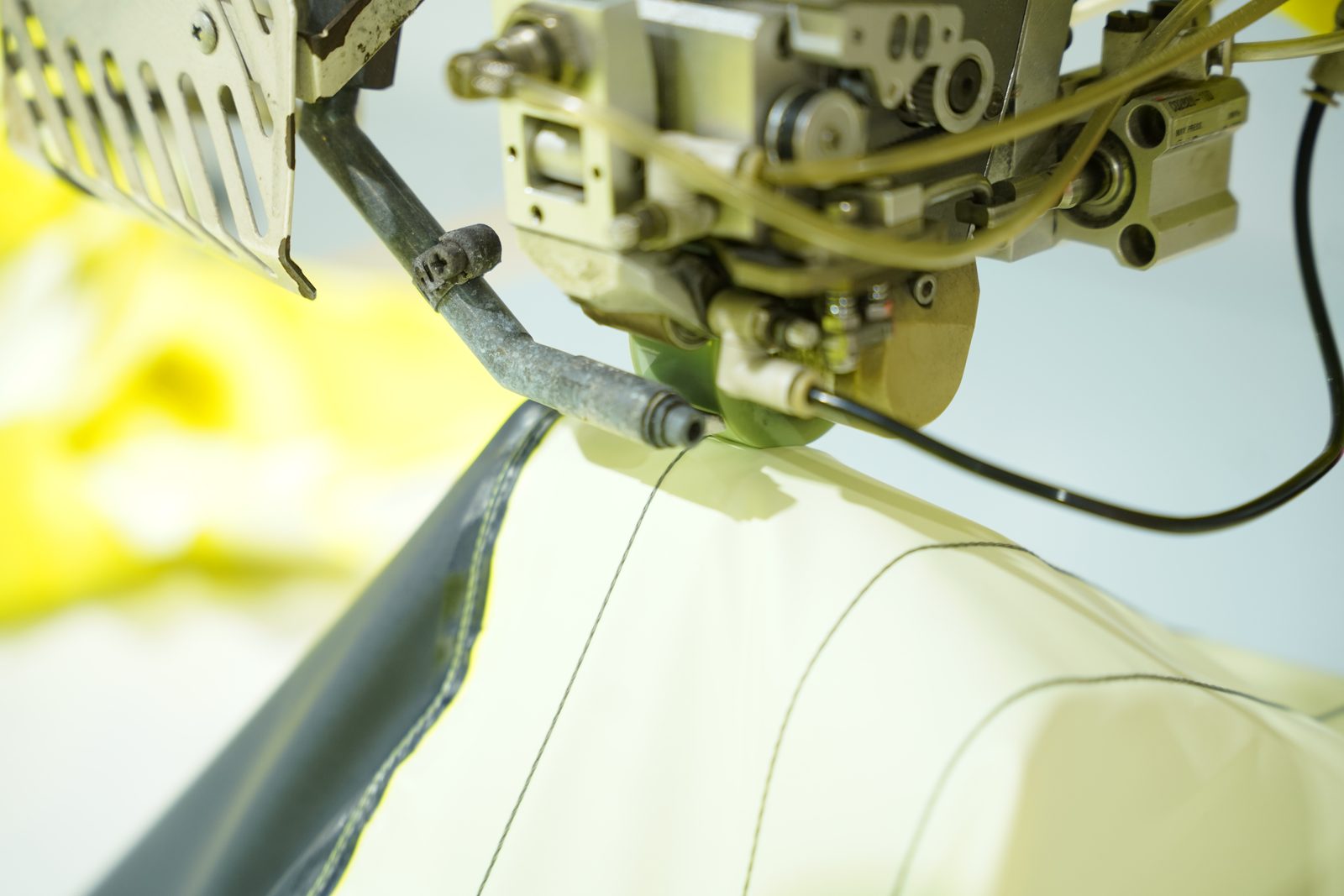
First time right requires the factory to check:
- Whether the fabric is the right code, colour and lot.
- Whether the trims are the right type.
- Whether the quantity is enough for production.
- Whether the fabric has a surface, colour or structural defect.
- Whether the functional trims suit the product.
- Whether seam tape, reflective tape, zippers, labels, drawcords and cuffs match the requirement.
- Whether any material needs testing before production.
If defective fabric is only found after cutting, the factory has to re-cut. If the wrong trim is only found after sewing, it has to be unpicked. If an incompatible seam tape is only found after sealing, the whole batch can be affected.
Good incoming control reduces defects at the root. It is one of the most practical ways to protect quality, schedule and cost.
4. The pilot piece is an important risk gate
The pilot piece is a crucial step in a first time right approach.
It lets the factory confirm:
- Whether the sewing line has understood the product.
- Whether operators are working correctly.
- Whether machines are properly prepared.
- Whether the right materials and trims are being used.
- Whether measurements are stable.
- Whether stitching, details, seam sealing and functional trims meet the requirement.
- Whether QC knows the points to check.
- Whether technical needs to re-explain anything.
When the pilot piece is checked carefully, the factory finds defects while the quantity is still very small. Skipped or done loosely, a defect can spread across tens, hundreds or thousands of garments.
For international buyers, the pilot piece is an important signal that the factory controls the product before bulk runs.
5. QC at source reduces dependence on final inspection
Final inspection is necessary, but it should not be the only control point.
If the factory relies on final inspection alone, a defect may already have travelled too far. Repair then costs more and the delivery pressure is greater.
QC at source finds defects earlier at each operation:
- A sewing defect is caught right after the operation.
- A measurement defect is checked in the early stage.
- A seam sealing defect is checked after sealing.
- A trim defect is found before packing.
- A repeating defect is reported straight to the line leader and technical.
QC at source is not the QC department's job alone. It needs operators, line leaders, technical, IE and production management.
When each person understands the standard and can self check within their own work, quality is created during the process rather than only discovered at the end.
6. Operators need to be trained to understand why it matters
In technical manufacturing, operators need more than the motion. They need the reason behind it.
A seam does not only need to be straight. It can relate to durability. Reflective tape does not only need to look right. It can relate to how visible the wearer is. A seam tape does not only need to adhere. It can relate to waterproof performance. A pocket does not only need to match the sample. It can relate to how usable the garment is at work.
When operators understand why their operation matters, they tend to work more carefully and to report problems sooner.
Training should focus on:
- The operation standard.
- Common defects.
- Acceptable and defective examples.
- How to self check.
- The risk points of the product.
- When to report to the line leader or QC.
- What the product means to the person who wears it.
First time right cannot rest on a slogan. It has to be built through real training on the floor.
7. IE supports first time right through a sound process
A difficult operation, an unsuitable layout or an unbalanced line can all raise the defect rate.
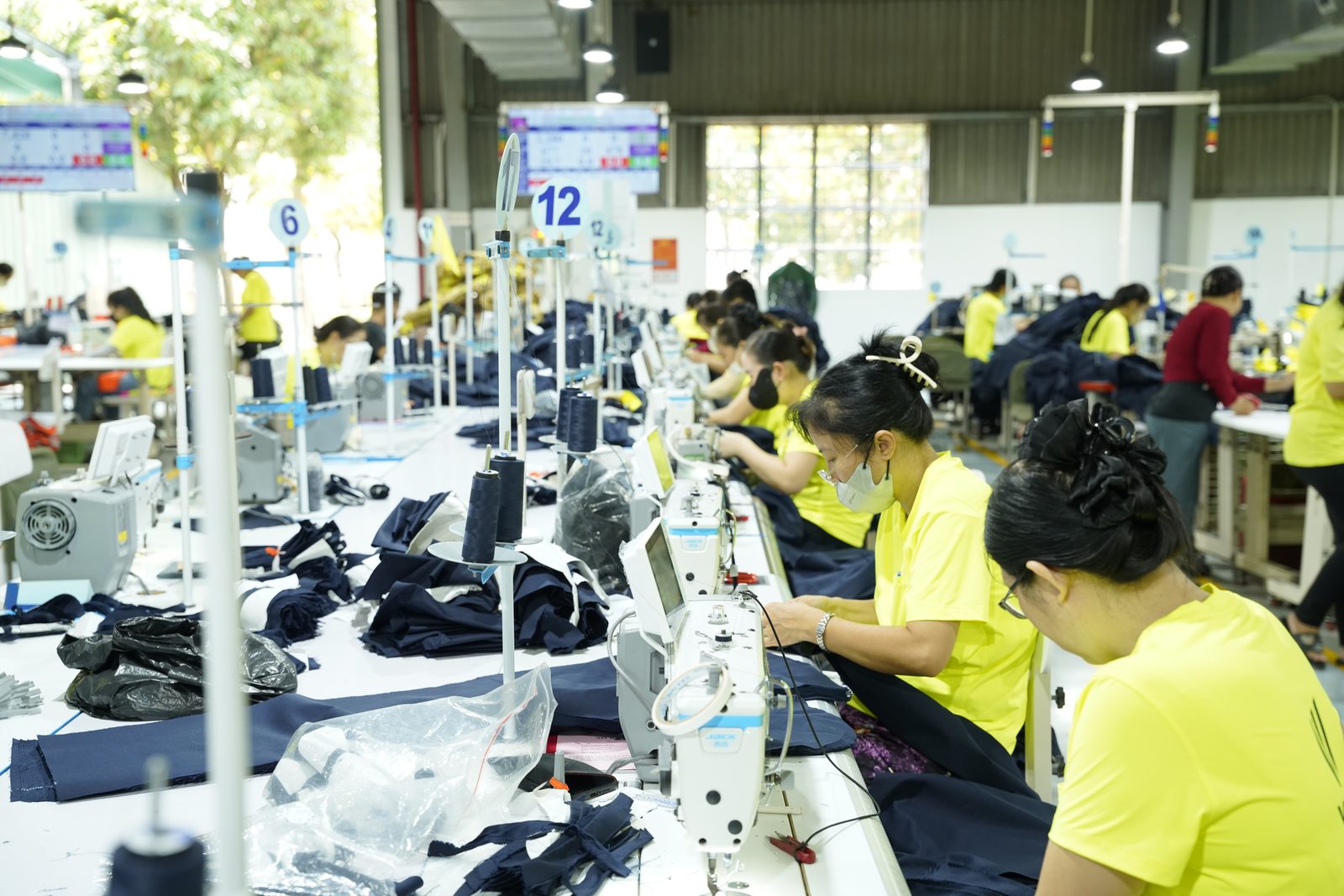
IE plays an important role in supporting first time right through:
- Operation analysis.
- Identifying bottlenecks.
- Laying the line out sensibly.
- Calculating operation times.
- Proposing attachments or supporting equipment.
- Adjusting the process to remove unnecessary motion.
- Working with technical to clarify difficult operations.
If an operator has to work inside a process that has not been thought through, asking them to “do it right” is very hard. When the process is designed well, doing it right becomes easier, steadier and less prone to defects.
First time right is therefore not only the responsibility of the person at the machine. It belongs to the whole system that designs the process.
8. Maintenance prevents defects caused by machines and equipment
In a garment factory, a defect sometimes starts not with a person but with a machine.
A machine unsuited to the material. The wrong needle. An unsuitable presser foot. An unstable sealing machine. An inaccurate attachment. Equipment that has not been maintained.
These can cause seam defects, puckering, misalignment, thread breaks, heat marks, tape lifting or unstable measurements.
Maintenance needs to be involved before and during production to:
- Prepare machines for the product requirement.
- Adjust machines to the material.
- Check equipment before the style goes to the line.
- Supply attachments for difficult operations.
- Respond quickly when a machine causes a defect.
- Maintain on schedule to reduce interruptions.
A first time right system needs stable machines, not only careful people.
9. Defect data lets the factory learn and stop defects repeating
First time right is not only about the order in front of you. It also means learning from defects so the next order is better.
Defect data tells the factory:
- Which defect appears most often.
- Which operation it appears at.
- Whether it belongs to operation, material, machine or technique.
- Whether it repeats on similar styles.
- Whether the corrective action worked.
- Who or which operation needs retraining.
- Whether a document or process needs updating.
Without data, the factory resolves problems on intuition. With data, it can improve where it matters.
This is the foundation for reducing rework and raising quality over time.
10. First time right reduces waste and supports ESG
A defective product does not only affect quality. It creates waste.
A defect increases:
- Time spent on repair.
- Consumption of thread, fabric and trims.
- Electricity and energy running machines.
- Pressure on operators.
- Time spent re-inspecting.
- The risk of late delivery.
- The chance of scrap or rejected goods.
First time right is therefore part of sustainable manufacturing.
When the factory reduces defects, it also reduces wasted resources, eases operating pressure and raises production efficiency. This is where quality, productivity and ESG meet.
For international buyers, a first time right factory does not only deliver a steadier product. It makes the supply chain more responsible.
11. The value for international buyers
International buyers value a first time right mindset because it brings real benefits:
- More consistent quality.
- Fewer repeating defects.
- Less rework.
- More dependable delivery.
- More transparent production data.
- Lower risk in bulk production.
- Technical products that hold their function better.
- A sounder basis for long term cooperation.
On workwear, waterproof garments, protective clothing and outdoor apparel especially, customers need more than a product that passes final inspection. They need a product made inside a system able to prevent defects from the start.
12. Viking Vietnam and the first time right mindset
Viking Vietnam develops manufacturing capability in high performance apparel, workwear, rainwear, waterproof garments, protective clothing and outdoor apparel for international customers.
In its operating direction, Viking focuses on:
- Understanding the customer requirement correctly.
- Controlling incoming materials and trims.
- Clear technical preparation before production.
- Controlling the pilot piece.
- Training operators around the product's risk points.
- QC at source.
- IE supporting a sound process and layout.
- Maintenance keeping machines stable.
- Defect data serving continuous improvement.
- Reducing rework and waste while protecting the delivery schedule.
For Viking Vietnam, first time right is not only a quality control method. It is an operating mindset: each department needs to understand its part in making a product that is consistent, dependable and responsible towards international customers.
Summary of operational value
A first time right mindset helps a technical garment factory control quality at the root instead of repairing defects at the end.
A first time right system needs:
- A clear understanding of the customer requirement before production.
- Control of incoming materials and trims.
- Confirmation of the pilot piece.
- QC at source.
- Operators trained to know the standard and the risk points.
- IE designing a sound process.
- Maintenance keeping machines stable.
- Defect data recorded for improvement.
- Quality tied to waste reduction, ESG and production efficiency.
Connect with Viking Vietnam
Viking Vietnam works alongside international brands and partners in manufacturing high performance apparel, workwear, rainwear, waterproof garments, protective clothing and outdoor apparel. With a first time right mindset, quality control at source, a trained team and the capacity for continuous improvement, Viking Vietnam aims to be a dependable manufacturing partner for customers who need consistent quality, a clear schedule and sustainable development.
Contact Viking Vietnam to develop technical apparel made inside a production system built on doing it right the first time, reducing waste and creating long term value.