Learn how a technical garment factory turns production defects into improvement data to control quality, reduce rework, and build trust with international buyers.
In garment manufacturing, no factory wants defects. But how a factory looks at a defect, and what it does about it, says a great deal about its real operating capability.
A small defect that is ignored can repeat across many garments.
A defect that is repaired without analysing the cause can come back on the next order.
A defect that is recorded correctly, fed back correctly and resolved correctly becomes valuable data for improvement.
In technical garment manufacturing, and especially on high performance apparel, workwear, rainwear, waterproof garments, protective clothing and outdoor apparel, a defect does not only affect how the product looks. A fault in a seam, in seam sealing, in material, in reflective tape, in measurement or in a trim can affect how the product performs, how long it lasts and how safe it is for the wearer.
A dependable factory is therefore not one that claims it never has defects. It is one with a system to find defects early, analyse the cause, resolve them responsibly and turn the problem into lasting improvement.
Viking Vietnam defines production efficiency not only as speed, but as the ability to secure quality from the first operation, operate in step across departments, and build quality thinking at the root.
1. A small defect can be the signal of a systemic problem
In production, a small defect is easily treated as an isolated incident. But if it appears repeatedly, at the same operation or on the same group of products, it can be the signal of a systemic problem.
A defect can come from many causes:
- The operator was not given clear enough guidance.
- The technical file was not updated.
- The pilot piece was not carefully controlled.
- The machine or jig is not suitable.
- The material behaves differently from the previous run.
- The line layout makes the handling difficult or the flow awkward.
- QC did not feed the defect back early enough.
- IE has not identified the bottleneck in that operation.
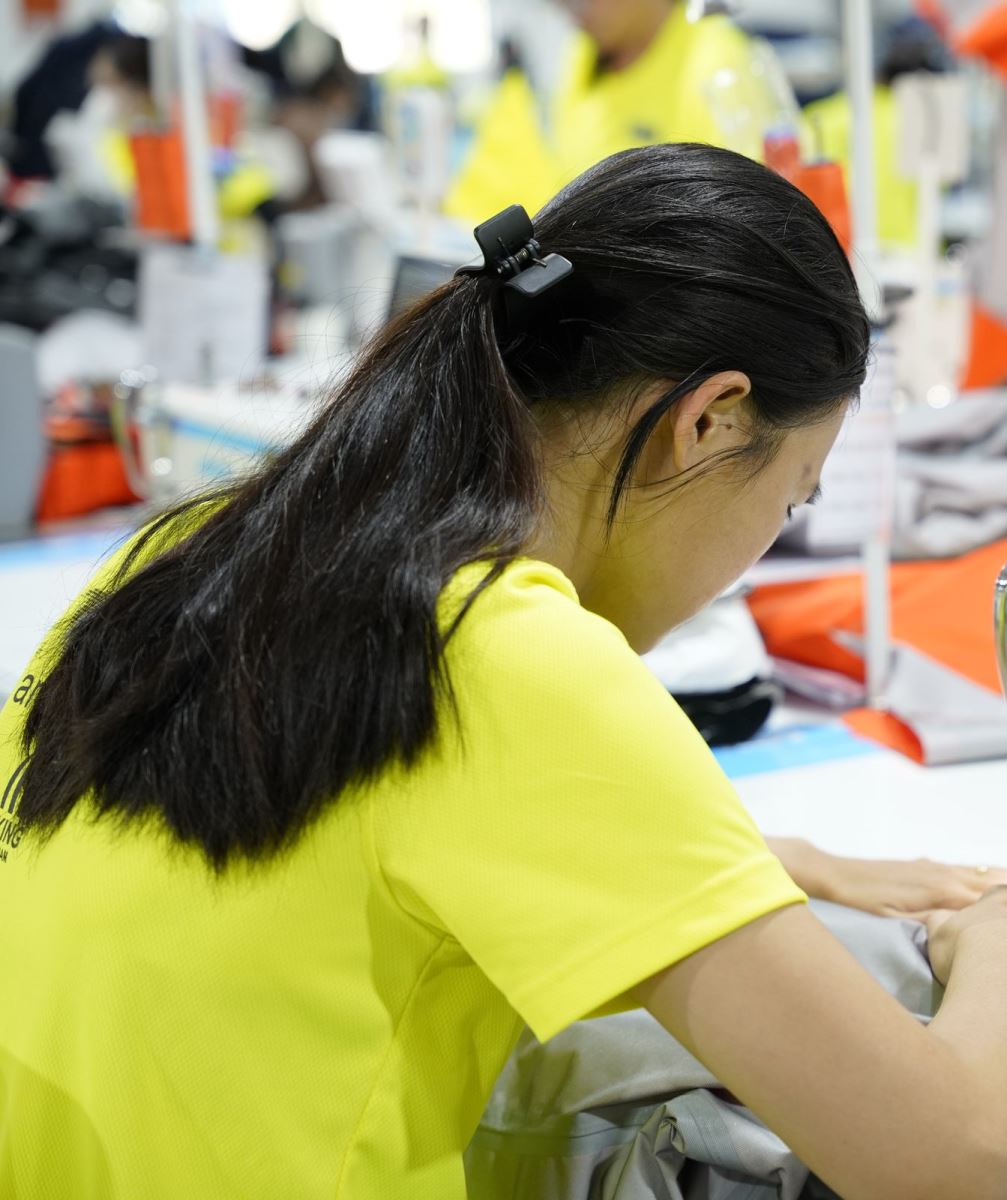
Seen only as an individual mistake, the root cause gets missed. Seen as a signal from the system, the defect becomes a chance to improve the right thing.
That is the difference between repairing a defect and learning from it.
2. Recording the defect correctly is the first step of improvement
A defect only has improvement value when it is recorded correctly.
If defects are recorded too generally, the factory cannot analyse them. If everything is written down as a sewing defect, the team will not know which seam, which operation, which size, which line, which material or which moment it relates to.
A sound defect recording system needs to make clear:
- What type of defect it is.
- At which operation it arose.
- The style, size, colour or PO concerned.
- The person or group of operations involved.
- How serious the defect is.
- Whether it has repeated.
- What the temporary action was.
- Which department needs to analyse it further.
In a technical garment factory, defect data does not exist to fill a report. It is the basis for improving the process, retraining operators, adjusting technical documents, changing the layout, checking machines, or going back to the customer where needed.
3. Classifying defects tells the factory who needs to act
Not every defect is resolved by the same department. An effective quality system classifies defects so the problem reaches the right specialist.
For example:
- A handling defect needs the line leader and technical to guide the operator again.
- A measurement defect needs technical to check the pattern, the documents and the implementation.
- A repeating seam defect may need maintenance to check the machine or the jig.
- A seam sealing defect calls for a review of temperature, pressure, speed and the compatibility between tape and fabric.
- A fabric surface defect calls for checking the material, how it was stored or how it was handled.
- Low productivity may need IE to analyse the operation, the layout or the line balance.
- A repeating final inspection defect calls for a review of the control points at source.
When defects are clearly classified, the factory does not waste time solving the wrong thing. The departments involved coordinate faster, in the right roles, more effectively.
Viking Vietnam values a culture in which everyone is trained to recognise defects, check their own work and speak up when they find a problem, rather than treating quality as QC's job alone.
4. Early feedback stops a defect from spreading
In bulk production, the timing of defect feedback matters enormously.
If a defect is found on the first product, the factory can resolve it quickly. If it is found only after hundreds of garments are finished, repair cost, schedule pressure and delivery risk all rise sharply.
Early feedback needs coordination between:
- QC finding the defect at source.
- The line leader adjusting the handling or the staffing.
- Technical clarifying the sewing method or the standard point.
- IE analysing the operation if the defect relates to time or difficulty.
- Maintenance checking the machine, the jig or supporting equipment.
- Production management deciding how to re-coordinate if the schedule is affected.
A small defect fed back early can save the factory from a large problem.
For international customers, the ability to feed defects back early is a sign that the factory controls production actively.
5. Root cause analysis keeps the defect from coming back
Repairing a defect is necessary, but not sufficient. If the root cause is not addressed, the defect can return on the same style, the same line or the next order.
Root cause analysis needs to answer:
- Where did the defect really begin?
- Why did it happen?
- Why did the earlier control point not catch it?
- Does it relate to people, machines, material, method or the production environment?
- Is any document unclear?
- Is retraining needed?
- Does the process or supporting equipment need changing?
- What is the preventive action?
In practice, many defects cannot be resolved by telling people to be more careful. If the operation is too difficult, the material is hard to handle, the layout is awkward, the instruction is unclear or the machine is unstable, asking the operator for more care is only a temporary fix.
A factory that learns from defects improves the system rather than only reminding an individual.
6. PDCA turns a problem into an improvement cycle
In quality management, PDCA is an important way of thinking: Plan, Do, Check, Act.
In a garment factory it can be understood very practically:
- Plan: identify the defect, the cause and the action needed.
- Do: carry out the action in the department concerned.
- Check: verify the result after the action.
- Act: standardise the new way if it works, or adjust if it does not.
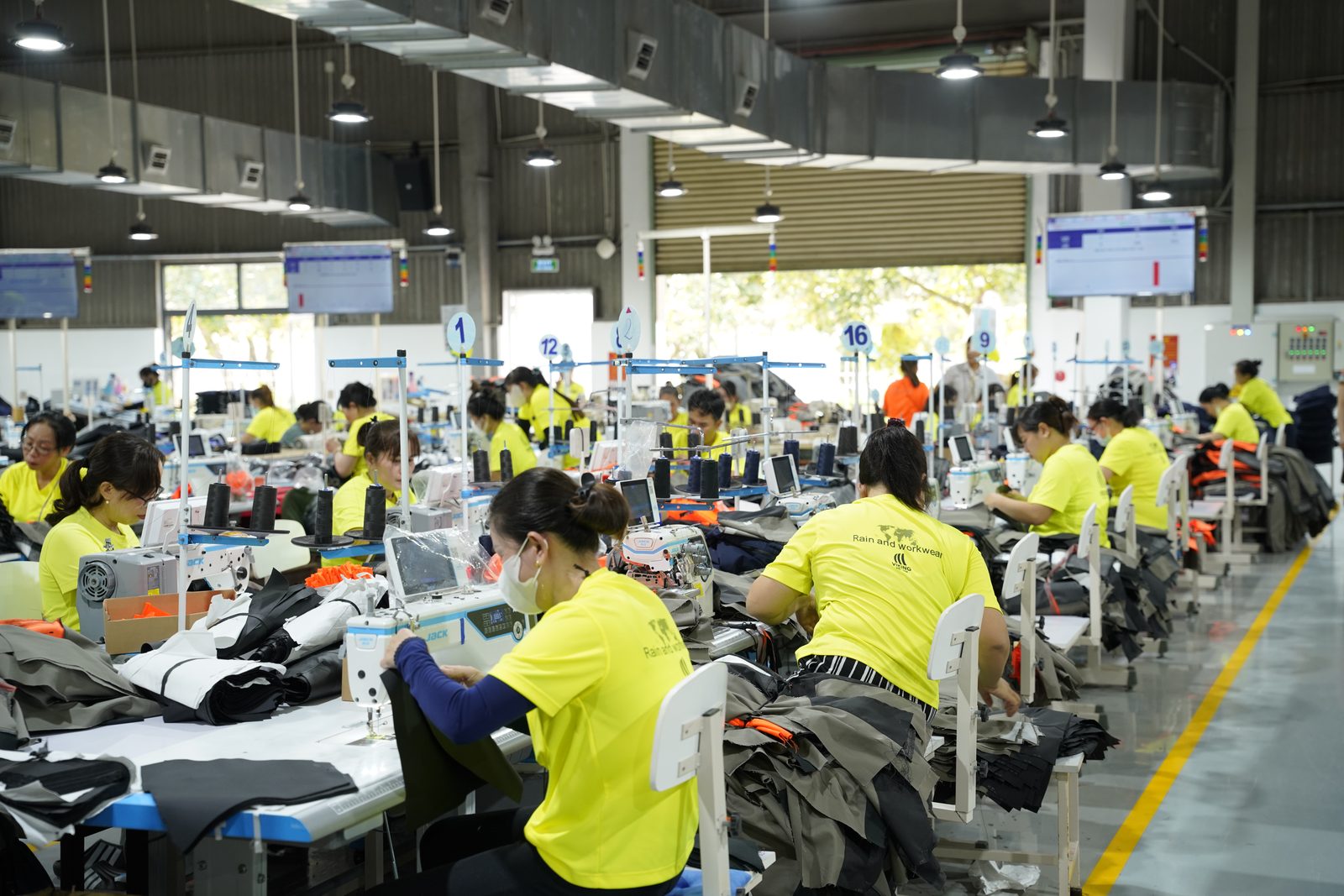
For example, if a seam defect repeats at one operation, the factory can:
- Plan: identify the defect and analyse the cause in handling and machine.
- Do: guide the operator again, adjust the machine or add a jig.
- Check: track the defect rate over the following hours.
- Act: update the method instruction if the solution works.
Viking Vietnam trains operators, technicians, QC and management in root cause analysis using the PDCA method.
When PDCA becomes a habit, the factory does not only resolve problems one at a time; it raises its operating capability step by step.
7. Quality defects have to be connected to productivity and cost
In garment manufacturing, a defect does not only affect quality. It affects productivity, cost, schedule and the morale of the team.
A repeating defect can produce:
- More repair time.
- Lower actual output.
- More consumption of thread, trims or material.
- More pressure on operators and the line leader.
- Delay to the operations that follow.
- Higher risk of late delivery.
- Extra cost of re-inspection.
Improving quality is therefore also improving production efficiency.
In Viking's own framework, efficiency is defined not only by speed or cost, but by the integrity of the process, the maturity of the team and the trust of the customer.
That fits the approach of improving from defects: reducing defects is not only about a better looking product, but about a steadier system overall.
8. Defect data makes worker training more accurate
Effective training should not rest on generic content. Real defect data tells the factory exactly what needs training.
If the data shows that one operation frequently produces defects, the factory can:
- Review how the handling is taught.
- Prepare a defective sample and an acceptable one so operators can see the difference.
- Add photos or video of the correct handling.
- Retrain the group of operators involved.
- Have QC repeat the control point at the line.
- Track the result after training.
Defect data makes training specific, practical and directly connected to production.
On technical products this matters even more. Operators need to understand not only how, but why that operation affects how the product performs.
9. Learning from defects raises capability on new products
Every new order can bring new requirements: a new material, a new construction, a new trim, a new process or a new standard.
If the factory has the habit of learning from defects, the experience of one order becomes an asset for the next.
For example:
- A seam sealing defect on one product can improve how tape is tested on the next.
- Reflective tape lifting after sewing can lead the factory to check that trim more carefully before production.
- A measurement defect on small sizes can make technical more careful when grading.
- A handling defect on a difficult operation can help IE prepare a better layout or jig.
- A packing defect can help the warehouse and packing update their checklist.
A factory that does not learn from defects repeats the same problem. A factory that does builds capability that accumulates across production seasons.
For international customers, that is a great deal of value in a long term relationship.
10. Being transparent when something goes wrong builds trust
In B2B cooperation, customers do not expect a perfect factory. What they need is transparency and responsibility when something goes wrong.
When a defect could affect the order, the factory needs to communicate clearly:
- What the problem is.
- How much quantity it affects.
- What the initial cause is.
- What the factory has done about it.
- What the preventive action is.
- Whether the customer needs to confirm or decide anything.
Transparency lets the customer judge the factory's capability correctly. A problem reported early and handled systematically can strengthen trust more than hiding it until it is too late.
For Viking Vietnam, trust in international cooperation is built on product quality, operational responsibility and the ability to stay alongside the customer when a problem has to be resolved.
11. Viking Vietnam and a culture of improvement from the floor
Viking Vietnam develops manufacturing capability in high performance apparel, workwear, rainwear, waterproof garments, protective clothing and outdoor apparel. These products demand high stability at every operation and good risk control in bulk production.
In its operating direction, Viking focuses on:
- Finding defects early at source.
- Recording quality data clearly.
- Analysing causes rather than only repairing.
- Connecting QC, technical, IE, maintenance and production in resolving problems.
- Training the team on real defects.
- Using PDCA for continual improvement.
- Being transparent with customers when a risk needs discussing.
- Standardising the lesson so the defect does not repeat.
For Viking Vietnam, a defect is not something to avoid talking about. It needs to be seen correctly, recorded correctly and resolved correctly so that it becomes a basis for raising the factory's capability.
A mature factory is judged not only by how few defects it has, but by its ability to learn, improve and avoid repeating the same defect pointlessly.
Summary of operational value
From small defects to major improvements is an important journey in technical garment manufacturing.
A factory that learns from its problems is able to:
- Find defects before they spread.
- Record defects accurately to create improvement data.
- Analyse the root cause rather than only repairing the garment.
- Connect QC, technical, IE, maintenance and production in resolving problems.
- Train operators on real defects.
- Reduce rework and waste and protect the delivery schedule.
- Build trust with international customers through transparency and responsibility.
Connect with Viking Vietnam
Viking Vietnam works alongside international brands and partners in manufacturing high performance apparel, workwear, rainwear, waterproof garments, protective clothing and outdoor apparel. With a mindset of continual improvement, quality control at source and the ability to learn from real production data, Viking Vietnam aims to be a dependable manufacturing partner for customers who need consistent quality and long term cooperation.
Contact Viking Vietnam to develop technical apparel made inside a system that learns, improves and takes responsibility down to the smallest detail.