Waterproofness, breathability and repellency are three distinct properties, measured by three different methods and often in conflict. This article explains the three ratings and how Viking recommends the combination that matches the wearer's actual work.
Viking Vietnam produces waterproof jackets, rain suits and technical garments for the German, American, Japanese and Nordic markets.
For every waterproof product line, we record 3 separate ratings in the technical file and recommend the combination that matches the wearer's actual work.
This article explains the three ratings and how we work with customers to choose correctly.
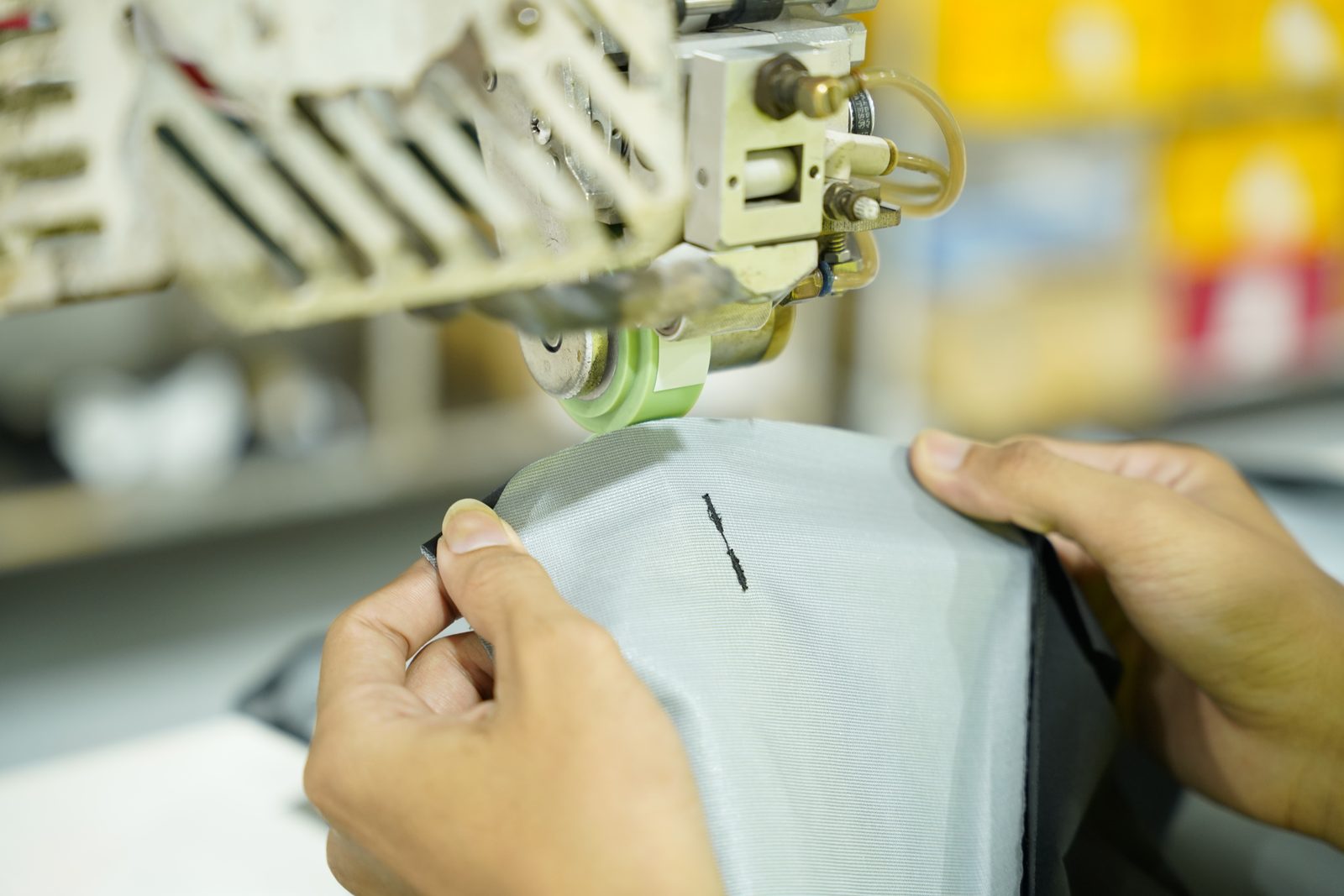
Seam taping: the operation that decides whether water passes through the stitch line.
Why a genuinely waterproof product still gets criticised
Wearers rarely say the hydrostatic head is too low.
They say it feels stuffy. Or it started leaking after a few months. Or once it gets wet it stays heavy for hours.
Those three complaints correspond to three different ratings, and none of them concerns the rating buyers usually focus on when ordering.
That is why we do not begin with figures. We begin with the wearer.
The 3 ratings and what each answers
|
Rating |
Answers |
Unit |
|
Waterproofness |
Does water pass through the fabric? |
mm water column |
|
Breathability |
Can perspiration escape? |
g/m²/24h |
|
Repellency |
Does water run off the surface? |
5-level grade |
These three are often merged into a single phrase in commercial conversation. In practice they are measured by three different methods and frequently work against each other.
The range across the Viking catalogue
|
Product |
Waterproofness |
Breathability |
|
Lightweight single-layer jacket |
3,000 to 4,000 mm |
under 5,000 g/m²/24h |
|
2.5-layer shell |
5,000 mm |
under 5,000 g/m²/24h |
|
Rain suit |
7,000 mm |
3,000 g/m²/24h |
Repellency is recorded per style in the technical file on the 5-level grade, because it depends on the surface finish applied rather than on the layer construction.
Two technical limits we state plainly
Limit 1. Waterproofness and breathability trade against each other
The more tightly water is blocked from outside, the harder it is for vapour to escape from inside. This is a physical limit, not a defect that engineering removes. Modern constructions narrow the gap but do not close it.
Limit 2. The repellent finish degrades first
When users report a garment starting to leak, what has usually been lost is the surface finish, not the membrane. Many finishes can be restored, and end users should be told how.
We raise both points early because correct expectations retain a customer longer than an attractive number.
Three questions we ask before proposing ratings
When a customer asks us to develop a waterproof line, we begin with 3 questions about the wearer rather than 3 numbers about the fabric:
-
At what intensity does the wearer move?
-
How long are they outdoors in a single shift?
-
What is the most severe weather they face?
From those answers we propose a combination of ratings, with the trade-offs stated plainly.
This adds one exchange at the beginning. It avoids discovering a wrong choice after samples exist, which is many weeks later and many times more expensive.
We also verify the measurement method on every material quotation before comparing. Two breathability figures from two different methods are not comparable.
What the customer receives
-
A recommended combination of three ratings matched to real work, with trade-offs explained.
-
The Viking waterproof material comparison table, with real figures.
-
Clear statements of each option's limits, given in advance rather than afterwards.
-
Care guidance to pass on to end users, extending the life of the repellent finish.
Three things you no longer have to do yourself
-
No balancing three competing ratings yourself. We propose the combination and explain why.
-
No comparing figures measured on different bases. We verify measurement methods first.
-
No inheriting an overstated promise and the complaints that follow. We state the limits early.
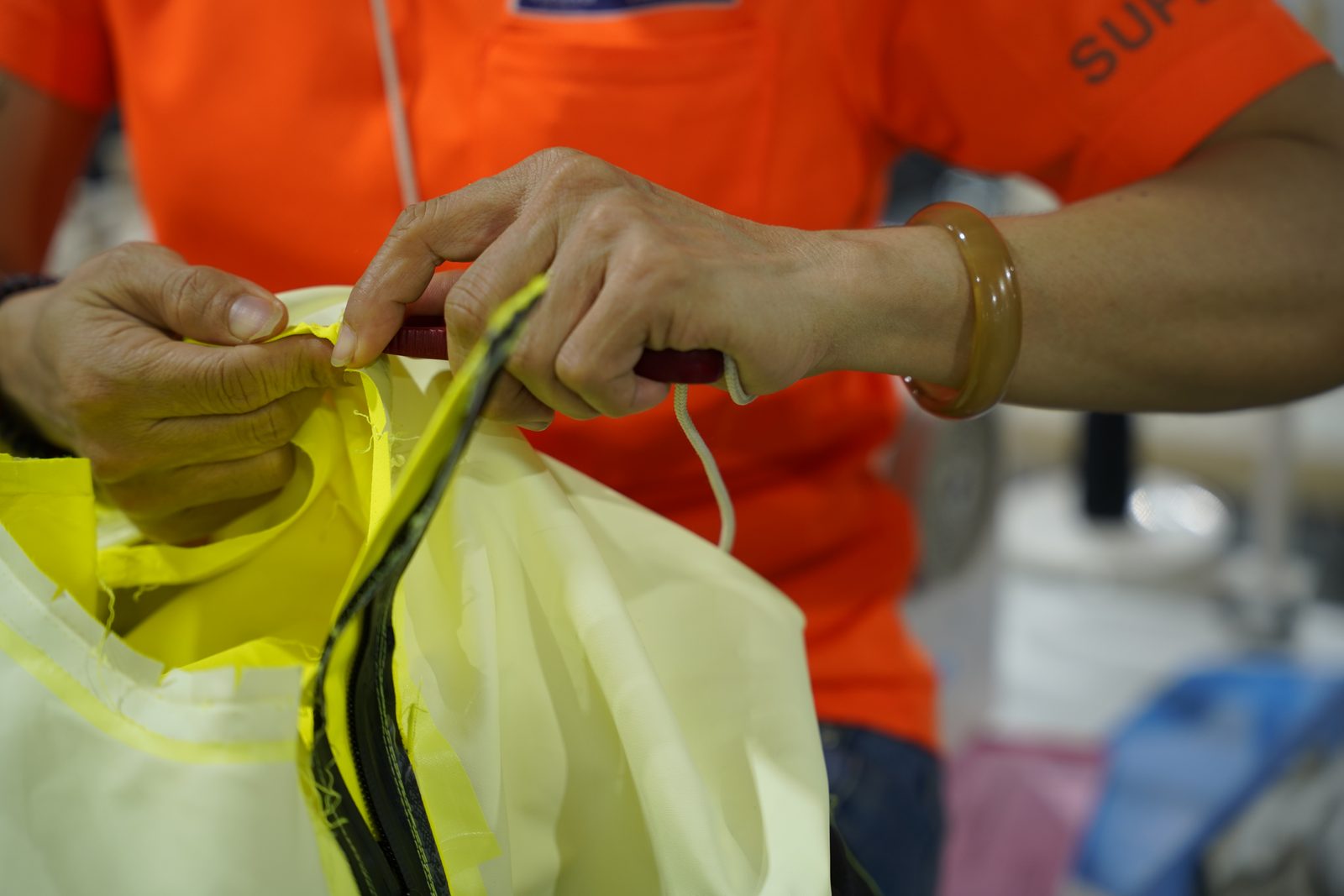
Zipper and storm flap on a rain suit, two points that leak when handled incorrectly.
Let Viking Vietnam accompany your business
If you need to compare these three ratings for a specific product line, contact us for the Viking waterproof material comparison table with recommendations based on real operating conditions.