Social responsibility does not live in the audit file; it lives in how a factory operates each day. This article walks through ten operational signals at Viking Vietnam, from working conditions and management communication to how schedule pressure is managed and how workers are cared for.
In export garment manufacturing, social responsibility is no longer an additional item in a supplier file. It is an important part of how many international customers select their partners.
A capable factory does not only need to produce to the right quality, the right schedule and the right technical requirement. It also needs to demonstrate that the product was made in a working environment that is organised, safe, transparent, and respectful of the people who work there.
Social responsibility is not shown through certificates, policies or audit forms alone. It shows in how the factory operates every day:
- How management communicates with operators
- How production targets are allocated
- How schedule pressure is handled
- How workers are supported when a problem appears
- How the production area is kept safe
- How meals, drinking water, rest and health are cared for
- How departments coordinate when a difficulty arises
At Viking Vietnam, social responsibility is seen as part of sustainable manufacturing. A factory can only develop over the long term when the people inside it are respected, protected, and given stable working conditions.
1. Social responsibility does not live only in the audit file
In a factory audit, documentation is necessary. It demonstrates the policies, the processes, the evidence of compliance, and how the factory manages its labour system.
However, documentation is not the whole picture.
A socially responsible factory needs to show consistency between its documents and the reality of its operation. This can be observed at many points across the factory:
- Whether workers understand their rights and responsibilities
- Whether management communicates clearly and respectfully
- Whether the working area is kept safe
- Whether walkways, lighting, ventilation and machine arrangement are appropriate
- Whether operators are supported when they face difficulty
- Whether issues that arise are recorded and handled properly
For international customers, this consistency matters a great deal.
At Viking Vietnam, we build our operating standard to be applied on ordinary working days. When the standard is maintained every day, the documentation and the reality naturally match.
2. The end of the working day says a great deal about factory culture
A factory can be observed at many different moments in the day. The morning is usually when everything begins in a state of readiness. The end of the working day, however, reveals more realistic signals about operating culture.
After many hours of production, it becomes clearer to see:
- Whether people are still working in stable conditions
- Whether the production area is still kept tidy
- Whether management still communicates calmly
- Whether operators are supported when the schedule is tight
- Whether the issues of the day have been recorded
- Whether departments coordinate or blame each other under pressure
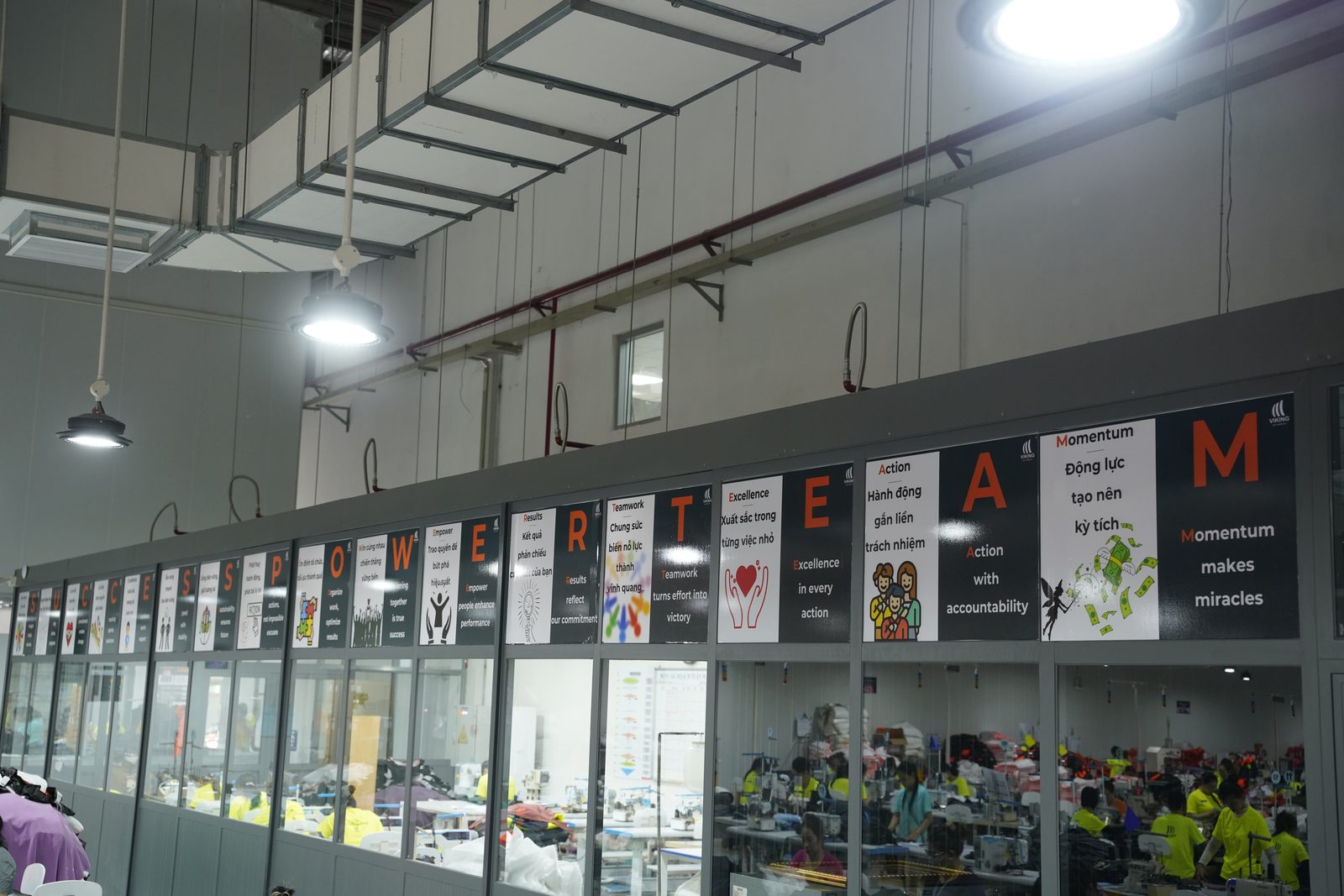
The end of the day reflects the resilience of the management system. If a factory only runs well when conditions are favourable, that system is not yet solid. If a factory maintains clarity, safety and respect for people even under pressure, that is a positive signal about its production culture.
At Viking Vietnam, how we operate under pressure is treated as an important part of the factory's capability.
3. Stable working conditions support productivity and quality directly
In garment manufacturing, people are at the centre of how a product is made. Machines, processes and technology only become effective when the people operating them have suitable working conditions.
A stable working environment needs attention to:
- Lighting in the production area
- Temperature and ventilation
- Safe walkways
- Sensible machine arrangement
- Clearly defined areas for work in progress
- Suitable seating and working posture
- Areas for rest, meals and health care
Working conditions are not only a welfare matter. They also directly affect productivity, quality, and a worker's ability to concentrate.
When the working environment is well organised, operators can work more consistently. When people are less tired, the risk of defects can fall. When the production area is safer, the factory protects both its people and its schedule.
This is why social responsibility and production efficiency should not be treated as two separate goals.
4. Communication between management and operators is an important indicator
Factory culture is expressed very clearly in how management communicates with operators.
In a production environment, pressure on schedule, quality and delivery always exists. However, it is how the factory handles that pressure that makes the difference.
A good management system needs to encourage:
- Clear communication
- Specific instruction
- Timely feedback
- Respect for the people doing the work
- No blaming when a problem appears
- Finding the cause and the solution together
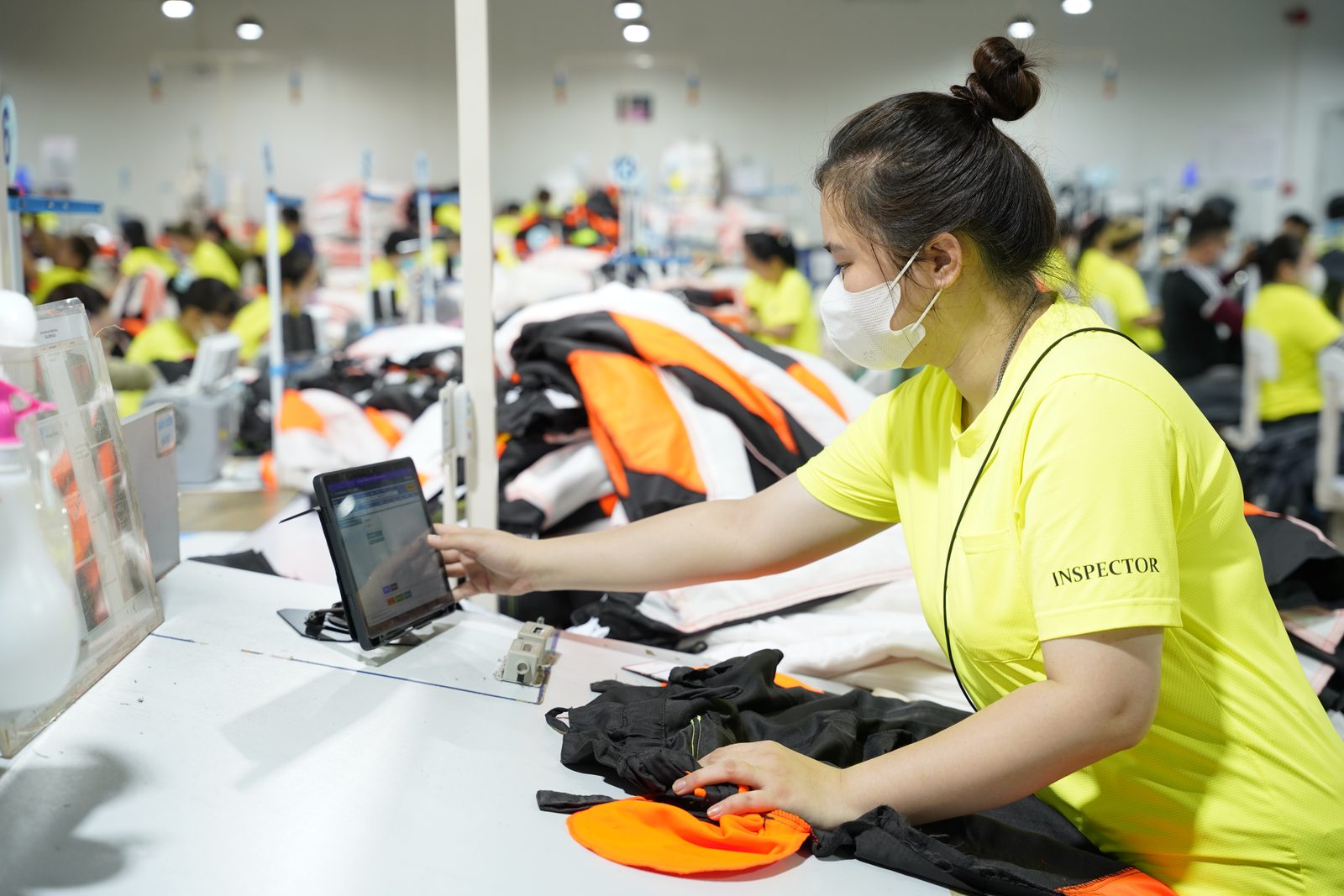
When operators feel safe to report a defect early, the factory has a chance to resolve it faster. When management listens, information from the floor is reflected more accurately. When communication is built on respect, cooperation on the sewing line is better too.
At Viking Vietnam, managing people is not only about assigning work. It is the ability to create an environment where each person understands their role and is ready to coordinate towards a shared result.
5. Schedule pressure needs to be managed by system
In export manufacturing, the delivery schedule is very important. However, if schedule pressure is simply passed straight down to the operators without a supporting system, the factory easily falls into stress, rising defects, and declining morale.
A responsible factory needs to manage pressure through its system:
- A clear production plan
- Specific daily targets
- Productivity monitored through the day
- Bottlenecks detected early
- Sensible allocation of people
- Timely support from technical and maintenance
- QC controlling defects at source
- Transparent communication when something changes
When pressure is managed by the system, workers do not have to carry the whole problem alone. The departments coordinate to clear the bottleneck and protect the schedule.
This is also what gives customers more confidence when working with Viking Vietnam. The schedule is not only checked at the end of the process; it is managed through how the factory operates each day.
6. Worker welfare is part of sustainable manufacturing
Sustainable manufacturing is not only about the environment. In the apparel industry, the human element is an important part of ESG and of social responsibility.
Worker welfare can be expressed through many aspects:
- Meals and the dining area
- Drinking water and sanitary conditions
- Basic health care
- Insurance and statutory entitlements
- Training and skill development
- A safe working environment
- Activities that build connection inside the company
- Recognition of people's contribution
When people are cared for better, the factory has a more stable foundation for maintaining quality, productivity and long term commitment.
At Viking Vietnam, people are not only a production resource. People are the foundation of sustainable competitiveness.
7. A mechanism for recording and responding helps the factory improve
A responsible factory needs a mechanism to record issues and respond to them appropriately.
Issues inside a factory can come from many sources:
- Working conditions
- The production process
- Management communication
- Occupational safety
- The quality of meals
- Machines or supporting tools
- Difficulty in an operation
- Pressure at one specific operation
If these issues are not listened to, they can accumulate and affect morale. If they are recorded properly, they become data for improvement.
An effective feedback system needs to ensure:
- Workers can raise an issue
- The issue is recorded seriously
- Someone is responsible for resolving it
- A response is given within a reasonable time
- Recurring issues are analysed to improve the system
For customers, a factory able to listen and improve is a more reliable partner over the long term.
8. Social responsibility supports product quality directly
Many people see social responsibility as a separate part of compliance. In the reality of production, however, social responsibility is directly connected to product quality.
When people have better working conditions, they can concentrate better.
When management communicates more clearly, defects can be found earlier.
When operators are fully instructed, their work is more consistent.
When pressure is coordinated by the system, the risk of error falls.
When the working environment is safer, production is interrupted less often.
So social responsibility does not only help a factory meet audit requirements. It supports quality, productivity and stability in production directly.
At Viking Vietnam, social responsibility is seen as part of the overall operating system. A good product needs to be made in a responsible working environment.
9. Social responsibility builds trust with international customers
For global brands, choosing a supplier is not only a decision about price. It is also a decision about risk, reputation and responsibility within the supply chain.
Customers need to know that their manufacturing partner:
- Respects its workers
- Maintains a safe working environment
- Has a transparent management system
- Complies with social and labour requirements
- Is able to respond when an issue arises
- Builds a stable and responsible production culture
A factory with strong social responsibility helps its customers reduce risk to brand image, to compliance, and to the sustainability of the supply chain.
At Viking Vietnam, every product leaving the factory carries more than technical quality. It also reflects how that product was made.
10. Viking Vietnam and the direction of responsible manufacturing
Viking Vietnam works towards a manufacturing model that combines quality, people, process and sustainable development.
Within it, social responsibility is expressed through:
- An organised working environment
- Coordination between departments
- Clear communication in production
- Attention to the working conditions of our people
- Safety and quality control on the floor
- Continuous improvement in operation
- A commitment to long term cooperation with international customers
Responsible manufacturing is not a separate activity. It is how the factory operates every day.
For Viking Vietnam, sustainable development begins with building a production environment where people are respected, quality is controlled, and customers can place their trust with confidence.
Summary of operational value
- Social responsibility in a garment factory does not live in the audit file alone; it shows in how the factory operates every day.
- Stable working conditions, clear management communication and worker welfare directly affect productivity and quality.
- Schedule pressure needs to be managed by system, through planning, data, coordination between departments and timely support.
- A mechanism for recording and responding helps the factory improve its working environment and raise stability in production.
- For international customers, social responsibility is an important foundation for building trust, reducing supply chain risk, and developing long term cooperation.
Connect with Viking Vietnam
If you are looking for a garment manufacturing partner in Vietnam with technical capability, a clear operating system, and a commitment to responsible manufacturing, Viking Vietnam is ready to work with you.
We believe that quality products need to be made in a working environment that respects people, controls the process well, and works towards sustainable development.
Connect with Viking Vietnam to build technical apparel that is reliable and responsible towards the global supply chain.