Explore how Viking Vietnam translates tech packs, drawings, specifications and customer requirements into technical documentation, samples and shopfloor production instructions.
A customer sends the factory a tech pack. Inside there may be drawings, a measurement chart, a bill of materials, detail images, material and trim requirements, labels, packing instructions and a great many technical notes.
But a tech pack is not yet a product. For a technical jacket, a workwear item or a waterproof garment to be produced consistently, all of that information has to be turned into a language that several functions in the factory understand and can act on.
That is an important part of Viking Vietnam's manufacturing capability.
Capability is not only whether the factory can sew the product. It is also the ability to turn a customer requirement into a clear system of execution on the floor.
1. The tech pack is the starting point, not the end point
A tech pack usually provides a great deal: the shape of the product, measurements, construction details, materials, trims, colours, labels, logos, packing requirements and comments from the sample rounds.
In practice, though, points can remain unclear. Is a line on the drawing a seam or a decorative stitch? From where is a pocket measured? Does a trim apply to every colour or only one colourway? Has the latest change been applied to bulk?
This is where merchandising and technical matter. What is unclear has to be clarified before production, because an ambiguity in the office can become hundreds of wrong garments on the line.
2. Merchandising keeps the customer information consistent
While running an order, merchandising connects the customer to the internal functions. Information from the customer has to reach the right people:
- Technical needs the construction and the measurements.
- Purchasing and the warehouse need the material and trim information.
- IE needs information to analyse the operations.
- QC needs the standard to inspect against.
- Production needs the plan and the execution instructions.
What matters is that everyone works from the same requirement. If the customer changes a detail, that change cannot stay inside a merchandising email. It has to enter the production system.
3. Technical turns a drawing into a construction that can be made
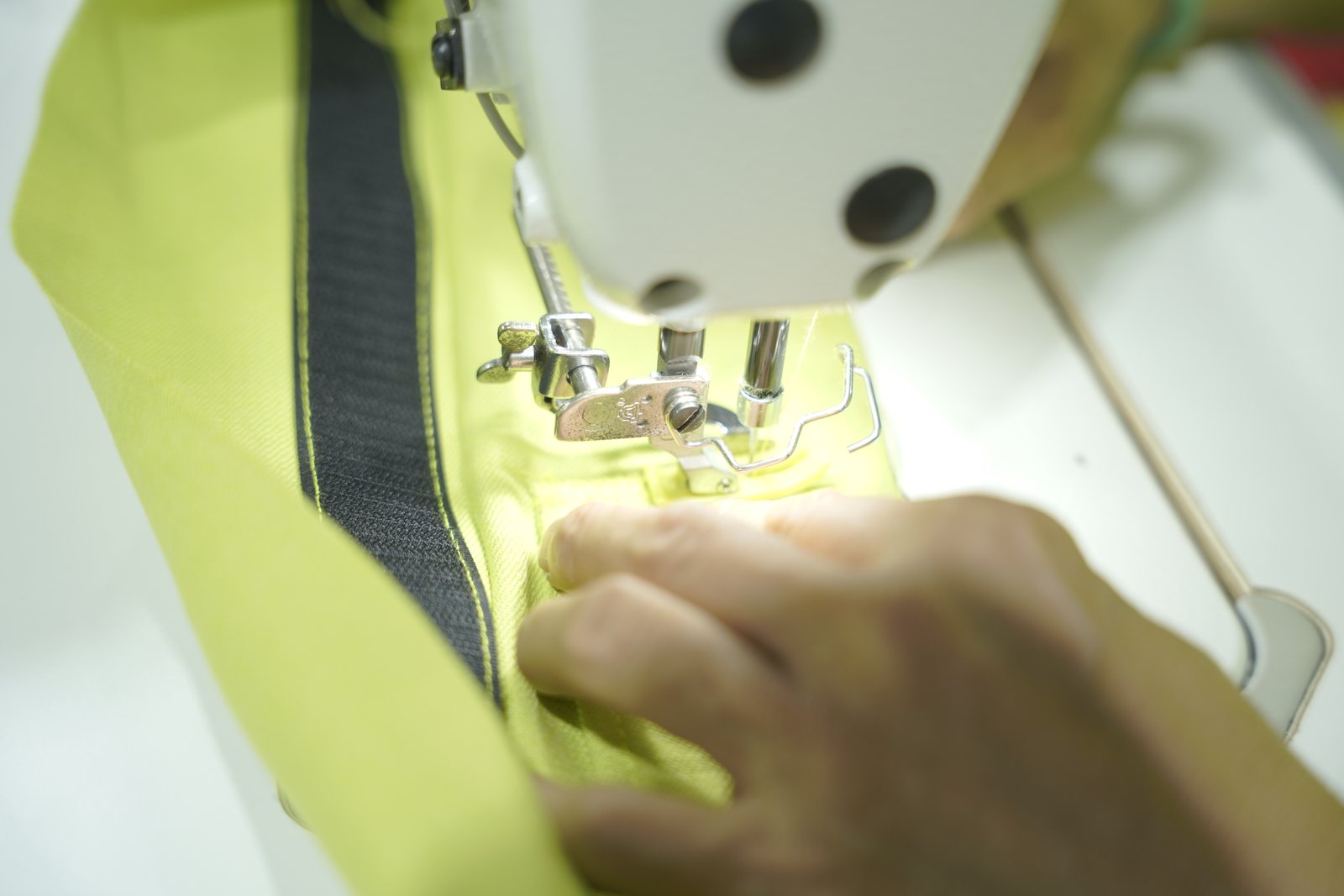
The technical function is one of the key bridges between design and reality. From the tech pack, technical has to review the patterns, the measurements, the assembly method, the seam construction, component positions, material requirements, the difficult points in production and what needs particular control.
For technical apparel this matters more still. A waterproof jacket may involve laminated fabric, seam sealing, technical zips, an adjustable hood, functional pockets, drawcords and several multi layer positions. Each detail can affect how the garment is made.
Technical therefore does not simply copy the customer requirement. It has to understand the requirement in order to turn it into a method of execution.
4. Samples test what the documents cannot answer

A design can be perfectly clear on the drawing and still raise problems once it becomes a real garment. This is the role of sample development.
The sample tests the fit and shape, the measurements, whether the construction is feasible, how the material behaves when sewn, trim positions, assembly, the difficult operations and the points the customer has to confirm again.
On a technical product the sample also lets the team see problems a spreadsheet cannot show. A curve that is hard to seal. A position with too many layers. A detail that makes the handling awkward. A pocket position that is not practical. These findings have to be resolved before the product goes into bulk production.
5. The BOM keeps every function talking about the same materials
A product can use dozens of components. Not only the shell fabric, but contrast fabric, lining, zips, buttons, cords, stoppers, seam tape, labels, logos, reflective material and packaging.
The bill of materials identifies those components. But for the BOM to have value, the information has to be accurate and current.
If the tech pack has changed a trim but the sample card on the line has not, a defect can follow. If the same zip code exists in several colours without clear distinction, the risk of mixing them rises. Managing the BOM is therefore part of manufacturing capability, not paperwork.
6. IE turns the product into a sequence of operations
Once the construction is clearer, IE answers a different question: how will this product be made on the line?
IE analyses the order of operations, the time for each, the machines required, the difficult operations, the points at risk of becoming a bottleneck, the line layout, the skill required and how the line can be balanced.
This is a critical conversion. A jacket on a tech pack becomes a series of specific movements that people, machines and equipment have to carry out together.
7. Maintenance prepares the conditions for the method to work
A good process can still fail if the equipment is not ready. Maintenance has to help prepare the right machine, the needle, the presser foot, attachments, specialised equipment, the seam sealing machine where applicable, and the adjustments the material calls for.
This matters especially for technical apparel. Not every material will run on the same machine setting. Equipment preparation therefore has to follow the product construction and the approach defined by technical and IE.
8. QC turns the technical requirement into control points
QC has to know which points on this product cannot be wrong. For example: critical measurements, pocket positions, zips, load bearing seams, seam sealing, reflective elements, logos, appearance and packing.
The important thing is that QC is involved early enough. Waiting until the garments are finished makes correction more expensive. Inline QC puts quality into the production process itself.
9. The pre production meeting lets the functions see one product
Before goods reach the line, a preparation meeting earns its place when it lets the functions answer:
- Which sample is the reference?
- Which documents are in force?
- Are the materials and trims correct?
- Where are the difficult operations?
- Which equipment has to be prepared?
- Which points does QC have to focus on?
- Is any change still open?
- Who is responsible for each part?
This is when merchandising, technical, IE, QC, the warehouse, maintenance and production need to look at one product together. The aim is not to hold a meeting for form's sake. The aim is to reduce surprises once the goods are running.
10. The first piece tests the documents against reality
However thorough the preparation, the first garment on the line still matters. The first piece checks whether the operators have understood the instruction, whether the machine is right, whether the material is correct, whether the handling is feasible, whether QC and technical read the standard the same way, whether the measurements are met and whether the functional details are correct.
If there is a problem, this is the moment to adjust. Not after dozens or hundreds of garments have run.
The first piece is where Viking can check whether what was prepared on paper actually works on the line.
11. From tech pack to sewing line is a chain of responsibility
A technical order is not created by one department. It passes through many roles, in order:
Customer requirement, merchandising, technical, sample, materials, IE, machine preparation, QC control points, production, first piece, bulk.
If each function optimises only its own part without connection to the others, defects still occur. The strength of a production system lies in how the roles coordinate around the same customer requirement.
The value for international customers
When choosing a factory for technical apparel, a customer should not only ask “can this factory sew this product?”
A deeper question is: “how will this factory turn our requirement into bulk production?”
A good preparation process helps to:
- Reduce the gap between sample and bulk.
- Identify risk early.
- Reduce misreading of the requirement.
- Prepare the right equipment.
- Keep QC focused on the right points.
- Support communication when something changes.
- Create a clear basis for improvement.
This capability is hard to see in a finished garment, yet it has a large effect on how steadily an order runs.
Viking Vietnam: turning a requirement into action on the floor
For Viking Vietnam, a tech pack should not stop at being a file passed from the customer to the factory. It has to become: clear patterns, correct materials, a clear process, prepared machines, instructed people, QC with defined control points, and production that can actually be executed.
That is how a requirement on paper becomes real factory capability. It is also the basis on which Viking Vietnam works with customers across workwear, waterproof garments, technical outerwear and high performance apparel, where the technical demands keep rising.