Learn why worker training capability is essential in technical garment manufacturing, helping Viking Vietnam maintain consistent quality, process control, and international buyer confidence.
In technical garment manufacturing, quality does not come only from machines, technical files or final inspection. Quality is created every day by the people who carry out each operation.
A waterproof seam needs someone who understands the handling. A reflective detail needs someone who places it correctly. A workwear product needs someone who knows how to protect durability, accuracy and usability. An export order needs the whole team to understand that every small operation affects the finished product.
In a technical garment factory, therefore, worker training is not a side activity. It is a core capability that lets the factory hold quality steady, reduce defects, raise productivity and meet the rising expectations of international customers.
At Viking Vietnam, training is not simply showing an operator how to sew one operation. Training is the process of helping the team understand the standard, carry out the operation correctly, recognise quality risk and take part in a professional production system.
1. Why worker training matters in technical garment manufacturing
In ordinary garment production, sewing skill is already important. On high performance apparel, workwear, waterproof garments, protective clothing or outdoor apparel, the requirement is higher still.
Operators do not only need to sew the seam correctly. They need to understand:
- Why this operation matters
- Where defects are likely to arise
- What the acceptance standard is
- Which handling affects the function of the product
- When to report back to the line leader or QC
- How to keep consistency between products
A technical product usually has more material layers, more functional details and more control requirements. If the person performing the operation has not been fully trained, defects can arise from very small points.
Good training means operators do not only follow instructions; they understand enough to get it right.
2. Training starts with understanding the product
An operator sewing a technical product needs the product explained clearly before the operation begins.
What is the product for? Who wears it? In what environment is it used? Which details affect safety, durability or comfort? Which points does the customer particularly care about?
When operators understand that the product is not just a jacket or a pair of trousers but clothing worn in a real working environment, they become more conscious of every action.
On workwear, durability and usability matter greatly. On waterproof garments, the seam, the seam sealing and the position of details can affect waterproofness. On protective clothing, precision in each detail can relate to the safety of the wearer.
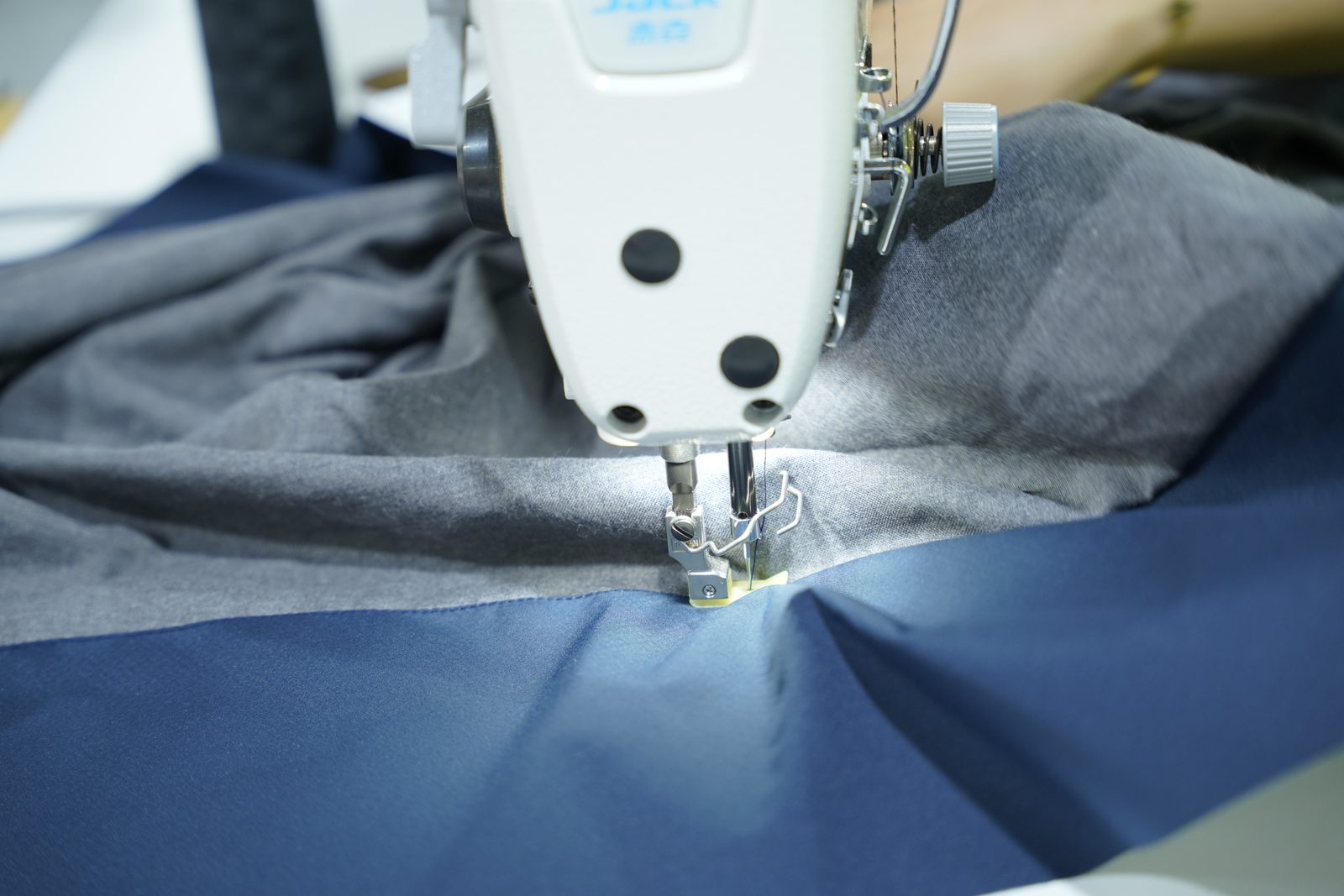
Understanding the product lets operators see the meaning of the work they do. That is the foundation of durable quality.
3. A skill matrix lets the factory manage capability clearly
In a modern garment factory, training should not rest on intuition. The factory needs a way to track each operator's capability.
The skill matrix is an important tool for managing the team's capability. Through it, the factory can know:
- Which operator performs which operation well
- Which operator needs further training
- Who can cover when the line is short of people
- Which operation is short of skilled staff
- Which order needs operators with higher skill
- Where the next training plan should focus
On technical products the skill matrix matters even more, because not every operation can be handed to someone else immediately. Some operations demand precision, steady skill and experience with difficult materials.
When capability is managed with data, the factory can plan staffing more actively and reduce risk in bulk production.
4. Training before the line starts reduces defects from the beginning
A common mistake in production is letting operators learn on the job once the order has already started running. That puts pressure on the whole line, because defects in the early stage bring rework, lower productivity and a slower schedule.
On technical orders, training before the style reaches the line is very important.
Before bulk production, operators need guidance on:
- How to read the reference sample
- How to recognise the difficult technical points
- The correct handling for each operation
- Common defects and how to prevent them
- The quality standard to be met
- How to self check the product after the operation
- When to report a defect or ask for support
Training beforehand lets the sewing line start better prepared. It also relieves QC, the line leader and technical from handling defects after a large quantity has already run.
5. The line leader's role in training on the floor
The line leader keeps the daily rhythm of production and is also very important in training operators on the floor.
A good line leader does more than assign work. They observe, guide, repeat the standard and notice early when an operator's handling is not right.
In training at the line, the line leader needs to:
- Explain the purpose of the operation
- Demonstrate the correct handling
- Check the first product
- Follow productivity and defects in the first hour
- Work with QC when a risk appears
- Support new operators or those changing operation
- Record the points that need retraining
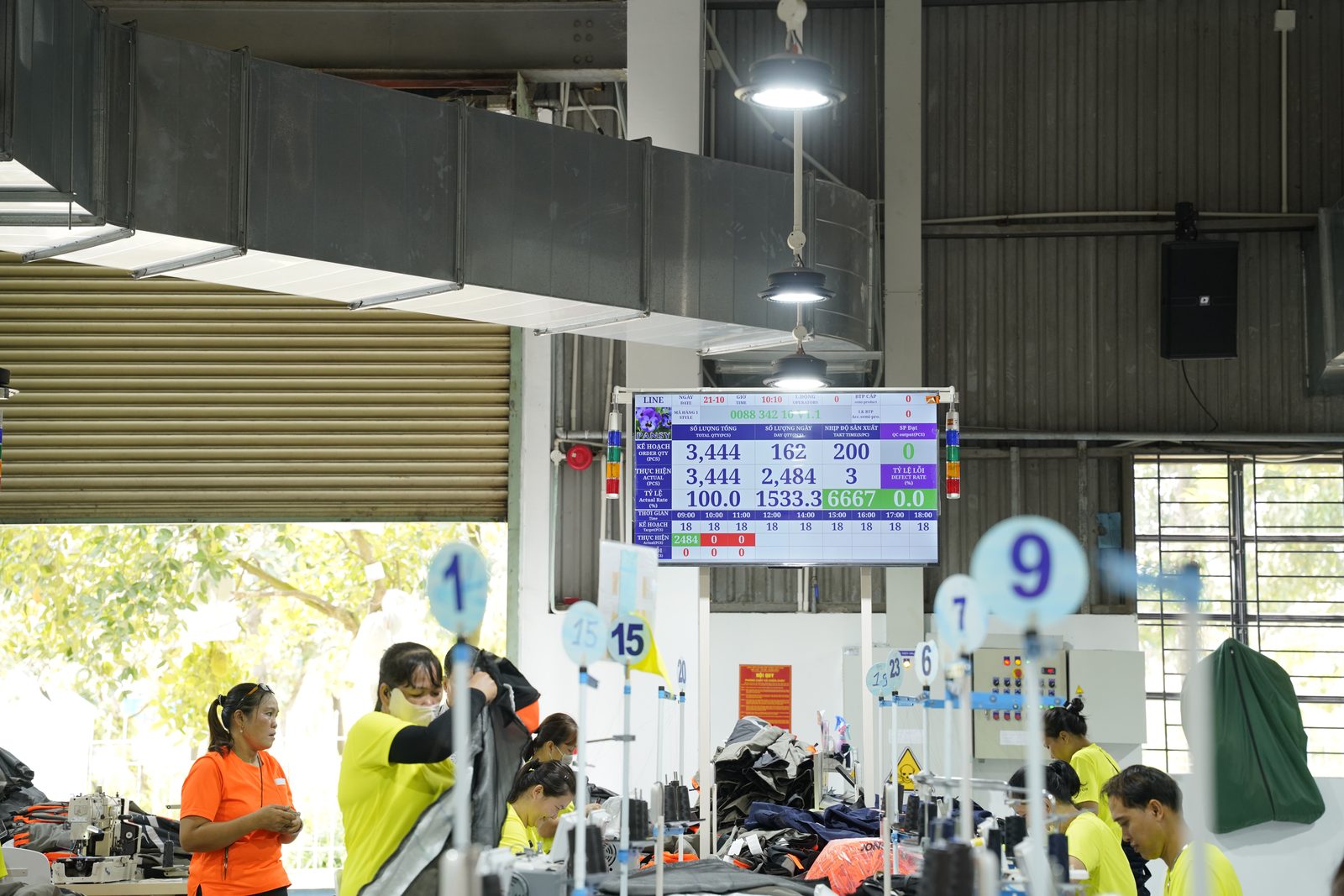
Effective training on the floor lets the factory respond faster to real problems. It is the bridge between the technical file and the daily work of production.
6. QC takes part in training so operators understand the quality standard
QC does more than find defects. QC also helps operators understand what passes and what does not.
In many cases an operator gets something wrong not through carelessness, but because the standard was never clear or the consequence of the defect was never explained. When QC takes part in training, the quality standard is communicated directly and in a way that is easier to grasp.
QC can support training by:
- Showing an acceptable sample and a defective one
- Explaining how the defect affects the product
- Guiding the self check points after the operation
- Warning about the defects common to that order
- Giving fast feedback when a new defect appears
- Recording defect data for retraining
When operators understand the quality standard, they control their own work better. That reduces reliance on final inspection and builds a culture of getting it right the first time.
7. Technical and IE make sure the handling and the process are both right
In a technical garment factory, worker training cannot be separated from the role of the technical department and IE.
Technical turns the customer's requirement into a specific way of working. They clarify the pattern, the measurements, the seams, the technical details, the reference sample and the method.
IE optimises the process, operation times, line layout and line balancing. Correct handling does not only need to meet quality; it also needs to suit the flow of the sewing line.
When technical, IE, QC and the line leader train together, operators understand the operation more completely:
- How to do it correctly from a technical point of view
- How to hold quality steady
- How to work efficiently
- How to coordinate smoothly with the operations before and after
This is training that creates real capability, not just a short term instruction.
8. Multi skill training makes the factory more flexible
In export manufacturing, orders can change in quantity, style, colour, size or complexity. If operators know only one operation, the factory will struggle to adjust the line when it needs to.
Multi skill training lets operators take on more operations. That benefits both the worker and the factory.
For operators, multiple skills develop their craft, raise their confidence and open more opportunities to contribute. For the factory, multiple skills keep the line steadier when people change, styles change, or a blocked operation needs support.
On technical products especially, multi skill training needs a plan. Not every operation can be taught quickly. The factory needs to identify the critical operations, the right people and a clear path for raising skill.
9. Safety and responsibility training is part of quality
In a garment factory, product quality cannot be separated from occupational safety and social responsibility.
An operator working in a safe environment, clearly guided and treated with respect, is in a better position to work steadily. Conversely, if the working environment is stressful, short on guidance or unsafe, product quality is hard to sustain.
Training in the factory needs to cover:
- Safety when using machines
- Handling broken needles, sharp objects or small components
- Fire safety rules
- Keeping the working area clean
- How to report a risk or an incident
- Awareness of saving materials and reducing waste
- Responsibility towards the product and the customer
This is also where training, ESG and sustainable manufacturing meet. When workers are trained properly, the factory not only makes better products but also builds a more responsible working environment.
10. The value for international customers
For international customers, worker training capability is an important signal of how stable a factory is.
A factory with a sound training system is able to:
- Reduce repeating defects
- Hold quality steady between shipments
- Adapt better to new products
- Control risk in the early production stage
- Staff the line flexibly when orders change
- Improve productivity without trading away quality
- Keep the team clear on the customer's standard
For brands from Europe, the United States, Japan and other demanding markets, what they need is not only a factory with equipment. They need a skilled team, able to learn, with a training system that sustains quality across many seasons.
11. Viking Vietnam and the development of a skilled team
Viking Vietnam focuses on product lines with technical requirements such as workwear, rainwear, waterproof garments, protective clothing, outdoor apparel and high performance apparel. These products demand precision in handling, understanding of materials and close coordination between departments.
In its operating direction, Viking Vietnam treats worker training as an important part of production capability. Training is not only about meeting the order in front of us; it is about building a team that can stay alongside the customer and the factory as both develop.
Through skills training, guidance on the floor, the skill matrix, coordination between technical, IE, QC and the line leader, and a culture of getting it right the first time, Viking Vietnam is step by step building the human foundation for sustainable manufacturing.
Machines can add speed. Technology can help manage data. But it is properly trained people who create consistency in each product.
Summary of operational value
Worker training capability in a technical garment factory is an important foundation for quality, productivity and stability in export manufacturing.
An effective training system helps the factory:
- Help operators understand the product and the technical standard correctly.
- Manage capability with a skill matrix rather than intuition.
- Reduce defects from the earliest stage of production.
- Connect the line leader, QC, technical and IE in training on the floor.
- Develop a multi skilled team for greater flexibility.
- Link training to occupational safety, ESG and sustainable manufacturing.
- Give international customers confidence in consistent quality over the long term.
Connect with Viking Vietnam
Viking Vietnam works alongside international brands and partners in manufacturing high performance apparel, workwear, rainwear, outdoor apparel and other technical product lines. With a focus on developing people, building skills and establishing a stable operating system, Viking Vietnam aims to be a dependable manufacturing partner for customers who need quality, transparency and long term cooperation.
Contact Viking Vietnam to develop technical apparel made by a team that is skilled, responsible and trained to get it right the first time.