The ESPR Digital Product Passport will require data that mostly originates in the factory: fabric lot, supplier, production date, product construction. The real timeline and what factories should start doing now.
The data brands will need, and why most of it sits inside the factory.
Within the next few years, a garment sold in Europe will have to carry an electronic data record: the Digital Product Passport, or DPP.
Consumers, authorities, repairers and recyclers will all be able to open that record to see what the product is made of, where, by whom, and what to do with it at the end of its life.
Most of the discussion about the DPP today happens on the brand side. But one thing is rarely said out loud:
Most of the data a product passport requires does not sit with the brand. It sits in the factory.
Fibre composition, fabric lot, supplier, production date, production location, product construction, the trims actually used — all of it is created and recorded inside the factory, or it is recorded nowhere at all.
This article is written for both sides: brands preparing for the DPP, and factories wondering what it means for them.
1. What the Digital Product Passport is, and where it comes from
The DPP is part of the European Union's Ecodesign for Sustainable Products Regulation, usually shortened to ESPR.
The basic idea: every product carries an electronic data carrier, usually a QR code or a tag. Scanning it opens the product's data record.
On 16 April 2025, the European Commission adopted the ESPR Working Plan for 2025–2030. In that plan, textiles and apparel are ranked the highest priority among the product groups assessed, alongside furniture, mattresses, tyres and metals.
The reason textiles come first: high improvement potential in extending product lifetime, in material efficiency, and in reducing water, waste, emissions and energy use.
2. The real timeline, and why waiting for it is the wrong move
This part needs stating plainly, because several different dates are circulating in the market.
According to the European Commission's own information:
- The delegated act specific to textiles is indicatively planned for adoption in Q4 2027.
- The Commission states clearly that this date is indicative, and that timelines may evolve as legislative and technical work progresses.
- After adoption there is a transition period before obligations take effect. On other product groups this has typically run to around 18 months.
In other words: DPP obligations for textiles most likely land towards the end of this decade, not next year.
So why does it matter now?
Because one kind of data cannot be created after the fact.
If a fabric lot goes into production today without its supplier, lot code and receipt date being recorded, nobody can reconstruct that information in 2029. The goods have shipped, the fabric is used up, the person who handled it may have moved on.
A garment shipping in 2029 is developed in 2028. The data system that serves it has to be running steadily before that. The preparation window is shorter than the headline year suggests.
3. What data the passport will carry
The detailed content will be set by the delegated act for textiles. But the European Commission has already set out the expected categories:

- Product identification and characteristics.
- Fibre composition, where relevant under the Textile Labelling Regulation.
- Information supporting use, repair and maintenance.
- Information on reuse, resale, disassembly, refurbishment, disposal and recycling.
- Origin information.
- Identification of the relevant economic operators.
- Documentation for compliance and traceability, with conformity assessment information accessible to authorities.
Read that list again, and ask: of those seven categories, how many originate in the factory?
The answer is nearly all of them.
4. Why most of the data sits in the factory
The brand owns the design, the market and the consumer relationship. But the physical data about the product is created where the product is made.
Specifically:
- Fibre composition comes from the fabric supplier's documentation, received by the factory warehouse.
- The fabric lot is recorded by the factory on receipt, and tied to a style when it is issued to cutting.
- Trim suppliers sit in the factory's purchasing and receiving records.
- Production location and date sit in the line records.
- Product construction — how many layers, what bonds them, how far it can be disassembled — sits in the factory's technical file.
- Care and repair information depends on the materials and assembly methods actually used.
A brand can write all of this into its own records. But the source is the factory. If the factory does not record it, the brand can only estimate.
And a legal record is not built on estimates.
5. The data that cannot be recreated later
This is the most important point in the article.
Some information can be added at any time: product name, washing instructions, description. But some information is tied to the moment of production and disappears if it is not captured then:
- The specific fabric lot used on a specific order.
- The supplier of that lot.
- The receipt date and the date it was issued to production.
- The line and production date for each shipment lot.
- The trims actually used, when a substitution happened mid-order.
- Which fabric lot a test report belongs to.
None of this is in the tech pack, none of it is in the contract, and nobody remembers it two years later. It exists only if the factory has the habit of recording and keeping it.
This is why a serious factory should start now, even though the legal obligation is still years away.
6. Fibre composition: simpler in theory than in practice
On the face of it, fibre composition is information already on the label. On technical products the story is more complicated.
A waterproof jacket may contain: a multi layer laminate main fabric, a contrast fabric, a lining, an insulation layer, seam tape, drawcords, zippers, reflective tape, labels and sewing thread. Each component has its own material.
When the passport asks for composition information at a traceable level, the factory has to be able to answer:
- What each material layer is.
- Which supplier document that information came from.
- Which lot that document belongs to.
- Which order used that lot.
If the factory records only “fabric A was used on style B” without tying it to a lot, the traceability chain breaks at the step that matters most.
7. Origin and supply chain: the question travels several tiers up
The passport asks about origin. On textiles, origin is not only where the garment was sewn.
Brands may need to know where the fabric was woven, dyed and finished. The garment factory does not usually perform those steps, but it is the party closest to the fabric supplier.
That means the capability required is not only recording data internally, but being able to request and retain data from suppliers.
A factory already in the habit of requiring full documentation from suppliers is in a far better position than one that simply receives fabric and signs a delivery note.
8. Information for repair, reuse and recycling
This is the newest data category for most factories, because it concerns the stage after the product leaves the wearer's hands.
A repairer needs to know:
- How far the garment can be disassembled.
- Whether replacing a component such as a zipper is feasible.
- Whether a sealed seam can be re-sealed after repair.
A recycler needs to know:
- Whether the material layers can be separated.
- Whether any component obstructs recycling.
- Which material family the main fabric belongs to.
These questions are not in today's tech packs. But the factory knows the answers best, because the factory is where the product was put together.
This is also the interesting part: once a factory can answer these questions, it moves from a manufacturing role towards an advisory one on product lifecycle design.
9. The gap between today's systems and what the DPP requires
Most garment factories already have the data. The problem is not missing data, it is data sitting in separate places.
What is commonly found:
- Fabric lot information in the warehouse book, not linked to the style.
- Supplier information in purchasing, not linked to the lot.
- Production date in the line report, not linked to the shipment.
- Test reports in the technical file, with no note of which lot they belong to.
- Change records in email rather than in a system.
Every piece of data exists. But to produce a product passport, they have to connect around one common unit: the product, or the production lot.
That is the real work of digitalisation in this context. Not buying software, but agreeing on how things are identified.
10. Where a factory should start
There is no need to wait for the delegated act. The following are worth doing even before the DPP applies, because they improve traceability and quality control anyway:
- Assign a lot code to every incoming material and trim, not only the main fabric.
- Link the lot code to the style when it is issued to cutting, and keep that link.
- Record the line and production date for each shipment lot.
- File supplier documentation by lot, not by year.
- Note which fabric lot each test report belongs to.
- Keep technical change records in one searchable place.
- Agree one product identification scheme shared by warehouse, production, QC and shipping.
All of this is operational work, not technology work. Software makes it faster, but it does not replace the habit of recording.
11. What brands should ask their factory now
If you are a brand preparing for the DPP, these are questions worth sending to your factory this season:
- Does the factory record lot codes for fabric and trims?
- Can that lot code be linked to our specific order?
- How long does the factory keep supplier documentation?
- If we ask about a shipment made a year ago, how long does the factory take to answer?
- Can the factory provide composition information layer by layer?
- Does the factory require origin information from its fabric suppliers?
The answers tell you how ready that factory will be when the regulation applies. More importantly, they tell you whether this season's data will still be traceable by then.
12. Viking Vietnam and how we are preparing
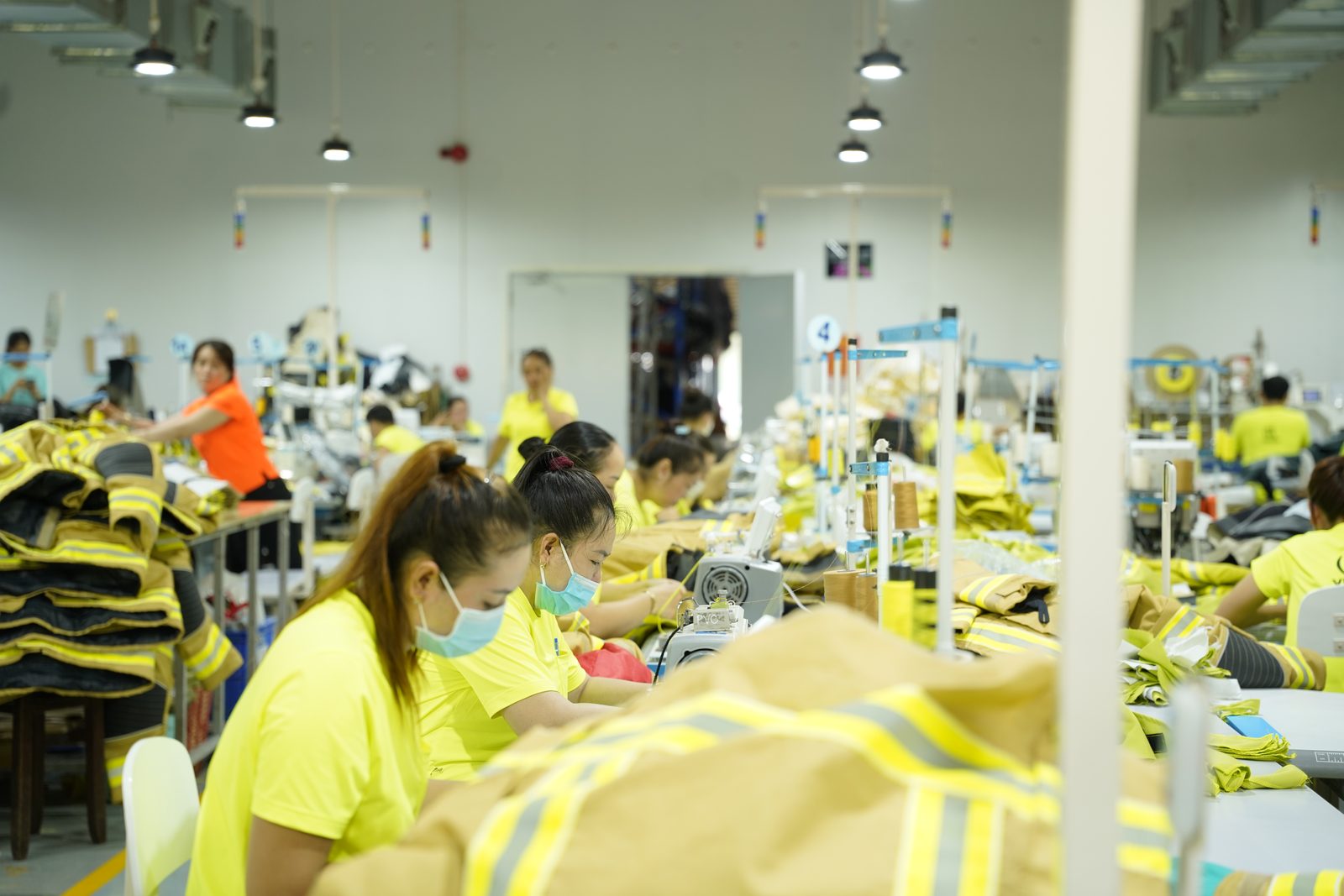
Viking Vietnam manufactures high performance apparel, workwear, rainwear, waterproof garments, protective clothing and outdoor apparel for customers in Europe, the United States and Japan.
On these product lines, material traceability was already a quality control requirement before it became a legal one. A protective garment has to be traceable to the materials used, because those materials relate to function and safety.
Viking's preparation focuses on:
- Controlling incoming materials and trims by lot.
- Linking material data to the production plan and the quality record.
- Filing supplier documentation against specific lots.
- Recording technical changes in a system rather than in scattered correspondence.
- Discussing early with customers what data they will need.
Viking Vietnam does not claim to be DPP ready, because the detailed rules have not been issued. What Viking is doing is building the data foundation, so that when the regulation applies, the information from earlier seasons is still traceable.
Summary of operational value
The Digital Product Passport will require data that mostly originates in the factory, not with the brand.
The points to remember:
- Textiles are the highest priority group in the ESPR Working Plan 2025–2030, adopted 16 April 2025.
- The delegated act for textiles is indicatively planned for Q4 2027, and that date may change.
- A transition period follows adoption, typically around 18 months.
- Lot, supplier and production date data cannot be recreated later, so it has to be captured now.
- The factory's problem is not missing data, but data that does not connect around a common identifier.
- Repair and recycling information is a new data category, and the factory knows it best.
- Brands should start asking their factories about traceability this season.
Connect with Viking Vietnam
Viking Vietnam works alongside international brands and partners in manufacturing high performance apparel, workwear, rainwear, waterproof garments, protective clothing and outdoor apparel. With material control, production data and a transparent approach, Viking Vietnam is ready to discuss data and traceability requirements for the seasons ahead.
Contact Viking Vietnam to discuss traceability and product data requirements for your product line.