Learn why change control in garment manufacturing helps Viking Vietnam protect quality, delivery, and production stability in technical apparel manufacturing.
In export garment manufacturing, change happens all the time. A customer may update the measurements. A material may arrive in a different lot. A trim may need replacing. A design detail may be adjusted after sample approval. An operation may need a different sewing method to suit bulk production.
These changes can look small on paper, but in real production they can affect many different departments.
A change to the fabric can affect cutting, sewing, pressing, inspection and packing.
A change to a zip can affect measurements, handling, durability and how the garment feels to wear.
A change to the position of reflective tape can affect the visibility standard.
A change to a seam can affect waterproofness or durability.
Change control is therefore not just updating information. It is an important operating capability that lets the factory protect quality, schedule and consistency in bulk production.
At Viking Vietnam, and especially on workwear, protective clothing, waterproof garments, outdoor apparel and high performance apparel, change control is treated as an essential part of a dependable production system.
1. A small change can have a large effect in bulk production
During sample development, a small change can be handled quickly by the technical team or the sample room. Once the product is in bulk production, however, the same change can affect hundreds or thousands of garments.
For example, if the position of a seam changes, the factory needs to check:
- Whether the pattern needs adjusting
- Whether the sewing process changes
- Whether IE needs to update operation times
- Whether the line leader needs to retrain operators
- Whether QC needs to update its inspection points
- Whether maintenance needs to adjust jigs or machines
- Whether the pilot piece needs confirming again
If the change is not communicated fully, each department may understand it differently. This is what creates deviation between the approved sample and production.
For international customers, a factory with a sound change control system reduces the risk when an order receives technical updates or changes during production.
2. Every change needs a clearly confirmed source
One of the most important principles of change control is identifying the source of the information clearly.
In practice, a change can come from:
- The customer
- Sample development
- The technical department
- The merchandiser
- QC
- Production
- A material or trim supplier
- Test results or real inspection findings
If the source of a change is unclear, the factory risks implementing the wrong requirement.
So before any change is applied, the following need to be clear:
- Who requested the change
- Which style the change applies to
- Which sizes, colours or PO it applies to
- Whether the customer has confirmed it
- Whether it affects the approved sample
- When the change takes effect
- Whether goods already produced are affected
At Viking Vietnam, clarity about the source of information keeps departments from acting on intuition or on informal conversations.
3. A technical change has to be assessed before it is applied
Not every change can go straight into production.
Before it is applied, the factory needs to assess the impact of the change on the product and the process.
The questions to consider include:
- Does this change affect the fit
- Does it affect the measurements
- Does it affect the function of the product
- Does it affect the quality standard
- Does it change the assembly sequence
- Do the pattern or technical documents need updating
- Does a confirmation sample need to be made
- Does it affect the delivery schedule
- Does the customer need to be informed or asked for further confirmation
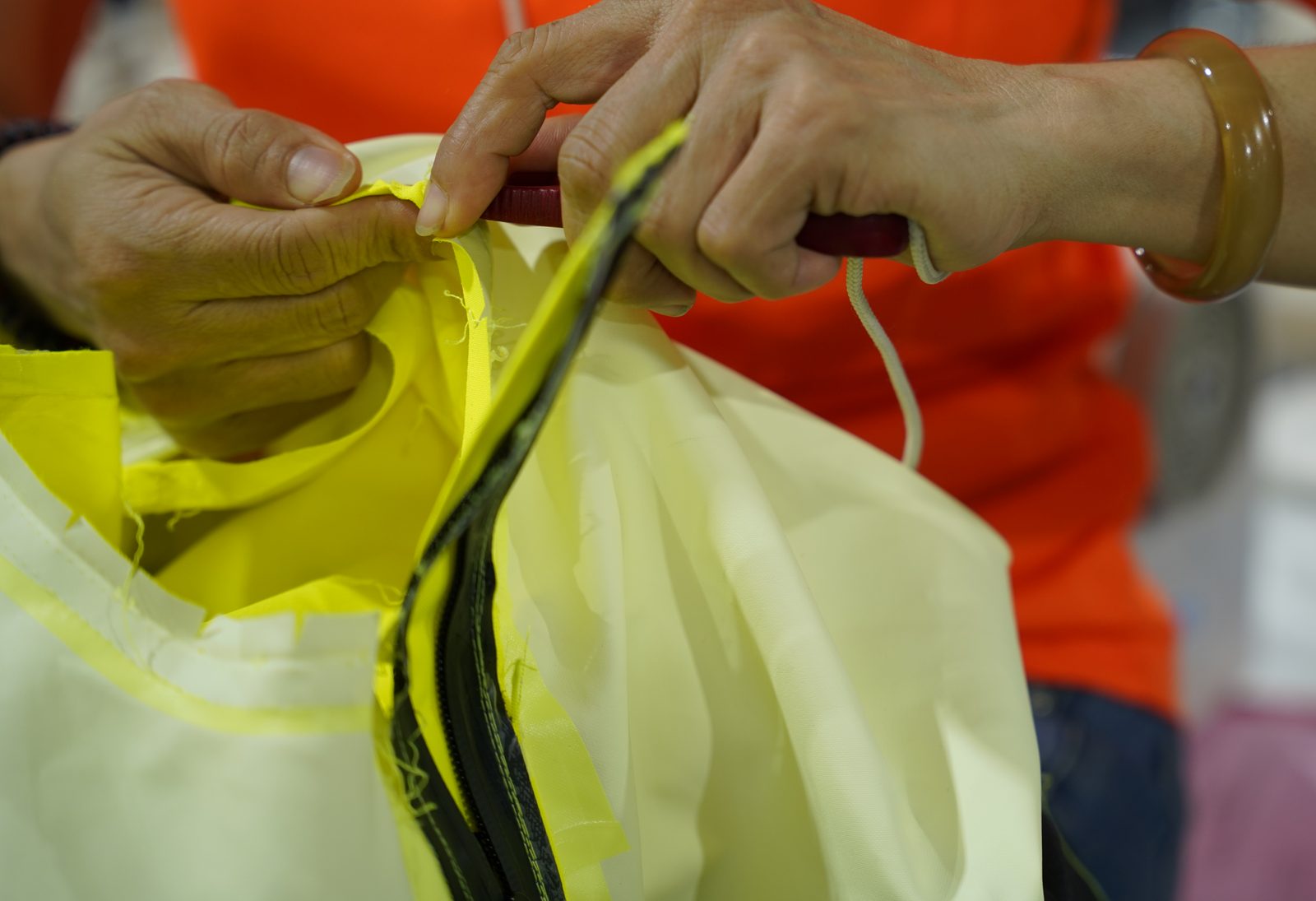
On technical products this assessment matters even more. A small change to a waterproof, protective, reflective or insulated product can directly affect how it performs.
At Viking Vietnam, a technical change is looked at from three angles: the product, the process and the end user.
4. Documents have to be updated consistently
A common risk in production is that a change has been agreed, but the documents have not been updated consistently.
Each department may then be working from a different version of the information:
- Technical is using the new version
- The sewing line is still looking at the old one
- QC is inspecting to the old standard
- The warehouse is issuing trims from the old list
- IE has not updated the process
- Packing has not updated the label or packing requirement
To avoid this, the related documents need to be updated clearly:
- Tech pack
- Measurement chart
- Sewing process
- Pattern
- Bill of Materials
- QC instructions
- Reference sample
- Line layout where affected
- Packing and labelling documents
A change is only truly controlled when every department involved is looking at the same version of the information.
5. Communicating the change to the line is a step that cannot be skipped
Even when the documents have been updated, a change can still fail if it is not communicated clearly to the sewing line.
The people performing the operation need to understand:
- What has changed
- From which piece the change applies
- What the new way of working is
- Which points need attention
- Which defects to prevent
- Who will check and confirm after the change
The line leader, QC and technical implementation need to work together to make sure operators understand correctly.
In bulk production, nobody can assume that everyone will read and understand a change on their own. The change has to be explained, checked and confirmed on a real product.
At Viking Vietnam, this is an important step in making sure information does not stop at the office but actually reaches the production floor.
6. QC has to update its inspection points after a change
Every change can create a new quality risk. QC therefore needs to be fully informed in order to adjust how it inspects.
After a change, QC needs to know:
- Which points need additional checking
- Which defects may appear
- What the acceptance standard is
- Which piece is the new reference sample
- Whether inspection frequency should rise in the early stage
- How goods before and after the change will be distinguished
- How defect data after the change will be tracked
If QC is not updated, the factory may keep inspecting to the old standard and miss new defects.
At Viking Vietnam, QC does not only inspect finished products. QC takes part in change control to make sure quality stays consistent throughout the order.
7. IE and production have to assess the impact on productivity
A technical change does not only affect quality. It can also affect productivity and schedule.
For example, a more complex sewing detail can lengthen an operation. A new trim can be harder to handle. Moving a pocket or reflective tape can cost the line extra alignment time.
IE and production need to assess:
- Whether the change lengthens the operation time
- Whether it creates a new bottleneck
- Whether the layout needs adjusting
- Whether a more skilled operator is needed
- Whether a jig or supporting device is needed
- Whether it affects the daily output target
- Whether the delivery plan needs updating
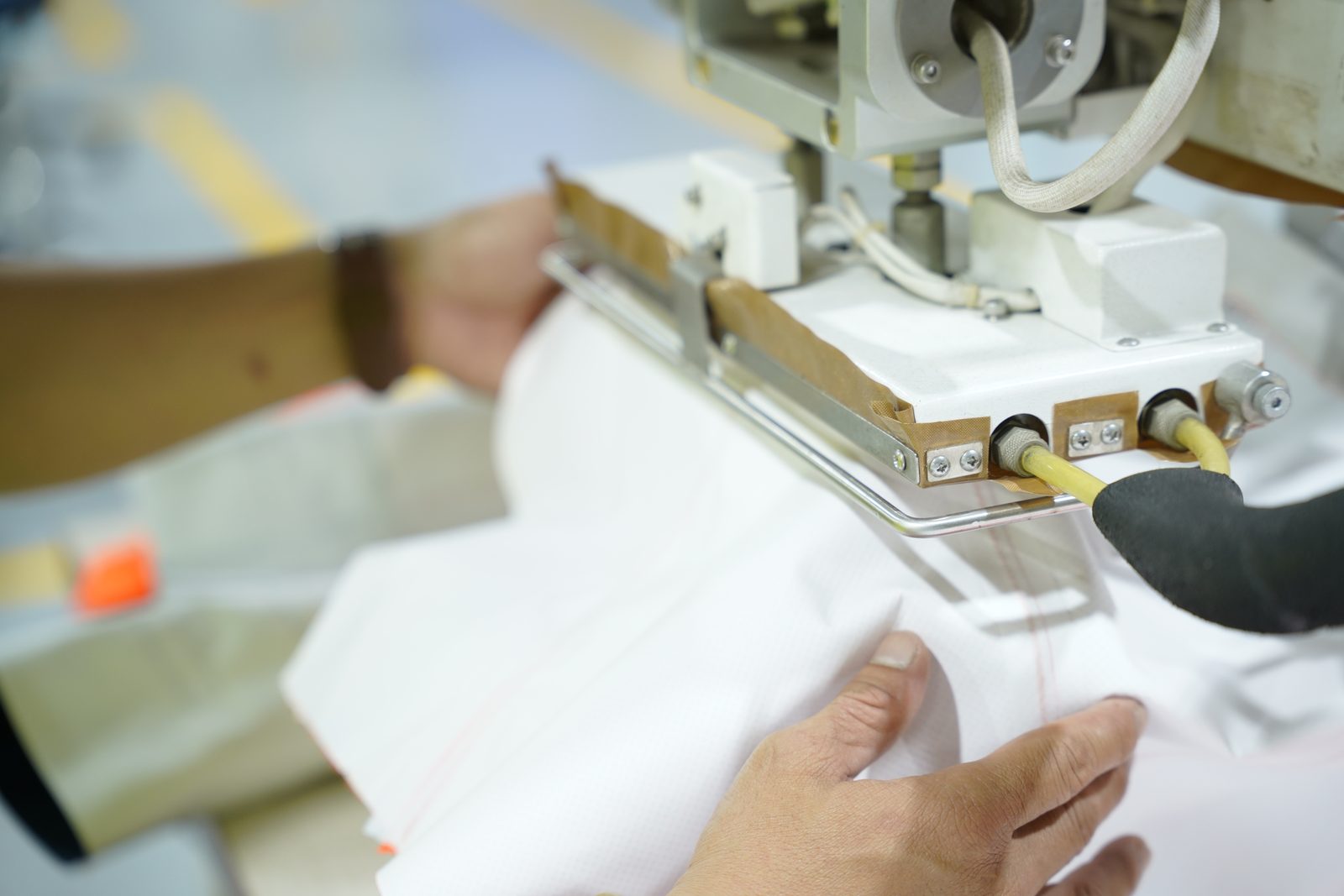
This is part of what gives customers more confidence in working with Viking Vietnam. A change is not only judged on whether it can be done, but on whether it can be implemented steadily in bulk production.
8. Goods before and after a change must be clearly distinguished
When a change is applied while an order is in production, one important issue is distinguishing clearly between goods made before and after the change.
Without good control, the factory can end up mixing:
- Products made to the old version
- Products made to the new version
- Work in progress that has not been updated
- Old and new trims
- Cartons from different production periods
The factory therefore needs a clear way of identifying:
- The point in time when the change takes effect
- The quantity produced before the change
- The quantity that needs repair or can stay as it is
- How work in progress is marked
- How packing is controlled
- How reports to the customer are updated where needed
Clear separation protects transparency and avoids risk at shipment.
For international customers, this is an important part of trust in the supply chain.
9. Change control protects the customer's trust
In a manufacturing partnership, customers understand that change can happen. What they need is a factory with a system for controlling change clearly and responsibly.
A factory with strong change control gives customers more confidence because:
- Changes are clearly confirmed
- The impact is assessed in advance
- Documents are updated consistently
- The departments involved are fully informed
- The sewing line receives specific guidance
- QC updates its control points
- Goods before and after the change are clearly separated
- Quality and schedule risks are tracked
This matters especially for international brands, where expectations for transparency, consistency and supply chain responsibility keep rising.
A well controlled change can strengthen trust. A missed change can create serious risk for both the factory and the customer.
10. Viking Vietnam's approach to change control in production
Viking Vietnam has experience manufacturing technical garments for export markets. For products with requirements for function, durability, fit, safety or real world usability, change control is an essential part of the operating system.
Viking's approach focuses on:
- Confirming the source of the change clearly
- Assessing the impact on the product and the process
- Updating the related technical documents
- Communicating the change to the right departments
- Controlling the sample or product after the change
- Monitoring quality in the early stage of application
- Separating goods before and after the change clearly
- Coordinating merchandising, technical, IE, QC, maintenance and production
For Viking Vietnam, change control does not mean slowing the schedule. On the contrary, it is how the factory reduces risk, avoids correcting mistakes later and protects stability in bulk production.
Summary of operational value
- In technical garment manufacturing, a small change can affect quality, schedule, productivity and product consistency.
- Change control has to start by confirming the source of information, the scope of application and the timing.
- Every change needs its impact assessed, documents updated, communication to the line and suitable QC control.
- When a change happens during production, the factory must separate goods before and after the change clearly to keep things transparent.
- Viking Vietnam treats change control as an important part of stable production capability, especially for workwear, protective clothing, waterproof garments and high performance apparel.
Connect with Viking Vietnam
If you are looking for a garment manufacturing partner in Vietnam able to control change clearly, coordinate effectively between departments and protect stability in bulk production, Viking Vietnam is ready to work with you.
We support customers in developing and manufacturing technical apparel with transparent processes, clear data and responsible responsiveness at every stage of production.
Connect with Viking Vietnam to build technical garments that are well controlled, from the first requirement to every small change in production.