Explore how Viking Vietnam connects safety policy, training, risk reporting, equipment readiness and management responsibility with everyday manufacturing behaviour.
In a garment factory, safety is often seen through things that are easy to recognise: warning signs, fire exits, extinguishers, rules, protective equipment, training records.
But a safe working environment is not created only by what can be seen. It is created in hundreds of small decisions every day.
Does an operator stop the machine when something seems wrong? Does a line leader deal with a hazard straight away, or prioritise output? Does a member of staff feel able to report an unsafe condition? Is equipment checked before it goes into production? Is a problem raised early, or left until it becomes an incident?
That is why Viking Vietnam places health, safety and environment requirements inside the responsibility of its staff, rather than treating them as the work of an HSE function alone. Viking's business ethics policy requires staff to follow the company's health, safety and environment rules, and to comply with the law on occupational safety, workplace hygiene and environmental protection.
1. A policy only has value when it becomes behaviour
A safety rule can be very thorough. But if the person doing the work does not know what to do in a specific situation, the rule stays on paper.
For example: an unusual needle break, a damaged power cable, a machine making an odd noise, a blocked walkway, a guard that is not working, or an operation the worker feels is unsafe.
In these situations, what matters is not only knowing the rule. The worker needs to know the sequence: stop when needed, report to the right person, check the conditions, and continue only once the risk has been handled.
That is how a safety policy becomes behaviour on the floor.
2. Reporting a hazard matters as much as reporting an accident
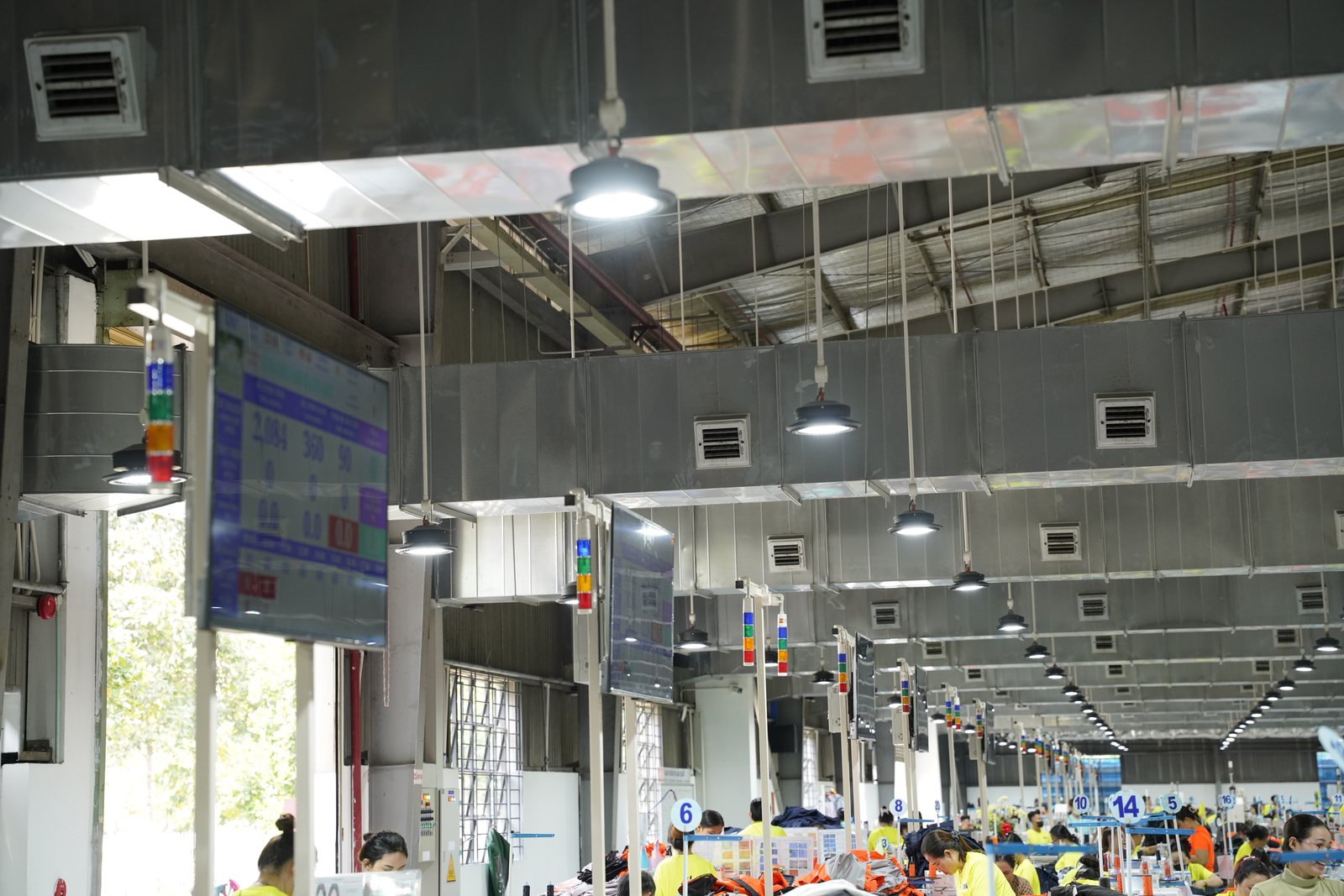
A mature safety system does not only react once an accident has happened. It has to pick up the signals that come before one.
Viking states that staff have to report accidents, risks and unsafe conditions promptly to management or to the HSE function.
This matters. If a report only comes once somebody is hurt, the organisation is reacting too late. An exposed cable that has not yet caused an accident is still a problem. A blocked walkway that has not yet caused a fall still needs clearing. A machine behaving abnormally that has not yet failed still needs checking.
The sounder way to think about it is: report the risk before it becomes an incident.
3. Workers need the conditions to speak up
Viking publishes several channels through which workers can raise unsuitable working conditions, environmental concerns or abuse of position. These include management, the trade union, the SPT and SA8000 committee, and external contacts under the policy.
This sets an important governance principle: information about risk has to have a route.
If a worker sees a hazard but does not know whom to tell, the system is missing a link. If they know the channel but are afraid to use it, the system is not working in spirit either.
Safety is therefore directly connected to the communication culture of the organisation.
4. Safety training has to connect to the actual job
Safety training should not be only an introduction to the rules. The content has to relate to the workstation.
A machine operator needs to understand the hazardous points of the equipment, how to run it correctly, when to stop, what must not be adjusted without authorisation, and who supports them when something goes wrong.
Warehouse staff may need to focus on moving goods, loading and unloading, walkways, weight and storage areas.
Line staff need to understand posture, the machine area, power cables, sharps, needles and how to handle an incident.
Viking's quality and social responsibility policy places training, awareness and worker responsibility within its social and safety management system.
A training session only has value when the trainee knows how to apply it to tomorrow's work.
5. Safety has to enter the production preparation step
A new style raises more than the questions of how many people, how many machines and what output is expected. It also has to ask: is the machine suitable, does the layout support good handling, which operations need extra instruction, which equipment has to be prepared in advance, and is there any position where the material or the handling creates risk?
IE at Viking is responsible for defining machine requirements, laying out the line, balancing operations and arranging work according to operator skill. These responsibilities create the basis for equipment, people and line organisation to be considered together before production.
Safety should therefore not be checked only after the layout is finished. It has to be weighed during the preparation itself.
6. Maintenance plays an important role in preventing risk
An unstable machine does not only affect output. It can create risk for the operator.
Maintenance is therefore more than fixing a machine once it breaks. A good system aims at checking machine condition, servicing, spotting abnormal signs, handling them before a serious failure, and making sure equipment returns to use in suitable condition.
Viking's business ethics policy also refers to inspecting, servicing and maintaining machinery and equipment as part of how the business meets its environmental and operational responsibilities.
Proactive maintenance therefore supports safety, quality and productivity at the same time.
7. The line leader is a key link in safety culture
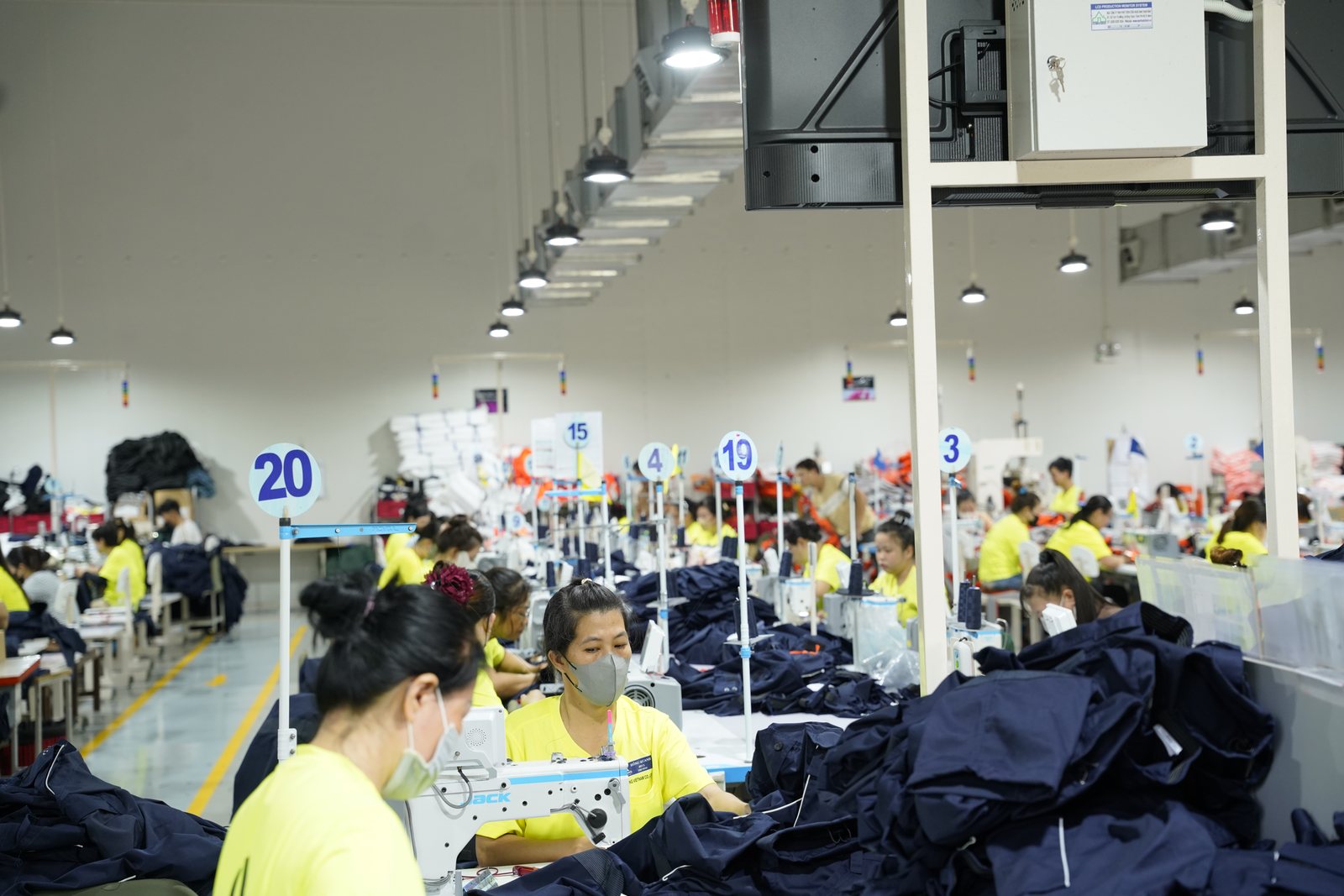
In a factory, frontline management is closest to the workers. A line leader has great influence over what staff understand about what is prioritised here when a risk appears.
If the real message is to keep going and deal with it at the end of the day, then however good the policy, the safety culture will be weak.
If the manager instead responds by stopping, checking and only then continuing, workers learn that reporting a risk is the correct behaviour.
Line leader training therefore has to cover more than output, efficiency and quality. It has to cover safety awareness, escalation, communication and how to respond to an unsafe condition.
8. Safety is not traded for output
Production pressure is real. There are deadlines, customers, targets and ship dates. But a good management system has limits that are not traded.
Viking requires staff to follow its health, safety and environment rules and the law on occupational safety. The ethics policy also places compliance responsibility on both staff and managers.
This has a very practical meaning: output is not a reason to pass over a safety hazard.
If equipment is not safe, running faster does not solve the problem. If an operator has not been properly instructed, adding pressure only makes the risk larger.
Safety has to be a condition of productivity, not its opponent.
9. A safety observation can start from very small things
Not every safety activity needs a large programme. A safety observation can begin by asking:
- Is anything obstructing this area?
- Are the power cables routed suitably?
- Is the fire exit clear?
- Does the worker have to reach too far?
- Is any tool sitting where it should not?
- Does the machine make an abnormal sound?
- Does the operator know how to stop the machine in an emergency?
Small observations can find a risk before it becomes an incident.
What matters is that observation leads to action. It should not stop at seeing and recording. It has to go further: see, report, act, verify.
10. A near miss is valuable data
A near miss is a situation that did not cause an accident but came very close. A carton that nearly fell. Someone who nearly slipped. A cable that was nearly pulled apart.
If people think that nothing happened after all and carry on, the organisation has lost a lesson.
The question should be: why did it nearly happen?
These situations can feed a five why analysis, safety training content, a layout adjustment, an equipment change or an SOP update.
That is how an incident that did not happen can still make the system better.
11. Safety and five why belong together
When an incident or a near miss occurs, correcting the scene is not enough.
Take a worker who nearly tripped over a cable. The immediate action is to move it. But the root cause may run deeper: why was the cable there, why did the layout not allow for the power position, why did nobody identify it earlier, is the line preparation checklist missing this item?
A small incident can then create an improvement for several other lines. That is how safety becomes part of continuous improvement.
12. Safety also relates to working hours and workers' rights
Viking's quality and social responsibility policy places working conditions, working hours, workers' rights and social responsibility within the same management system. The policy also states the principle of no forced overtime and provides channels for raising concerns about working conditions.
This widens the understanding of workplace safety. Safety is not only about avoiding injury from a machine. It also concerns organising work responsibly and with respect for the people doing it.
13. A safe environment supports quality
Someone working in unstable conditions finds it hard to hold full concentration. A machine with a problem struggles to give a stable result. An awkward layout can reduce output and raise the chance of a handling error at the same time.
Safety, quality and productivity should therefore not be managed as three entirely separate aims. A good improvement can support all three.
A well made jig can reduce a difficult movement, raise repeatability, cut defects, raise productivity and reduce physical strain on the operator.
That is systems thinking rather than optimising one measure at a time.
14. Managers have to turn policy into decisions
A policy only gains force when it changes how managers decide.
When a machine behaves abnormally: continue to protect output, or stop to check?
When a worker raises a risk: say later, or confirm and act?
When a safety action is overdue: let it go because nothing has happened, or escalate because the risk is still there?
This is where leadership creates culture. Workers read management decisions to understand what the business genuinely values.
15. Safety training needs repeating in several forms
Not everything heard once becomes a habit. Safety training can therefore be reinforced through onboarding, periodic training, short start of shift talks, visual instructions, reminders on the floor, real situations, near miss cases and coaching at the workstation.
The final aim is not for staff to remember a page of material. It is for them to respond correctly when a real situation arises.
16. What international customers see in a good safety system
A buyer cannot observe every behaviour in a factory. But they can learn a great deal by asking:
- How are staff trained on safety?
- When they find an unsafe condition, whom do they tell?
- Is there an escalation mechanism?
- How is equipment maintained?
- Do workers have a channel to raise concerns?
- How are near misses handled?
- How does management follow corrective actions?
These questions show whether safety exists as a file of documents or as a working system.
17. Safety is part of responsible manufacturing
Viking states a mission of developing and producing workwear tied to safety, comfort and quality, and identifies care for the production environment and for its people as part of how the business operates.
That creates an important connection: a company making products to support the safety of the wearer also has to build safety for the people who make them.
This is where responsible manufacturing begins inside the factory.
Viking Vietnam: from safety rules to safety behaviour
Safety thinking can be summarised as a sequence: identify, stop, report, assess, correct, verify, learn, prevent.
Behind that sequence sits something more important: people have to feel both responsible and entitled to speak when they see a risk.
A safe environment is not created by an HSE department alone. It is created when the operator reports an abnormality, the line leader responds correctly, maintenance handles the equipment, IE revisits the layout, management follows the actions, workers are trained, and everyone understands that no amount of output is worth a preventable risk.
That is how safety moves from policy to everyday behaviour. And for Viking Vietnam it is also part of responsible manufacturing capability: safe people, a stable process, a reliable product.