Explore how material issuing control from warehouse to sewing line helps Viking Vietnam maintain accuracy, traceability and production readiness in technical apparel manufacturing.
A roll of fabric has been inspected. The zips have arrived in full. The seam tape is the right code. The labels are confirmed. Everything is in the warehouse.
But between that moment and the point where materials are actually used on the line, one important step remains: issuing the right material to the right order.
It sounds simple. In a factory running many styles, colours, sizes, purchase orders and technical materials at once, a single wrong issue can lead to the wrong material being used, lots being mixed, the wrong colourway, a shortage mid line, wrong labels, more rework and a break in traceability.
Warehouse management therefore does not end when material is received correctly. An important part of capability lies in getting the right input to the right point of use.
1. Issuing should not begin with the question of what the line needs
If the warehouse only reacts when the line calls for another two hundred zips, an important question is still missing: which two hundred zips?
The request has to be tied to the style, the purchase order, the colour, the size where relevant, the material code, the approved BOM, the quantity, and the lot where needed.
Material issuing therefore has to rest on controlled order information, not only on a verbal request.
The principle should be: production need plus approved information makes a valid issue.
2. The BOM is the basis for issuing
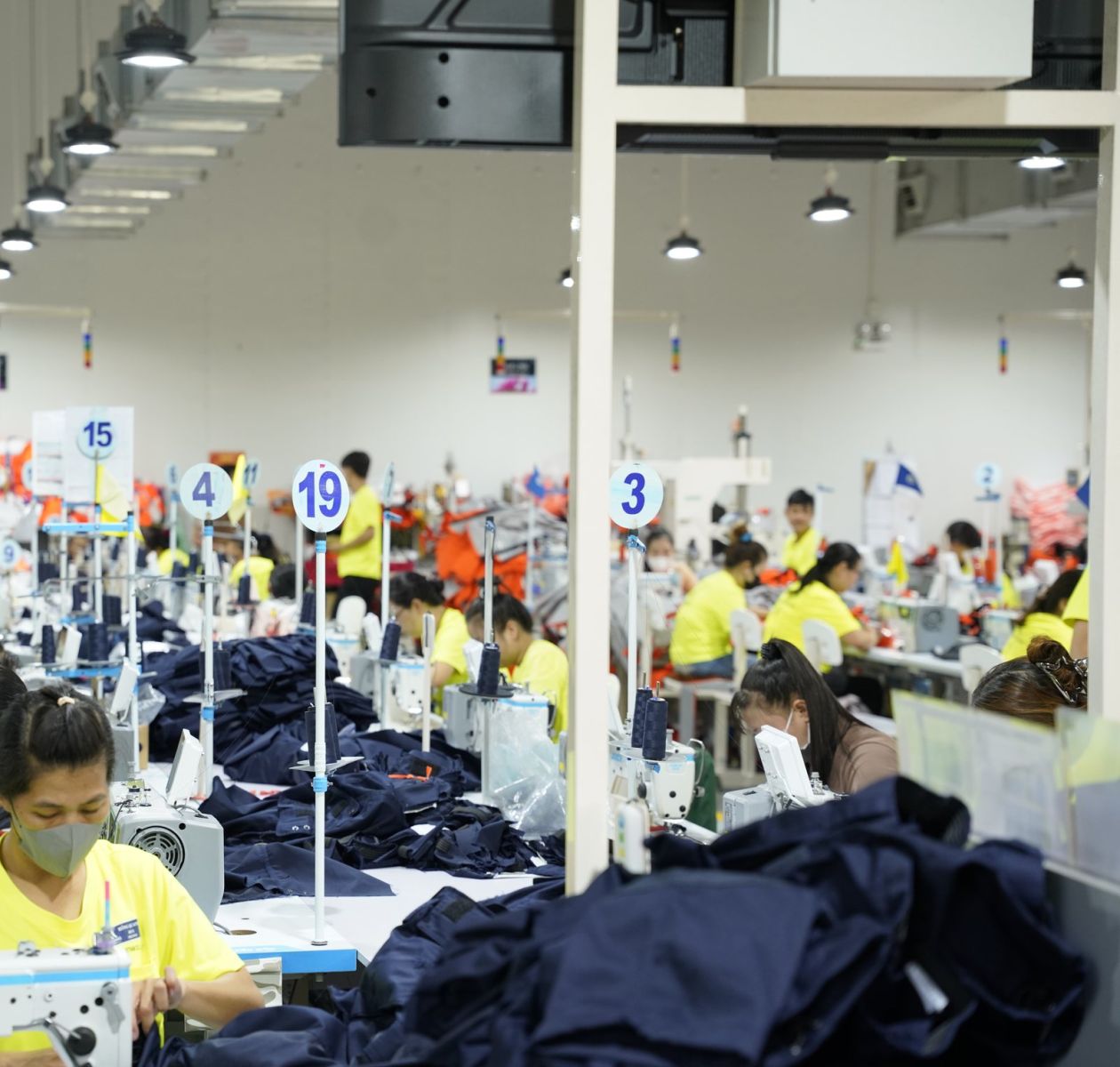
The bill of materials does more than help purchasing buy. It also tells the warehouse which components the product needs.
On a technical jacket, the BOM can include shell fabric, contrast fabric, lining, insulation, zips, seam tape, reflective material, elastic, cord, stoppers, hook and loop fastening, labels, logos and packaging materials.
If the BOM changes and the warehouse still issues to the old version, production can use the wrong material even though the warehouse followed exactly the document it held.
Issuing control therefore begins with the right BOM version.
3. Material codes reduce dependence on memory
In a warehouse holding many black zips, the eye struggles: different suppliers, different sizes, waterproof and non waterproof, different sliders, different specifications.
If the person issuing relies on the impression that one looks like the other, the risk is high.
A material code creates clearer identification. A good system lets the operator check the material name, the code, the colour and the order rather than rely on memory.
People can be very experienced. But a system should not require them to memorise hundreds of material codes in order to avoid a mistake.
4. Storage location is also a control tool
How material is arranged in the warehouse affects accuracy directly.
If two similar materials sit next to each other with similar labels and no clear zoning, the risk of a picking error rises.
Storage location therefore has to help people get it right. It can be differentiated by material type, customer, order, status, lot or risk level.
A good layout does not only optimise space. It reduces the chance of picking the wrong item. This is a simple example of error prevention inside the warehouse.
5. Material that passed and material on hold cannot share a usable status
In the warehouse, material can be in one of three states:
- Available: fit to use.
- On hold: awaiting assessment.
- Rejected: not permitted for use.
If the status exists only in the system while the physical material is not clearly distinguished, the risk remains.
Information status and physical identification therefore have to match.
Material on hold needs clear identification, segregation, exclusion from normal picking, and release only with the appropriate approval. This matters particularly with technical materials.
6. The right quantity does not mean issuing as much as possible
Issuing everything to the line can look convenient. It can also create problems: work in progress rises, material becomes harder to control, components get lost, orders get mixed, actual consumption becomes unclear, and surplus is hard to recover.
Issuing has to balance production continuity against material control. Too little and the line waits. Too much and control weakens.
This is why the warehouse and planning have to coordinate with production.
7. Critical trims need tighter control
Not every material carries the same risk. Some components affect function, compliance, appearance or the customer's identity directly.
For example waterproof zips, seam tape, reflective material, special labels, customer logos or protective components.
For this group, issuing may need a higher level of confirmation than an ordinary item.
Risk based control lets the team concentrate on the materials where a mistake would have the largest effect.
8. Lot identity has to survive leaving the warehouse
When material leaves the warehouse, the lot information should not disappear.
If a problem is found later, the team needs to know which lot production used, which line it was issued to, when, and in what quantity.
If the warehouse knows the lot only at receiving and does not link it to issuing, traceability breaks in the middle.
Receiving traceability has to connect to production traceability.
9. Production has to verify what it receives
The warehouse is responsible for issuing correctly. But production also needs a check on receipt. It should not be assumed that whatever comes from the warehouse must be right.
A simple verification can catch an error before the material is used: the style, the colour, the material code, the quantity, the label and the lot where needed.
This is the principle of two way control. The warehouse checks before handover. Production checks before use. Two simple layers can stop a defect spreading.
10. A line leader should not substitute materials unilaterally
In practice, a line can run out of a material while something similar sits nearby. Output pressure can make the temptation to substitute strong.
This is a dangerous point. A line leader should not decide a substitution if that change requires approval.
The route should be: identify the shortage, report, check the alternative, have technical and quality assess, approve where required, update the information, then issue.
Not shortage, replace, continue. Speed must not be created by bypassing change control.
11. A shortage has to be visible before the line stops
The warehouse, merchandising, planning and production have to see the same material position.
If a shortage is only found when an operator says there is nothing left to work on, the response is already too late.
A good shortage report shows the material code, the quantity required, the quantity available, the quantity incoming, the expected date, the order affected, the production date required and the owner.
The problem can then be handled before it becomes downtime.
12. Returned material has to come back into the system properly
After production, the line may still hold fabric, zips, labels, reflective material and packaging. These should not simply be gathered up and sent back.
The warehouse has to receive them with enough information: material code, order, lot, quantity, condition and the reason for return.
If returned material loses its identity, the next use can carry real risk. With labels or components carrying customer identity, the handling has to be more careful still.
13. Reconciliation reveals the abnormal
After an order, a comparison is possible: quantity issued minus quantity returned equals actual usage, then checked against expected consumption.
Where the gap is large, the cause has to be found: cutting waste, defective material, rework, damage, loss, an inaccurate consumption standard or incomplete records.
Reconciliation does not only serve finance or costing. It lets production see where material is being consumed abnormally.
14. Issuing accuracy and inventory accuracy are directly linked
If every issue, return and adjustment is not recorded promptly, the system inventory gradually drifts from reality.
Planning may then see two thousand pieces remaining when the real figure is fifteen hundred. The consequences are a wrong plan, a belief that the order is ready, and a shortage discovered too late.
Warehouse transactions therefore have to be recorded accurately. Transaction discipline creates inventory accuracy. Without discipline on each transaction, the overall data cannot be trusted.
15. An issuing error should be handled as a quality issue
Suppose the line receives the wrong label. Found before use, it is quickly controlled. With five hundred garments already labelled, it becomes rework. Once cartons are packed, the problem is larger still.
An issuing error should therefore not be seen only as a warehouse mistake. It can affect product conformity directly.
The same logic applies: stop, contain, quantify, correct, find the root cause, prevent. Exactly as with a defect on the line.
16. Five why can reduce picking errors
The problem: the warehouse issued the wrong zip.
- Why was the wrong one issued? The operator picked from the wrong location.
- Why the wrong location? Two zip types are stored side by side.
- Why are they hard to distinguish? The label shows only a small supplier code.
- Why was there no second check? This zip is not classified as a critical trim.
The corrective action can be separating the locations, adding visual identification, clearer labels, a cross check on critical trims and training.
Root cause analysis moves the response from be more careful to make the system easier to do correctly.
17. Barcodes support discipline, they do not replace it
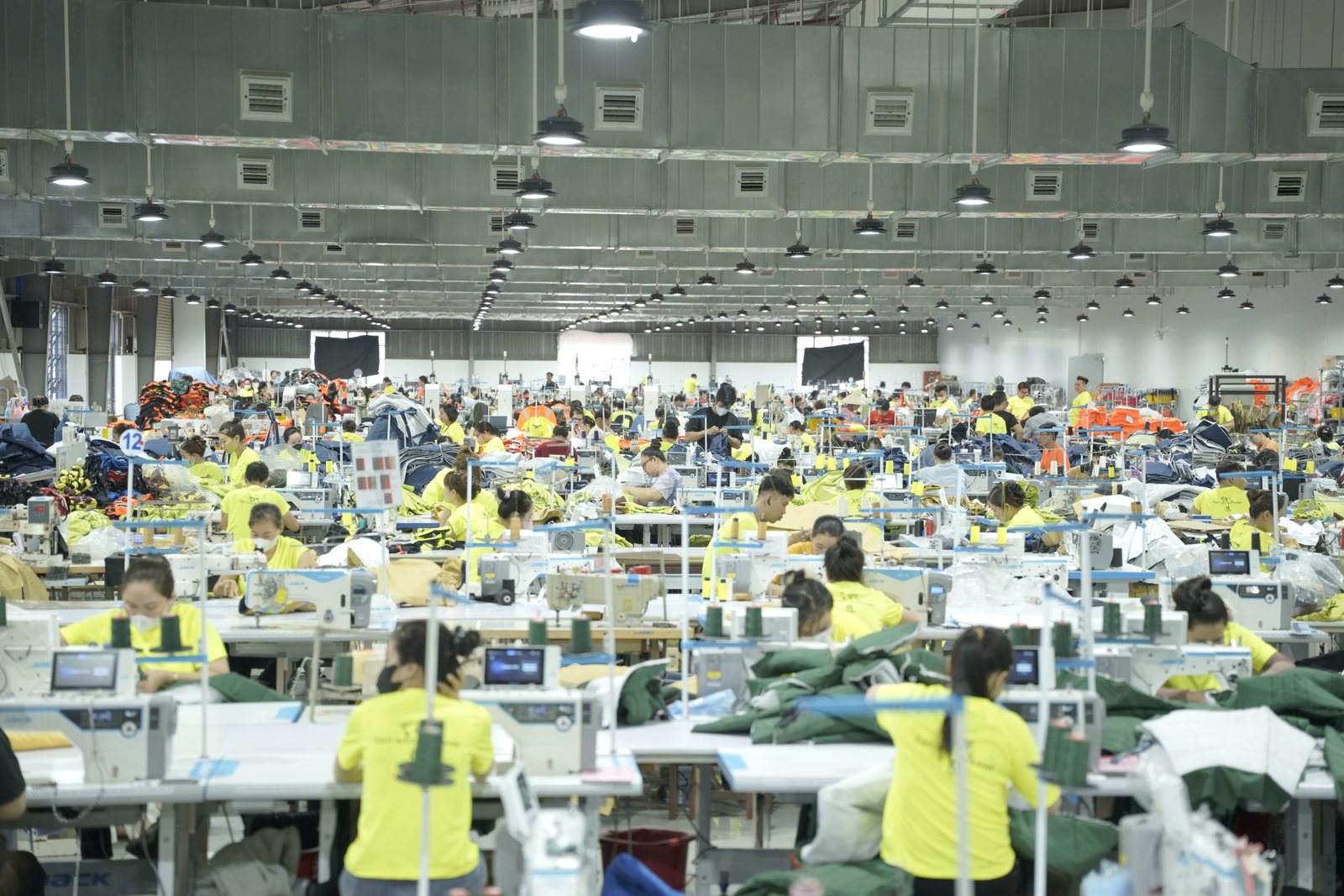
Barcodes or QR codes can help with identification, picking, transactions and traceability. But technology does not guarantee the data is right.
If the original label is wrong, the user scans the wrong item, the process is bypassed or the master data is wrong, the system still produces errors.
Digital control has to sit on top of a clear process control. Technology should reduce human error, not conceal a process that is not sound.
18. Material issuing also involves RACI
When a shortage or an issuing error appears, who does what?
- Warehouse: establish the stock and the transactions.
- Planning: assess the production impact.
- Merchandising and purchasing: follow incoming material.
- Technical: assess an alternative where one exists.
- QA and QC: confirm the material requirement and the risk.
- Production: contain the work in progress and adjust the plan.
- Management: decide where delivery or the customer is significantly affected.
RACI avoids the state where everyone knows a material is short and nobody owns closing the issue.
19. What a customer gains from good issuing control
A customer may never see the warehouse in the finished product. But they feel the result of warehouse control through fewer material errors, fewer mixed lots, fewer interruptions, better traceability, shortages identified earlier, changes controlled better, and a more consistent product.
This is why warehouse capability should not sit outside the conversation about manufacturing capability.
20. From warehouse to line, without losing control
The material issuing process can be pictured as a chain: approved BOM, material identification, available status, picking, verification, issue, production receiving, use, return, reconciliation.
At each step, these questions have to be answerable: which material, for which order, how much, from which lot, in which status, and who is holding it.
With those answers, the material flow is no longer only a physical movement. It becomes a flow of information that can be controlled and traced.
Viking Vietnam: the right material in the right place
In technical apparel manufacturing, a correct product cannot be made from a wrong input.
The warehouse aim is therefore not only to deliver material quickly, but: the right material, the right order, the right lot, the right quantity, the right time, the right record.
When those six are controlled together, the warehouse becomes an active part of the quality system and of production readiness.
Because before an operator can sew correctly, the factory has to make sure they were handed the right thing to sew. That is how warehouse capability connects directly to manufacturing capability at Viking Vietnam.