Explore how material management helps Viking Vietnam control quality before production by connecting BOM, warehouse, technical teams, merchandising and sewing operations.
When a garment has a defect, the sewing line is usually the first place we look. But not every problem starts at the needle.
A jacket can be sewn by the correct method and still have a problem if the fabric is from the wrong lot, the colour is not consistent, the zip code is wrong, the seam tape is unsuitable, the reflective material does not meet specification, the label is the wrong version, the material quantity is short, or material was issued against the wrong style or colourway.
On technical outerwear, waterproof garments, workwear and high performance apparel in particular, materials do not only give the product its shape. Many components create its function directly.
Quality therefore has to begin before the cutting table.
1. Material delivered does not mean material ready
In manufacturing there is a large difference between material arrived and material ready for production.
A roll of fabric in the warehouse is not automatically fit to be issued. Before use, these points have to be clear:
- Is it the right supplier?
- Is it the right material code?
- Is it the right colour?
- Is it the right lot?
- Is the quantity right?
- Does it meet the technical requirement?
- Is there any damage or abnormality?
- Does it need a test or an additional approval?
Only once the important points are confirmed does material genuinely become a ready input. That is the discipline of material readiness.
2. The BOM is the product's material map
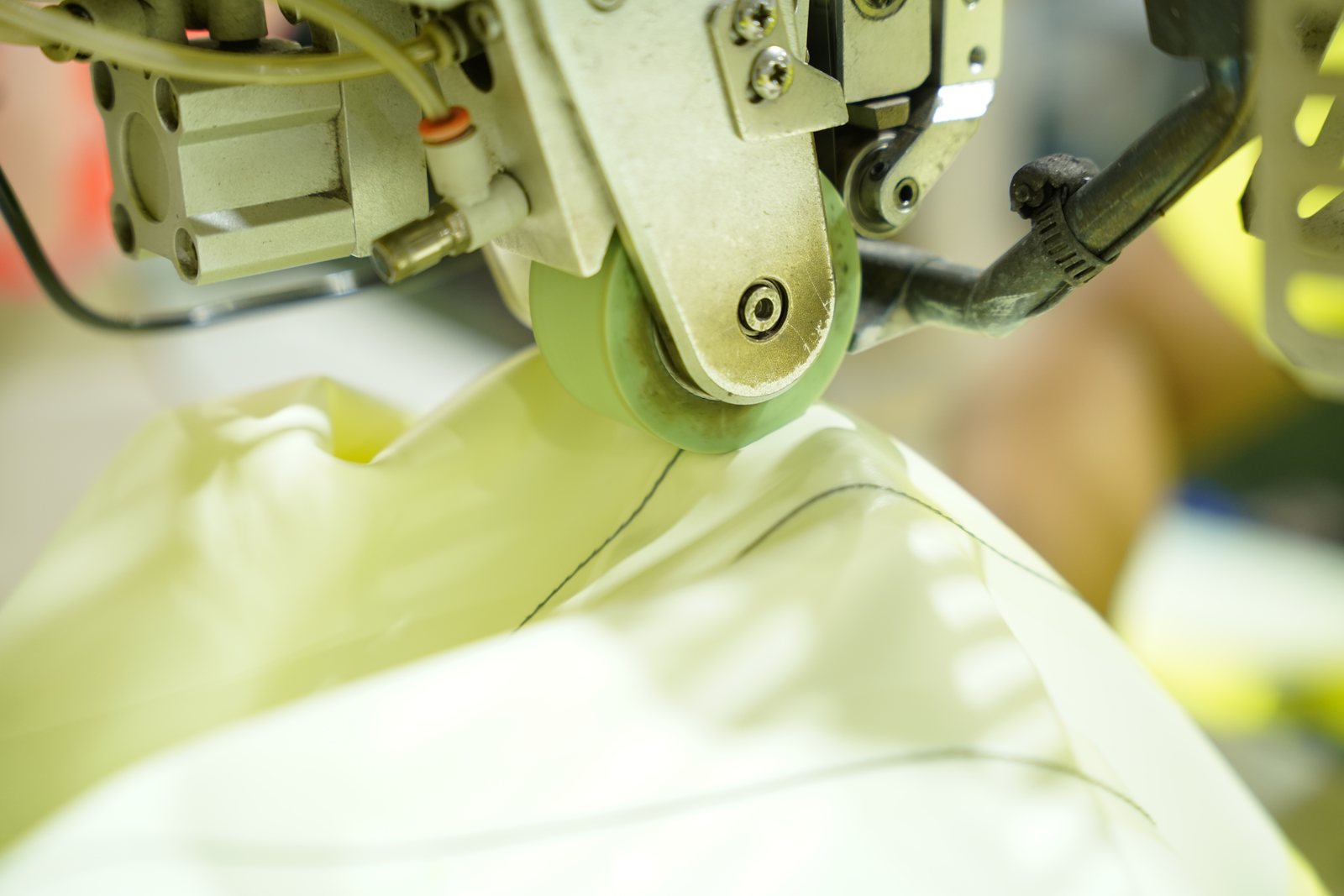
A technical jacket can carry a great many components: shell fabric, contrast fabric, lining, insulation, zips, seam tape, reflective material, hook and loop fastening, elastic, cord, stoppers, labels, logos and packaging materials.
If each function works from a different list, the risk of error is high. The bill of materials lets everyone look at one defined material configuration.
But a BOM only has value when it is the right version, updated when the customer changes something, with clear material codes, clear colourways, confirmed suppliers or specifications, and every function using the same version.
Managing the BOM is therefore not one department's responsibility. It is the connection point between merchandising, technical, purchasing, the warehouse, production and quality.
3. A small trim can stop a whole line
On a jacket, a zip slider or a cord stopper is a very small item. Without that exact trim, though, the garment cannot be finished.
This is a familiar paradox in manufacturing: the value of a material can be small while its effect on production flow is very large.
Ninety nine percent of the materials are ready. The missing one percent sits on a critical component. The line still cannot run normally.
Material readiness should therefore not be measured only by what percentage of materials have arrived. It also has to ask: where in the operation sequence does the missing material sit?
This is why planning, merchandising and the warehouse have to coordinate before a line is released.
4. Not every material can be substituted at will
When a trim is missing, the natural reaction is to look for something close enough to use temporarily. On a technical garment, that question has to be handled with great care.
A small material change can affect appearance, weight, hand feel, strength, waterproof performance, the sewing method, seam sealing, performance after washing and the customer approval itself.
The principle should therefore be no unapproved substitution.
Where a change is needed, the sequence should be: request, assess, test if needed, approve, update the document, then use.
A shortage should not lead straight to choosing something similar and carrying on. Flexibility in manufacturing is not the same as uncontrolled change to a specification.
5. Fabric lot control limits variation within one garment
Fabric of the same code and colour can still differ between lots. This matters particularly when components of one garment are cut from several different lots.
Without control, shade variation can appear, along with differences in surface, hand feel, or how the material behaves when sewn or heat treated.
The warehouse and the related functions therefore have to identify lots clearly. When material is issued, the lot information has to be sufficient to trace back if a problem arises.
The point is not only avoiding a colour mismatch. Lot information is also part of traceability.
6. Technical material has to be judged on specification and on real production
A material can meet its specification and still need assessing under real production conditions.
Does the fabric pucker easily? Does the zip wave? Does the seam tape bond well? Is the reflective easily affected during sewing? Does the presser foot mark the material? Does heat affect the surface?
This is why material evaluation should not be entirely separated from sampling and technical development.
The sample answers the question: can this material make the product the way we intend?
7. Incoming quality control stops problems before production
If a material problem is found after cutting, the cost of handling it is usually far higher. After sewing, higher still.
Incoming control therefore earns its place by finding the problem before the factory adds more value to that material.
Depending on the material and the order requirement, checking may focus on identification, quantity, colour, appearance, dimensions, functional requirements, the approved reference and test requirements.
The aim is not to check everything the same way. It is to establish which points matter for each material.
8. The warehouse is more than a place to store material

In a technical apparel factory, the warehouse does more than receive and issue. It sits between several information flows: from supplier to warehouse to production, and from the BOM and order information to the warehouse and on to issuing.
The warehouse therefore has to support identification, zoning, storage conditions, quantity control, correct issuing, traceability, handling of surplus and returns, and separation of material on hold.
A well organised warehouse helps production receive the right material at the right time. A warehouse without control can create defects even when purchasing bought exactly the right goods.
9. The right material, the right order, the right quantity, the right time
The aim of material issuing can be summarised in four words:
- Right material: no confusion of code or specification.
- Right order: no issuing against the wrong style, purchase order or colourway.
- Right quantity: enough for the need, still under control.
- Right time: not so late that the line waits, not so early that issuing becomes chaotic.
This is part of the production flow. Warehouse performance should not be judged only on how fast material goes out. Accuracy matters as much as speed.
10. A shortage has to be visible before it affects the line
A good system does not wait for the line leader to report that the zips have run out before starting to act.
Shortage information should be visible earlier, through the order requirement, inventory, the incoming schedule, actual consumption and the production plan.
Where a shortage is possible, the relevant functions need to know what is short, how much, when it is needed, which orders are affected, whether a valid option exists, and who has to decide.
This is where material management connects directly to production planning.
11. Actual consumption can reveal a system problem
If the planned consumption is one figure and actual consumption is consistently higher, the question should not only be why the warehouse issued more.
The analysis has to cover cutting loss, defective material, rework, process waste, pattern efficiency, damage during handling, or a consumption standard that does not fit.
The gap between plan and actual can provide improvement data. Material variance is therefore not only a cost issue. It can also be a signal about quality, process and planning.
12. Non conforming material has to be clearly segregated
An important principle is that material which has not passed, or is awaiting confirmation, must not find its way back into normal use.
The sequence can be: identify, hold, segregate, review, decide, then release or return.
If material awaiting a decision sits mixed with conforming material, one wrong pick is all it takes for the risk to return.
Physical control and information control therefore have to go together. If the system says hold but the material can still be taken freely, the hold does not really exist.
13. Managing returned material matters as much as issuing
After production, surplus material may come back to the warehouse. This should not be an informal activity.
What has to be established is the material, the code, the lot, the quantity, the condition, whether it can be reused, and which order it belongs to.
If returned material is not clearly identified, the next use can create risk. The return flow is therefore also part of traceability.
14. Traceability narrows the problem
Suppose a problem relating to one trim lot is found after production. With good data, the factory can establish which lot, when it was received, which orders used it, which lines, over what period, and what quantity may be affected.
Without traceability, the inspection scope can be far wider.
This is the practical value of traceability: not only to answer an auditor, but to let the organisation respond more precisely when something goes wrong.
15. A material mix up also deserves five why
When the wrong material is picked, the analysis should not stop at the warehouse operator taking the wrong item. The questions continue:
- Why was the wrong item taken? Two codes look very similar.
- Why are they hard to tell apart? Small labels and storage positions next to each other.
- Why are they stored side by side? Locations are not differentiated by risk.
- Why did picking not catch it? There is no double check step for critical trims.
The corrective action can then include adjusting locations, improving labels, using barcodes or another identification method, adding a checklist, training and a verification step.
Rather than only reminding staff to be more careful.
16. RACI keeps a material issue from getting stuck between departments
A material issue usually involves several roles:
- Warehouse: detect, hold, verify quantity.
- Purchasing: work with the supplier.
- Technical: assess whether it can be used.
- QA and QC: confirm the quality position.
- Merchandising: assess the effect on the order and the customer.
- Production: establish the affected work in progress.
- Management: decide where there is risk or significant impact.
Without clear responsibility, the issue easily lands in a state of waiting for the other department. RACI turns that into who does what, by when, and who decides.
17. Material readiness has to be a condition of line readiness
Before releasing an order to the line, readiness should be seen as a system: documents ready, materials ready, machines ready, people ready, QC ready.
One element that is not ready can affect the flow. In particular, if materials are incomplete but the line starts producing part of the work anyway, work in progress rises and garments wait between operations.
The question should therefore not only be whether sewing can start, but if we start today, do we have the conditions to keep the flow running?
18. Warehouse data has to reflect reality
A beautiful inventory system on screen has no value if the physical quantity differs widely from it.
Data discipline therefore has to cover receiving correctly, issuing correctly, returning correctly, adjusting with justification, recording promptly and resolving discrepancies.
Warehouse data quality affects planning directly. If the system says a thousand zips remain and the actual figure is seven hundred, planning can make a wrong decision.
Inventory accuracy is production information quality.
19. Material management is also sustainability
Sustainability does not sit only in choosing friendlier materials. It also sits in how a business uses what it buys.
Good management can reduce waste, reduce over ordering, reduce material that expires or degrades, make reasonable use of conforming surplus, reduce rework caused by wrong issuing, and improve consumption accuracy.
Every metre of fabric not wasted has both economic and environmental value. This is where operational excellence and environmental responsibility meet naturally.
20. What a buyer should ask about material control
Assessing a technical garment factory, a customer can ask:
- How is the BOM version controlled?
- How is incoming material identified?
- How are fabric lots managed?
- How is material on hold segregated?
- Who can approve a material substitution?
- When is a shortage detected?
- How far does traceability reach?
- How is surplus material returned?
- How is actual consumption used for improvement?
These questions reveal the capability behind the sewing line. A product can only be consistent when its inputs are controlled too.
Viking Vietnam: quality starts before the needle
In a technical apparel factory, quality does not begin when the needle passes through the fabric. It begins earlier: the right specification, the right material, the right lot, the right quantity, the right identification, the right storage, the right issuing, and then the right production.
A neat seam cannot correct the use of the wrong material. A good QC should not have to discover a wrong zip code once the garment is finished. A high performing line cannot run steadily while materials are constantly short.
Material management is therefore not a logistics activity sitting behind production. It is part of manufacturing capability.
For Viking Vietnam, as material information, technical requirements, warehouse control and production planning connect more closely, the factory gains an important layer of protection: the right input, before asking people to create the right output.