Explore how RACI helps Viking Vietnam clarify who performs, owns, advises and receives information when production issues arise.
A problem on the line is found at ten in the morning.
QC says it is a technical issue. Technical says production is not executing correctly. Production waits for instruction. Merchandising wants to know whether it affects the customer. Management asks: so who is actually responsible for resolving this?
This situation arises easily in any manufacturing environment where several functions are involved. Not because people lack responsibility. Sometimes the problem is that responsibility has not been defined clearly enough.
That is why Viking Vietnam uses RACI thinking to support coordination between functions. RACI is not about adding another matrix. The aim is for the team to know who does the work, who owns the outcome, who has to be consulted and who has to be informed.
When those answers are clear, the speed of resolving a problem can change considerably.
1. What RACI is
RACI covers four roles:
R, responsible: the person or function who does the work. They act directly: inspecting goods, adjusting a machine, correcting a document, quarantining work in progress, analysing a cause. One action can have several people executing it.
A, accountable: the person who owns the outcome. This is who has to ensure the problem is resolved or the decision is made. One task should normally have one clear A. When too many people are jointly accountable, it is easy for nobody to truly own the problem.
C, consulted: those who have to be asked before acting or deciding. Usually technical, QA, IE and merchandising. They provide the expertise or information needed.
I, informed: those who have to know the status or the result. They do not necessarily take part in the decision but need to know in order to coordinate their own work.
RACI therefore creates a very simple language: R does, A owns, C advises, I knows.
2. Why a production problem usually involves several functions
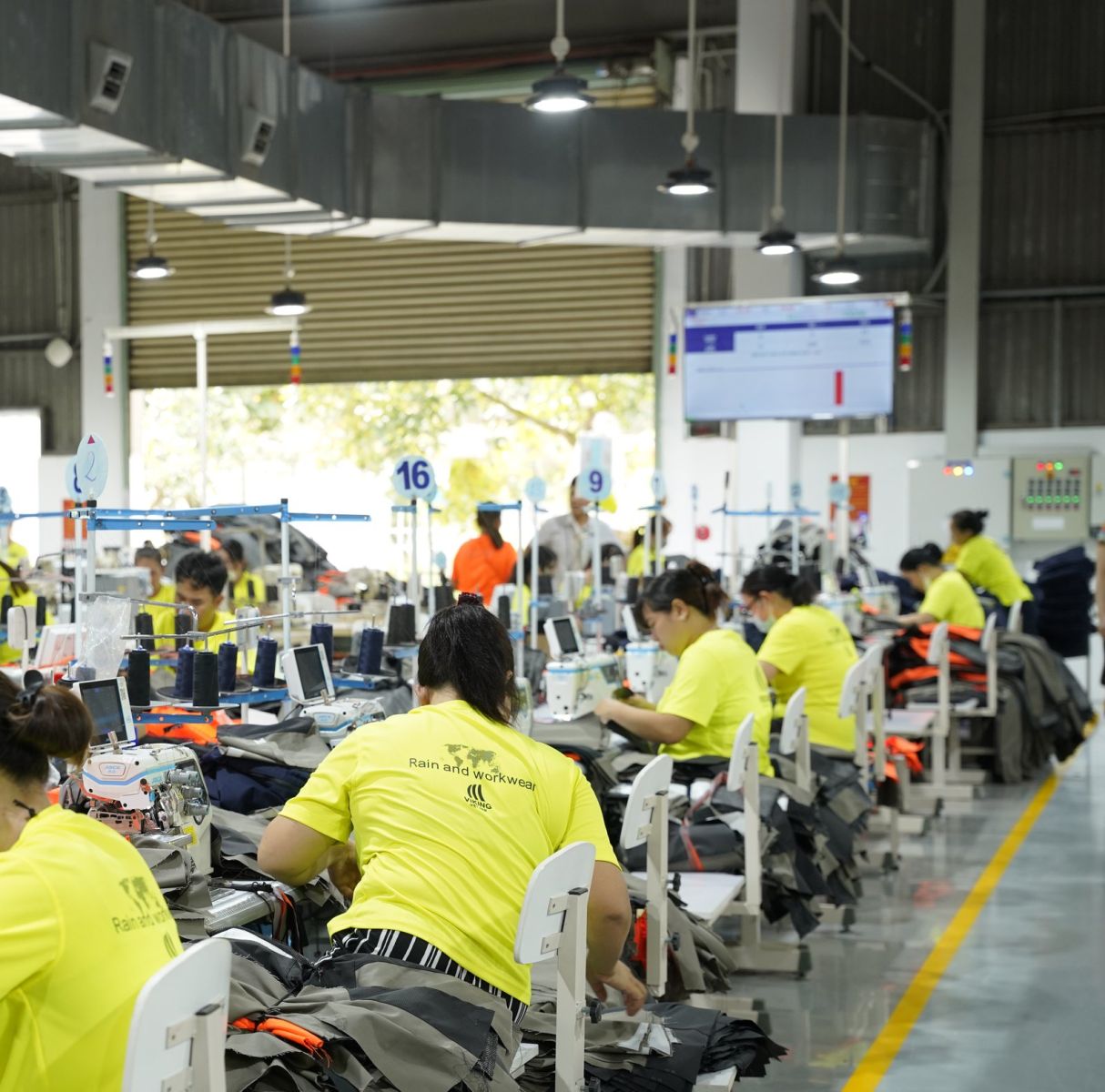
Take a pocket set in the wrong position. From the outside it looks like a production defect. Analysed, the cause may come from:
- The operator executing incorrectly.
- Unclear marking.
- A wrong pattern.
- Technical instructions that were not updated.
- A first line sample that was never confirmed.
- QC not detecting it early.
- The customer having just changed the pocket position.
A problem seen in production, therefore, does not necessarily originate in production.
This is why responsibility cannot be assigned simply by asking which function the defect appeared in. The question is: who is responsible at each step of handling it?
3. The production role: detect, stop, contain, quantify
When something abnormal appears on the line, production is usually closest to it. Its key role can be read through four actions:
- Detect: recognise the abnormality.
- Stop: halt the operation or the process where needed.
- Contain: segregate the goods that may be affected.
- Quantify: establish the quantity and the scope.
For example, QC finds a misplaced pocket. Production has to check how many garments have run, where the work in progress sits, which operations are still running, whether to stop, and which goods have to be set aside.
Production does not necessarily have to explain the technical cause itself. But production is responsible for making sure the defect does not keep spreading while the related functions analyse it.
4. The technical role: analyse, explain, prevent
When the problem relates to method, construction or a technical requirement, technical has to be involved:
- Analyse: find the technical cause.
- Explain: clarify the correct standard and method.
- Prevent: propose a change so the defect does not recur.
Take a zip that waves. Technical has to look at whether the construction is suitable, whether the seam allowance is right, whether the zip setting method is sound, whether the machine setting needs changing, and whether the work instruction needs updating.
Technical does not only say to redo it to the sample. The greater value is helping the organisation understand why the defect happened and how to stop it repeating.
5. The quality role: verify, assess risk, release or hold
Quality holds a particular position in the RACI of a production problem:
- Verify: confirm the problem and the standard.
- Assess risk: establish the scope and the severity.
- Release or hold: confirm whether the goods continue or are held.
After production corrects the method, QC or QA has to check again. The function that carried out the corrective action should not be the only party confirming that the action worked.
This is an important control principle: correction and verification should be kept separate.
6. The merchandising role: coordinate, assess commercial impact, communicate
A technical problem sometimes affects more than production. It can affect delivery, cost, materials, approvals or the customer requirement. Merchandising then has to be involved:
- Coordinate: connect information between customer and internal functions.
- Assess impact: establish the effect on the order.
- Communicate: deal with the customer where needed and authorised.
What matters is avoiding several functions contacting the customer with different information. Customer communication needs one clear point of contact.
7. The management role: decide, communicate, accept risk
Some situations cannot be resolved by technical means alone: when a change affects delivery, when there is significant cost, when a deviation approval is needed, when a risk requires customer acceptance, or when several options exist and one has to be chosen.
Then someone with the authority to decide is needed:
- Decide: choose the option.
- Communicate: ensure the decision is clearly understood.
- Accept risk: confirm the level of risk accepted within that authority.
An important point of RACI is that the person executing should not be forced to decide matters beyond their authority.
8. A RACI example in a seam sealing situation
The situation: QC finds seam tape lifting on some garments.
- Production, role R: stop the operation if needed, segregate work in progress, establish the quantity produced.
- Technical, role R or C: check the tape, check the material, check the setting and the method, analyse the cause.
- Maintenance, role C or R: where the equipment is suspected, check temperature, pressure, rollers and machine condition.
- QC and QA, role A or the verification role under the procedure: confirm the defect, assess the scope, re inspect after adjustment, decide release or hold.
- Merchandising, role I or C: follow the effect on the order, inform when delivery or the customer requirement is affected.
RACI lets everyone see what I have to do right now, rather than waiting for a meeting to decide who does what.
9. RACI helps most where a problem sits between two functions
Many of the hardest problems do not sit entirely within one department:
- A material issue can involve the warehouse, purchasing, merchandising, technical and QA.
- A machine issue can involve production, maintenance, IE and quality.
- A specification change can involve the customer, merchandising, technical, QC and production.
RACI is most useful at these boundaries, because this is exactly where the sentence appears: I thought the other department was handling it.
10. An action is only clear when it has an owner and a deadline
After a meeting, phrases like technical will check, QC will follow up, production will handle it remain far too vague.
A good action needs at least five things: what, who is responsible, when it has to be complete, what status it is in, and what evidence shows it is done.
Instead of writing “technical check pocket”, it can be clearer: “technical confirms the pocket marking method and issues an updated instruction before 14:00, owner A, evidence a revised instruction plus an approved first piece”.
The more specific it is, the more likely the action gets closed.
11. RACI has to connect with five why
RACI answers who does what. Five why answers why the problem happened. The two tools complement each other.
A handling sequence can be: detect, contain, assign RACI, analyse with five why, define corrective action, assign the owner, set the deadline, verify, close.
With five why but no owner, the analysis may be excellent and the action never happens. With RACI but no root cause analysis, people can do a great deal of work and the defect still returns.
12. RACI reduces crowded meetings
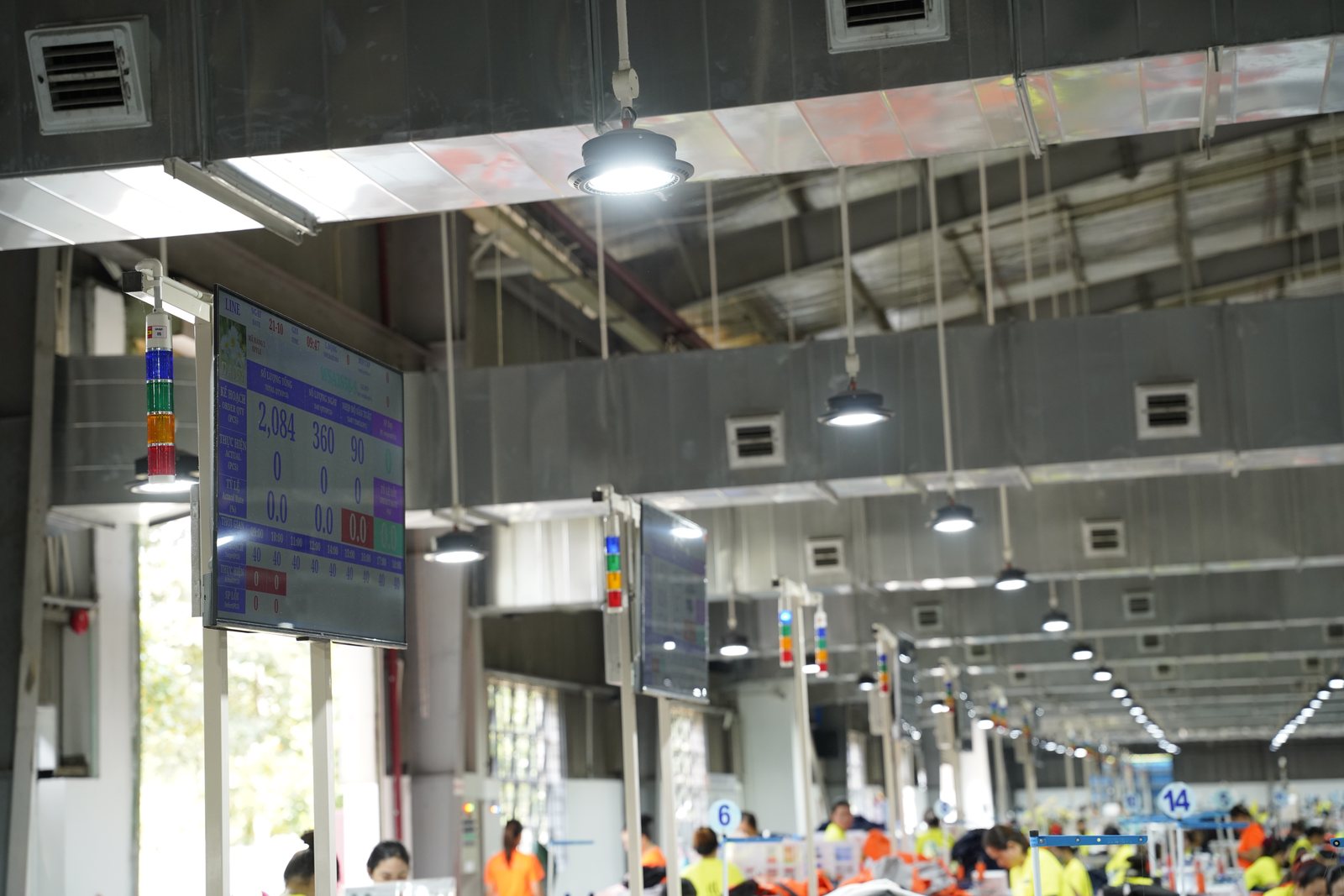
One sign that responsibility is unclear is that every problem requires a large meeting. Everyone listens, everyone discusses, and it is unclear who decides.
RACI separates who has to act, who has to decide, who only has to be asked and who only has to know the result. That can make meetings smaller and action faster.
Not everyone who knows about a problem needs to become the person handling it.
13. RACI should not become a way to push responsibility away
Another risk is using RACI to say that this is not my job. That is not the spirit of it.
RACI clarifies who owns the outcome, but the success of an order still needs coordination. If a QC sees a safety risk, they should not ignore it because they are not the A. If production sees abnormal material, they should not continue because purchasing owns the issue.
RACI does not replace professional responsibility. It connects professional responsibility to the right person.
14. The letter A needs the most clarity
Of the four letters, A is usually the hardest. Many organisations have plenty of Rs. Everyone is doing something. And the problem stays open. The cause is a missing A.
The person holding A has to ask: has the problem been closed, is the action complete, where is the verification, what risk remains, does this need escalating.
A problem should not quietly disappear from the action list because everyone moved on to something else. Someone has to be responsible for taking it to closure.
15. Escalation has to be defined before the crisis
Not every problem needs to reach senior management. But a serious problem should not sit too long at the execution level either.
A good system defines the triggers for escalation: a critical quality risk, an affected customer requirement, rising delivery risk, an overdue action, an unidentified root cause, functions that cannot agree, or a decision beyond the available authority.
Escalation is not a failure by the person handling it. It is the mechanism that protects the organisation when a problem exceeds the current authority.
16. An action follow up board keeps RACI alive after the meeting
A RACI matrix only shows the structure of responsibility. To run in practice, an action follow up record is needed covering the issue, the action, who executes, who owns, the deadline, the priority, the status, the evidence, whether it was escalated, and the closure date.
Management then does not have to ask how this is going, manually, every day. They can see which issues are open, in progress, overdue, awaiting a decision or closed.
That is the shift from assigning responsibility to managing responsibility.
17. Closing an issue needs evidence, not just the word done
In action follow up, one of the most misleading words is done. Done meaning what? Spoken to the operator? Corrected the SOP? Delivered training? Or the defect has genuinely stopped recurring?
An issue should only close with appropriate evidence: a revised SOP, a training record, an approved first piece, QC verification, a test result, a photograph, an updated BOM, or customer approval where needed.
This makes closure mean something in practice.
18. RACI is also a management training tool
When a line leader or a new manager is asked to handle a problem, the instinct is usually to do everything themselves. But effective management does not mean solving everything personally.
A manager needs to know what they have to do, what they have to delegate, when to ask for expertise, when to escalate and who needs to be informed.
RACI develops that thinking. Management shifts from I have to solve everything to I have to make sure the right person solves the right part.
19. RACI protects speed without sacrificing control
Speed matters in manufacturing. But speed does not come from everyone running faster. It can come from not waiting for a decision maker, not duplicating work, not passing responsibility in circles, not losing actions, and not meeting again just to establish who owns something.
A clear RACI removes time that creates no value. In technical apparel in particular, where quality, technical, production, IE and maintenance interact constantly, clarity becomes an operational advantage.
20. The value for international customers
When a problem happens, customers do not only care what the defect is. They care who owns it, what the factory is doing, when it will be closed, and how anyone knows the action worked.
A clear system of responsibility helps the factory answer those questions better. Customers do not need to see the internal RACI. But they feel its result through:
- Faster responses.
- More consistent information.
- A clearer owner.
- Actions with deadlines.
- Fewer problems falling between departments.
- Closure backed by evidence.
That is a very practical part of reliability.
Viking Vietnam: from who does it to who owns the outcome
RACI thinking in problem handling can be summarised as a sequence: detect the problem, stop and contain, assign RACI, analyse, define the action, assign the owner, set the deadline, verify, escalate if needed, close.
For Viking Vietnam the aim of RACI is not more bureaucracy. It is to make coordination simpler, faster and more accountable.
When production knows what to do immediately, when technical knows what to analyse, when quality knows where to verify, when merchandising knows when to talk to the customer, and when management knows which decisions are theirs, a problem stops being somebody's. It becomes a managed process.
And in a factory making technical apparel for international markets, that is an important foundation for what customers look for in a long term partner: clear responsibility, fast response, and reliable closure.