Learn the value chain behind a qualified protective garment, from customer requirements, materials, technical development, production, QC, to the final wearer.
The value chain behind a qualified protective garment.
A qualified protective garment does not begin at the sewing line, and it does not end when it is packed into a carton.
It begins with understanding the risk the end user faces. It runs through material selection, sample development, technical control, production organisation, quality inspection, packing and delivery, and it keeps proving its value while the worker uses it every day.
In technical apparel, protective clothing is not simply a garment. It is part of a system that protects people.
To produce a dependable protective garment, the factory therefore needs to understand the whole value chain behind it: the B2B customer, the brand, the technical standards, the working environment, the material suppliers, the technical team, the operators, QC, and finally the person who wears it.
For Viking Vietnam, producing protective clothing, workwear, rainwear, waterproof garments, outdoor apparel and high performance apparel is not only about completing an order. It is the process of creating a product with real value in use, consistent and responsible within the global supply chain.
1. The value chain starts with understanding the wearer's risk
Protective clothing exists to support the wearer in a working environment that carries risk.
That risk can come from:
- Rain, wind, cold or severe weather.
- Low light environments where visibility matters.
- Abrasion, dust, oil or rough surfaces.
- Heat, sparks or protective requirements specific to an industry.
- Constant movement: bending, lifting, pulling, climbing or handling equipment.
- Long hours where comfort and durability both matter.
A qualified protective garment has to be developed from one question: in what situation does the wearer need support and protection?
If the factory sees the product only as a jacket, a trouser or a uniform, it is easy to overlook the details that affect safety and the experience of wearing it.
Understanding the wearer's risk is the first step towards a product with real value.
2. Customer requirements have to become production standards
B2B customers usually supply a great deal of technical documentation: tech pack, measurement chart, reference sample, bill of materials, inspection standards, packing requirements, material certification or market specific regulations.
But documentation is only the starting point. The factory has to turn those requirements into concrete operating standards.
That includes:
- Which measurements are critical.
- Which details affect protective function.
- Which materials need special inspection.
- Which operations carry high risk.
- Which seams need reinforcement.
- Where reflective tape or functional trims belong.
- Which areas need seam sealing on waterproof products.
- What QC has to check during production.
A requirement that stays in a document, without becoming action on the floor, has not yet created quality.
The factory's value therefore lies in turning the customer requirement into a process that is clear, controllable and repeatable.
3. Material is the foundation of protective function
In protective clothing, material does not only give the garment its shape. It decides most of its protective capability and durability.
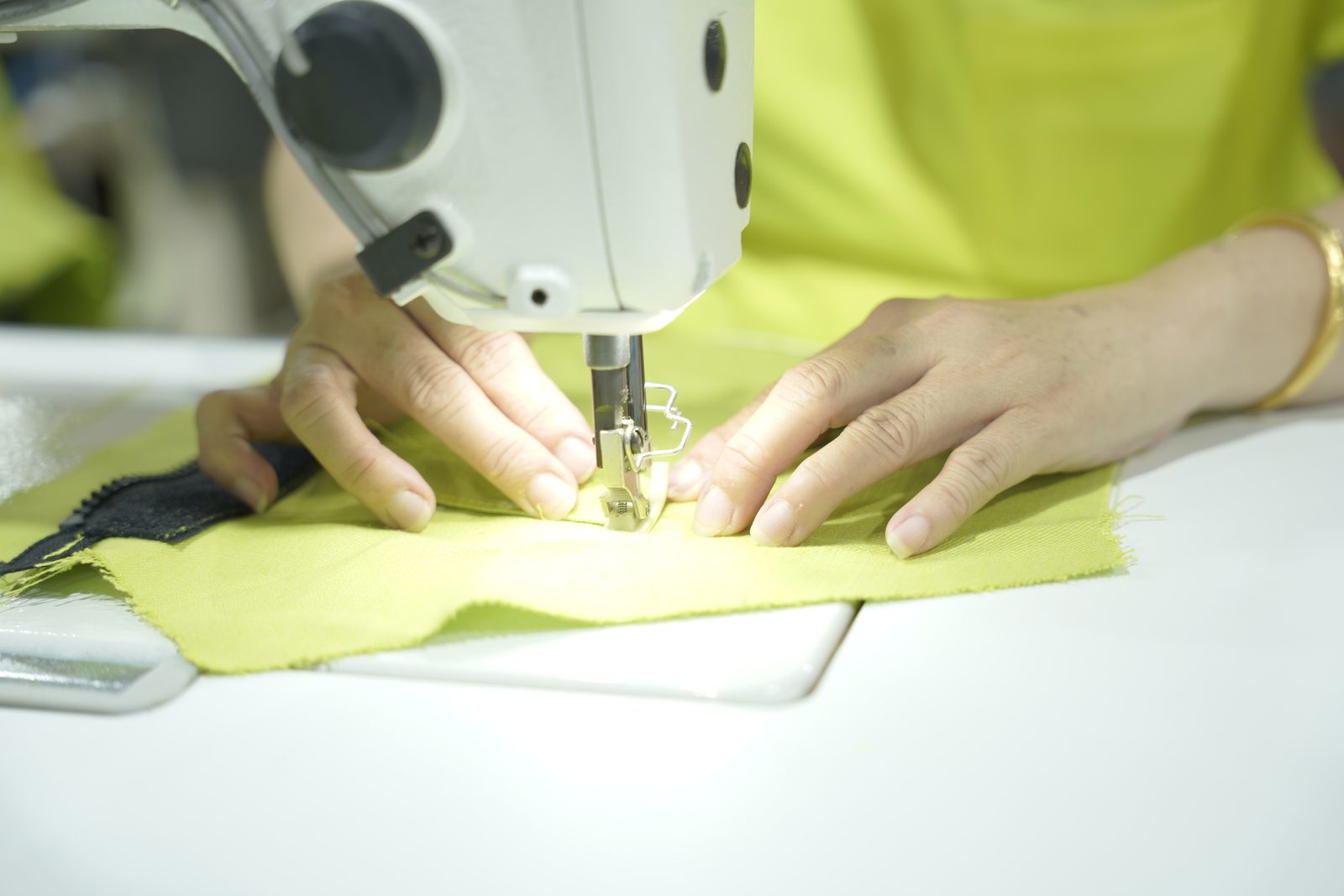
Depending on the product group, the material may need to:
- Be waterproof.
- Be windproof.
- Insulate.
- Resist abrasion.
- Have suitable tensile and tear strength.
- Carry reflective or high visibility properties.
- Meet protective requirements specific to the customer.
- Stay stable after washing and in use.
The factory needs to control material from the moment it arrives:
- The right style code.
- The right colour.
- The right lot.
- The right specification.
- The right accompanying trims.
- No surface defect that would carry into the finished garment.
- Suitability for cutting, sewing, sealing, finishing and packing.
Without good material control, the product will struggle to reach consistent quality even with skilled operators.
A dependable protective garment starts with dependable materials.
4. Sample development confirms the product before bulk
The trial sample is an important step for checking design, material, measurements, sewing method and production feasibility.
On protective clothing, the sample has to answer several questions:
- Does the product have the right shape and measurements?
- Can the wearer move comfortably in it?
- Are the protective details in the right position?
- Does the material suit the design?
- Are the seams stable enough?
- Do the trims work properly?
- Is any operation too difficult or prone to defects in bulk?
- Is anything that needs adjusting before bulk starts?
The sample is not only for the customer's visual approval. It is the factory's chance to learn the product, find the risk and prepare better for bulk production.
A carefully developed sample reduces defects once the style reaches the line.
5. Technical and IE turn the product into a production process
Once sample and documentation are confirmed, technical has to turn the product requirement into clear production instructions. IE has to analyse operations, times, layout and line capacity.
Together these two functions create the foundation for stable production.
Technical needs to make clear:
- The order of assembly.
- How to handle difficult details.
- Where reinforcement is needed.
- Which areas need seam sealing.
- Any special machine or equipment requirement.
- What the operators need to be shown.
IE needs to analyse:
- The list of operations.
- The time of each operation.
- Operations likely to bottleneck.
- Machine requirements.
- Line layout.
- Line balancing.
- Expected output.
When technical and IE work well together, the protective garment is not only sewn correctly, it is produced within a sensible organisation that reduces defects and waste.
6. Operators create quality in every motion
However carefully the documentation, materials and process are prepared, the final product is still made by each motion of the people on the line.
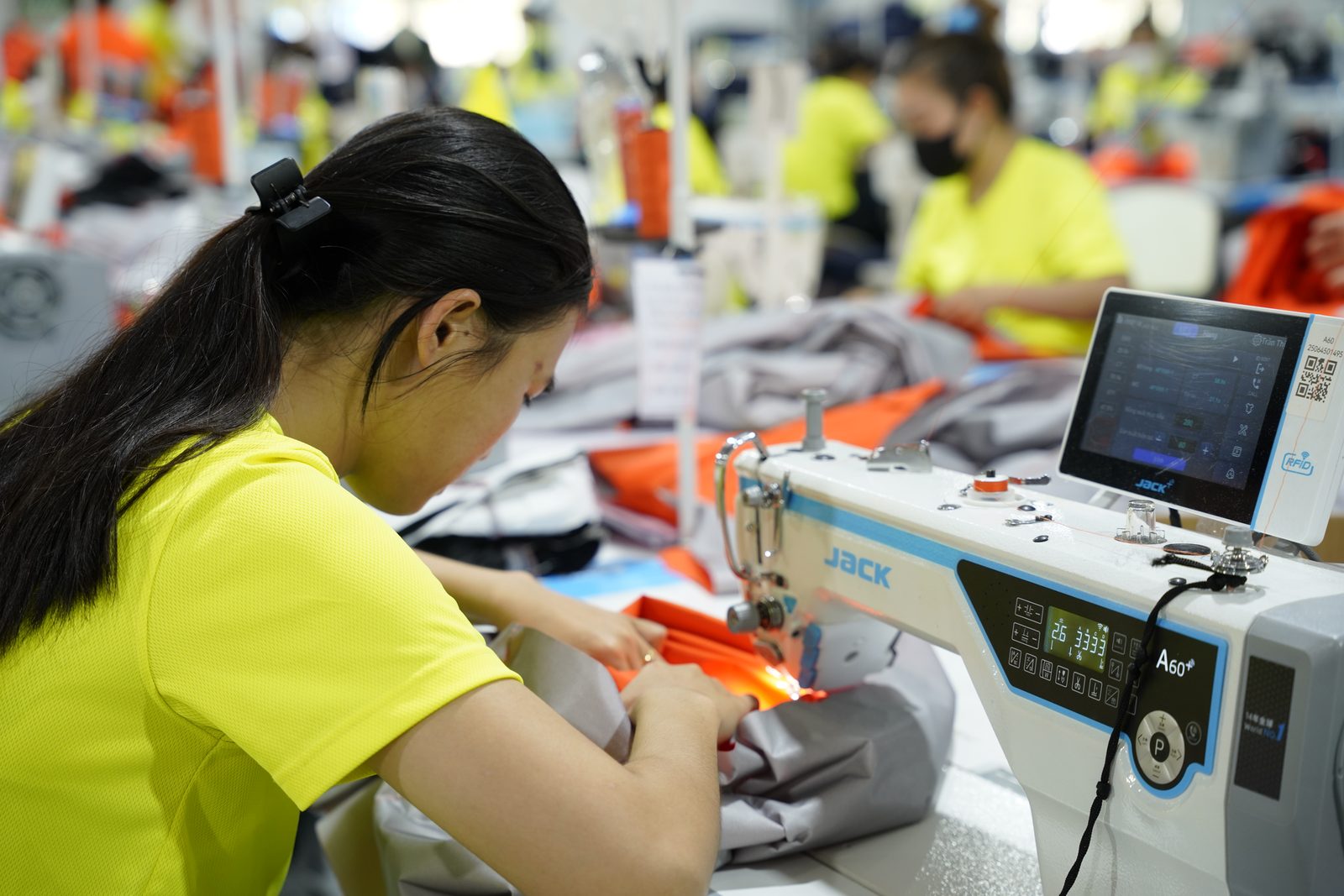
On protective clothing, operators need to understand:
- Which part of the product their operation affects.
- The defects common at that operation.
- Which details cannot deviate.
- When to self check.
- When to report back to the line leader or QC.
- Why this product matters to the person who will wear it.
A stable seam, reflective tape in the right place, a properly reinforced pocket, a correctly sealed seam: each comes from care in the motion itself.
Quality does not live only in the process. It lives in the awareness and the skill of the people who make the product.
7. QC protects the standard during the process, not only at the end
A protective garment should not be checked only once it is finished. QC has to be present through production to control risk early.
QC needs to follow:
- Incoming materials and trims.
- The pilot piece.
- High risk operations.
- Seams in high stress areas.
- Reflective detail.
- Functional trims.
- Critical measurements.
- Seam sealing on waterproof products.
- Finished garments before packing.
QC at source finds defects early, reduces rework and stops a defect spreading.
On protective clothing, QC does not only check whether the garment looks clean and neat. It has to understand which points affect protective function and the experience of wearing it.
8. Packing and labelling are part of the value chain too
Once the garment is finished, packing and labelling are the last steps inside the factory, but they are not minor ones.
On an export order, packing has to ensure:
- The right style.
- The right size.
- The right colour.
- The right market.
- The right label.
- The right barcode or identification where required.
- The right care instructions.
- The right carton, polybag or packing list.
A garment sewn correctly but packed incorrectly can still create a serious problem for the customer.
On protective clothing especially, the use and care label can affect whether the wearer looks after the garment properly. Washed, dried or stored the wrong way, the product can lose its function.
Packing and labelling are therefore an important part of protecting the product's value after it leaves the factory.
9. The end user is where the product proves its real value
A protective garment only truly proves its value when someone wears it at work.
At that moment, every decision in the production chain is tested:
- Is the material durable enough?
- Does the fit support movement?
- Is it comfortable enough to wear for long hours?
- Are the pockets usable?
- Is the reflective tape in the right place?
- Do the seams survive repeated movement?
- Does the waterproof jacket protect properly in rain?
- Are the adjustment details easy to use?
The end user may not know the name of a single operation inside the factory. But they feel very clearly whether the product helps them work better, more safely and more comfortably.
That is why the value chain behind protective clothing always has to return to people.
10. The value for international buyers
For international buyers, a factory that understands the value chain behind a protective garment brings real benefits:
- Less risk in product development.
- Quality controlled from material through to finished garment.
- Consistency protected between approved sample and bulk.
- Fewer defects, less rework and less waste.
- Better traceability when a problem arises.
- Clearer communication between factory and customer.
- A product that suits the end user better.
- A steadier foundation for long term cooperation.
Customers need more than a factory that sews correctly. They need a factory that understands why the product has to be correct.
That is the difference between a plain subcontractor and a manufacturing partner able to work alongside them.
11. Viking Vietnam and the protective clothing value chain
Viking Vietnam develops manufacturing capability in protective clothing, workwear, rainwear, waterproof garments, outdoor apparel and high performance apparel for international customers.
Viking's approach focuses on:
- Understanding what the product is for.
- Controlling materials and functional trims.
- Developing samples against the technical requirement.
- Turning customer requirements into a clear production process.
- Coordination between technical, IE, QC, maintenance, warehouse and production.
- Training operators to understand the product's risk points.
- QC at source to prevent defects.
- Controlling packing, labelling and consistency at shipment.
- Building long term cooperation with international customers.
For Viking Vietnam, a protective garment is not only the output of a sewing line. It is the result of a whole operating system working responsibly, from the factory to the person who wears it.
Summary of operational value
A qualified protective garment is the result of the whole value chain, not of one isolated operation.
The factory needs to control:
- The risk and working environment of the wearer.
- The customer's technical requirements.
- Materials and functional trims.
- Sample development and production feasibility.
- The technical process and IE.
- Operator skill in every motion.
- QC at source and finished garment inspection.
- Packing, labelling and traceability.
- The product's real value in use once it reaches the wearer.
Connect with Viking Vietnam
Viking Vietnam works alongside international brands and partners in manufacturing protective clothing, workwear, rainwear, waterproof garments, outdoor apparel and high performance apparel. With technical capability, a quality system, a trained team and a mindset centred on the end user, Viking Vietnam aims to be a dependable manufacturing partner in the global technical apparel supply chain.
Contact Viking Vietnam to develop protective garments built on an understanding of the wearer, suitable materials, a stable process and responsibility at every operation.