Explore how Viking Vietnam connects supplier selection, material approval, technical preparation and compliance in export garment manufacturing.
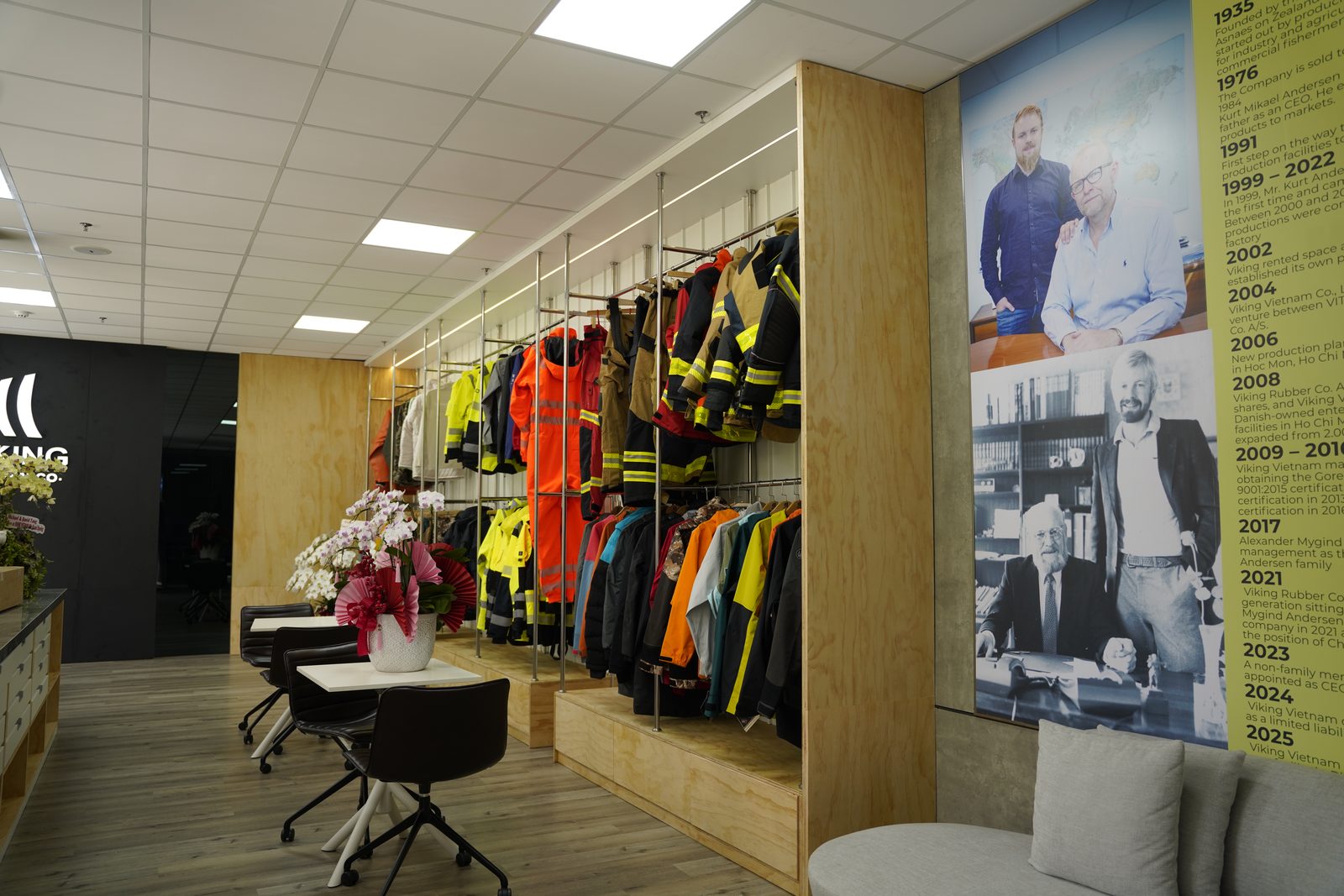
Viking Vietnam presents capability in sourcing, arranging materials and trims, and providing manufacturing on an FOB basis, alongside its waterproof jacket lines, taped and welded seam products and workwear. That scope connects the factory's work to material preparation as well, not only to cutting and sewing. viking-vietnam.vn
For a customer, what needs to be clear is on what basis a material is selected, who confirms its suitability, and how that information reaches production. A supply approach has to be considered alongside the technical requirement, the order plan and the responsibility of the people involved in the decision.
At Viking, these can be read through the purchasing policy, the material approval process and the duties of merchandising, technical and IE.
1. Supplier selection rests on clear criteria
Viking's business ethics policy states that supplier selection must rest on actual need, quality, price and other specific, reasonable criteria. Anyone responsible for selection or negotiation must not allow personal interest or private relationships to influence a purchasing decision. viking-vietnam.vn
This puts objectivity into the selection process. Price has to be assessed together with how far the requirement is met, rather than becoming the only basis.
For a customer placing production, this is a basis for discussing the material approach: why an option is proposed, which requirements were considered, and what still has to be confirmed. A purchasing decision is credible when it has a technical and commercial reason that can be explained.
2. Material is verified before being put to the customer for approval

In its account of running an order for waterproof jackets for a customer in the German market, Viking describes approaching several suppliers for fabric samples and carrying out both internal and independent testing. Material that passes those checks is proposed for the customer's approval; colour and hand feel are also considered. viking-vietnam.vn
The case shows material selection tied to the requirement of a specific product. The supplier offers an option, but acceptance still rests on test evidence and the customer's confirmation.
On a new order, both sides should agree the scope of testing and the acceptance criteria at the outset. A result for one material in one application should not automatically be treated as suitable for every other design.
3. Technical turns the selected material into usable information
Viking assigns the technical documentation member responsibility for building consumption figures, material and trim cards, measurement charts and technical standards. The position also coordinates production and takes part in approving the first line sample. viking-vietnam.vn
This creates a point for connecting the material to the product file. Once a component is accepted, the information has to be clear enough for each function to check against while preparing and carrying out the work.
From a control point of view, “a material option exists” and “there is enough information to execute” are not the same thing. The material card, the consumption figures and the related instructions all have to reflect one confirmed approach, so that no function works from a different reading.
4. Merchandising links material status to the order plan
Within the scope published, merchandising at Viking is responsible for checking and balancing materials, coordinating with production, issuing production orders and following progress. The function also takes part in resolving quality issues and customer complaints. viking-vietnam.vn
Those duties place material status within the same scope as following the order. Supply information has to be examined before deciding when execution starts.
In discussion with a customer, it helps to make clear which material is ready, which is still pending, and what remains to be decided. If a substitute is proposed, the effect on both the product and the plan has to be established, not only whether it can be delivered sooner.
5. Material suitability has to be judged together with the production method
IE at Viking writes the sewing process, does costing, defines machine requirements, designs the line layout and balances operations. These add a view of what can actually be executed, alongside the material and design requirements. viking-vietnam.vn
When assessing a material option, the technical discussion should establish the corresponding processing method. An option that is attractive only on price is not enough to conclude suitability if the conditions for execution have not been examined.
Faced with a proposed material substitution, for example, the functions should confirm whether an operation needs adjusting, whether equipment has to be prepared again, and what inspection content has to be updated. These are assessment questions, not a conclusion that every change makes production harder.
6. Compliance requirements extend to supplier relationships
In its Quality and Social Responsibility Policy issued on 20 July 2025, Viking sets out anti-corruption principles applying to staff, suppliers, partners and other related parties. These cover not offering or accepting bribes, not facilitating improper benefit, and not using one's position for personal gain. viking-vietnam.vn
Responsibility in the supply relationship is therefore defined both in the commercial decision and in the conduct of those involved. This is a policy requirement, and should not be read as evidence that every supplier has passed a specific assessment programme.
For a customer, what matters is how these principles become assigned responsibility and records that can be examined within the scope of the order.
7. Training helps staff apply the compliance requirement
Viking commits to communicating and updating its policies so that staff understand their rights and responsibilities. viking-vietnam.vn
For work involving suppliers, the instruction should be tied to concrete situations: receiving a proposed material substitution, handling incomplete information, or meeting an issue that needs confirmation.
The aim is for the person doing the work to know what falls within their own decision and when to pass an issue to the right point. A rule only has value when staff understand how to use it in the work, rather than remembering the name of a policy.
The value for customers working with Viking
When assessing a supply and production approach, a customer can focus on three things:
- The basis of selection: which requirements does the proposed material meet, and what confirmations are needed?
- Readiness to execute: how far is the material information connected to the technical documents, the operations and the plan?
- Decision responsibility: who confirms a change, follows an issue, and ensures execution stays within what was agreed?
These questions move the discussion to the conditions under which the order will actually run. Confidence is built on clear information, assigned responsibility and appropriate verification, rather than on a supplier's name or a general commitment.
Connect with Viking Vietnam
Talk to Viking Vietnam about your material requirements, technical documentation and order plan, so that a suitable supply and production approach can be defined together.
Agreeing the selection criteria, the scope of testing and the approval responsibility from the start helps both sides control product development on the same basis of information.