Learn why transparency in garment manufacturing helps international buyers gain confidence in quality, delivery, ESG performance, and long-term supplier partnerships.
In export garment manufacturing, international buyers do not only care about the finished product. They care about the journey that produced it.
A jacket can be shipped on time. An order can pass final inspection. But for professional brands and partners, the more important question is: was the production process controlled transparently?
Transparency does not mean a factory never has problems. In reality, production can always throw up change: material arriving late, a measurement that needs confirming again, a defect appearing at an early operation, a schedule affected by one stage, or a customer updating a requirement.
What international buyers value is not a promise that everything will always be perfect. They value a factory able to report clearly, respond honestly, act responsibly and offer a solution in time.
For Viking Vietnam, transparency is an important part of the capability to work internationally. On high performance apparel, workwear, rainwear, waterproof garments, protective clothing and outdoor apparel especially, customers need a partner who does more than manufacture: one who manages risk and communicates clearly throughout production.
1. Transparency lets the customer see the factory's real capability
A capable factory is not proven by good photographs, certificates, machines or a company profile. Real capability shows in how the factory operates once an order is actually running.
International buyers usually want to know:
- Which stage the order has reached.
- Whether materials and trims are ready.
- Whether the pilot piece has been confirmed.
- Whether the sewing line is on schedule.
- Which defects are arising during production.
- What corrective action the factory has taken.
- Whether any risk could affect the delivery date.
- Whether technical changes have reached the departments involved.
When the factory provides clear information, the customer has a basis for decisions. They can adjust plans, coordinate with their own teams, respond faster and reduce risk in the supply chain.
Conversely, if information is late, incomplete or unclear, trust suffers even when the final product is eventually completed.
2. Transparency is not reporting more, it is reporting the right things
In garment manufacturing, more reporting does not automatically create transparency. A long report without the necessary data still leaves the customer unsure.
A report that has value needs to answer the main points:
- What has been completed.
- What is in progress.
- What is at risk.
- What is causing that risk.
- Who is responsible for resolving it.
- By when it will be resolved.
- Whether the customer needs to confirm anything further.
For international customers, clear information tells them the factory has the situation under control. Even when something goes wrong, the way the factory reports and resolves it can strengthen trust rather than damage it.
At Viking Vietnam, transparency has to come with realism: the report must reflect the true state of the floor, the true schedule, the true risk and the action actually being taken.
3. Transparency in quality reduces the risk of defects spreading
On technical products, a quality defect found late can cause serious loss. A small defect at an early operation, if it is not reported and resolved in time, can spread across many garments.
Transparency in quality includes:
- Recording defects as they arise on the line.
- Classifying defects by level of impact.
- Tracking whether a defect repeats.
- Fast feedback between QC, technical, IE and production.
- Updating corrective action.
- Reconfirming after the defect is fixed.
- Keeping the data to prevent it happening again.
When defect data is shared properly, the factory does not only resolve the problem in front of it; it learns from that problem.
This matters especially on waterproof garments, protective clothing and workwear, where quality is not only appearance but relates to function, durability and the safety of the end user.
4. Transparency in schedule protects the delivery plan
In the global supply chain, schedule is a sensitive matter. A late order can affect a selling calendar, a distribution plan, a product launch or a commitment to the end customer.
International buyers therefore need the factory to update progress honestly.
A transparent system for schedule needs to track:
- The status of materials and trims.
- The actual cutting date.
- The date the style reaches the line.
- Daily output.
- The status of inline inspection.
- Progress in finishing and packing.
- Risks that could affect the shipment date.
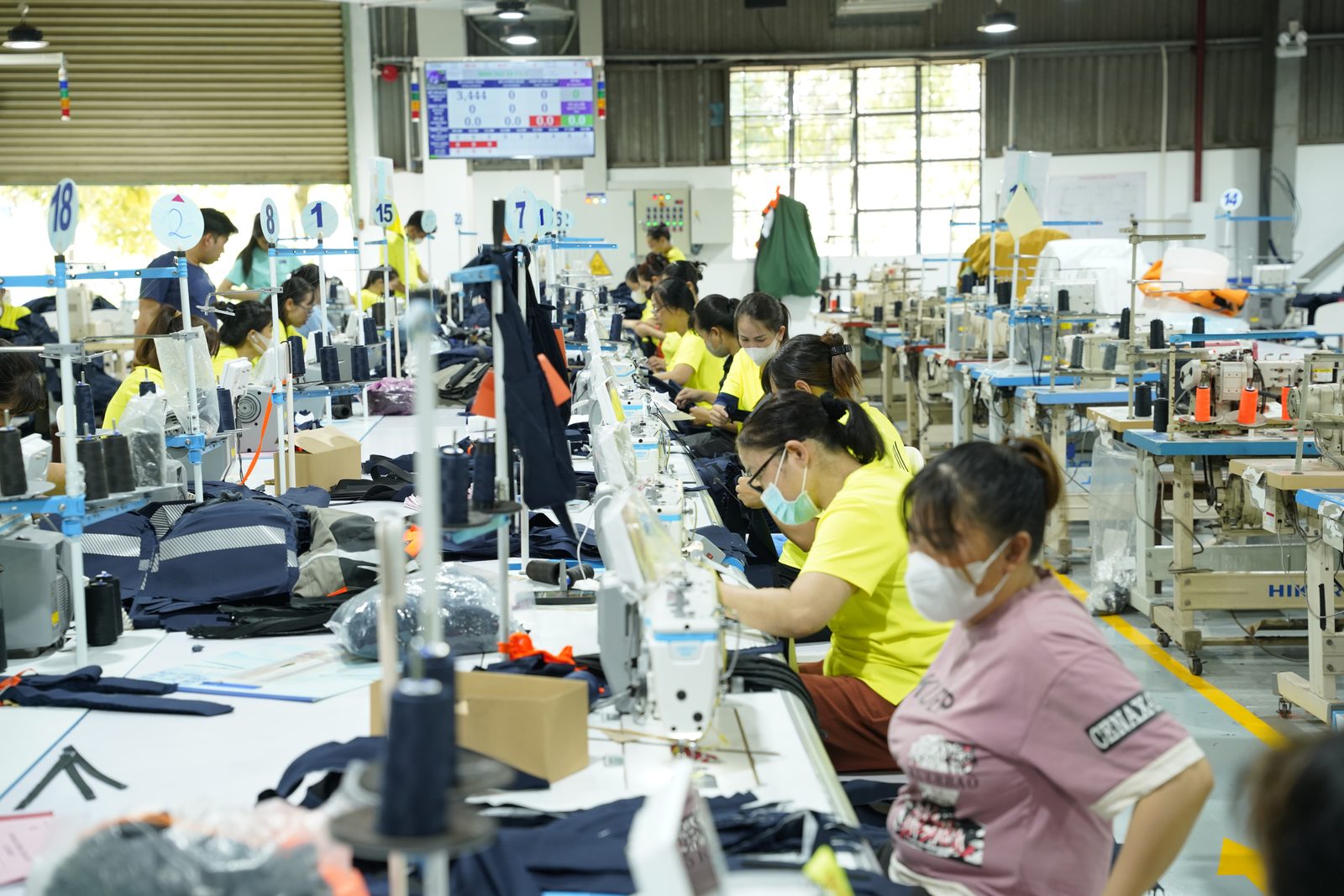
If there is a risk of delay, the customer needs to know early. Reporting early is not a sign of weakness. It is a sign of a responsible factory.
When information is updated in time, both sides can look for a solution together: prioritising an important colour or size, adjusting the inspection plan, adding resources, confirming a technical change, or agreeing a more suitable shipping arrangement.
5. Transparency in change prevents misunderstanding between departments
In garment manufacturing, change is common. A customer may adjust measurements, change a material, swap a trim, update a label, move the position of a detail or change a packing requirement.
If change is not controlled transparently, risk rises very quickly.
Every change needs to make clear:
- Who requested it.
- Which style it applies to.
- From what point it takes effect.
- How goods already produced will be handled.
- Which technical documents need updating.
- Which departments need to be informed.
- Which points QC needs to check after the change.
Transparency in change prevents a situation where one department works to the new information while another is still using the old.
For Viking Vietnam, change control is an important part of protecting consistency between the approved sample and bulk production.
6. Transparency in ESG reassures customers about supply chain responsibility
Today, international buyers do not only ask what a factory can produce. They also care about the conditions in which the product is made.
Transparency in ESG can include:
- Working conditions for employees.
- Safety inside the factory.
- Waste and environmental management.
- Control of chemicals and auxiliary supplies.
- Worker training.
- Social responsibility.
- Improvements that reduce waste and use resources more efficiently.
For a sustainable garment factory, ESG is not a document prepared for an audit. It has to live in daily action and be demonstrable through process, records, data and operating culture.
Viking Vietnam approaches sustainability through the combination of quality, people, the environment and responsibility towards the customer. Transparency in ESG gives international partners more confidence when building a long term relationship.
7. Transparency creates speed in resolving problems
Many people assume transparency slows the process down, because everything has to be reported, recorded and confirmed. In practice, transparency resolves problems faster.
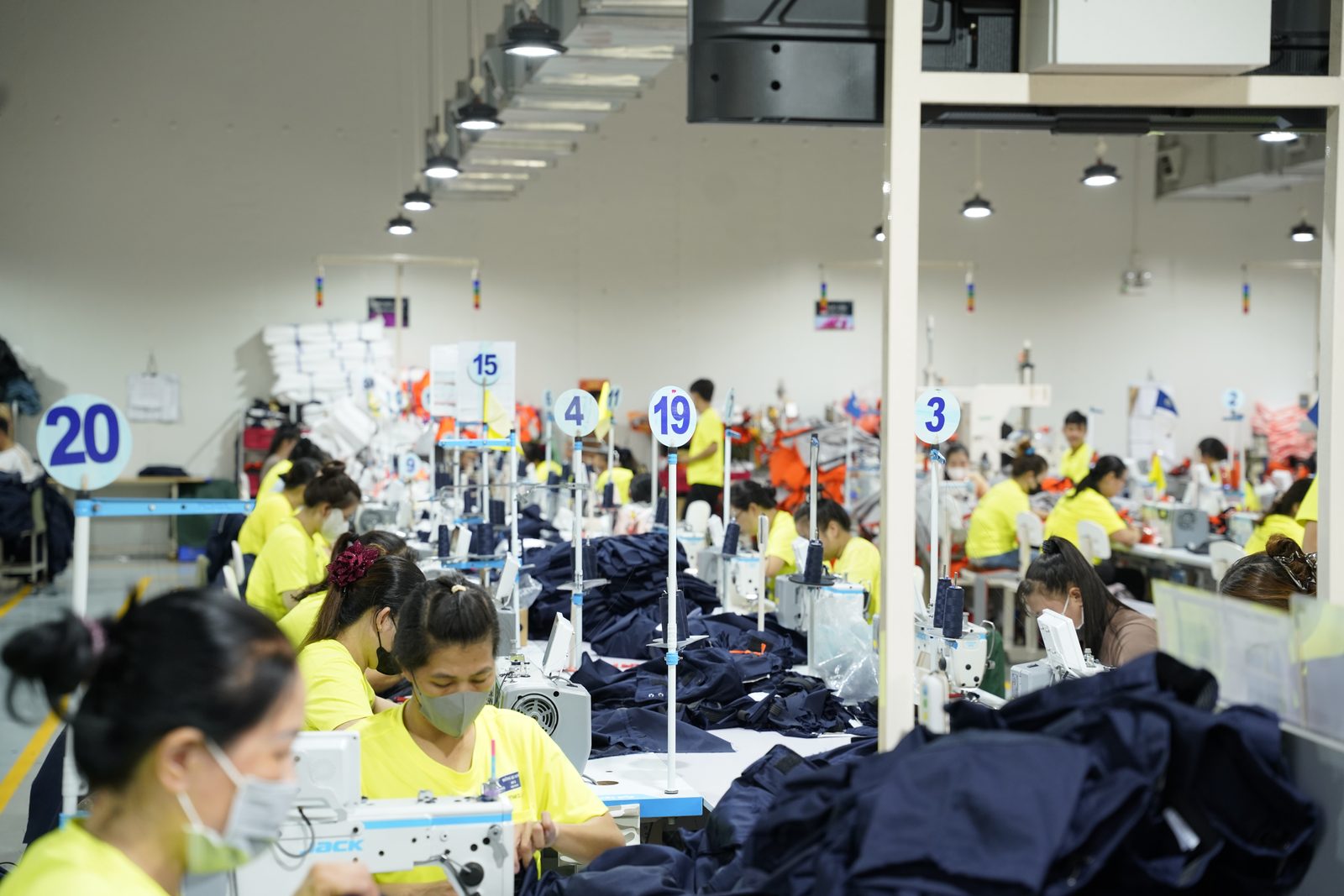
When the information is clear, each department knows what it has to do.
When the cause is clear, the corrective action is more accurate.
When responsibility is clear, follow up is not missed.
When the data is clear, the factory avoids arguing on intuition.
When the customer is clearly updated, decisions come faster.
In production, it is ambiguity that slows the system down. Transparency reduces ambiguity and speeds up coordination.
That value matters most on urgent orders, on orders with many colours, many sizes, many technical details, or changes during development.
8. Viking Vietnam and a commitment to transparent cooperation
Viking Vietnam develops manufacturing capability in high performance apparel, workwear, rainwear, waterproof garments, protective clothing and outdoor apparel. On these product lines, transparency in production is indispensable.
Viking Vietnam's approach focuses on:
- Clear communication from the sample development stage.
- Production preparation involving all the departments concerned.
- Tracking schedule and quality during production.
- Responsible control of technical change.
- Recording defects and corrective action.
- Connecting quality, ESG and production efficiency.
- Building long term partnership on trust.
For Viking Vietnam, transparency is not only how we report to customers. It is an operating principle that helps the factory work more clearly, coordinate better and improve continually.
Summary of operational value
Transparency in garment manufacturing gives international buyers more confidence in a factory's quality, schedule, ESG performance and capability for long term cooperation.
A transparent system helps the factory:
- Report the true status of the order.
- Detect and resolve risk early.
- Control quality with real data.
- Protect the delivery schedule.
- Manage technical change clearly.
- Strengthen trust in international cooperation.
- Support ESG and responsible sourcing requirements.
Connect with Viking Vietnam
Viking Vietnam works alongside international brands and partners in manufacturing high performance apparel, workwear, rainwear, outdoor apparel, waterproof garments and protective clothing. With a direction built on transparent communication, quality control and production management, Viking Vietnam aims to be a dependable partner for customers who need stability, responsibility and long term cooperation.
Contact Viking Vietnam to develop technical apparel made inside a production system that is transparent, responsible and built towards international standards.