Learn why a sustainable garment factory must balance people, technology, and production efficiency to create consistent quality, reduce waste, and build trust with international buyers.
In export garment manufacturing, sustainability is not only a question of the environment. A sustainable garment factory cannot focus solely on saving electricity, cutting waste or using friendlier materials. Those things matter, but they are not enough.
A genuinely sustainable garment factory has to balance three foundations: people, technology and production efficiency.
Focus only on output and forget people, and the factory may hit short term volume but will struggle to stay steady. Invest only in machines without training, and technology will not produce real results. Talk only about social responsibility without controlling quality and schedule, and international customers will find it hard to feel confident.
For Viking Vietnam, sustainability is how the factory operates every day: making quality products, protecting workers, controlling waste, improving processes and building transparent partnerships with global customers.
1. People are the first foundation of a sustainable factory
In garment manufacturing, people create quality directly. However modern the machines or however good the management system, the finished product still passes through the hands, the concentration and the responsibility of the operating team.
On high performance apparel, workwear, rainwear, waterproof garments and protective clothing especially, operators need to do more than sew the seam correctly. They need to understand the product, understand the standard, recognise defects and know when to report back to the line leader or QC.
A sustainable factory invests in its people through:
- Clear skills training.
- Guidance on correct handling before bulk production.
- A skill matrix for managing capability.
- A safe and respectful working environment.
- Encouraging workers to raise problems.
- Helping the team see the meaning of the product they make.
When operators understand that what they make may be worn in harsh working conditions, in wind and rain, in industry, outdoors or where protection is needed, they become more conscious of every detail.
Sustainability starts there: with a team that is skilled, responsible and proud of what it makes.
2. Technical work turns the customer's requirement into a consistent product
In a technical garment factory, the technical function is the bridge between the customer's idea and the product in bulk production.
A design can be beautiful. An approved sample can meet the requirement. But to produce consistently in large quantity, the factory has to turn all of it into a clear process:
- The pattern has to be accurate.
- The measurements have to be controlled.
- The sewing process has to suit the product.
- Difficult operations have to be identified in advance.
- Materials and trims have to be understood correctly.
- The pilot piece has to be carefully confirmed.
- Risk points have to reach production and QC.
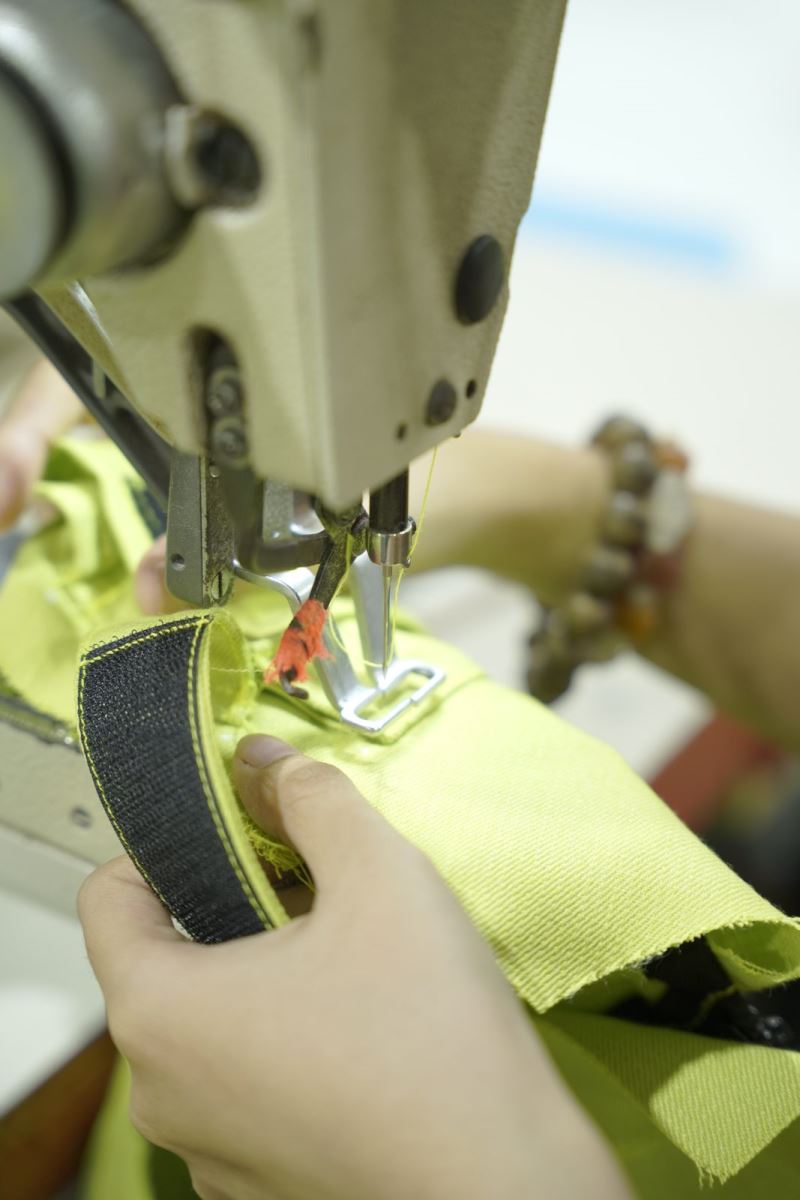
On technical products, even a small change can affect quality. The position of reflective tape, a type of seam tape, a seam, a pocket detail or a material layer can each make a difference in real use.
Technical is therefore not simply the department that produces documents. It is an important part of the factory's ability to control risk.
At Viking Vietnam, technical, IE, QC, maintenance and production need to work closely together so the product is not only correct on the drawing but stable in bulk production.
3. Production efficiency is not just working faster
In the apparel industry, production efficiency is usually read as higher output, shorter time and lower cost. For a sustainable factory, efficiency is not just speed.
Real efficiency means:
- Getting it right the first time.
- Reducing repeating defects.
- Reducing repair time.
- Reducing waste of materials and trims.
- Reducing interruption on the line.
- Keeping the delivery schedule steady.
- Producing consistent quality between shipments.
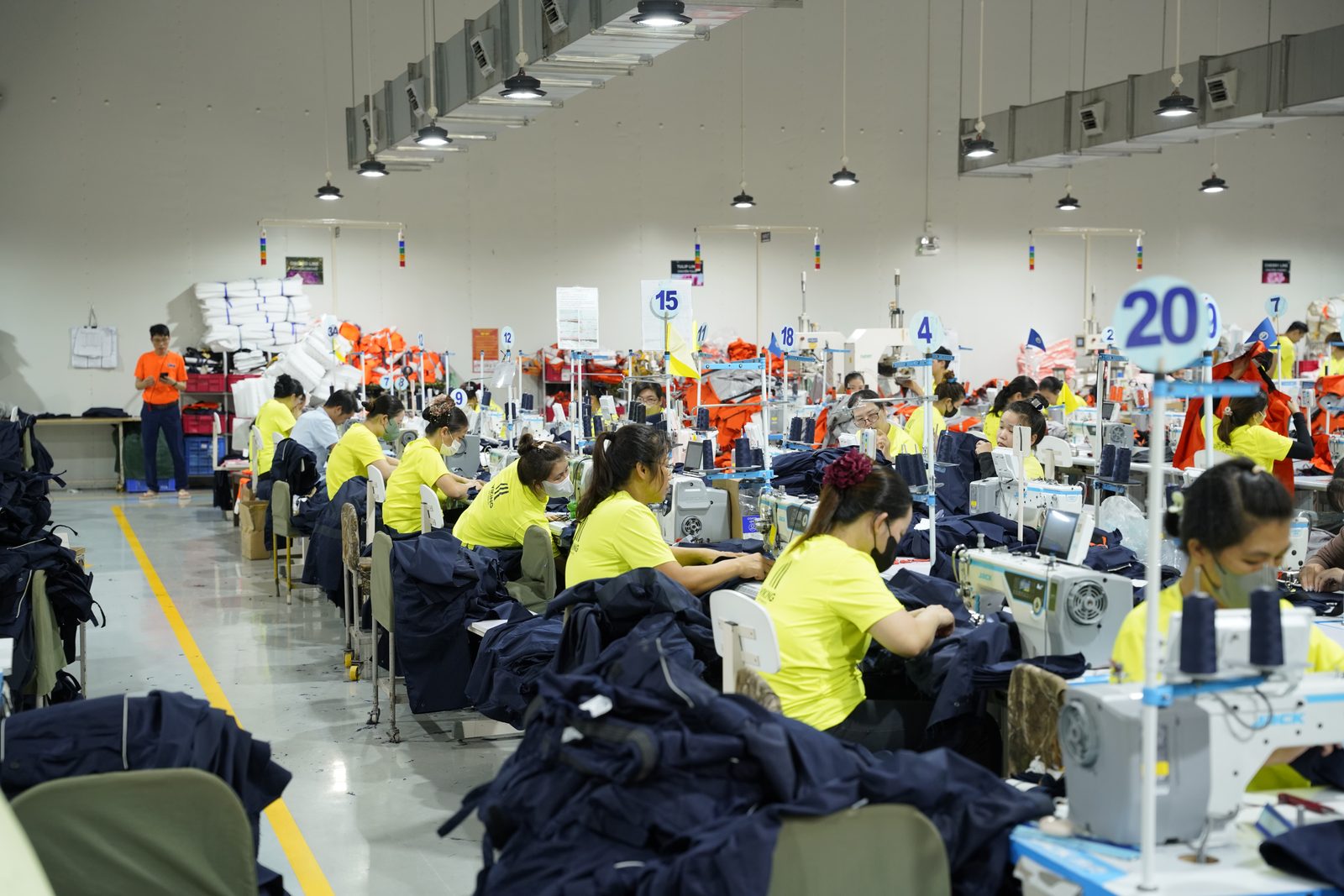
A line that runs fast but produces many defects is not efficient. An order delivered on time but only after heavy rework is not efficient. A product that finally passes but consumed too much material, time and human effort is not sustainable either.
Production efficiency has to be built from data and systems: a clear plan, a sensible layout, line balancing, bottleneck control, defect tracking, fast feedback and continual improvement.
This is where IE, the line leader, QC and production management all play their part.
4. Sustainability is where quality and waste reduction meet
In a garment factory, quality and sustainability are tightly linked.
When a product is defective, the factory has to repair it. Repair consumes extra time, electricity, labour and materials. When the defect is serious enough, the product may be scrapped. That is waste for the factory, the customer and the environment alike.
Conversely, when the factory controls quality well from the start, the positive effect spreads:
- Fewer defective garments.
- Fewer rejects.
- Less rework.
- Less pressure on operators.
- Less consumption of materials and trims.
- A steadier delivery schedule.
- More confident customers.
Sustainable manufacturing therefore cannot be separated from the quality management system. For Viking Vietnam, quality is not only what the customer asks for. It is also how the factory uses its resources more responsibly.
5. Technology has to serve people and process
Technology can make a garment factory more modern. Production boards, defect data, order management systems, specialised machines, cutting, pressing and inspection equipment, and analysis tools can all raise operating capability.
However, technology does not automatically create sustainability.
Technology only has value when:
- The data is entered correctly.
- The users understand the purpose.
- The process is clear enough for technology to support it.
- Management can read the data and act on it.
- Operators are trained to work with the change.
- Problems found in the data become real improvement.
A sustainable factory does not chase technology for appearance. It uses technology so that people work better, decide more accurately and operate more transparently.
At Viking Vietnam, technology has to come with training, operating discipline and a spirit of continual improvement.
6. ESG in a garment factory has to live in daily action
ESG should not appear only in a company profile or a report to the customer. In a garment factory, ESG needs to be visible in very concrete actions:
- Workers operate in a safe environment.
- Waste is sorted and controlled.
- Materials and trims are used responsibly.
- Machines are operated and maintained correctly.
- Production defects are analysed to reduce waste.
- Management listens to feedback from the floor.
- Customers are updated transparently when something goes wrong.
- The team is trained to understand quality, safety and the environment.
A sustainable garment factory does not have to start with large projects. Often, sustainability starts with small habits done consistently: switching off equipment that is not in use, checking material before cutting, reporting a defect early, keeping the work area tidy, reducing rework, using the correct trim and following the process.
When small actions become culture, ESG truly lives inside the factory.
7. The value for international customers
For customers in Europe, the United States, Japan and other demanding markets, a sustainable garment factory offers more than a factory with capacity alone.
Customers need a partner who can:
- Ensure consistent quality.
- Deliver as committed.
- Control risk during production.
- Stay transparent when something changes or goes wrong.
- Meet ESG and social responsibility requirements.
- Develop technical products with genuine understanding.
- Work alongside them over time rather than handling one order at a time.
When a factory balances people, technology and production efficiency well, customers can feel more confident. They know the product was not only sewn, but made inside a responsible system.
8. Viking Vietnam and the direction of a sustainable factory
Viking Vietnam develops manufacturing capability in high performance apparel, workwear, rainwear, waterproof garments, protective clothing and outdoor apparel. These products demand technique, skill, process and a high sense of responsibility.
In its operating direction, Viking Vietnam focuses on balancing:
- People: training, safety, responsibility, skill and cohesion.
- Technical: understanding the product, controlling the process, resolving the difficult points and securing consistency.
- Efficiency: reducing defects, reducing waste, raising productivity and protecting the delivery schedule.
- Sustainability: putting ESG into real operations rather than leaving it as a commitment.
This is the foundation that lets Viking Vietnam be more than a manufacturing site: a partner working alongside international customers to create products with quality, responsibility and long term value.
Summary of operational value
A sustainable garment factory has to balance people, technology and production efficiency.
- People create quality at every operation.
- Technical work turns the customer's requirement into a stable production process.
- Production efficiency means getting it right, reducing defects and reducing waste.
- Technology creates value only when it serves the process and the people.
- ESG has to live in daily action inside the factory.
- International customers value partners with systems, transparency and sustainable development.
Connect with Viking Vietnam
Viking Vietnam works alongside international brands and partners in manufacturing high performance apparel, workwear, rainwear, outdoor apparel, waterproof garments and protective clothing. With a direction that balances people, technology, efficiency and sustainability, Viking Vietnam aims to be a dependable manufacturing partner for customers who need stability, transparency and long term cooperation.
Contact Viking Vietnam to develop technical apparel made inside a production system that is responsible, efficient and sustainable.