Learn what international buyers should check when choosing a waterproof garment manufacturer, from materials, seam sealing, machinery, QC, to mass production stability.
In technical apparel, a waterproof product is not simply a jacket that keeps water out. It is the combination of material, design, stitching, seam sealing, trims, quality control and the ability to hold that performance steady through bulk production.
For international buyers, especially in rainwear, waterproof jackets, outdoor apparel, workwear and high performance apparel, choosing the right factory matters a great deal. A good sample is not enough. A waterproof product has to be produced consistently, to the right measurements, with the right materials, the right technique and in a way that suits real conditions of use.
Viking Vietnam develops manufacturing capability in premium laminate products, GORE-TEX jackets and technical protective clothing as a long term direction for serving global export markets.
So when assessing a factory for waterproof products, a customer should not only ask whether the factory can sew the garment. The more important question is: can the factory control the whole system that creates waterproof performance?
1. Check the capability to handle waterproof materials and laminate fabrics
Material is the foundation of a waterproof product. But not every waterproof fabric is handled in the same way.
A capable factory needs to understand materials such as:
- Two layer laminate fabric.
- Three layer laminate fabric.
- PU coated fabric.
- Fabric with a waterproof membrane.
- Fabric with windproof requirements.
- Fabric where shrinkage, stretch, surface or colour must be controlled.
- Material that needs separate storage so its performance is not affected.
With technical fabrics, cutting, sewing, pressing, ironing and finishing can all affect the performance of the product. A surface distorted by heat, a damaged membrane, a panel stretched too far or an unsuitable stitch can each reduce final quality.
Viking treats the ability to handle high performance fabric as an important criterion in protective clothing manufacturing, particularly with materials such as GORE-TEX and three layer laminates.
For the customer, this is the first thing to check. A conventional garment factory may be able to sew a jacket, but it will not necessarily control waterproof material well in bulk production.
2. Check seam sealing capability
In a waterproof product, the seam is one of the biggest risk points. When the needle passes through the fabric, the needle holes can become a path for water. Seam sealing is therefore a very important operation for protecting the waterproof function of the garment.
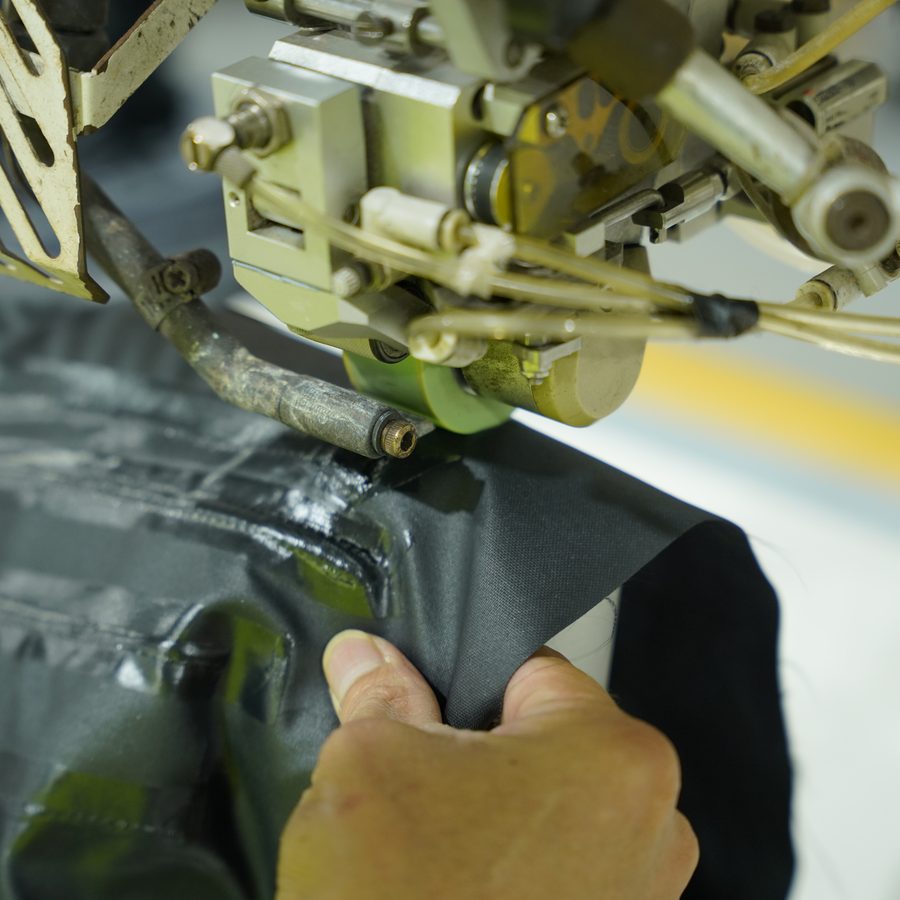
A factory with seam sealing capability needs to control:
- The right seam tape for each fabric.
- Sealing temperature.
- Sealing pressure.
- Machine speed.
- Tape adhesion after sealing.
- The condition of the fabric surface after sealing.
- The sealing path at curved, intersecting or multi layer areas.
- Testing after production and after use, where the customer requires it.
Viking has invested in seam sealing machines able to adjust three key parameters: temperature, pressure and speed, allowing tape to be applied on many two and three layer laminates without melting the membrane or leaving heat marks.
For international buyers, seam sealing should not be treated as a secondary operation. It is a core technical capability of a waterproof garment factory.
3. Check the ability to test and control waterproof performance
A waterproof product has to be controlled with data and appropriate test methods, not only by feel or visual inspection.
In its technology direction, Viking refers to requirements such as GORE-TEX waterproof products passing testing after 20 washes, seam sealing adhesion checked under water pressure of up to 15,000 mm, and laminate fabric maintaining consistent colour between lots, accurate stretch and resistance to distortion in wet conditions.
When assessing a factory, customers should look at questions like:
- Does the factory know which points need testing?
- Is seam sealing checked after it is applied?
- Is fabric checked before it enters production?
- Does the product have a test procedure matching the customer's requirements?
- Does the factory keep test data so it can be traced when needed?
- When a test fails, does the factory have a way to analyse the cause and adjust the process?
A dependable factory does not test only to get a result. It uses test data to improve and to control risk in production.
4. Check the ability to control waterproof design
Waterproof performance does not come only from the fabric and the seam tape. Product design also plays a very important role.
A waterproof product needs to consider:
- Hood design.
- Collar construction.
- The storm flap over the zipper.
- Pocket position.
- Sleeve and cuff construction.
- Hem and adjustment cords.
- Seams at the shoulder, body, sleeve and other areas exposed to water.
- Waterproof zippers or a suitable covering solution.
- Ventilation areas where the wearer moves a great deal.
A design that looks good but does not suit real rain, wind or movement can reduce effectiveness in use. A pocket in the wrong place can hold water; a zipper that is not well covered can create a leak point; an unsuitable hood can reduce protection for the head; a seam placed in a heavily exposed area can raise risk.
The factory therefore needs to understand design in terms of function, not only appearance.
5. Check the ability to control trims
In a waterproof product, trims play a very important role. One unsuitable trim can affect the whole garment.
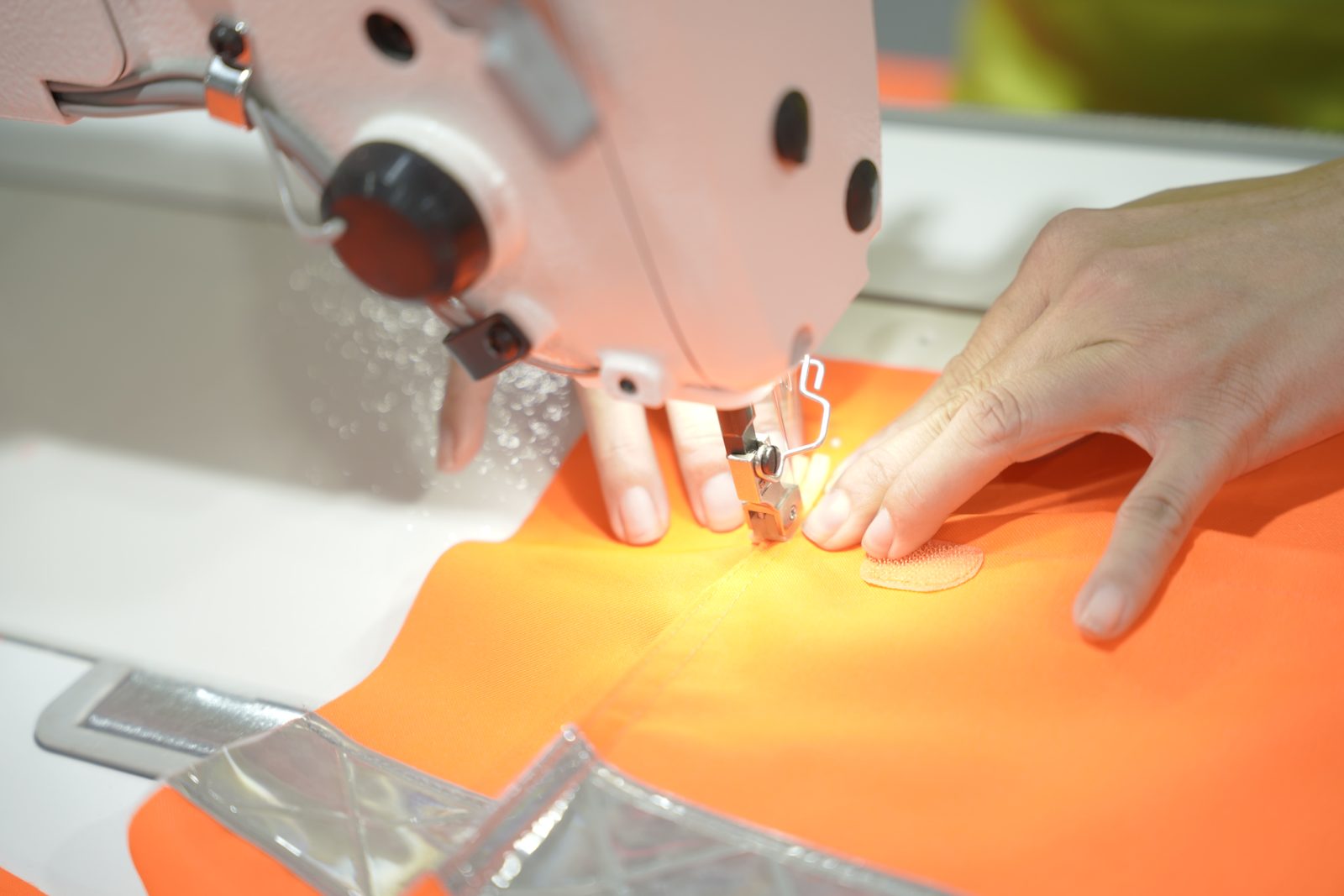
Trims that need control include:
- Waterproof zippers, or zippers with a storm flap.
- Seam tape.
- Drawcords, cord stoppers and snap buttons.
- Cuffs, hems and adjustment details.
- Lining.
- Labels, logos and decorative materials.
- Reflective tape where the product is used in low light.
Every trim has to suit the fabric, the design and the purpose of use. A zipper has to run smoothly. Seam tape has to be compatible with the material. Reflective tape has to hold firmly without causing discomfort. Adjustment details have to be easy to use in real conditions.
Viking has emphasised that reflective detail in protective clothing is not merely an accessory, but an element connected to safety and to how visible a worker is.
The same holds for waterproof products with a protective or workwear element: trims do not only make the product look good, they affect function and safety.
6. Check the system of quality control at source
With waterproof goods, final inspection is necessary but not sufficient. If a defect is found too late, repair cost and schedule risk both rise.
QC needs to control at several points:
- Incoming material inspection.
- Inspection of semi finished parts.
- Inspection of the stitching before seam sealing.
- Inspection of the sealed seam.
- Inspection of points where water can enter easily.
- Measurement checks.
- Inspection of functional trims.
- Inspection of the finished garment before packing.
Viking's direction is that the whole process, from receiving materials and technical deployment through inspection of semi finished parts to packing, should be controlled under a quality management system and ISO standards.
In particular, the culture of “everyone is an inspector” means quality does not depend only on QC at the end of the line, but is controlled from many points in the process.
7. Check the ability to keep bulk as stable as the approved sample
One of the biggest risks for a customer is an approved sample that meets requirements while bulk production is not stable.
On waterproof products, the difference between sample and bulk can appear in:
- Measurement accuracy.
- Consistency of seam sealing.
- Position of details.
- Tape adhesion.
- Stitching at curved or multi layer areas.
- The condition of the fabric surface after sealing or finishing.
- Consistency across sizes, colours and lots.
To control this, the factory needs a clear handover from sample to production:
- Analysing the approved sample.
- Identifying the risk points.
- Preparing the sewing process.
- Preparing machines and trims.
- Controlling the pilot piece at the head of the line.
- QC follow up during the early stage.
- Fast feedback when a defect appears.
- Recording the lesson for later orders.
A capable factory does not only make one good sample. It has to turn that good sample into stable bulk.
8. Check IE capability and line organisation
Waterproof products usually have more complex operations than ordinary garments. Without good line organisation, operations such as detail sewing, handling multiple layers, seam sealing, inspection and finishing can create bottlenecks.
IE helps the factory control:
- The sequence of operations.
- The time of each operation.
- Machine requirements.
- Line layout.
- Bottlenecks.
- Output by group of operations.
- Line balancing.
- Data for improvement.
Viking has described how an MES system connects the steps in the production line, from fabric cutting, sewing and seam sealing to packing, while tracking output, technical defects and completion rate in real time.
For a customer, a factory with IE and clear operating data is more dependable, because production does not rest entirely on intuition.
9. Check the production environment and factory layout
With technical materials, production conditions and factory layout can affect quality.
Customers should pay attention to:
- The flow of materials and trims.
- How materials are separated by style.
- Inspection lighting.
- The area for checking sealed seams.
- A physical testing area, where one exists.
- The packing area.
- Material storage conditions.
- Control against mixing between product types.
In the direction set for the new factory, Viking emphasises a logical flow of materials, fabric and trims to avoid mixing; control of walls, ceiling, lighting and temperature to keep fabric colour stable; and dedicated areas for physical testing, seam sealing inspection and packing to reduce the chance of a defect being missed.
This matters on waterproof products because quality does not depend on a single operation, but on the whole production environment.
10. Check training capability
Waterproof manufacturing needs a team that understands the technique, not one that works only from habit.
The team needs to be trained to understand:
- The characteristics of the material.
- The risk points when sewing waterproof fabric.
- Why seam sealing matters.
- How to recognise a defect in the sealed seam.
- How to self check within the operation.
- When to report back to QC, technical or the line leader.
- Why a small defect can affect the function of the product.
Viking emphasises that technology is only a tool, while quality still comes from the understanding, initiative and commitment of the people; the team is trained to understand how the machines work, to recognise defects and to analyse data so improvement comes faster.
On waterproof products, training is what decides consistency between operators, between lines and between lots.
11. Check the ability to work alongside the customer and improve
International buyers do not only need a factory that follows a sample. They need a partner able to respond, propose and improve.
A capable factory should be able to support:
- Assessing the feasibility of a design.
- Proposing adjustments that reduce the risk of water ingress.
- Suggesting more suitable trims.
- Optimising product construction for the environment of use.
- Early feedback when a technical risk is found.
- Proposing how to control a special operation.
- Improving with the customer season by season.
Viking defines effectiveness by helping the customer reach their goals, not only by internal indicators. The factory proactively proposes solutions such as design adjustments, substitute materials when the supply chain is under pressure, and changes to product construction for a particular climate, market or end user group.
This is very important in long term B2B cooperation.
12. Why customers should choose a factory that understands waterproof products
A factory that understands waterproof products helps the customer reduce risk at many points:
- Less risk of choosing the wrong material or trim.
- Less risk of inconsistent seam sealing.
- Less risk of a good sample followed by uneven bulk.
- Less risk of a water ingress defect found too late.
- Less risk of late delivery caused by rework.
- Better control of quality at source.
- Better capability to develop products suited to the market.
- More transparency in production and improvement.
For international buyers, a waterproof product is not only a fashion item. It relates to the experience of use, the reputation of the brand and the trust of the person who finally wears it.
13. Viking Vietnam and waterproof manufacturing capability
Viking Vietnam develops capability in waterproof garments, rainwear, workwear, protective clothing, outdoor apparel and high performance apparel.
Viking's approach focuses on:
- Handling technical materials and laminate fabrics.
- Controlling seam sealing.
- Preparing suitable equipment and processes.
- Organising the sewing line with data and IE.
- Controlling quality at source.
- Training the team to understand the risk points of waterproof products.
- Control from approved sample through to bulk production.
- Working alongside customers on product improvement.
- Linking quality with sustainability and long term cooperation.
For Viking Vietnam, a waterproof product needs more than a good appearance. It needs to be produced inside a system that understands the material, understands the function, controls seam sealing and holds quality steady across many orders.
Summary of operational value
When choosing a factory for waterproof garments, customers should check far more than basic sewing capability.
A dependable factory needs:
- Capability with waterproof and laminate fabrics.
- Stable seam sealing capability.
- A system for testing and controlling waterproof performance.
- Control over design, trims and stitching.
- Quality control at source with clear quality data.
- IE support for line organisation and bottleneck control.
- A production environment suited to technical materials.
- A team trained to understand waterproof products.
- The mindset to work alongside the customer in development and improvement.
Connect with Viking Vietnam
Viking Vietnam works alongside international brands and partners in manufacturing waterproof garments, rainwear, workwear, protective clothing, outdoor apparel and high performance apparel. With capability in technical material handling, seam sealing, quality control at source, IE, team training and a responsible operating system, Viking Vietnam aims to be a dependable manufacturing partner for waterproof export product lines.
Contact Viking Vietnam to develop waterproof products made through the combination of the right material, precise technique, a stable process and a long term partnership.