Learn how Viking Vietnam turns technical drawings, tech packs, and customer requirements into clear production processes, from sample development and materials to IE, QC, and finished garments.
In export garment manufacturing, a technical drawing or tech pack is not only a document describing the product. It is the starting point of the whole production chain.
From a drawing, the factory has to understand the silhouette, the construction, the materials, the trims, the stitching, the measurements, the position of each detail, the quality standard, the packing requirement and the purpose the product will serve.
On high performance apparel, workwear, rainwear, waterproof garments, protective clothing and outdoor apparel, this process matters even more. One small detail in the drawing, if misread, can affect quality, function, schedule and consistency once bulk production starts.
Viking Vietnam has a technical and sample development team supporting customers from trial sample through to bulk production. The coordinated process, from order intake, pattern development, sample checking, fabric lamination and trial sewing to seam sealing, helps keep technical specification and product performance consistent.
For international buyers, then, the ability to turn a technical drawing into a clear production process is one of the important signs of a dependable factory.
1. A technical drawing has to be read as a system of requirements
A technical drawing should not be understood simply as a picture of the product. In professional manufacturing, the drawing is a system of information.
The factory needs to read the drawing together with many related documents:
- The tech pack.
- The measurement chart.
- The bill of materials.
- Reference samples.
- Sample comments.
- Detail photographs.
- Stitching requirements.
- Inspection standards.
- Packing instructions.
- Requirements for labels, logos and brand identity.
Looking at the drawing without connecting it to the other documents, the factory can miss or misread what the customer intends.
A line on a drawing, for example, could be a decorative topstitch, a technical joining seam, the position of seam sealing, a material panel line or a functional detail. If it is not clarified at the start, the error can appear at sample stage or, more seriously, in bulk production.
At Viking Vietnam, the first step is to understand the overall requirement of the product correctly, before moving on to pattern, sample, process and production.
2. Understanding the purpose of use helps the factory develop more accurately
A technical garment is not designed only to look good. It is designed to serve a specific purpose.
The factory needs to understand:
- Who the end user is.
- The environment the product will be used in.
- Whether the wearer stands still or moves a great deal.
- Whether the product needs to be waterproof, windproof, insulating or protective.
- Which details affect safety or function.
- Whether the target market has its own climate, usage habits or standards.
Both are jackets, but an outdoor jacket is not a workwear jacket. Both are waterproof, but rainwear for light rain is not the same as a product for heavy rain or outdoor labour. Both are protective, but each industry carries its own risk in use.
When the factory understands the purpose of use, the technical team asks better questions, finds risk earlier and works with the customer more effectively.
3. Pattern development turns the idea into product structure
Once the drawing and the product requirement are understood, pattern development is the step that turns the idea into a structure that can be manufactured.
The pattern does not only decide the silhouette. It also affects:
- Finished measurements.
- Fit.
- Freedom of movement.
- How the panels are assembled.
- Seam position.
- The position of pockets, hood, sleeves, cuffs and hem.
- Consistent grading across sizes.
- Feasibility in bulk production.
On technical products, the pattern has to be considered together with the material. A fabric that stretches, or is thick, slippery, laminated or coated, changes how the pattern is handled and how the operation is sewn.
If the pattern is not suitable, the sewing line struggles, measurements drift and bulk can differ from the approved sample.
Pattern development is therefore an important technical step, not simply preparation before production.
4. The trial sample tests feasibility before bulk production
The trial sample is the stage where the factory and the customer check the product before bulk production begins.
A good trial sample confirms:
- Whether the silhouette matches the requirement.
- Whether the measurements are right.
- Whether the material behaves as the design assumes.
- Whether the stitching and assembly structure are stable.
- Whether functional details sit in the right position.
- Whether the product is easy to wear, easy to move in and suitable for the end user.
- Whether any operation is too difficult or carries risk in bulk.
At this stage the factory is not only sewing a sample for approval. It needs to use the sample to learn the product, identify the difficult points and prepare for bulk production.
For Viking Vietnam, the trial sample is the link between the design idea, technical capability and the stability of real production.
5. Materials and trims have to be confirmed before production
A correct design can still run into risk if the materials and trims are not suitable.
In technical garment manufacturing, materials and trims need careful control:
- Main fabric.
- Contrast fabric.
- Lining.
- Insulation.
- Zippers.
- Buttons, cords, eyelets and stoppers.
- Seam tape.
- Reflective tape.
- Labels, logos and badges.
- Packaging materials.
Viking treats the ability to handle high performance materials as an important criterion, particularly with materials such as GORE-TEX and multi layer laminates.
On waterproof products, an unsuitable seam tape can affect the waterproof function. On workwear, a trim that is not durable enough can shorten the life of the garment. On reflective workwear, reflective tape has to be checked for position, adhesion and performance in use.
Materials and trims therefore need to be confirmed before production, not only checked once the style is already on the line.
6. Technical turns the requirement into a clear sewing method
Once the sample and materials are confirmed, the technical department has to turn the customer's requirement into a clear production method.
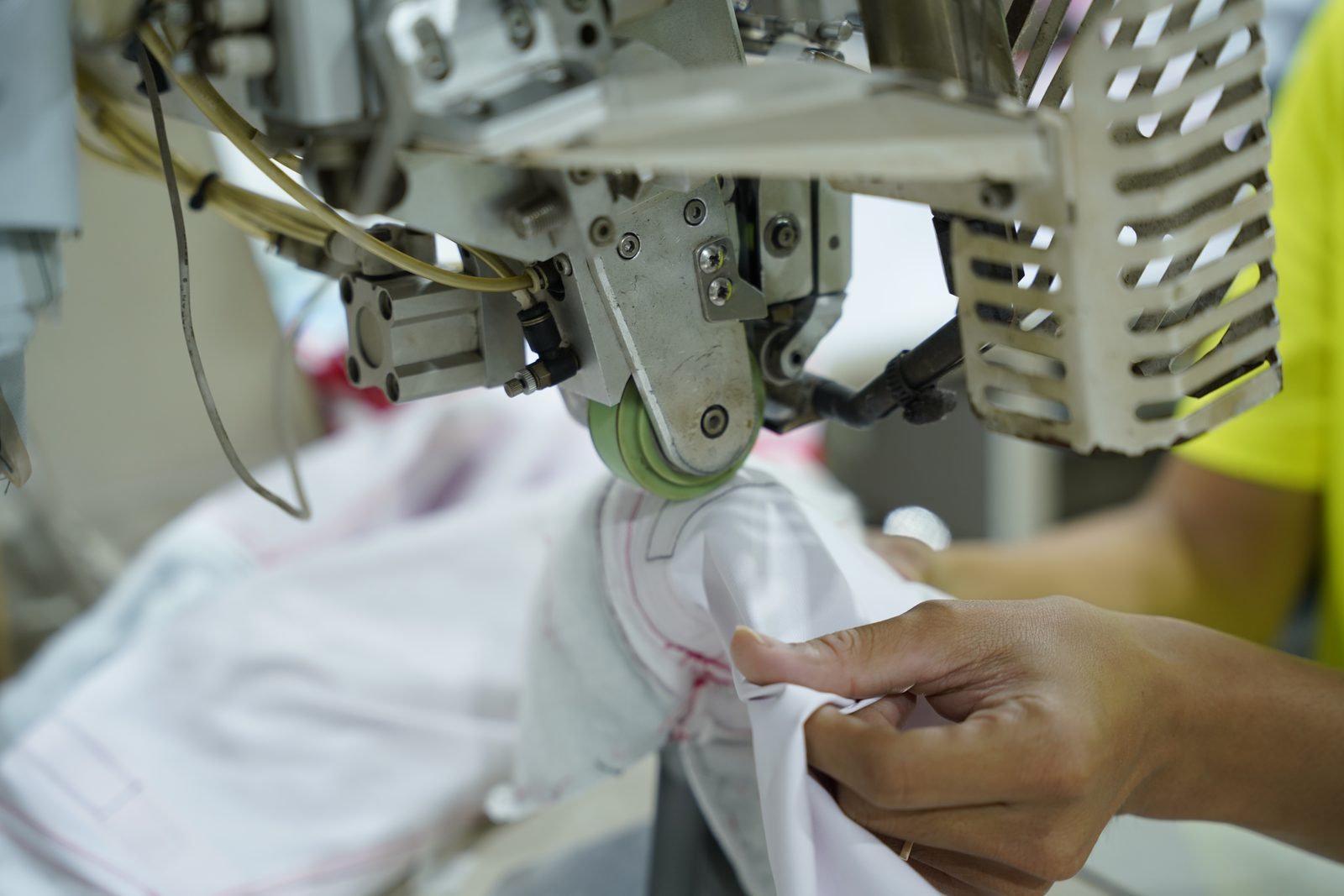
This covers:
- The order of assembly.
- Stitch specification.
- The position of key technical points.
- Operations needing special control.
- How to handle difficult materials.
- How functional details are assembled.
- What to check on the pilot piece.
- Operation instructions for the operators.
If technical does not communicate clearly, each operator or each line can understand it differently. That creates the risk of inconsistency in bulk production.
At Viking Vietnam, technical does not only produce documents. Its role is to turn the customer's requirement into clear action on the production floor.
7. IE turns the product into a production process with data
A product is only truly ready for production when the factory knows which operations it passes through, how long each one takes, what machines are needed and how the line should be laid out.
IE plays an important role in this step.
IE needs to analyse:
- The list of operations.
- The time of each operation.
- Operations likely to bottleneck.
- Operations needing high skill.
- Machine and attachment requirements.
- Line layout.
- The right number of operators.
- Expected output.
- The line balancing plan.
Viking has deployed an MES system connecting the steps in the production line, from fabric cutting, sewing and seam sealing to packing; output, technical defects and completion rate are tracked in real time.
Data reduces the factory's dependence on intuition. For international buyers, this is an important basis for trusting the factory's control over production.
8. QC sets the control points before bulk production
QC needs to be involved early to identify the critical control points of the product.
Depending on the product, control points can include:
- Finished measurements.
- Stitching.
- The position of pockets, zippers, hood or cuffs.
- The position of reflective tape.
- Seam sealing adhesion.
- The condition of the fabric surface.
- Symmetry between left and right.
- Labels, logos and packing.
- Points where the trial sample showed defects were likely.
Viking's direction is that the whole process, from receiving materials and technical deployment through inspection of semi finished parts to packing, is controlled under a quality management system and ISO standards.
When QC sets the control points at the start, the factory prevents defects rather than only discovering them at the end of the line.
9. Maintenance prepares machines and equipment for the product
A technical drawing can call for several kinds of machine or supporting equipment.
The maintenance team needs to be involved to prepare:
- The right sewing machine for each operation.
- Specialised machines where needed.
- Attachments and aids for the operation.
- Sealing or bonding machines where the product has seam sealing.
- Test equipment for any special requirement.
- A plan for when a machine issue affects the schedule.
In its technology material, Viking notes that its seam sealing machines can adjust temperature, pressure and speed to handle many two and three layer laminates without melting the membrane or leaving heat marks.
This shows that a technical product needs close coordination between design, technical, materials and production equipment.
10. The pilot piece confirms understanding before bulk runs
The pilot piece is an important step for checking whether the sewing line has understood the product correctly.
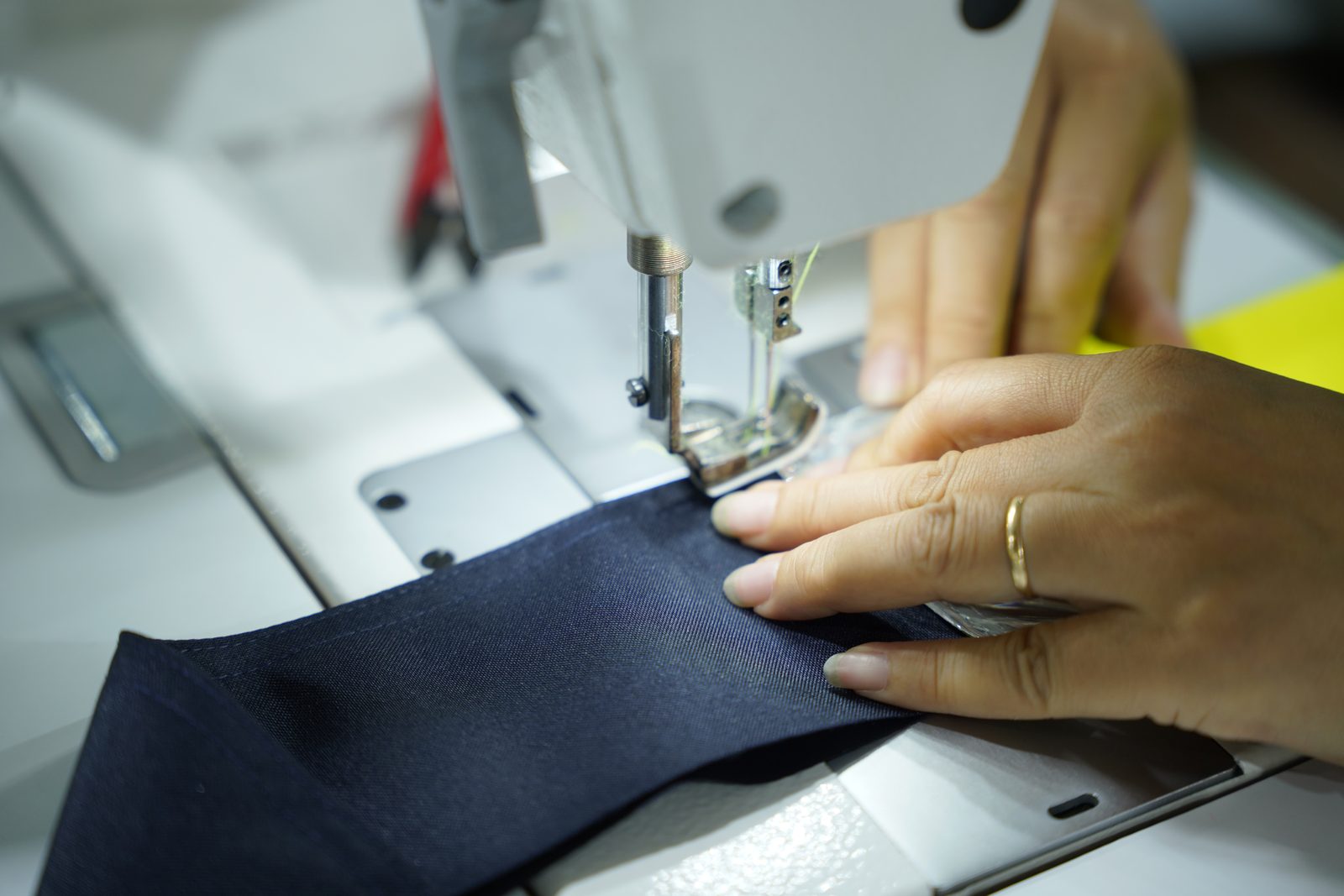
The pilot piece confirms:
- The operators understand the operation.
- The machines are properly prepared.
- The assembly order is right.
- Measurements are stable.
- Stitching and functional details meet the requirement.
- QC has the right check points.
- Technical has communicated clearly enough.
- Whether IE needs to adjust the layout or an operation.
When the pilot piece is well controlled, the factory finds risk before a defect spreads through bulk production.
For the customer this matters a great deal, because it protects consistency between the approved sample and bulk.
11. Bulk production needs continuous feedback from the floor
Once the style is on the line, the process is not finished. The factory still has to track and feed back continuously.
The departments that need to coordinate:
- The line leader following the production rhythm.
- QC controlling defects at source.
- IE tracking output and bottlenecks.
- Technical supporting difficult operations.
- Maintenance handling machines and attachments.
- Merchandising updating information when the customer needs to be consulted.
- Production management coordinating the schedule.
Viking emphasises that production effectiveness lies not only in speed, but in the ability to secure quality from the very first operation, in coordinated operating capability, in cooperation between departments and in a root cause approach to quality.
This is why bulk production needs a feedback system from the floor, not only a plan on paper.
12. A finished garment is the result of the whole system, not one operation
A finished garment that meets the requirement does not come from a single department. It is the result of the whole system working together:
- The customer provides clear requirements.
- Merchandising receives and passes on the information.
- Technical develops the pattern, the sample and the production instructions.
- IE builds the process, the layout and the operation data.
- The warehouse controls materials and trims.
- Maintenance prepares the machines.
- The sewing line carries out the operations.
- QC controls quality.
- Finishing and packing meet the delivery requirement.
For Viking Vietnam, production is not only cutting, sewing and packing. It is the process of converting a customer requirement into a product that can be used, can be controlled and can be held steady through bulk production.
13. Why international buyers should care about turning a tech pack into production
For international buyers, a factory able to turn a tech pack into a clear production process creates real value:
- Less risk of misreading the technical requirement.
- Shorter sample development time.
- Better control from approved sample through to bulk.
- Better preparation of materials, trims and machines.
- Fewer defects in the early stage of production.
- More stability in quality and schedule.
- A foundation for improvement across seasons.
Viking does not only follow the drawing. It develops ideas with the customer, optimises the design and resolves the practical problems that arise in bulk production.
This is one of the important reasons customers feel confident choosing Viking Vietnam as a long term manufacturing partner.
Summary of operational value
From technical drawing to finished garment is a journey of many steps, requiring coordination between people, process, data and technology.
A dependable factory needs to be able to:
- Read a technical drawing and tech pack as a system of requirements.
- Understand the purpose and function of the product.
- Develop patterns and trial samples suited to bulk production.
- Control materials, technical trims and special components.
- Turn the customer requirement into a clear sewing process.
- Use IE to organise operations, layout and production data.
- Use QC to set control points from the start.
- Prepare machines, equipment and the pilot piece before bulk runs.
- Feed back continuously from the floor to hold quality steady.
Connect with Viking Vietnam
Viking Vietnam works alongside international brands and partners in manufacturing high performance apparel, workwear, rainwear, waterproof garments, protective clothing and outdoor apparel. With capability in reading technical products, sample development, material control, IE, QC, seam sealing and a stable production system, Viking Vietnam aims to be a dependable partner for customers who need technical apparel built to export standards.
Contact Viking Vietnam to turn technical drawings and product ideas into finished garments that are consistent, dependable and suited to global markets.